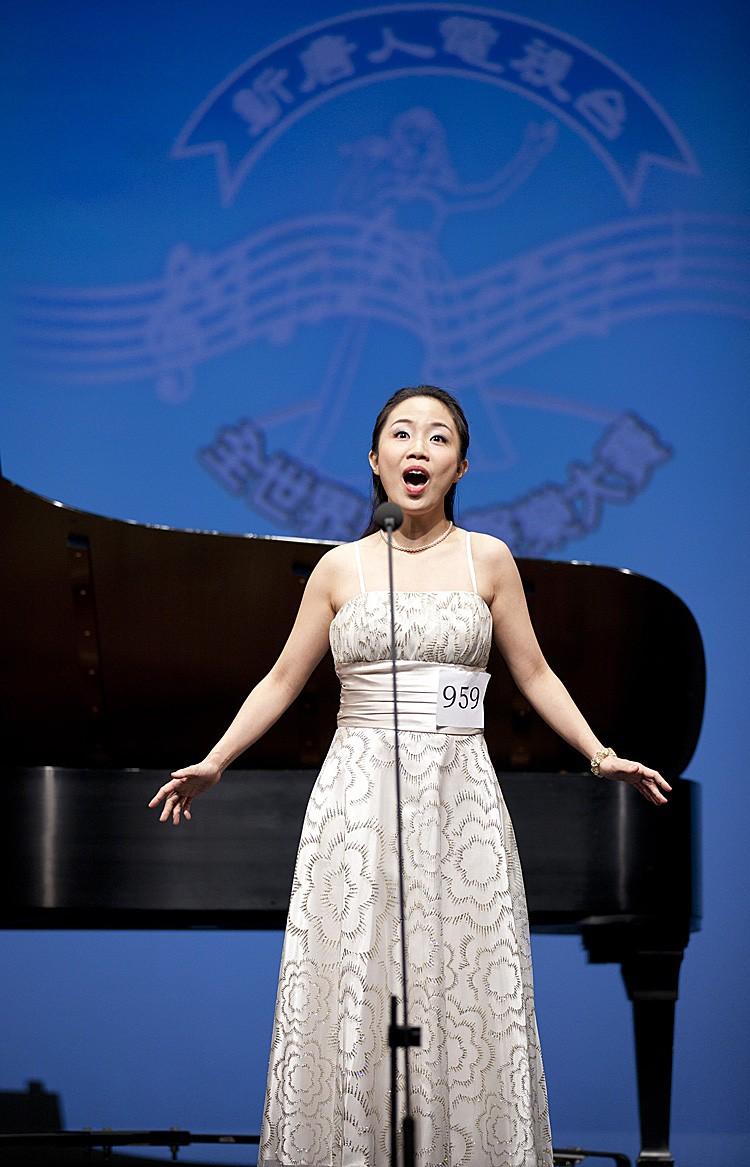
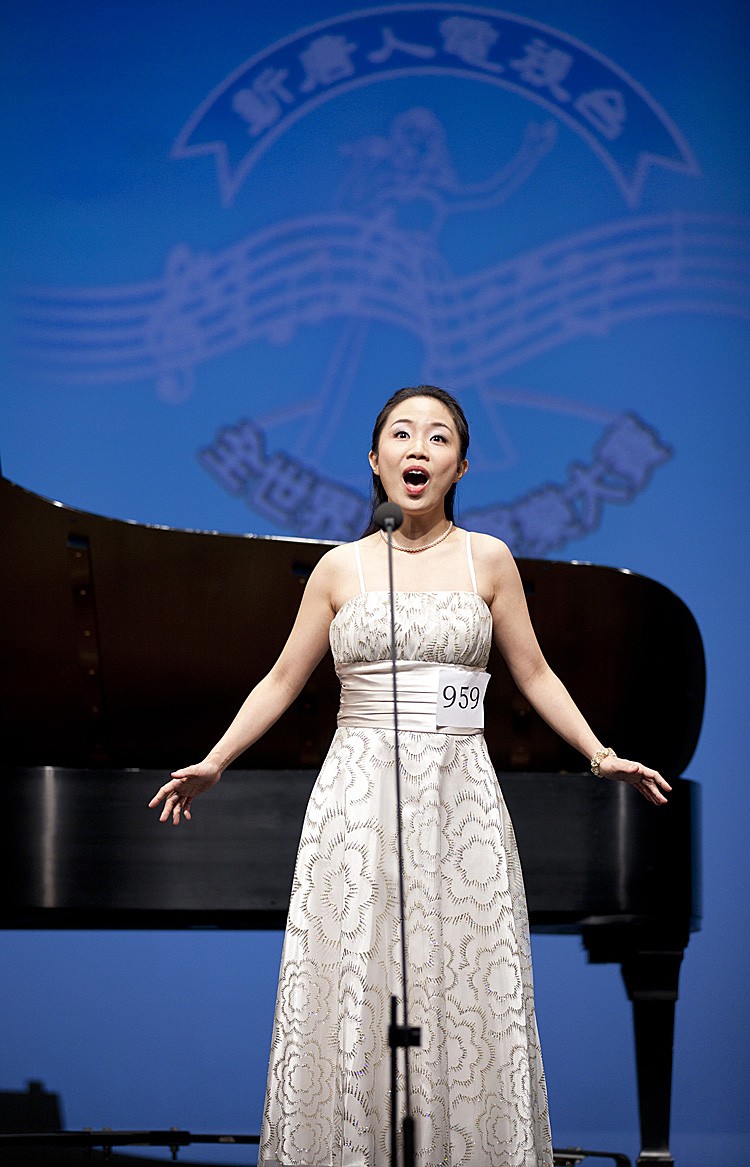
Moreover, the lucky few who make the cut will perform in front of vocal masters, theater managers, artistic directors, and recruiters from world-class musical establishments. The experience could propel these men and women into international fame. This will also be the first time a worldwide vocal competition for singers of Chinese origin has ever been held at Carnegie Hall.
The competition was created to attract Chinese talent in classical arts and provide them with an international platform to promote the true arts of both East and West.
“These contestants have talent but may not be yet known by the world,” said assistant producer Anna Chang. “We try to create a path for them to contribute their talent.”
New Tang Dynasty Television (NTDTV), holds competitions in vocal, violin, piano, photography, oil painting, classical Chinese dance, Chinese martial arts, Chinese culinary arts, and Chinese hanfu (couture) design either every year or every other year.
Since the launch of the competition in 2007, the competition series have become a valuable platform for Chinese artists to show their craft to the world and to each other. All the competitions are held in New York City.
“Goodness and beauty shall be shared with everyone, and art is a good carrier,” said Chang. “ It is said that art has no borders, and it’s true.”
Big Opportunities
This year, for the vocal competition’s fifth anniversary, the Florence Opera Academy (FLOA) has agreed to offer three contestants scholarships for their talent in interpreting Italian Opera. Recipients will complete a master class with the academy in Florence, Italy, and then perform in a concert held in their honor.
FLOA's artistic director, Silvia Bossa, will handpick the scholarship recipients. "Once I saw that the mission of the competition is to promote traditional vocal arts of pure authenticity, pure goodness, and pure beauty, I knew immediately that this is a perfect match because this is exactly my life's philosophy,” said Bossa in a statement on the NTD website.
As contestants sing the notes of Puccini and Bach, directors and agents of top-tier theaters and music companies will be in the audience watching for talent, possibly with contracts in hand.
“For anyone to stand on that stage and perform is no small opportunity,” said Chang.
Tough Competition, High Pressure
Over the course of three days, the group of contestants will quickly thin. Eighteen contestants have already passed the Asia Pacific Region preliminary round that was held in Taipei on Aug. 28. They will be joining contestants from USA, Canada, the U.K., France, Italy, Germany, China, Macau, Japan, Malaysia, Australia, Argentina, and other countries in the semifinal round in New York on Oct. 29.
The morning of Oct. 30 will be the final round of the semifinals, and the two gold winners chosen that morning—one male, one female—will perform in the concert with seven winners from previous years that very afternoon at Carnegie Hall.
For the semifinal and final rounds of the competition, contestants will be required to perform two self-selected pieces, one of which must be a Chinese piece from a designated list of 9 classical Chinese repertoires. The challenge for contestants, especially those trained in the West, is to apply bel canto vocalization to Chinese-language works.
Audiences will see a new facet of opera, says Chang. “They will see Chinese talent they may never have heard of.”
The competition will be held on Oct. 28-30. Attendees are by-invitation only but the Future Stars Recital is open to the public. Visit http://vocal.ntdtv.com/en/ and www.futurestarsconcert.com for event and ticketing information.