After traveling the Pacific Ocean for years, sockeye salmon find their way home to their birthplaces using the Earth’s magnetic field, new research shows.

Even while growing inside their egg cases, some embryonic sharks keep very still when predators are nearby to avoid being detected.

Thorny seahorses, Hippocampus histrix, inhabit sandy and reef substrates in the Western Pacific.

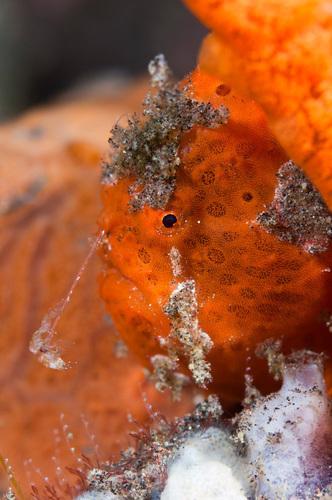
The painted frogfish, Antennarius pictus, is also known as the painted anglerfish because it uses a lure to attract prey, like all frogfish.
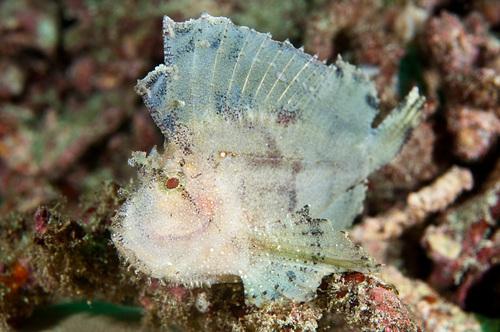
Leaf scorpionfish are found in various parts of the world, including the tropical Indo-Pacific and the Red Sea.
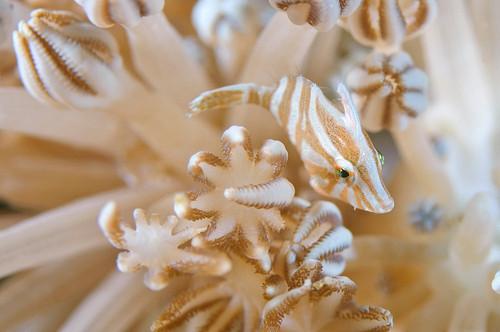
Bargibanti pygmy seahorses, Hippocampus bargibanti, are typically grey with red tubercles, but orange variations are commonly found at Seraya in Bali.

Razorfish, Aeoliscus strigatus, inhabit seagrass beds and coral reefs of the Indo-Pacific, and spend their whole lives in a vertical position.
Migration of juvenile reef fish from coastal seagrass beds and mangroves to coral reefs is much more complex than previously realized, according to a new study in the Red Sea off Saudi Arabia.

My all-time favorite fish is fresh, wild-caught Alaska salmon. Granted, it can be on the pricey side, especially if you order it at a restaurant, but cooking salmon is actually quite easy.

The radial filefish, Acreichthys radiatus, is also known as the flower-coral leatherjacket, and is widespread in the Indo-Pacific ocean.
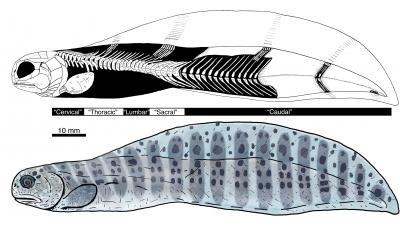
The surprising discovery of a fossil fish with a multi-segmented backbone has contradicted long-held beliefs that this type of anatomy was exclusive to land animals.
A tiny “living,” swimming robot that could be used to detect diseases in the human body is being developed by U.K. and U.S. researchers.
Wild salmon are valued as a sustainable seafood option for humans, but can we consider how much salmon bears and ecosystems need when setting management goals?

Some schooling fish have an unusual way of warning others of predation—when they are injured, they release something that elicits a fear response in nearby fish, causing them to flee.
For the first time, scientists have recorded an incidence of unexpected association between the mimic octopus and the black-marble jawfish.
The common names of Synchiropus splendidus—the mandarinfish, green mandarin, or mandarin dragonet—allude to the vibrant hues painting its body, reminiscent of the Mandarin robes of Imperial Chinese courts.

Watch this video of a young rockmover wrasse tucking itself in for the night.
In these unusual situations that today’s science has not encountered, who is an expert?
In Indiana, mercury levels from fish in local water samples yield levels too high for human and animal consumption.