Once again, I find myself in the middle of an argument that has been going on for decades, maybe longer: the friction that develops between working women and stay-at-home moms.
I’m not an anthropologist. Nor am I a social scientist. And I’m sure that folks in those professions would be able to find all kinds of underlying causes for the resentment felt by so many working women toward their gender counterparts who, for whatever reason, spent their lifetimes as full-time mothers and wives.
But this is a column about Social Security, not inter-gender politics. So why do I bring this topic up? Because Social Security rules can sometimes get in the middle of these heated discussions.
I’ve waded into the middle of this sea of disharmony in a couple of past columns. But some recent emails have caused me to do so once more.
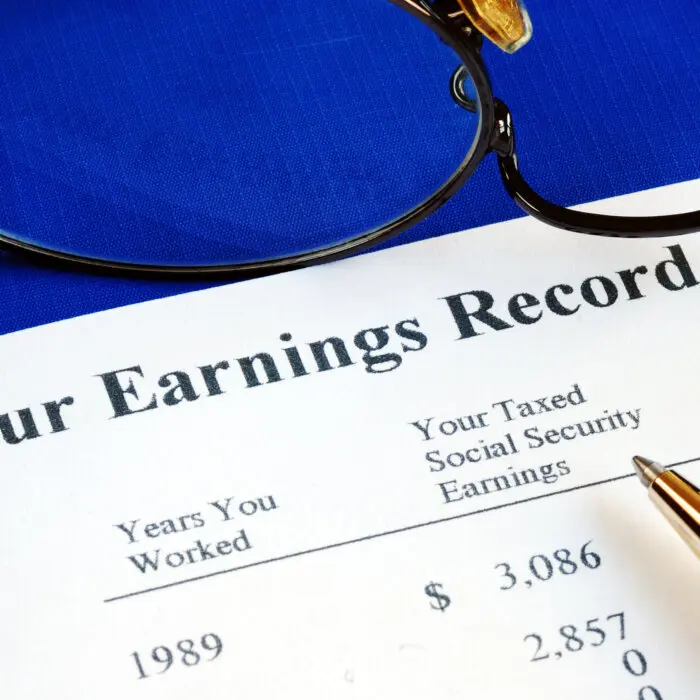
Not long ago, I wrote a column in which I explained that a working woman will generally be paid her own Social Security benefit first. Only after that will they look to her husband’s record to see whether she can get any additional benefits.
Part of that column included comments from a stay-at-home mom (now a grandma) who complained that she thought that the benefits she was getting on her husband’s Social Security account were too small. And that triggered comments from more than a few working women.

One woman wrote to say: “These women, who claim that sitting at home all day changing a few diapers is a full-time job, should stop their griping. I do all that and I work 8 hours a day at Costco. And I won’t get half as much off my husband’s Social Security as these whiners will get!”
Another woman wrote: “I wish I could sit at home all day living off a sugar-daddy husband and then get half of his Social Security when he retires. I work for a living and probably won’t get any of my husband’s Social Security!”
Those comments are just snippets of the hundreds of irate emails I’ve received over the years from working women who are upset that they oftentimes get reduced and sometimes no benefits from their husbands’ Social Security records. And then they find it doubly irritating that a woman who didn’t work outside the home gets to collect full Social Security spousal benefits from her husband’s or ex-husband’s account.
Whenever I get these kinds of emails, I think of my mother. I’ve shared her story before. And I guess it’s time to do so once again. It helps explain the Social Security rules.
My mom went through the last 25 years of her life carrying such a grudge against Social Security in general and a neighbor lady in particular.
My parents came from the wrong side of the economic tracks and spent their lives trying to inch their way into the middle class. My dad was a janitor. But that job simply didn’t bring enough money into our household. So my mom always worked outside the home. She spent much of her adult life doing clerical work in a hospital. She took time off to have four kids. But within a year of the birth of each of those kids, she was always back to work to help pay the rent and buy groceries. There was little money left over for what most people would consider the good things in life.
But speaking of those good things, our neighbors behind us across the alley were living the American Dream. (That alley was like the proverbial “tracks.” It divided the rich side of town from the poor side.) In their household, the husband and father was the vice president of a local bank. They had six kids. And his wife, although she had a degree in journalism, was a full-time stay-at-home mom. She never had to work outside the home because her husband’s salary brought in more than enough money to keep them living in comfort.
My brothers and sisters enjoyed playing with the banker’s kids. (They had really nice toys and stuff!) But our parents never mingled and never visited one another. They simply ran in different economic circles.
Long story short: Both the husbands eventually died. The banker’s widow (she was older than 65 at the time) started getting a rather substantial widow’s benefit from Social Security. But my mom got a very small monthly widow’s check from my dad’s account. And that’s because she was getting her own Social Security retirement benefit, and that benefit offset her widow’s payments—dollar for dollar.
And because of their respective economic circumstances, the banker’s widow received a significantly higher monthly Social Security benefit than the combined payments my mom was getting. And this simply irritated my mother to no end. By this time, I was working for the Social Security Administration, and if she asked me this once, she asked this a thousand times: “Why is that woman across the alley, a woman who never worked a day in her life, getting more money than I am—a woman who has spent 40 years working at a job and at home?”
I tried to explain to my mom that it all had to do with two of the basic concepts of Social Security. The first essentially says this: The more you pay into the system, the more you get out. And the second has to do with the reason behind spousal benefits: Those benefits were always intended to be paid to women who were “dependent” on their husbands’ income.
The banker’s wife was just that: a “dependent.” She depended on her husband’s salary while he was alive. And so once he died, she was dependent on his Social Security.
My mom, on the other hand, had her own job and her own income. And because of that job, she received her own pension from the hospital where she worked and her own Social Security retirement benefit once she retired. In other words, she was not totally dependent on my father. But because my dad’s Social Security benefit was slightly higher than my mom’s retirement check, she did get a small widow’s supplement from Social Security.
My mom never bought that argument. She would say, “Your dad worked all his life, and I should be getting his Social Security now that he’s gone.” In other words, she wanted her own full retirement benefit and a full widow’s benefit from my dad’s account. And many working women today send me emails making the same points my mom did 50 years ago.
I tried to explain to my mom, and I still try to explain to those sending me emails today, that if the law allowed them to get both a retirement benefit and a dependent spousal benefit, where would we draw the line? Why can’t all working people in this country, both men and women, claim their own Social Security benefit and spousal benefits from their husband or wife? Gosh, if we had been paying every working person in this country both her own retirement benefit and a dependent’s benefit from her spouse, the Social Security program would have gone belly up a long time ago!