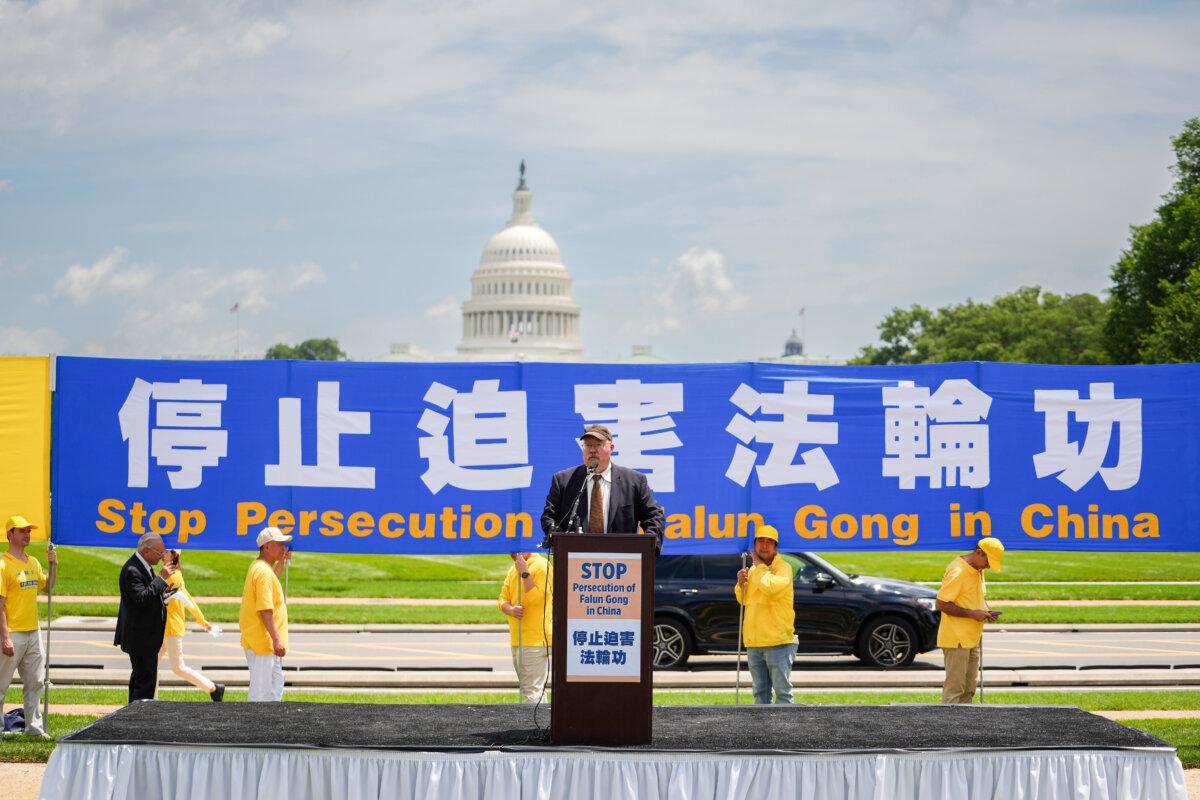
Shortly after the launch of Shen Yun Performing Arts, halfway across the world, Chinese Communist Party (CCP) officials believed they had the perfect plan to drive the American arts group out of business: They would flood the market with dozens of competing groups—60, to be precise—and that would be the end of it. After all, who wouldn’t want to see a Chinese performance that was officially state-backed over one put on by a bunch of New York-based dissidents trying to revive “5,000 years of Chinese civilization”?
Very few people, it turns out.
The state-backed groups hardly made a splash, and are little remembered. Meanwhile, Shen Yun—now nearing its 20th year—draws recognition and full theaters all around the world every season.
Spotlight on the CCP’s Greatest Fear
The CCP has had its eye on Shen Yun from the group’s inception. That means even before the regime knew the contents of its two-hour shows—the ethnic and folk dances highlighting some of the 50-plus ethnic minority groups of China, peoples such as the Mongolians and Tibetans whose cultures the regime has tried to erase; or the bel canto songs in Chinese with lyrics about the Creator, heaven, or the meaning of life in stark contrast with the atheist agenda the CCP imposes on the Chinese; or the story-based dances that paint a vivid picture of folk heroes, emperors, and other prominent figures from a Chinese history the CCP has sought to rewrite—the CCP already opposed Shen Yun.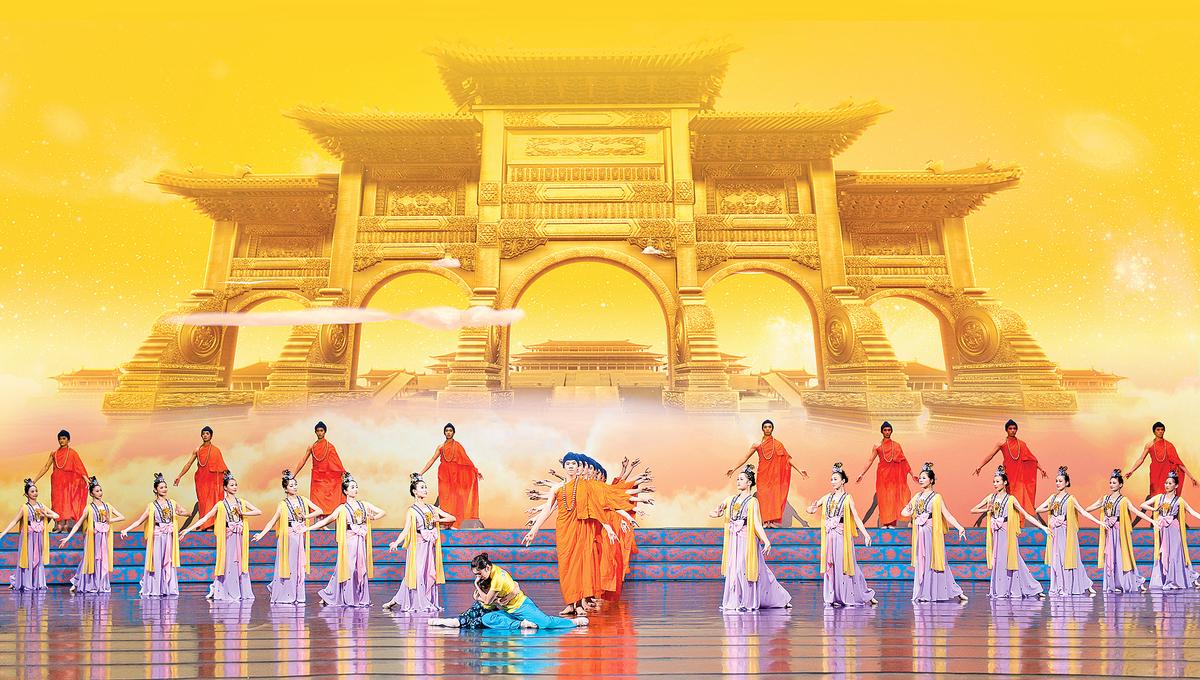
It did so for a single, but significant, reason: Shen Yun’s founding artists practice Falun Gong.
Falun Gong, also known as Falun Dafa, is a peaceful spiritual practice centered around the principles of truth, compassion, and tolerance. Outside of China, it’s widely regarded as a religion.


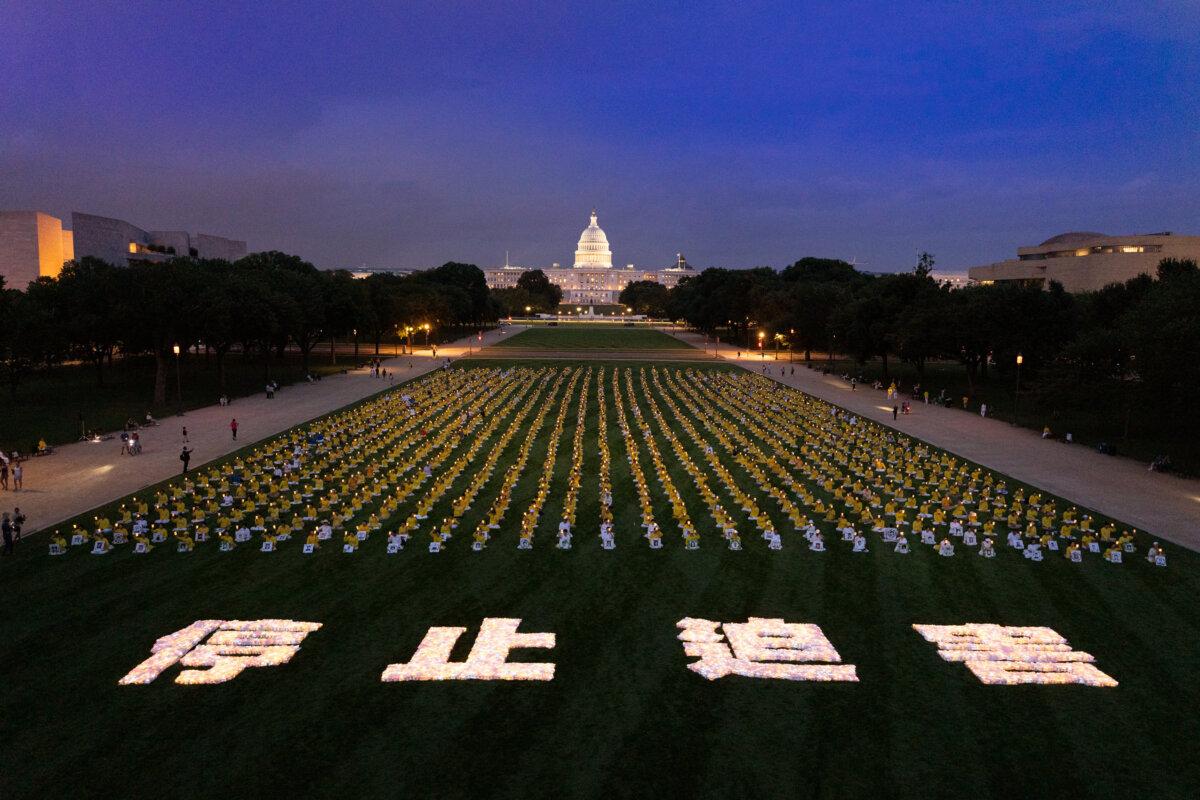
But in China, where religious activity outside of state control is criminalized, Falun Gong practitioners have faced violent persecution since 1999. Human rights organizations and The Epoch Times have documented cases of mass arrests, forced labor, torture, brainwashing, and even live organ harvesting of Falun Gong practitioners by the Chinese regime, and that persecution continues unabated today.
The practice was introduced to the public in the early 1990s and saw widespread popularity that put the number of people practicing Falun Gong between 70 million to 100 million by the end of the decade, according to official estimates. By 1999, most people in cities in China had seen people practicing the five meditative exercises of Falun Gong in public parks, and most people had heard of the qigong-like practice.
The persecution was initiated by then-CCP leader Jiang Zemin, who, insiders revealed, had what seemed like an irrational hatred and even jealousy of Falun Gong. But the persecution was also meant to cement his grab for power. Like the violent suppression campaigns the communist regime launched every decade or two—the Tiananmen Square massacre, the Cultural Revolution, the treatment of civilians during the Great Famine—the dictator believed that, with the force of the state, he could “eliminate” Falun Gong in short order.
Chen Yonglin was stationed at the Chinese Consulate in Australia beginning in 2001, where he was tasked to spy on Falun Gong practitioners, whose compassion eventually inspired Chen to expose these transnational repression efforts.
Falun Gong is a top threat to the CCP, Chen said, but they would describe their efforts to eliminate Falun Gong as a losing battle because peaceful demonstrations continue and practitioners refuse to renounce their beliefs.
From Diplomatic Pressure to Bomb Threats
The mission to revive a once-lost civilization is bold enough on its own, but what happens when that civilization is one a well-resourced authoritarian regime has tried for the better part of a century to erase?The CCP’s inability to “eliminate” Falun Gong is something insiders have told The Epoch Times plagues Xi Jinping, the current party leader. CCP officials overseas work hard to try to prevent Xi from witnessing any demonstrations related to Falun Gong or advertisements related to Shen Yun, but Shen Yun’s popularity and the freedom to demonstrate in democratic societies make this a challenge.
Shen Yun members have told the newspaper that it has been a target for harassment since its inception, sharing wide-ranging evidence from slashed tires to death threats.
There are physical cases, such as multiple instances of vehicle tampering. In one case, a mechanic assessing the tour bus tires said punctures were made to evade detection but calculated to cause a blowout at high speeds on a highway that might flip the bus carrying dozens of performers.

Chinese officials have also long used diplomatic pressure to try to persuade theaters, or in the case of Europe, governments, which often run national theaters, to cancel Shen Yun performances. These efforts have been well-documented by local media as scandals, with European officials expressing offense that a foreign regime had been attempting to dictate to them what constitutes art. In many cases, local officials have shared with media correspondence from Chinese Embassies asking that they cancel or boycott Shen Yun.
But there have also been cases in which the Chinese regime succeeded.
Since 2016, the Chinese regime has added cultural performances and theaters as a subagenda of its global economic development strategy, the Belt and Road Initiative. It created the International League of Theaters of the Silk Road, now an alliance of 130 theaters and cultural institutions worldwide incentivized with predictions of 24 million audience members annually.
What’s Behind the Shen Yun Success Story
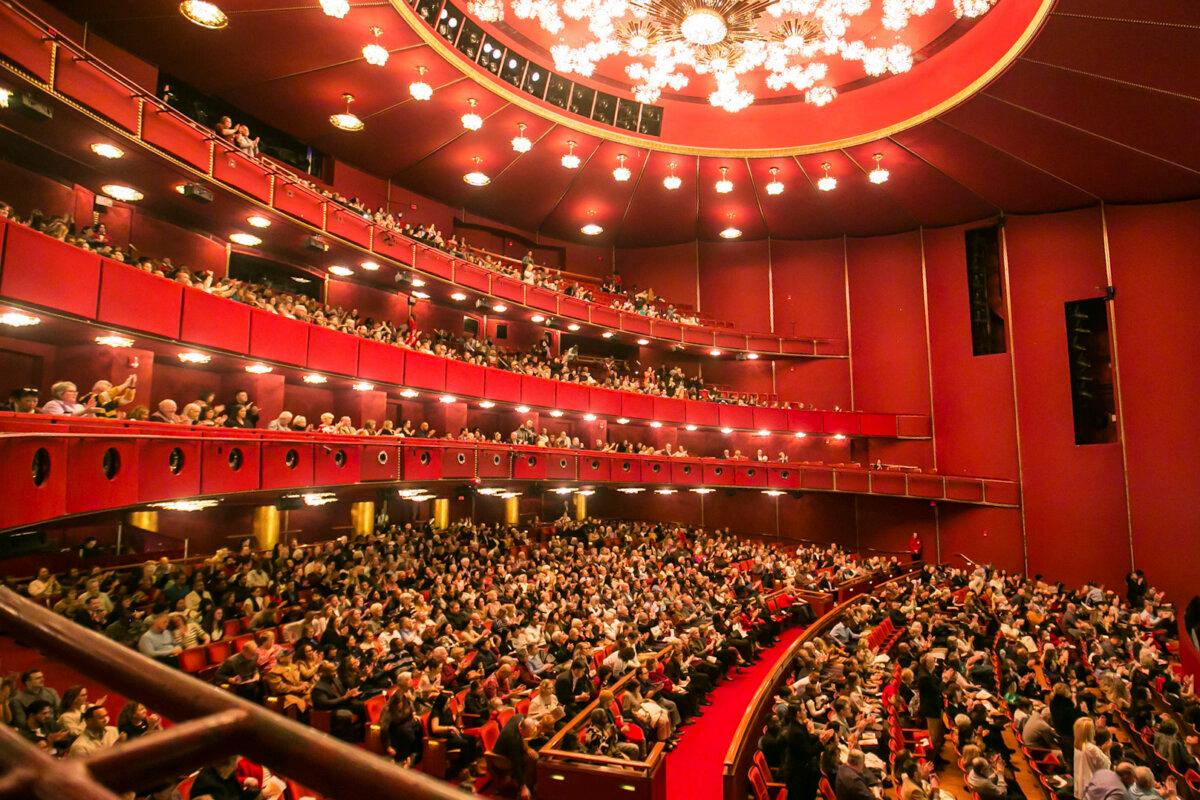
The Epoch Times has been covering audience reactions to Shen Yun performances since 2006, and those responses have been broadly positive, even profound. They applaud the artistry and, oftentimes, the devotion they see the artists have toward preserving a culture once almost lost.Shen Yun is the world’s premier classical Chinese dance company, and its two-hour performance includes about 15 vignettes such as story-based dances, ethnic and folk dances, and original songs sung in the traditional bel canto style in the Chinese language. Many features of its production are unique: a patented digital backdrop that allows characters to move seamlessly between screen and stage, a live orchestra combining ancient Chinese instruments with a Western symphony, and more surprises to be discovered. Based in New York, its mission is to revive 5,000 years of Chinese civilization, which it has recently billed as “China before communism.”
Preity Upala, an actress and former Miss India International, said that seeing Shen Yun last season amazed her even more than when she first saw it 10 years ago.
“When you come to a show like this, it reminds us, I think, who we are, why we came here, that we’re all connected, interconnected. ... It’s not just that they’re coming to have a beautiful experience. They’re actually leaving feeling fulfilled, feeling positive, feeling full of hope,” she said.

Former Argentine Vice President Carlos Ruckauf, a towering figure in the nation’s political history, said he found Shen Yun “truly remarkable.”
“The performance is spectacular, and its resistance to communism is equally commendable,” he said.
It is also not uncommon for audience members to say they never knew China once had all the culture and customs shown in the performance—even audience members who spent the majority of their lives in China.
Chinese are in the minority of Shen Yun audiences, with some even telling The Epoch Times they came out of curiosity for the show that is so strictly banned in China. Their responses are broadly positive, too.
A young man surnamed Chen traveled from China to Taiwan to see a performance and said it felt like a rope thrown to him, pulling him out of the chaos in which he was mired. He shared how he thought Chinese people, more broadly, would react to seeing Shen Yun:
In the grand scheme of things, the CCP is a minuscule part of the story. Last year, audience members around the world shared that they found the CCP’s attempts to dissuade people from seeing the show absurd and felt that even more so after they'd seen a performance themselves.