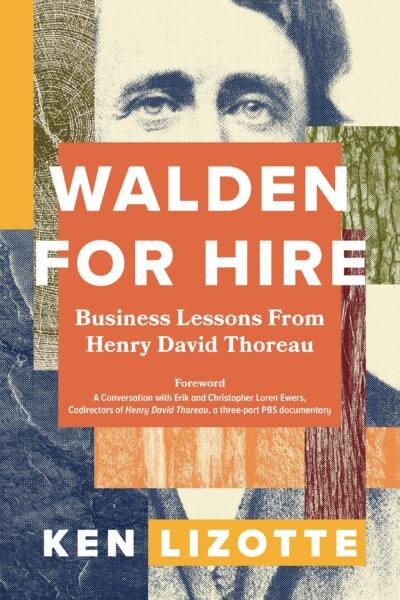
Whenever Henry David Thoreau is brought up in today’s classrooms, it is most likely in philosophy, American literature, or political science courses. But if Ken Lizotte has his way, Thoreau’s genius would be shared in courses on entrepreneurship, business management, and marketing.
Advocating for Entrepreneurship
Lizotte starts his thesis by pointing out that the first chapter of Thoreau’s 1854 masterpiece “Walden” is titled “Economy.” The author notes that this heading is not meant to be viewed as a literary metaphor. Instead, he quotes Mike Frederick, the former executive director of the Thoreau Society, as observing that the chapter is the foundation for Thoreau’s business thinking.Lizotte takes Thoreau’s jolting observation, “The mass of men lead lives of quiet desperation,” and steers it away from existential angst into the realm of career turmoil. The author recalls how the working world of Thoreau’s time offered a surplus of toil and a bare minimum of fulfillment.
Business startups were rare. Most people would spend their adult lives at the same job with no chance for financial advancement.
Thoreau initially pursued a career as a public school teacher following his 1837 graduation from Harvard, but his entrepreneurial spirit percolated one year later.
He teamed up with his older brother, John, to open the Concord Academy in Massachusetts. This startup school presented a different approach to education, most notably in its absence of corporal punishment for misbehaving students.

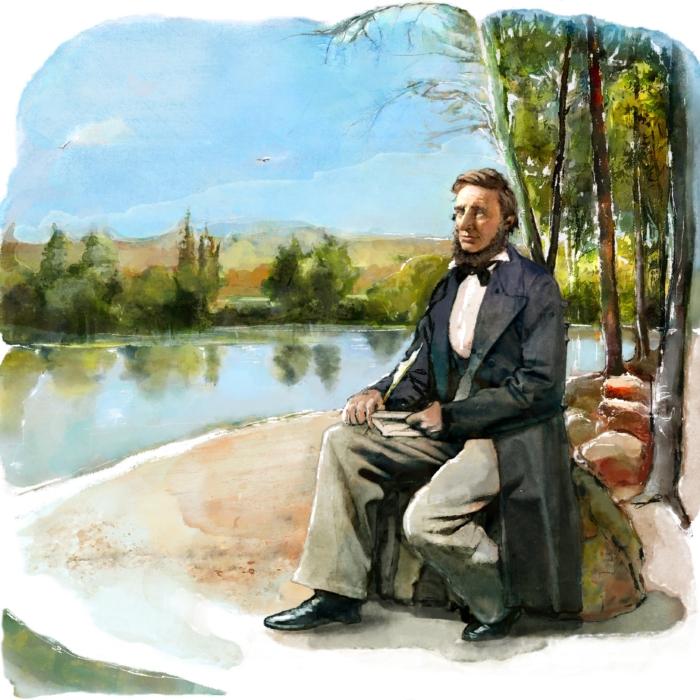
The Sharper Pencil
Rather than return to teaching at public schools, Thoreau joined his father’s pencil manufacturing business. Thoreau’s natural curiosity and expert research skills led him to improve the interior design of the pencils, with the goal of creating a more solid product.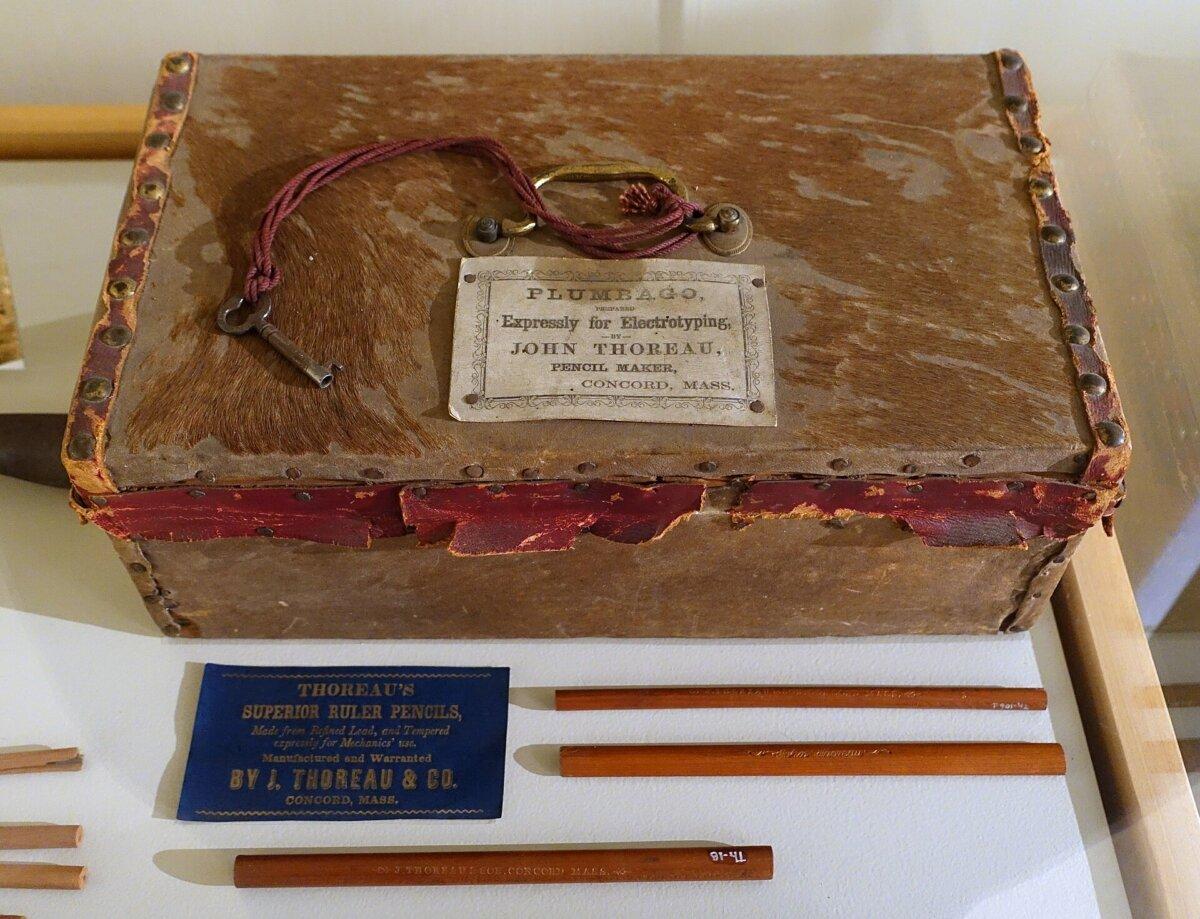
Through repeated experimentation, Thoreau was able to produce a superior pencil. Lizotte quotes historian Henry Petroski in describing how he “worked out all the mechanical details, such as how fine to grind the graphite and how to remove the impurities that made pencil leads scratch.”
Happenings at Walden
When Thoreau opted to build a cabin in the woods near Walden Pond in 1845, Lizotte details how he mostly built the residence by himself, asking for assistance from family and friends only to help with the roof raising. The author adds that Thoreau learned about home building the year before his relocation, which he views as a prescient act of financial planning.The modest structure is yet another tribute to Thoreau’s business mind, Lizotte stresses, since he kept track of all construction costs and stayed within his predetermined budget. This included Thoreau’s money-saving tactic of carrying most of the materials to the site on his back rather than renting a buggy for transportation.
While Thoreau intended to use his time at Walden Pond for writing, he knew that he needed to earn money. Through his skills and a fortuitous connection, he enjoyed a cash flow during this time.
Lizotte details how Thoreau generated an income by working as a surveyor and a carpenter, and at assorted day-labor gigs during this time. He also saved on rent. The cabin was on land owned by his friend and fellow writer Ralph Waldo Emerson. The two worked out a deal in which Emerson waived rental fees in exchange for Thoreau raising beans and vegetables for the Emerson family.
“Walden for Hire” also celebrates Thoreau’s genius for self-marketing. To gain clients as a surveyor, Thoreau took the unusual step of printing handbills promoting his service, with the promise of “the best methods known” for land surveying.
A prolific writer, he bombarded the newspapers and journals of his era with articles and poems that put his name in front of audiences he sought to influence. He booked himself in public speaking engagements; he created wall posters and handbills to advertise his appearances.
Throughout “Walden for Hire,” the Thoreau that emerges is wildly different from the image of the gentle philosopher who advocated for transcendentalism and civil disobedience.
The political activist side of Thoreau is absent here, with scant mention of his night spent in jail for refusing to pay a poll tax and his involvement in the Underground Railroad.
If anything, “Walden for Hire” should inspire a re-reading of Thoreau’s work. Through Lizotte’s spectrum, there is far more to Thoreau than we might realize.