Many Americans may be uncomfortable making investment decisions. But giving young families a stake in the markets could help build a true investment culture.
How the Trump Account Works
The Trump Account is a savings and investment account built to help families give their children a head start.According to the Internal Revenue Service, the Trump Account features a pilot program contribution of $1,000 from the Treasury Department for children born between Jan. 1, 2025, and Dec. 31, 2028. The children must be U.S. citizens and have a valid Social Security number to receive the contribution.
Parents of children born earlier than 2025 can still open an account; they just won’t receive any seed money from the federal government.
The money in a Trump Account is invested in low-cost index funds or exchange-traded funds (ETFs). So, it will have the chance to grow over time without being taxed each year. Contributions and any earnings compound, which means your child’s balance can grow faster the longer it stays invested.
This is a long-term account. By starting early, growth works for the child. Withdrawals after the growth period are taxed as ordinary income, and there may be limits on taking money out before adulthood.

U.S. Treasury Department Oversees Trump Accounts Program
The Treasury Department will oversee the accounts programs and has broad authority to partner with private financial institutions. The One Big Beautiful Bill Act requires these accounts to invest in low-cost index funds, with annual fees capped at 0.1 percent.Contributions and Investments by Family and Employers
According to Intuit TurboTax, total contributions per year, after the federal seed money, are $5,000. Out of that amount, the parents’ employers can contribute up to $2,500, and the family can make up the rest annually.According to Vanguard, Trump Account funds must be invested only in certain eligible investments, which are generally low-cost stock index mutual funds or ETFs. The underlying securities of these ETFs must be composed of predominantly U.S.-based companies.
Projecting Trump Account Balances
The Council of Economic Advisors (CEA) estimated the return for Trump Accounts by age 18 would be $303,800. This figure factored in full yearly contributions and an average return (historically around 10 percent) of the U.S. stock market.If the maximum contributions were continued until the age of 28, the account would be worth $1,091,900.
Taxes on Trump Accounts for Minors
Investment earnings are taxed-deferred according to Intuit TurboTax. Withdrawals aren’t allowed until the child turns 18. After that, then only family contributions made with after-tax dollars are free. The initial $1,000 deposit, employer contributions, and investment earnings are taxed as ordinary income.Trump Account vs. 529 Plan
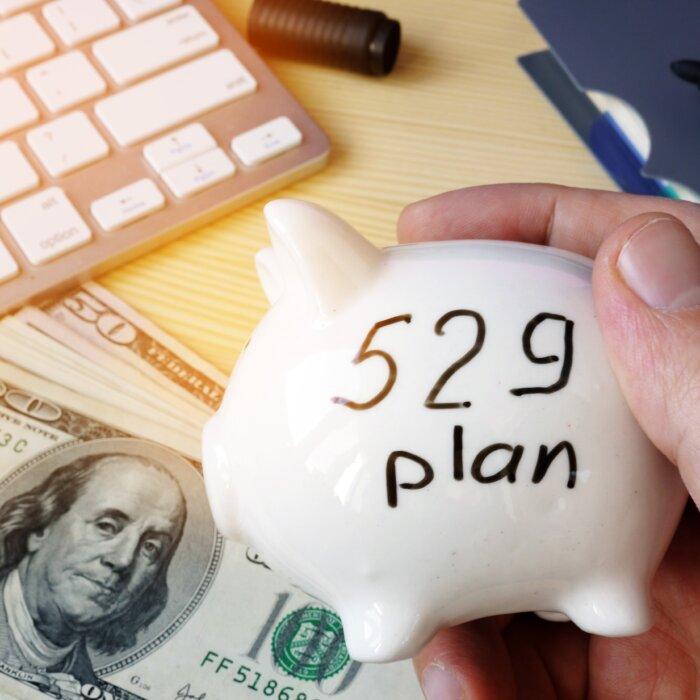
Both Trump Accounts and 529 plans are for minors. But the end goals of these two programs differ. The 529 plan is geared toward saving for educational expenses, while the Trump Account targets long-term financial growth.According to J.P. Morgan, 529 plans grow tax-free for qualified education expenses, while Trump Accounts are taxed when withdrawn as ordinary income.
The 529 plan enables investors to transfer funds to other eligible family members. Trump Accounts must stay in the name of the original minor.
Trump Accounts are reserved to one fund tracking the performance of the U.S. stock market. In comparison, 529 plans offer a wider range of managed investments.
There also are higher contribution limits for 529 plans. Trump Accounts have a $5,000 annual limit, while 529 plans have a $190,000 annual limit if married and a $95,000 annual limit if single.
Trump Accounts Expanding Equity Ownership
Stock ownership in America averaged 62 percent in 2025, according to Gallup. But the percentage of adults earning $100,000 or more was the highest at 87 percent.Forty-two percent of those Americans with a high school education or less owned stock. And the number dropped to 28 percent for those households earning less than $50,000.
The Trump Account plan aims to democratize the stock market. According to the Treasury Department, “President Trump is restoring the promise of our Founding, revitalizing the social contract, and helping secure American prosperity for the next 250 years.”