This copy is for your personal, non-commercial use only. Distribution and use of this material are governed by our Subscriber Agreement and by copyright law. For non-personal use or to order multiple copies, please contact The Epoch Times Reprints.
Twenty-six months ago, I was carrying $87,000 in combined debt: $31,000 in student loans, $24,000 on credit cards, $18,000 on a car loan, and $14,000 in medical bills. My minimum monthly payments consumed $1,870—nearly 35 percent of my take-home pay. The weight of it affected everything: my sleep, my relationships, and my ability to imagine a future beyond the next payment due date.
Today, the balance is zero. I did it using a modified zero-based budgeting system that forced every dollar to justify its existence. Here’s exactly how it worked.
What Zero-Based Budgeting Actually Means
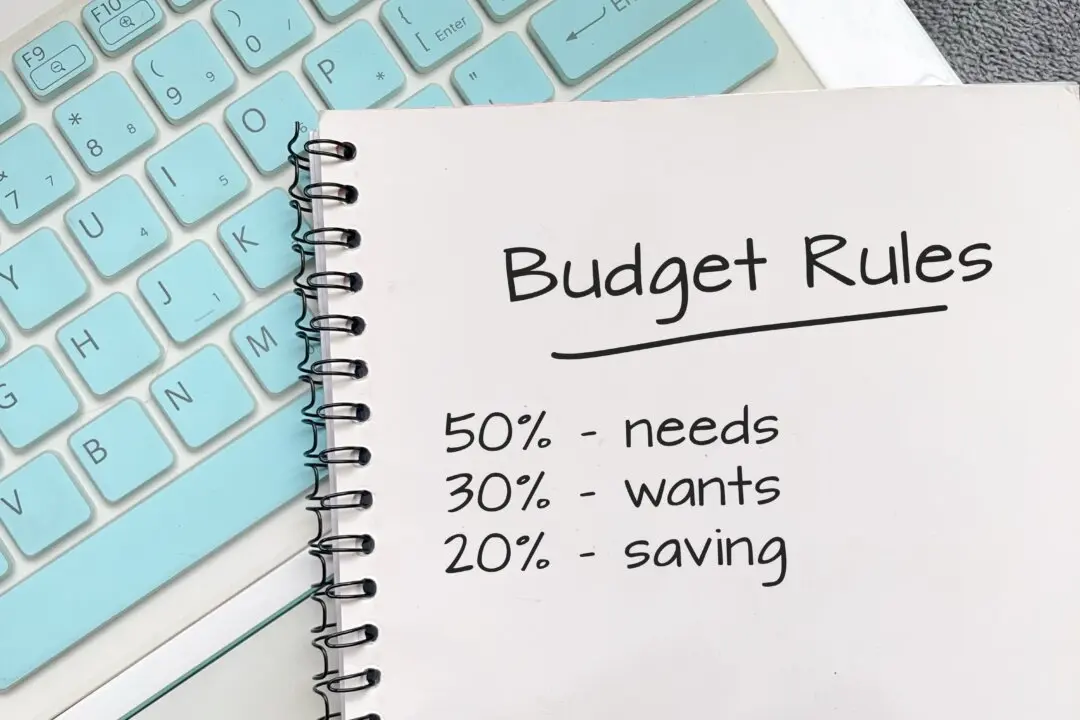
The concept is simple: your income minus all planned expenditures (including savings and debt payments) equals zero. Every dollar has an assigned purpose before the month begins. There’s no “leftover” money floating around to be spent impulsively.
Unlike traditional budgeting, which tracks spending after the fact, zero-based budgeting is prescriptive. You decide where money goes before you earn it, not after you’ve already spent it. According to a Ramsey Solutions study, people who use a monthly written budget pay off 19 percent more debt per year than those who don’t—and zero-based budgeters pay off 23 percent more.
The psychological difference is massive. When you give every dollar a job at the beginning of the month, impulse spending drops dramatically because there’s no “extra” money. You’ve already allocated it. Spending outside the budget requires a conscious decision to take funds from another category—a much higher friction point than simply swiping a card.
My Pre-Budget Reality Check
Before building my zero-based budget, I did a brutal audit of my spending over the previous three months. The results were uncomfortable:
I was spending $620 a month on food for a single person—split between $280 on groceries and $340 on restaurants and delivery. I had $247 a month in subscriptions, many of which I barely used. My “miscellaneous” spending averaged $430 a month—a category so vague it was essentially a permission slip for impulse buys.
The audit revealed approximately $900 a month in spending that I could reduce or eliminate without a meaningful impact on my lifestyle. That $900 became the fuel for my debt payoff. Combined with my minimum payments of $1,870, I was directing $2,770 a month toward debt—roughly 51 percent of my take-home pay.
The Monthly Zero-Based Budget Template
Every month, I build my budget in this exact priority order:
Priority 1: Four Walls ($2,050). Housing ($1,200 rent), utilities ($180), basic groceries ($350), and transportation ($320 for car insurance, gas, and parking). These are survival expenses that get funded first, no exceptions.
Priority 2: Minimum debt payments ($1,870). Every minimum payment on every debt, on time, every month. Late fees and penalties are budget killers that I refused to absorb.
Priority 3: Accelerated debt payment ($900). The money freed from my spending audit went entirely to extra principal payments, targeted at my highest-interest debt first using the avalanche method.
Priority 4: Small emergency fund ($200). I maintained a $1,000 emergency fund throughout the payoff period—enough to cover a car repair or medical copay without derailing the plan. A larger emergency fund would come later, after the debt was cleared.
Priority 5: Everything else ($380). Personal care, minimal entertainment, clothing basics, phone bill, and any other necessary expenses. This category was ruthlessly minimized but not eliminated. Sustainable debt payoff requires some quality of life—otherwise, willpower exhaustion leads to budget blowouts.
Here’s the math: $2,050 + $1,870 + $900 + $200 + $380 = $5,400 (my monthly take-home pay). Income minus expenses equals zero.
The Psychological Warfare of Debt Payoff
The hardest part wasn’t the math—it was the psychology. Month after month of aggressive payments while watching friends take vacations, upgrade their cars, and enjoy restaurants created a constant tension between my financial goals and my emotional well-being.
Three strategies kept me on track:
Visual progress tracking. I created a simple thermometer chart on my refrigerator showing my total debt declining. Watching the colored line grow toward zero provided a visceral reminder that the sacrifice was working. Behavioral research from the University of Chicago shows that visual progress indicators increase goal completion rates by 42 percent.
Milestone rewards. For every $10,000 in debt eliminated, I allowed myself a $50 reward—usually a nice meal or a small item I’d been wanting. The key was keeping rewards proportional and planned, not reactive.
Community accountability. I joined an online debt-free community where members share monthly progress updates. Knowing that others would see my numbers kept me honest during months when I was tempted to ease up.
The Debt-Free Acceleration Effect
Something remarkable happened around month 14: momentum took over. As each debt was eliminated, the minimum payment for that debt rolled into the extra payment for the next debt. My effective monthly debt payment grew from $2,770 to over $3,400 without any increase in income.
By month 20, I was throwing $4,100 a month at my remaining car loan—nearly triple its original minimum payment. The last $18,000 fell in just five months.
Life After Zero
The $2,770 a month I was spending on debt now flows into three buckets: a fully funded six-month emergency fund (complete), retirement investments via a Roth IRA and 401(k), and a home down-payment fund. At current contribution rates, I’ll have a 20 percent down payment within two years.
The zero-based budget didn’t end with the debt. I still build one every month. The categories have shifted from debt payments to wealth building, but the discipline of assigning every dollar a purpose before the month starts remains the single most powerful financial habit I’ve ever developed.
If you’re starting your own financial reset, the zero-based approach forces a level of intentionality that looser budgeting methods simply can’t match. It’s not easy—but nothing that eliminates $87,000 in debt in 26 months was going to be easy.
The Bottom Line
Zero-based budgeting isn’t about restriction—it’s about intention. It transforms passive spending into active decision-making, and that shift alone is powerful enough to eliminate massive debt in a fraction of the time it would take with minimum payments. If you’re carrying debt that feels insurmountable, know this: I started where you are, and the distance between $87,000 in debt and $0 was exactly 26 monthly budgets.
By Peter Daisyme
The views and opinions expressed are those of the authors. They are meant for general informational purposes only and should not be construed or interpreted as a recommendation or solicitation. The Epoch Times does not provide investment, tax, legal, financial planning, estate planning, or any other personal finance advice. The Epoch Times holds no liability for the accuracy or timeliness of the information provided.