This copy is for your personal, non-commercial use only. Distribution and use of this material are governed by our Subscriber Agreement and by copyright law. For non-personal use or to order multiple copies, please contact The Epoch Times Reprints.
(L-R) Wilbur Wright (1867–1912) and Orville Wright (1871–1948), the two brothers who invented and flew the first practical airplane, circa 1903. Hulton Archive/Getty Images
America has long been home to the tinkerer. Ben Franklin, Thomas Jefferson, Eli Whitney, Cyrus McCormick, and Robert Fulton are only some of the more famous inventors and innovators who, along with thousands of others, dabbled with technology and machines in their homes, barns, garages, and blacksmith shops.
In his 2013 book, “The Tinkerers: The Amateurs, DIYers, and Inventors Who Make America Great,” Alec Foege applauds these past and present builders and designers, noting that a tinkerer “can be anyone with big ideas and the time to pursue them.”
Add persistence and patience to that definition, and Wilbur and Orville Wright become premier examples of the American tinkerer.
Fascinated With Flight
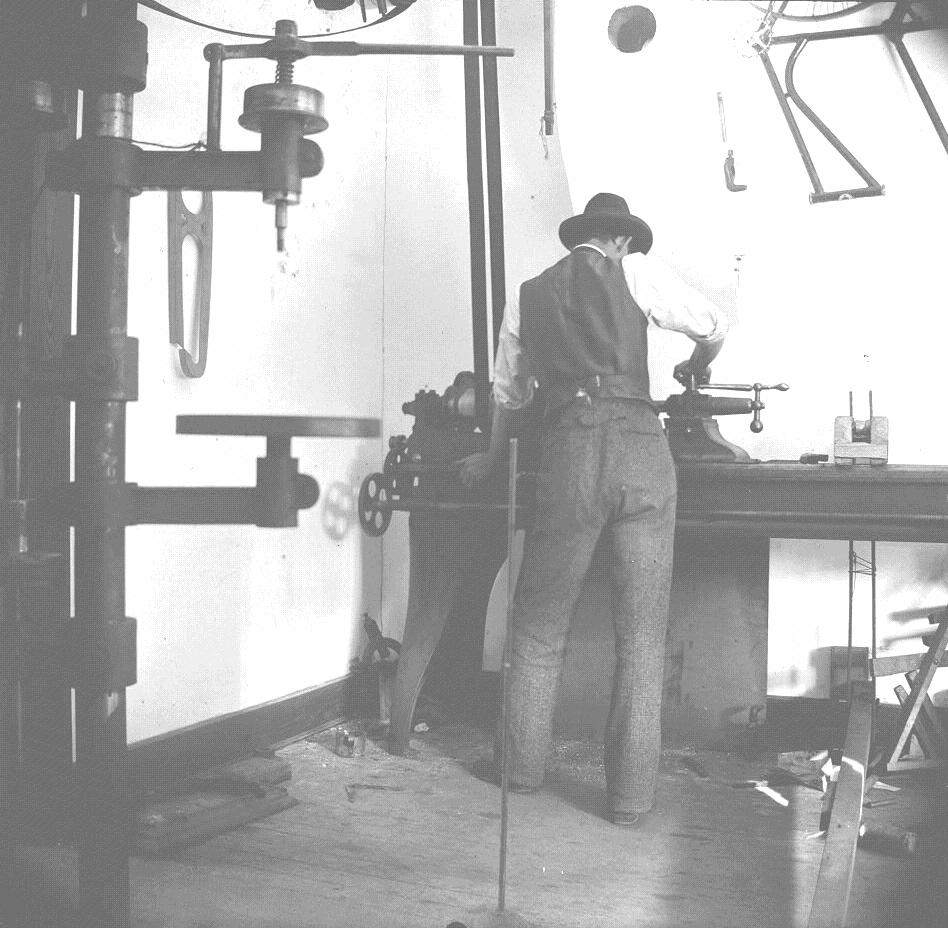
Unlike their other three siblings who reached adulthood, the Wright brothers never attended college. Nor did they marry—Wilbur once told reporters that he “didn’t have time for both a wife and an airplane.” With a bicycle craze sweeping the nation, the brothers opened Wright Cycle Shop in 1892. Soon they began designing and making their own bikes, seeking to improve, for instance, the coaster brakes of existing models.
Wilbur Wright working in the Wright brothers' bicycle shop. Library of Congress. Public Domain
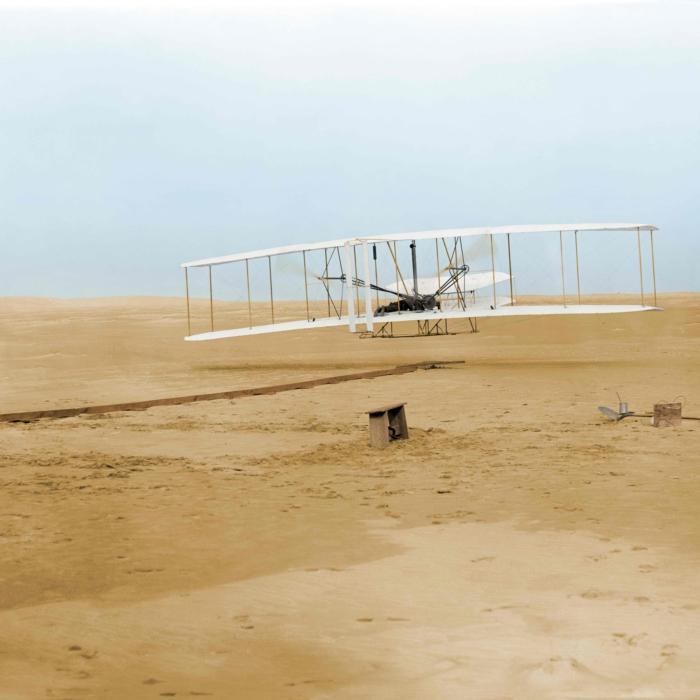
It was in this shop that they built their first airplane. Fascinated since boyhood by the possibilities of flight, they began their serious pursuit of aeronautics in 1896, when Orville fell ill from typhoid fever, and Wilbur, while caring for him, read accounts of the early aviator Otto Lilienthal and his death while flying experimental gliders. The brothers became obsessed by the possibilities of a heavier than air machine, studying the flight of birds for hours and building their own gliders, which they began testing in 1901 at Kill Devil Hills near Kitty Hawk, North Carolina, a part of the Outer Banks known for its winds and sand dunes.
At 10:35 on the morning of Dec. 17, 1903, Orville Wright made history operating the first manned airplane, a flight of 12 seconds. Their fourth flight of that day, with Wilbur at the controls, lasted 59 seconds and covered 852 feet. The brothers’ resolve had paid off.
Taking the Slow Road to Fame
That same tenacity served the brothers well in the first years after the flight.
At first, the press and the public largely ignored this historical breakthrough, a disregard not altogether displeasing to the Wrights. They were shy by nature, they wanted the chance to further develop their Flyers without publicity, in part to protect the design of their plane from others, and the pleasures and challenges of flight took much of their time and attention. The improvements in their Flyer and their piloting skills were demonstrated in 1905 at a field just outside of their hometown of Dayton when the plane booked 24 miles and stayed aloft for 39 minutes.
Meanwhile, critics both at home and abroad questioned whether the Wrights had ever actually gotten the Wright Flyer off the ground. Confronted by those doubters, and with other aerial pioneers beginning to win acclaim, the Wrights became intent on claiming credit for what they had done and how.
At the Peak
Tending to pilot Orville Wright or passenger Lt. Thomas E. Selfridge after the crash of the Wright Military Flyer at Fort Myer, Va. Library of Congress. Public Domain
In the year 1908, the Wrights showed the world what the Flyer could do. In September, at Fort Myer in Arlington, Virginia, Orville broke all records by flying for more than an hour above an audience of hundreds of government officials. Several days later, with 5,000 people watching, the Flyer crashed, the result of a splintered propeller, killing an Army lieutenant on board and severely wounding Orville. Nevertheless, the Fort Myer demonstrations had erased all doubt. The Wrights and their Flyer were the real deal.
At the same time, Wilbur was dazzling the Europeans. A month before his brother’s appearance at Fort Myer, he took off from a racecourse in Le Mans, flew into the skies above France, and amazed the observers below. A French reporter wrote, “I’ve seen them! Yes! I have today seen Wilbur Wright and his great white bird, the beautiful mechanical bird. ... There is no doubt! Wilbur and Orville Wright have well and truly flown.”
Falling Down
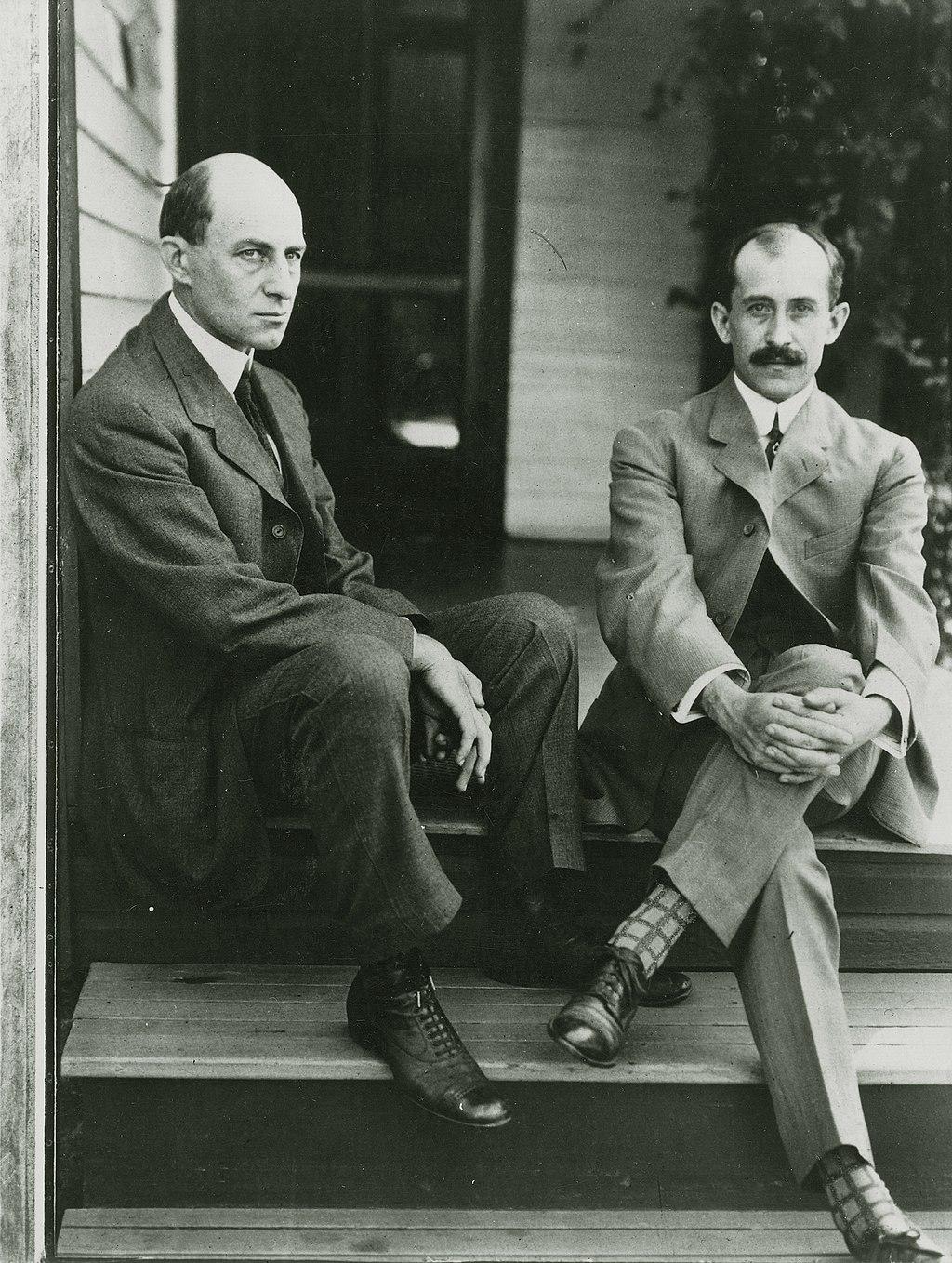
Wilbur (L) and Orville Wright sit on the porch steps of their Dayton, Ohio, home, June 1909. Public Domain
At this point, however, the same dogged tenaciousness that had created the Flyer and made the Wrights the most famous of aviation pioneers now became an enemy rather than an ally. Rather than working to improve their airplanes, the brothers instead became embroiled in a series of court battles of their own making over patent rights, particularly with a daring motorcyclist and aviator, Glenn Curtiss. The determination and perseverance that had lifted them into the clouds they now brought to the courtroom, driven to protect their prestige and what they regarded as their rights.
The result? By 1915, when Orville sold the Wright Company—Wilbur had passed away in 1912 after contracting typhoid—their aircraft were considered second-rate at best.
Had the brothers invented a crystal ball as well as the airplane, they might have seen that they would forever be associated with the invention of the airplane and that their names would remain household words in America. To honor their achievements and their dreams of flight, in 1969, Apollo 11 astronaut Neil Armstrong carried several wooden splinters and cuts of fabric from Wilbur and Orville Wright’s Kitty Hawk Flyer to the moon and back, and parts of the Flyer are resting on Mars as well.
What arts and culture topics would you like us to cover? Please email ideas or feedback to [email protected]
Jeff Minick has four children and a passel of grandkids. He has written two novels, “Amanda Bell” and “Dust on Their Wings,” as well as “Learning as I Go” and “Movies Make the Man.” You’ll find more of his writing at JeffMinick.substack.com.