Some books are great one-time reads. They capture your attention and keep you hooked. Others have a softer pull, but a longer-lasting effect. They’re the ones you revisit like favorite memories, reveling in their familiarity. For me, “The Lord of the Rings” falls under the latter category.
I know I’m not alone when I say Tolkien’s trilogy was a large enough part of my childhood actually to be a fond memory. But even more than that, it’s a font of rich beauty that never disappoints. Each time I reread it, something new stands out, and my thoughts return to it. These deep and timeless books hold a host of themes that are not only beautiful but practical and continue to inspire readers everywhere.
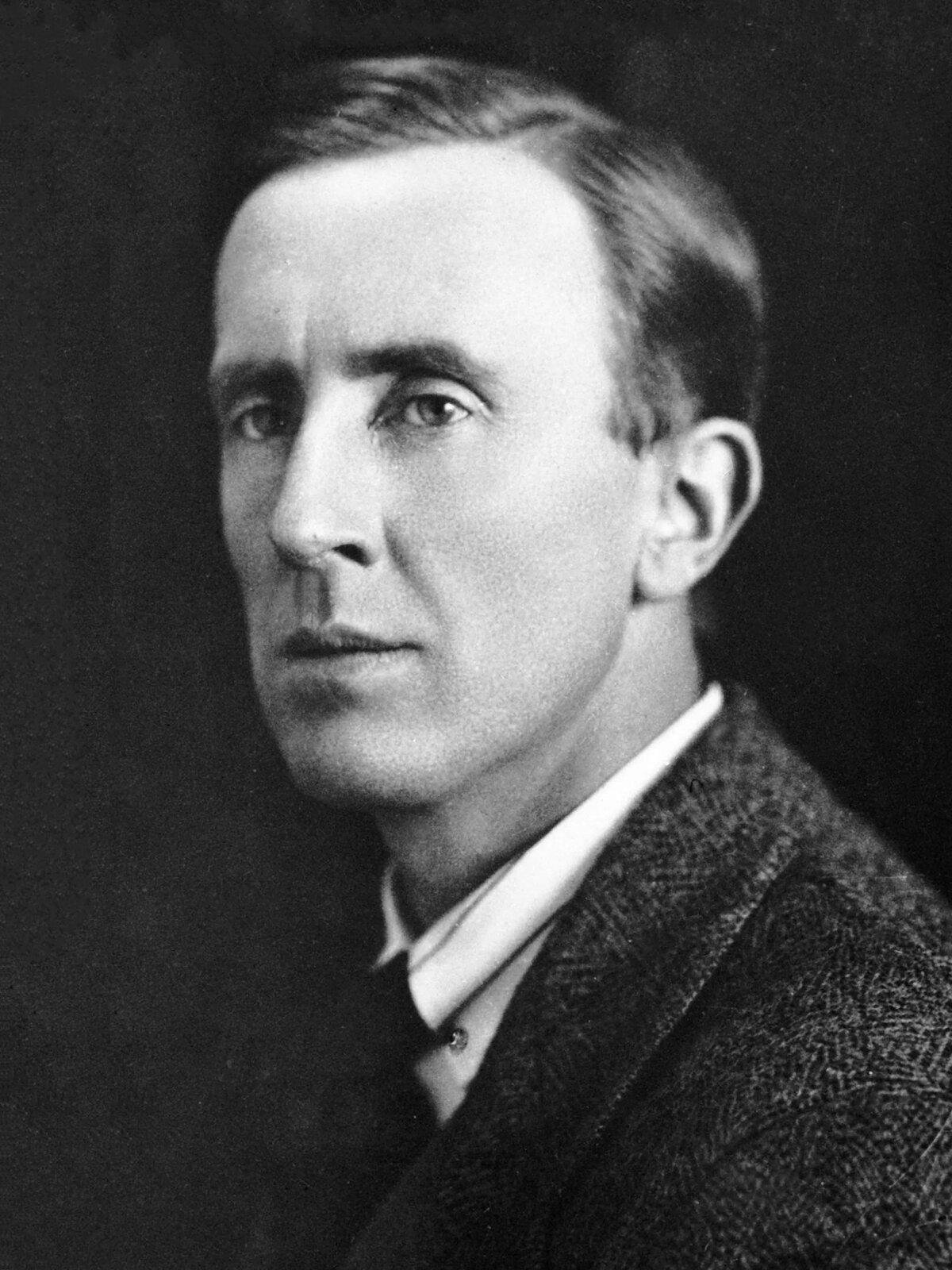
J.R.R. Tolkien, circa 1925. Having witnessed the horrific destruction of WWI, Tolkien intentionally crafted an epic where the world is saved not by machines or warlords, but by the virtues of humility, faithful friendship, and divine grace. Public Domain
Hobbit Humility
From the beginning, we’re told hobbits keep to themselves. They want nothing to do with the outside world or the troubles of “big folk,” and they’d simply like to be left alone. Because they don’t care to dominate nature or manipulate each other, they have a very integrated relationship with the land, minimal government, and a decentralized community.On the one hand, their isolationism can become selfishness, and that’s an obstacle we see the hobbits having to overcome. An elf, Gildor, warns them early on, “It’s not your own shire. ... You can fence yourself in, but you cannot fence it out.” What the hobbits cling to most is what they will lose if they cannot go beyond themselves and participate in Middle-earth.
Yet, when balanced, this attitude is precisely why the hobbits are so resilient against the ring. For Tolkien, the ring is the “will-to-power.” Coined by the 19th-century German philosopher Friedrich Nietzsche, this concept is about self-determination: the subjugation of anything and anyone to one’s own will. It feeds the desire for control and manipulation, and is closely tied to egoism. Tolkien didn’t think power itself was good or bad. But he believed that, when striven after, it corrupts the seeker’s intentions and sows division among people.
The hobbits are humble and embrace the little joys of a simple life. Where hobbits are deeply content with what they have rather than constantly seeking more, the will-to-power says enough is never enough and is willing to sacrifice everyone for oneself. Frodo does the exact opposite. Offering to take the ring to Mordor isn’t just a noble offer. It’s a death sentence he’s willingly shouldering. He sacrifices himself for the preservation of the Shire and his fellow hobbits. And he only has the strength to do so because of his disinterest in power and love of home.
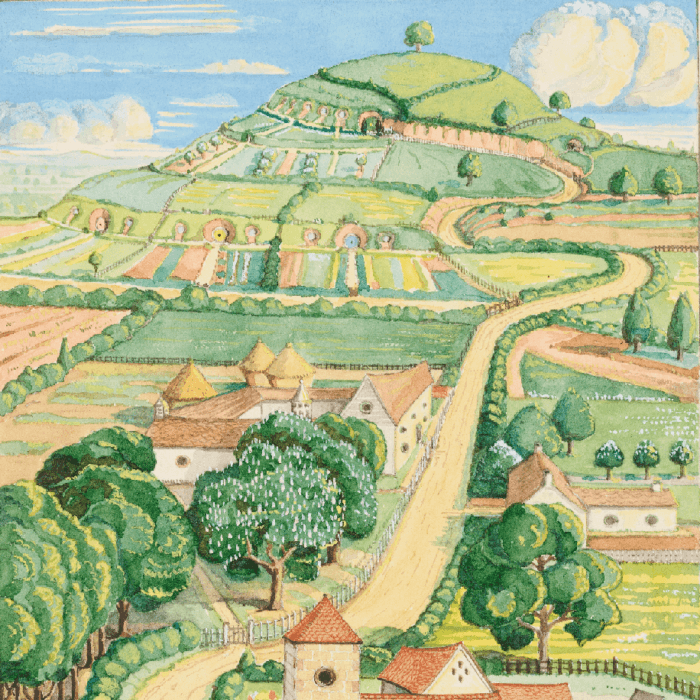
Hobbits are contradictory creatures. Their isolationism must be overcome, but it’s their love and desire for home that makes them so successfully resilient. Rather than strength, intelligence, or military prowess, it’s gardens, friends, and the smoking of good pipes that give them endurance amid evil and fortitude to fight for the good.
Lord of the Rings 6. Mark Pokorny/Warner Bros Pictures
Redemptive Risibility
Throughout the trilogy, and even in Tolkien’s own life, there is a continual emphasis on friendship and laughter. He believed the strongest antidote to evil is love, even when the world’s bleakness makes love seem abstract and irrelevant.Tolkien saw friendship not merely as a consolation in this vale of tears, but as an absolute necessity to overcome life’s evils. This is shown countless times throughout the “The Fellowship of the Ring,” with their love serving as a foil to the ring. Where the will-to-power manipulates, love between friends sacrifices for one another. Where the will-to-power dominates, laughter dismantles and dispels evil.
When Frodo announces to the Council, “I will take the Ring ... though I do not know the way,” it’s not just a navigational request. He understands that evil cannot be faced alone and asks for the help of friendship. Even when he doubts this after Boromir’s betrayal, it’s Sam’s stubborn fidelity that sheds doubt away. And we continue to see that it’s Sam’s constant camaraderie that sustains hope and perseverance for Frodo.
Friendship provides deep emotional support, but just as often, its laughter and lightheartedness defeat the will to power. My favorite scene in this is in “The Two Towers,” when Sam and Frodo joke about their futures as famous heroes, telling their crazy adventures to fellow hobbits.

A flying Ringwraith corners a helpless Frodo in "The Two Towers." This terrifying moment depicts the theme of humility as Frodo survives through the friendship of Sam and the grace of an unexpected rescue. New Line Cinema
Frodo laughs, “a long clear laugh from his heart. Such a sound had not been heard in those places since Sauron came to Middle-earth. To Sam, suddenly it seemed as if all the stones were listening and the tall rocks leaning over them. But Frodo did not heed them; he laughed again.”
Their laughter dispels the stifling effect of evil, providing relief and renewing hope. But I find this especially touching in light of Tolkien’s own life. Like the rest of his generation, he suffered from trauma and disillusionment after World War I, as well as dismay at the rapid industrialization of his rural country. In the darkness of his world, he found solace and strength in telling and hearing stories with his friends in their literary club, the Inklings. Just as laughter returns Sam and Frodo to a sense of themselves and love of home, so it did for Tolkien and his friends, C.S. Lewis, Charles Williams, and the others, all while drinking at the pub and writing fantasy.
The Aid of Grace
A lesser-known theme is the role of Providence. We see it at Weathertop in “The Fellowship of the Ring” when the Nazgul surround the hobbits. Up until this moment, evil and danger have all been physical. But rather than force, the ringwraiths use terror to overwhelm the hobbits, causing their division. Once separated from each other, Frodo is overcome with temptation and puts on the ring. He then collapses, crying, “Elbereth, Gilthoniel” before stabbing the rider in the foot, which prompts the wraith to stab him back.Here, Frodo invokes the ancient Valar, asking for spiritual help against a spiritual evil. Assistance comes at his behest, and as Tolkien writes of Frodo, “he heard himself cry.” Just as grace is not of our own doing and not against our will, so is the supernatural aid given to Frodo.
This language is used again when Frodo accepts the ring, “as if some other will was using the same voice,” and often when he fights its temptations. When Frodo first feels Sauron actively looking for him while wearing the ring, he’s overwhelmed with despair and hears a voice telling him to give up. It’s only thanks to the nudging of another power working within him, “neither the Voice nor the Eye,” that he becomes aware of himself and takes off the ring.
Not only does this theme depict the powerful reality of grace and the quiet way it perfects nature, but it also reminds us of the supernatural. It deepens the world Tolkien masterfully created as it hearkens back to the mythology of Middle-earth, giving a dynamic sense of time to this fantasy. But it is also a beautiful, encouraging truth he himself believed in his own life. God does not leave us to our own devices. He is actively involved in our lives, which are guided by a loving plan.
Tolkien is rightfully known for eucatastrophe. For the victory in a story when all hope seems lost and everything appears doomed. However, there would be no eucatastrophe without the theme of grace and Providence. Gandalf says, “For even the wise cannot see all ends,” and that is only true in the mystery of a world that can’t be calculated or predicted, one that Providence guides.
What arts and culture topics would you like us to cover? Please email ideas or feedback to [email protected].