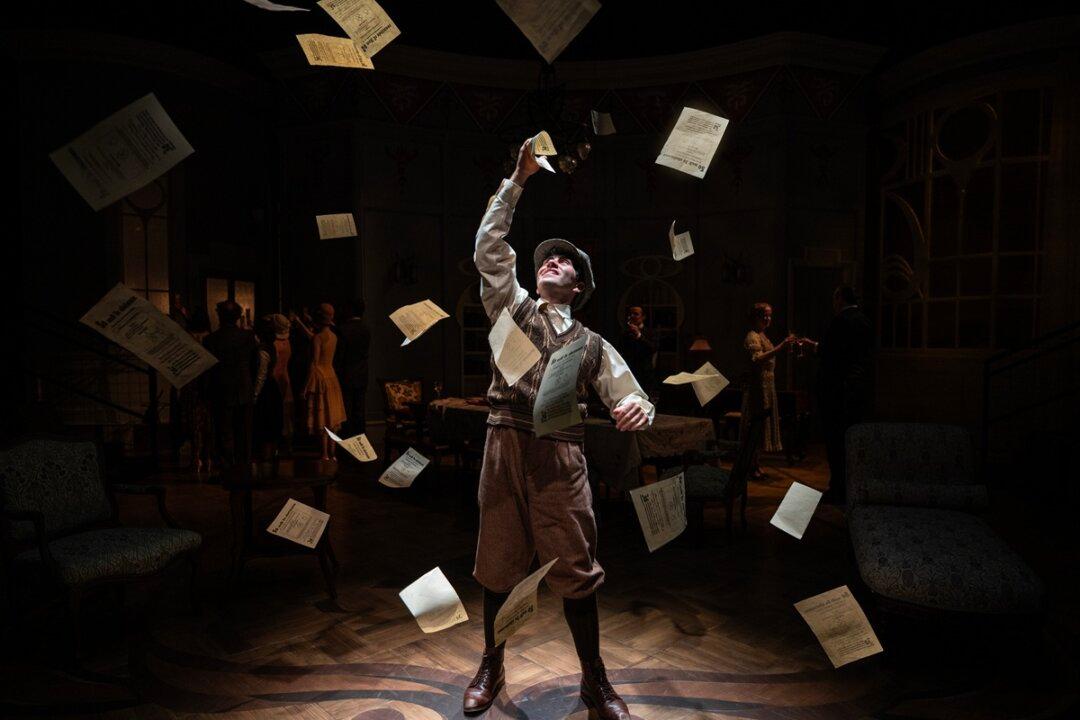
A Murder, a Theory, and a Crumbling Mind
Adapted in 2003 from Dostoevsky’s classic by Marilyn Campbell and Curt Columbus, the theatrical version is a gripping murder mystery with an intense philosophical theme. Many consider the novel a masterpiece because of its fascinating combination of mental introspection, moral concerns, and engrossing storytelling.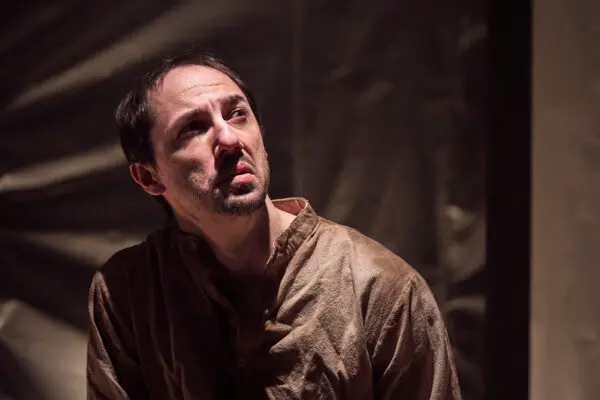
The story begins with the young Raskolnikov living in the confined, airless garret in St. Petersburg, Russia. He believes he’s an extraordinary man who, like Napoleon, is justified in committing a minor evil for a greater good. He decides to murder Alyona Ivanovna, a nasty pawnbroker, convincing himself that he will use the money he steals from her to do good deeds.
Raskolnikov’s idea of the superior man standing above social virtue has been used in several movies. These include Woody Allen’s 1989 “Crimes and Misdemeanors,” about a man grappling with intense guilt and the concept of cosmic luck; Martin Scorsese’s 1976 “Taxi Driver”; Alfred Hitchcock’s 1948 “Rope,” in which two young men believe they can commit the perfect crime; and Richard Fleischer’s 1959 film “Compulsion,” modeled after Leopold and Loeb, who in 1924 brought Raskolnikov’s fictional theory into reality when they sought the thrill of committing the perfect murder.
As a devout Christian, Dostoevsky created Raskolnikov to show what happens to a man’s soul and consciousness when he steps outside God’s moral law. The result is madness and spiritual ruin.


Intimate Staging Brings Dostoevsky’s Darkness to Light
In his fictional narrative, Dostoevsky explained the mind of a criminal in a way that felt eerily real. It feels spine-tingling on the intimate TUTA stage, where the audience can almost touch the performers. The claustrophobic feeling of the drama is emphasized by scenic designers Tatiana Kahvegian and Keith Parham’s use of plastic drapes, Parham’s shadowy lighting that gives a nightmarish quality, and Stefanie M. Senior’s spooky sound design.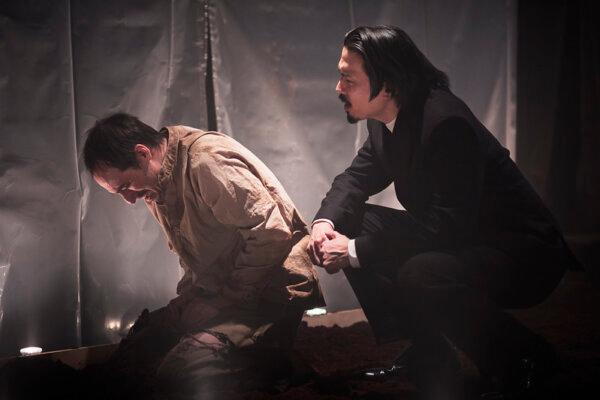
The play works largely because of Clifton Frei as Raskolnikov. He’s formidable as he takes center stage barefoot and dressed in ragged clothing. His stark appearance seems as frightening as a character from a horror flick. Frei delivers an intense and captivating performance as he reveals Raskolnikov’s belief that exceptional intelligence places him above the law and the standards of human decency.
As the detective Porfiry, Huy Nguyen delivers a cross-examination that keeps audience members on the edge of their seats. He plays the role as a kindly, fatherly figure trying to save Raskolnikov from himself. And as Sonia, the woman with whom Raskolnikov falls in love, Felix brings a sense of hope for herself and for him.
This “Crime and Punishment” has a mesmerizing power, not only because of its psychological tension, nail-biting game of wits, and suspenseful plot, but because its guiding idea focuses on how true moral redemption and peace cannot be achieved through cold rationality alone. Instead, they require accepting responsibility, feeling genuine remorse, and embracing human connection. It is truly a message for our times.