Tennessee Ernie Ford was one of country music’s defining voices of the 1950s. He reached crossover appeal with his cover of Merle Travis’s pensive tune, “Sixteen Tons,” which chronicled the life of a coal miner. Ford’s snappy version became a crossover hit after its 1955 release, topping both country and pop charts. He enjoyed success in the country and pop worlds, but he found a home in gospel music.
The baritone crooner released many faith-based recording projects during his career, establishing himself as a worthy contemporary steward of sacred music—music he encountered in his earliest days in the Tennessee farmlands. The popularity of the performer’s first gospel album, “Hymns,” made it a bestseller. Late in his career, a compilation released by Curb Records showcased Ford’s devotion to sacred music and the depth of his gospel recordings.
Hymns of Childhood
Ford’s love of hymns traces back to his childhood. He grew up working during summers on various family farms. During the school year, between studying and chopping wood, he attended church, choir practice, and prayer meetings.When he got older, his traditional musical roots influenced his gospel albums, with an angel-voiced choir ever-present on the recordings.
Not long after Ford became a household name with his surprise, folksy pop hit single, “Sixteen Tons,” he followed it up with his “Hymns” gospel album. It featured classic songs like “The Old Rugged Cross” and “Rock of Ages.” But the standout track was the vocalist’s languid, soaring rendition of “Sweet Hour of Prayer,” a mid-19th-century song about the power of private, spiritual conversation.
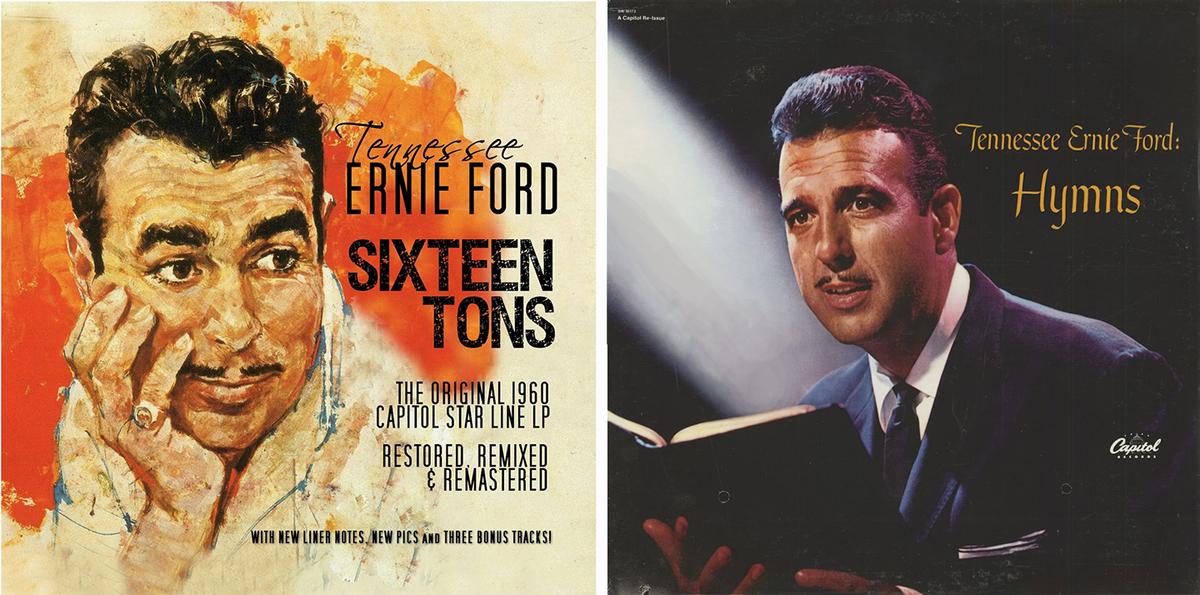
Not only did his debut gospel album garner critical praise, but it also set the stage for spiritual music to become a pillar of his catalog, with awards to follow.

Around the time “Hymns” was released, the singer also debuted “The Ford Show,” a variety series on NBC that lasted five years and helped launch the entertainer’s career as a beloved American television personality.
A Prolific Recording Artist
The 1990 Curb Records compilation record, “Tennessee Ernie Ford—All-time Greatest Hymns,” features various gospel recordings by the performer over the course of his 40-year career spanning the latter half of the 20th century.The album opens with one of his more popular hymn recordings, “Softly and Tenderly,” before weaving its way through classics like “In the Garden” and staples from his first gospel record. Ford delivers a stirring rendition of the sacred composition, “How Great Thou Art,” which he first performed live on television in 1961.
Hard Work and Spiritual Commitment

Ford, born Ernest Jennings, shared a close relationship with his father, Clarence Thomas. Clarence was a postal worker who delivered to farmers, and he taught Sunday school in his spare time. Ernie’s work ethic and spiritual commitment were handed down to him by the Ford family patriarch.
Tennessee Ford left Bristol to serve during World War II in the Army Air Corps as a B-29 bombardier before his music became a mainstay on airwaves.
In 1984, President Ronald Reagan awarded the musician and war veteran with the Presidential Medal of Freedom, the highest accolade a civilian can receive. When Ford passed away in 1991, a military funeral was held in his honor.
When Day interviewed Ford in 1974 for his “Day at Night” series, he said the singer was “well-known over the years … as a man who adhered to pretty simple values and [a] pretty simple life.”
Ford expressed his values through his music, including gospel albums centered around faith, hope, and grace.
Ford’s gospel releases show just how complex, how full, and how enriched one’s life can be when practicing the subtle yet fine art of simplicity.