The inaugural Indianapolis 500-Mile Race was unprecedented. Some 90,000 spectators packed the Indianapolis Motor Speedway on May 30, 1911, to catch a glimpse of a high-speed, groundbreaking, dangerous, and hair-raising event.
Ray Harroun pushed the margins of innovation, which made him stand out among the 40 drivers. Epitomizing both the progress and potential of racing, he rolled onto the brick-paved oval in something he had helped design. It was bright yellow and black, emblazoned with the number 32, and nicknamed the Marmon Wasp as a nod to its color combination and manufacturer.
The Wasp raised eyebrows and demanded double takes. Splitting from the tradition of two-seater construction, the sleek, aerodynamic vehicle was met with a mixture of marvel and uncertainty. And on top of this, it had a strange additional accessory: a small mirror mounted above its steering wheel.
Harroun and the Marmon Wasp took 6 hours, 42 minutes, and 8 seconds to effectively navigate all 200 laps of the 2.5-mile track. No easy feat, considering that another participant died that day in a tragic accident and several others were injured.
Life of the ‘Little Professor’
Son of a mill worker, Ray Harroun was born in Spartansburg, Pennsylvania, in 1879, in a small, rural Amish community. At first he embarked on a career as a dental technician before enlisting in the Navy during the Spanish-American War. After serving as a sailor on a coal carrier, he was honorably discharged.In 1899, Harroun moved to Chicago to continue his dental apprenticeship and worked in a men’s clothing store. In Chicago, he was hired as a chauffeur, patented an automobile bumper, and even built a pair of airplanes. In 1903, he was part of a five-man team that set a land speed record of 76 hours for driving from Chicago to New York.
In 1905, he built his own track speedster, and the following year he was hired by the Buick racing team as a test driver and mechanic for Louis Chevrolet, Louis Strang, and Bob Burman. During his time at Buick, he also started racing.
In 1909, he was zipping around in stock cars for the Marmon Motor Car Company racing team. In 1910, he won 45 out of 60 auto races and was acknowledged as the American Automobile Association’s (AAA) National Driving Champion. Around that time, his engineering innovation and scientific approach to racing earned him the nickname “Little Professor.”
Spectacle of the Great Race
Baseball dominated the American sports scene in 1911, though other niche sports such as football, basketball, and auto racing were increasing in popularity. In a period of rapidly evolving preferences, the public was eager for a fresh sort of spectacle: the Indianapolis 500.Harroun prepared to meet the challenge not only as a driver but also as a designer. He revolutionized the design of the smooth, lightweight Marmon Wasp, making his competitors’ machines appear bulky and out of date. Nearly all race cars of the era were two-seaters, involving a driver and a riding mechanic. The riding mechanic served as a pair of much-needed extra eyes for the driver, who was unable to see cars making moves in the rear. By shunning the standard two-seater race car design in favor of a single-seater car, Harroun’s design gained more speed and removed the riding mechanic from harm’s way.
A flood of objections from the other teams followed, but Harroun convinced officials that no safety risk would be posed because he had an alternative solution to the absent mechanic: a 3-inch by 8-inch mirror fastened to a bracket mounted above his dashboard. This unusual enhancement was inspired by something he’d seen on a horse-drawn taxi cab in Chicago.
Racing historians credit Harroun’s strategic, calculated driving and shrewd equipment management as essential keys to his victory. Sensing the rough brick surface of the track would be detrimental to tires, Harroun maintained a steady pace of around 74.6 miles per hour instead of pushing for warp speed. Conserving tires and minimizing pit stops turned out to be a levelheaded approach. Other racers zipped by Harroun, devoured their tires, and repeatedly pitted for new treads. He only had to pit four times, each time changing the right rear tire, while his competitors averaged many more, including rival Ralph Mulford, who changed tires on his 1911 Lozier 14 times.
Perpetual Innovative Spirit
Harroun promptly announced his retirement as a driver following the race. True to his word, he never raced again, though he did dedicate the remainder of his days to engineering and design innovations. For example, he patented a shock-absorbent steering wheel and a carburetor for the 1913 Marmon “48,” which is considered a predecessor of modern fuel-injection systems. He co-designed a “Safety Air Car” functionally comparable to the contemporary motor home.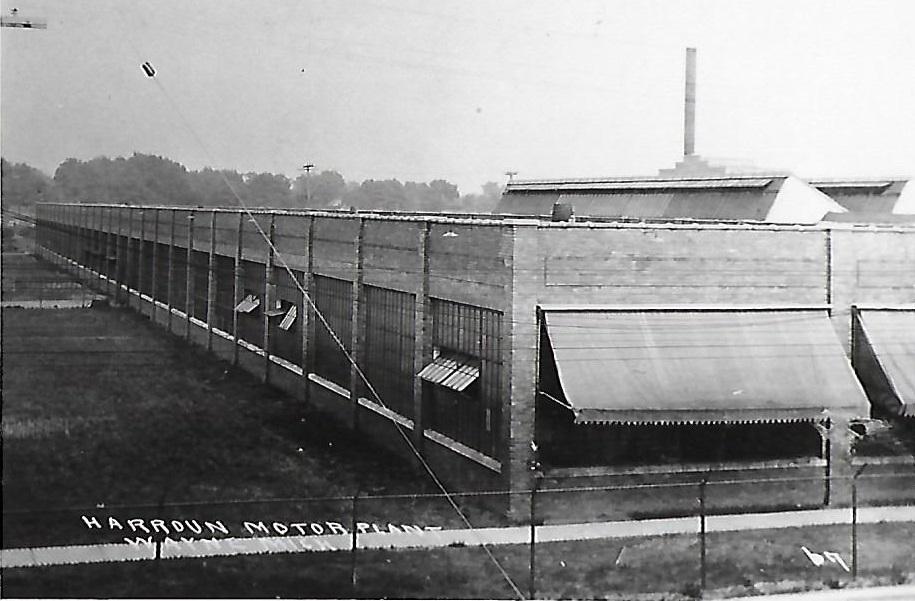
During World War I, Harroun transformed his Harroun Motors Corporation to manufacture munitions and military equipment for the U.S. government, including the production of artillery shells. Before the war, he worked for Chrysler and Lincoln and designed race cars for Marmon and Maxwell. His contributions to manufacturing supported the U.S. war production once more during World War II, including his designing a low-slung bomb carrier and a monoplane.
The rearview mirror, a symbol of ingenuity that guided his influential victory on the racetrack, was improved through the decades, and Harroun didn’t live to see its introduction as a critical safety element standard on most automobiles in the mid-1970s.
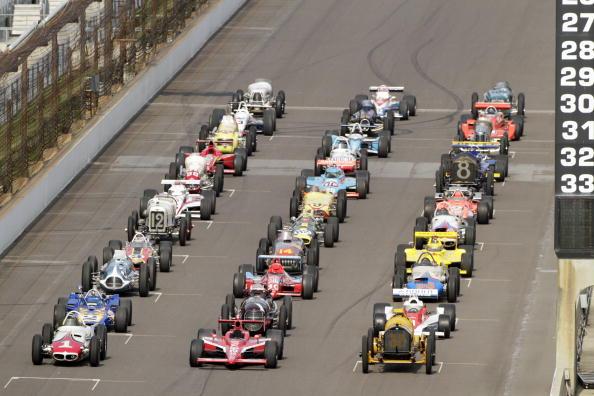
Ray Harroun passed away in 1968 in Anderson, Indiana, about 50 miles from the Indianapolis Motor Speedway where he had won the first great race 57 years earlier. Today, the Marmon Wasp is displayed in the Indianapolis Motor Speedway Museum.