Brothers at the Well
The father sends one of his sons to the well to draw water for the christening. He quickly sets out on his task, but finds himself followed by his six brothers. They arrive at the well and all try to draw water for their sister’s christening.Unfortunately, in their haste and excitement, they all drop their buckets into the well. They remain at the well, completely ashamed that they all failed in completing this task for their father.
Their impatient father, in turn, grows agitated, saying, “The whole seven must have forgotten themselves over some game of play.” When the sons fail to arrive with the christening water, the father loses himself in a passion and “wishe[s] them all turned into ravens.” No sooner have the words passed from the father’s mouth than he sees seven ravens fly away.
To Bind and Unbind
Yet, just as words can bind and curse, they can also unbind and free. One day, the young lady hears some of the people talking about her unknown brothers: “‘Yes,’ [they say], ’she is beautiful indeed, but still ’tis a pity that her brothers should have been lost for her sake.'”The daughter is horrified when she hears these words and approaches her parents about the validity of the claims. Unable to keep their secret any longer, her parents reveal the fate of her seven brothers, but assure her that “her birth was only the innocent cause of [their fate].”
Now that she knows about her seven brothers, the daughter is determined to find them. With a few provisions to aid her, she sets out.
She journeys so far that she reaches the world’s end and even the sun. But the sun proves too hot for her and she moves over to the moon. The moon, on the other hand, is too cold for her, so she continues on her way.
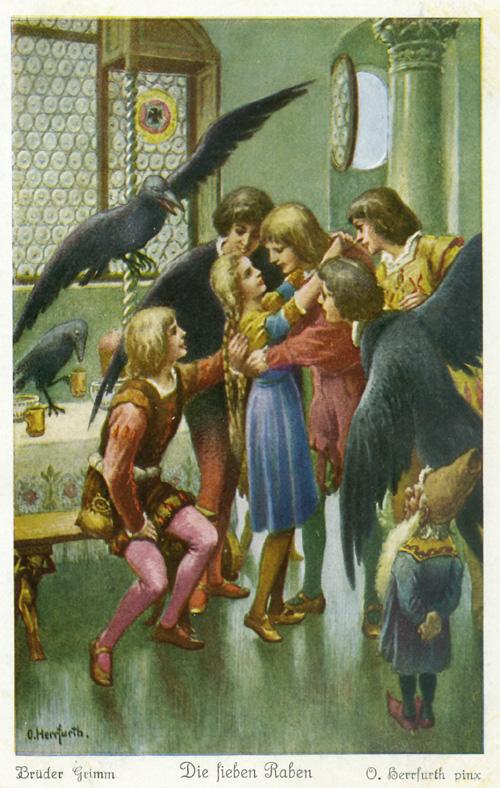
As she travels past the stars, one star gives her a key to enter the glass-mountain. She loses the key, but it doesn’t slow her determination to find her brothers.
Through this fairy tale, children can become more aware of their words. Whether in the heat of the moment or just a simple conversation, a single word or phrase can greatly impact others.
Even though they possess the power to hurt people with their words, children can also bless others when the words are beautiful. In doing so, they plant a seed in the other’s soul, one which may later reveal a person of beautiful character.