




Steven Bennett was not blessed with a beautiful singing voice, but that doesn’t stop him from breaking into song when emotion swells—particularly when moved to show public affection for his wife, Elaine Schmidt.
Instead, he was gifted with a good eye and a love for art that he shares with Schmidt. The two are self-described “full-time art collectors” and have spent 16 years orchestrating a program to propel the careers of women artists and introduce a new generation of art enthusiasts to figurative realism.
On May 15, Bennett and Schmidt announced their new prize winner at the Muskegon Museum of Art (MMA) in Michigan. Awarded every two years since 2019, the Bennett Prize (now in its fourth iteration) offers $50,000 to a woman emerging as a figurative realist painter.
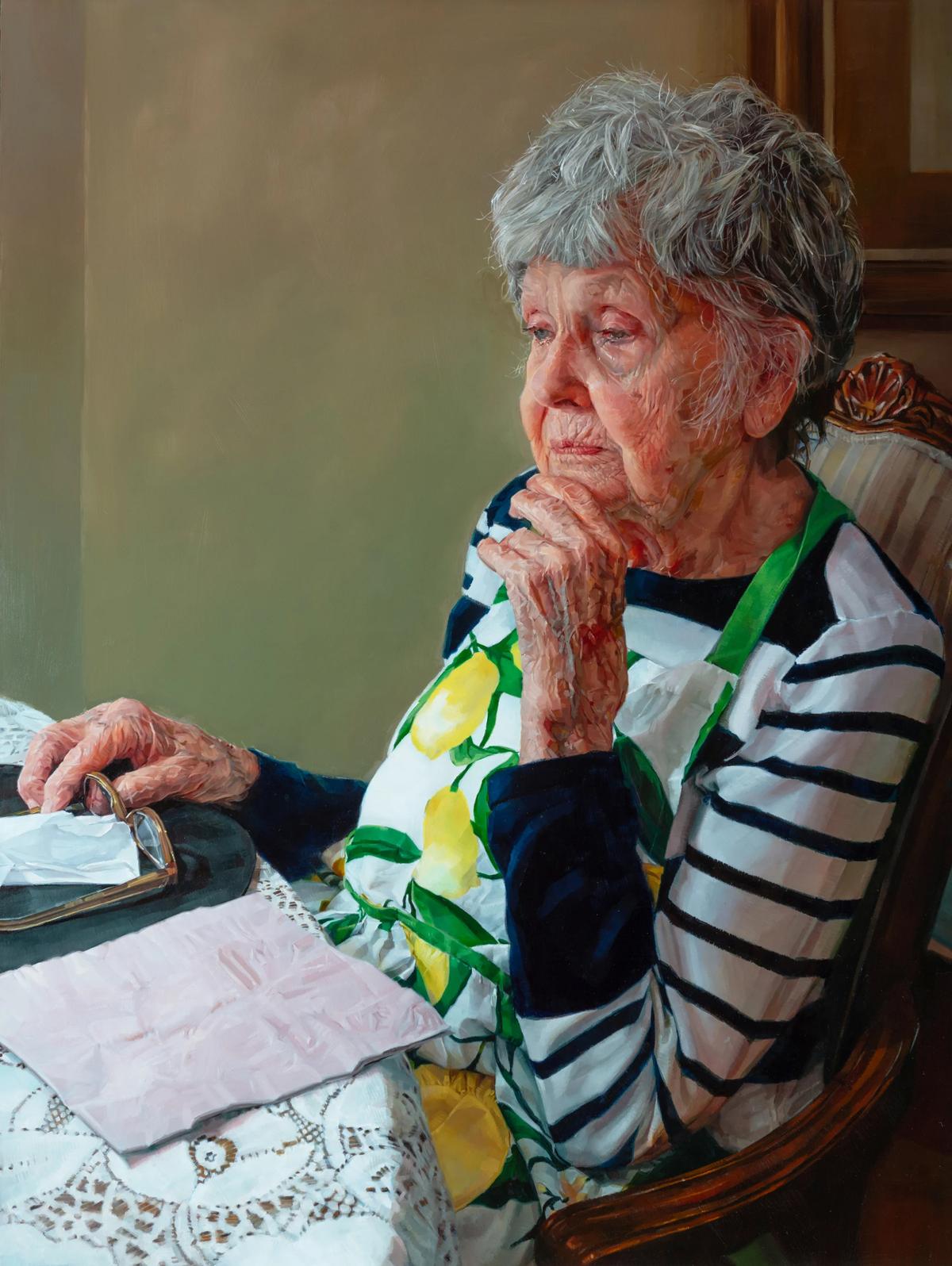
Among the 832 applicants and 10 finalists, Amy Werntz won the prize this year for her series of highly realistic and delicate portraits of elderly people. In “Carlyla,” a rendering of a photo of her 96-year-old grandmother (now 98). Werntz achieves a loving intimacy through the warmth and texture of translucent skin.
‘Women Painting Women’
After earning a degree in Art History at Indiana’s University of Notre Dame, Bennett applied to the MFA program at the Cortauld Institute in London. But he was rejected.“I’m still mad about that,” Bennett said, now 72.

Pivoting, he became a professional photographer before going to law school. Bennett enjoyed a successful career as a corporate attorney, garnering financial success and notoriety, until he retired in 2015.
Schmidt, an expert in special education, earned a doctorate in educational leadership and policy studies from Temple University in Philadelphia.
Bennett and Schmidt met in 2009 and were married in 2014. When Schmidt found the walls of Bennett’s apartment empty, the two began to talk about building an art collection. Their interest was piqued by a 2009 blog “Women Painting Women” by Alia El-Bermani, Diane Feissel, and Sadie Valeri, who later curated numerous group exhibitions of women painters.
“Women were producing great work” Bennett said. They began to collect work “of women by women” in a diverse range of styles. Their chief priority is the “oomph” factor, the ability of the work to command the room it is in.
Founding a Prize
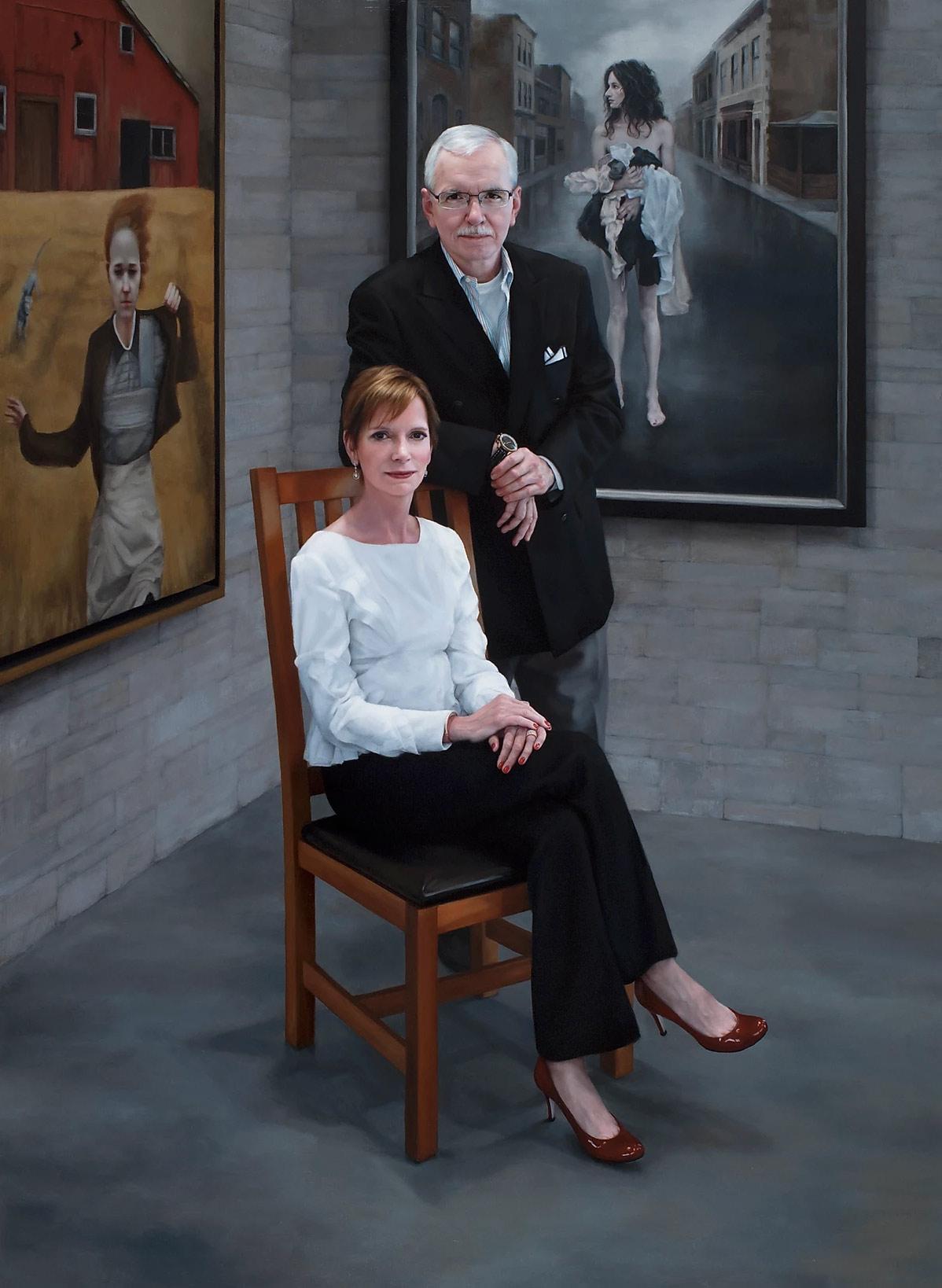
Schmidt and Bennett got to know the artists they were collecting. Many were struggling. “After a few years, we were trying to think: What could we do to help besides just buying their paintings? That’s great, that’s a lot, to purchase someone’s work and validate them that way and give them income, but we were trying to think of something we could do that would be more broad-based than that,” Schmidt said.
“What about a prize?” one said to the other while sitting in bed on a Saturday morning.
The Bennetts workshopped the idea with artists, and found that coupling a prize with a traveling exhibition would deliver the most impact by giving visibility to artists over several years. Rotating jurors or curators, with one seat to Bennett or Schmidt, would adjudicate the prize.
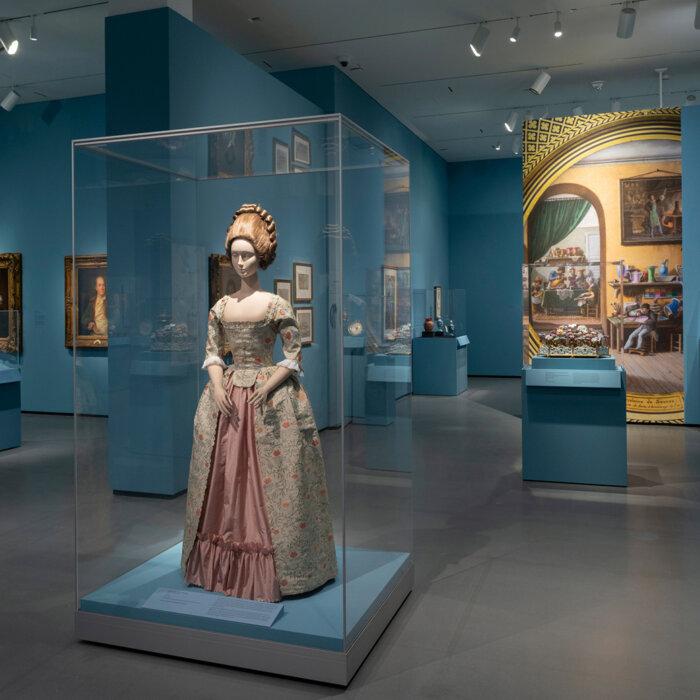
After a nationwide search, the Bennetts chose the Muskegon Museum of Art to partner on the project and to receive a bequest of 170 works, with a value of $12 million from the impressive (and growing) Bennett Art Collection. They also bestowed a $1.7 million contribution of the $16 million cost to build the new Bennett Schmidt Pavilion, doubling the size of the museum. This was completed in spring 2024.
Amy Werntz’s Winning Portrait
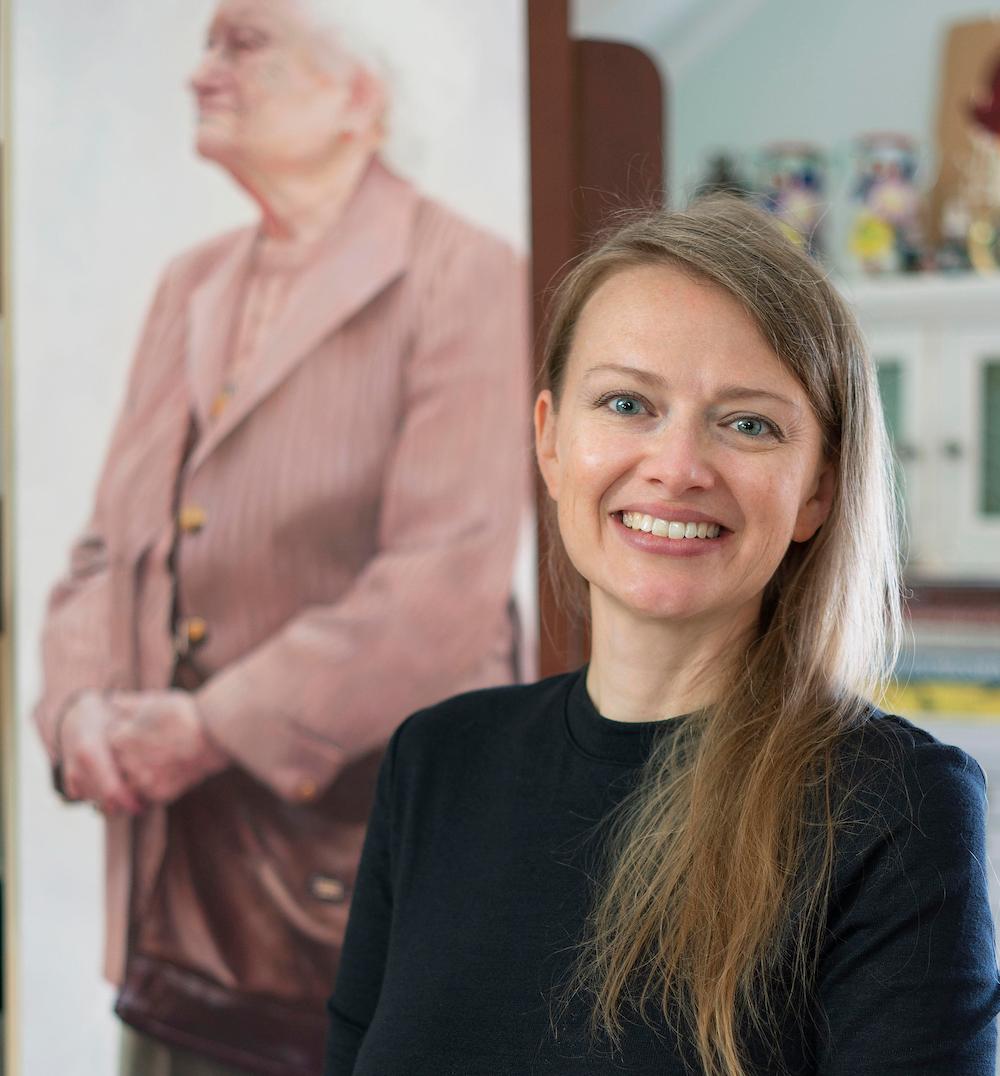
Werntz earned her Bachelor of Fine Arts in interior design from the Art Institute of Dallas. While working as a professional interior designer, she taught herself to paint and attended life-drawing sessions twice a week at a local community college.
Her first break came when a high-rise developer asked to see her work as part of a mission to collect work by local artists for the building. In 2010, she began painting full time. She was a finalist for the Bennett Prize in 2021.
Werntz now often paints from photos, sometimes ones that are old and discarded, but which capture a moment now forgotten. Many of the subjects don’t know they’ve been painted. The same is true of her grandmother. Wertz hasn’t told her about the winning portrait, “Carlyla.”
“Being beautiful was very important to her,” Werntz said about her grandmother. “So, the idea of her being represented older—I don’t know how she would feel about that.”
In the painting, Carlyla is warm and lifelike. Werntz captured something in her grandmother’s portrait that is not skin-deep: the quiet internal reflection of a woman who has lived a full life.
Beneath her grandmother’s heavy eyelids are the cataracts of old age expressed with the most delicate opacity. Carlyla is blind. Even if Werntz tells her about the piece, she will never see the work.
“You go to a museum and you see all the paintings of people. You don’t know who they are, but those people live on. Snapshots are a way to say to the world: ‘I was here; I existed,’” Werntz said.
“Carlyla” and the works by the Bennett Prize finalists are on display at the MMA, along with a solo show by the 2023 prize winner Ding Shiqing. The Bennett Prize exhibit is slated to travel to the Arnot Art Museum in Elmire, New York; the Customs House Museum in Clarksville, Tennessee; and the Bo Bartlett Center in Columbus, Georgia, among other locations.
So long as the tradition of figurative realism lives, artists will learn from the achievements of their predecessors and elevate them to new heights. Perhaps the best is yet to come.
