Christopher Nolan’s “The Odyssey,” starring Matt Damon, has become the year’s most-discussed film. The nearly three-hour IMAX epic is projected to soon join the $1-billion club, surpassing even “The Dark Knight” to become Nolan’s most successful film. It’s probably the biggest literary adaptation since “Gone With the Wind,” and it’s so entertaining that even people who hated English class will love it.
But the box office numbers tell only part of the story. What’s more striking is how thoroughly Nolan has inverted the spirit of the poem he adapted. Where Homer gave us a hero defined by perseverance, piety, wisdom, and authority, Nolan’s is closer to an antihero: self-doubting, rational, and passive. For an adaptation that stays reasonably faithful to the plot, the themes have been completely reversed.
From Perseverance to Disillusionment
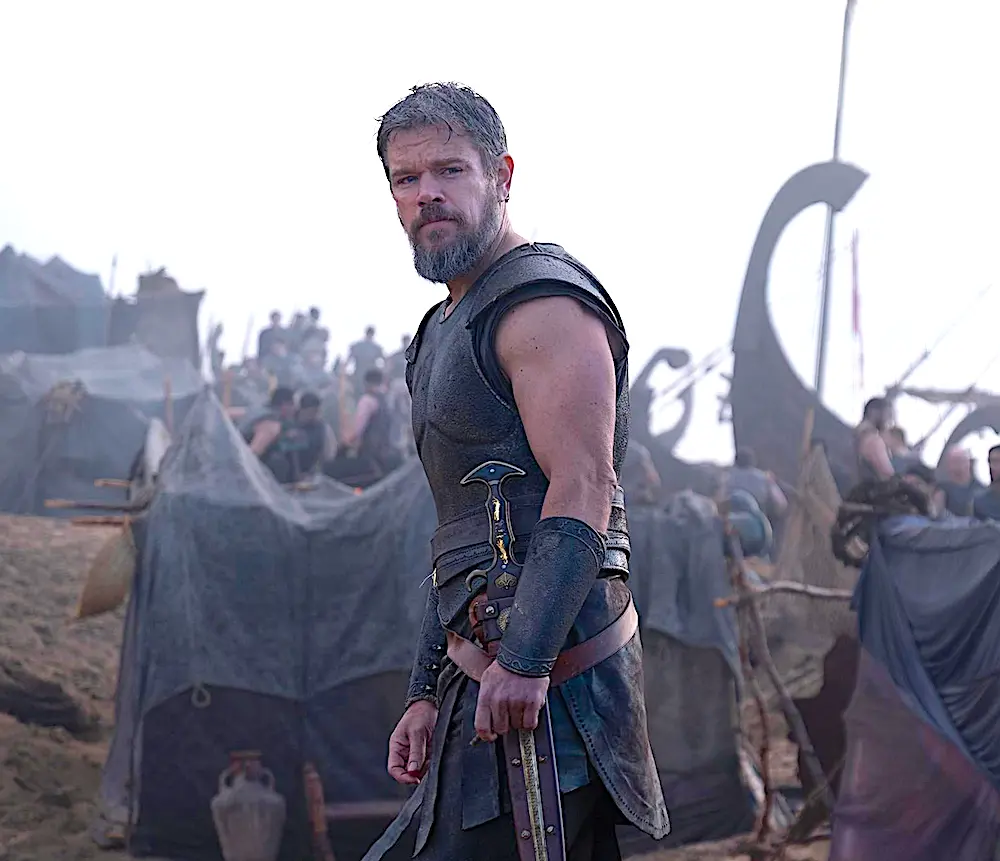
The original poem, written around 2,700 years ago, reflects the values of its author’s age. Some of those values are very different from ours, but Odysseus still has many virtues we would recognize. For one, he never wavers in his determination to get home. When Odysseus and his crew land on the island of the lotus eaters, his men indulge in a plant that causes them to lose all memory of home. In response, the sober Odysseus drags them back to the ships and ties them down before sailing off. Later, when his crew has been lost and he finds himself marooned on Calypso’s island for seven years, he spends his days weeping on the shore.Nolan’s Odysseus starts from a very different place. When we meet him on Calypso’s island, he isn’t aching for home. In fact, he doesn’t know where or who he is. Calypso has been feeding him the lotus plant. Disillusioned by the horrors he saw at Troy and suffering from post-traumatic stress disorder, Odysseus is only too happy to lose himself in addiction and forget his trauma.
From Piety to Skepticism
Homer’s Odysseus is favored by the gods (Poseidon aside) because he honors them faithfully. As an outraged Athena puts it to her father at the poem’s opening:“Now didn’t Odysseus honor you year after year, Doing the rites by his ships on the beaches of Troy? He worshipped you, Zeus! Why do you hate him so much?” (translation by Michael Solot)
Zeus then acknowledges the hero’s piety and resolves to bring Odysseus home.Nolan’s version will have none of this. As in Wolfgang Peterson’s “Troy” (2004), the director opted for a more human-centered approach to the story, with Matt Damon portraying a modern rationalist. After Troy has fallen and Odysseus’s men take to their ships, they urge him to make sacrifices to the gods before setting sail. He brushes the idea off, saying that he has already honored the gods enough, dismissing the need for more rituals.
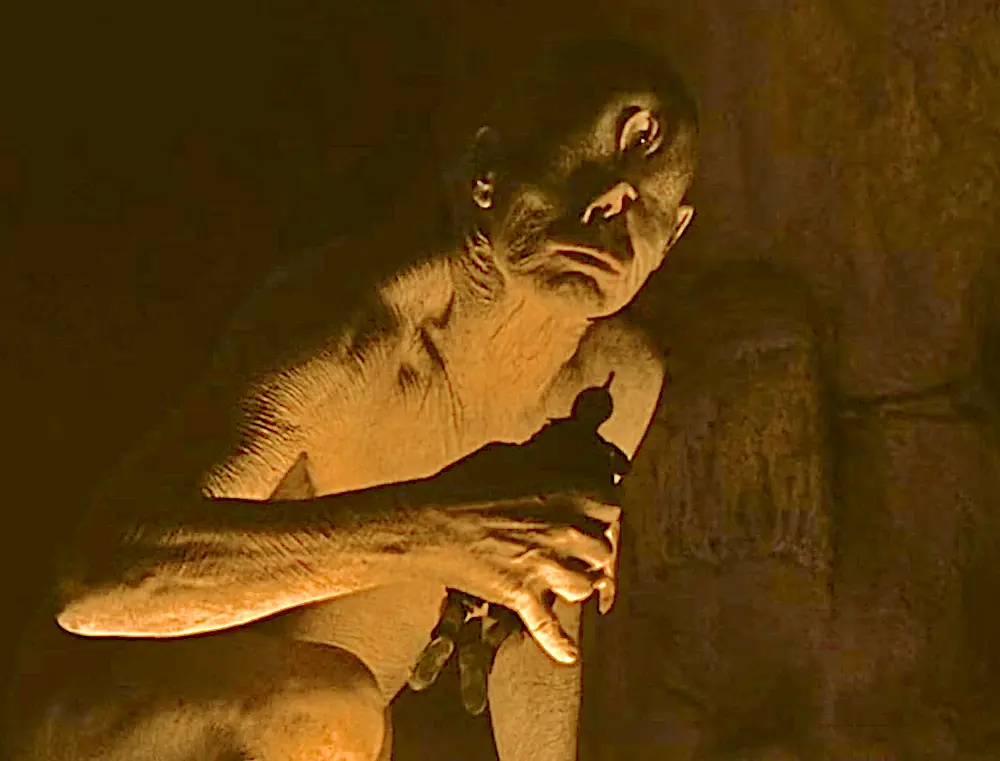
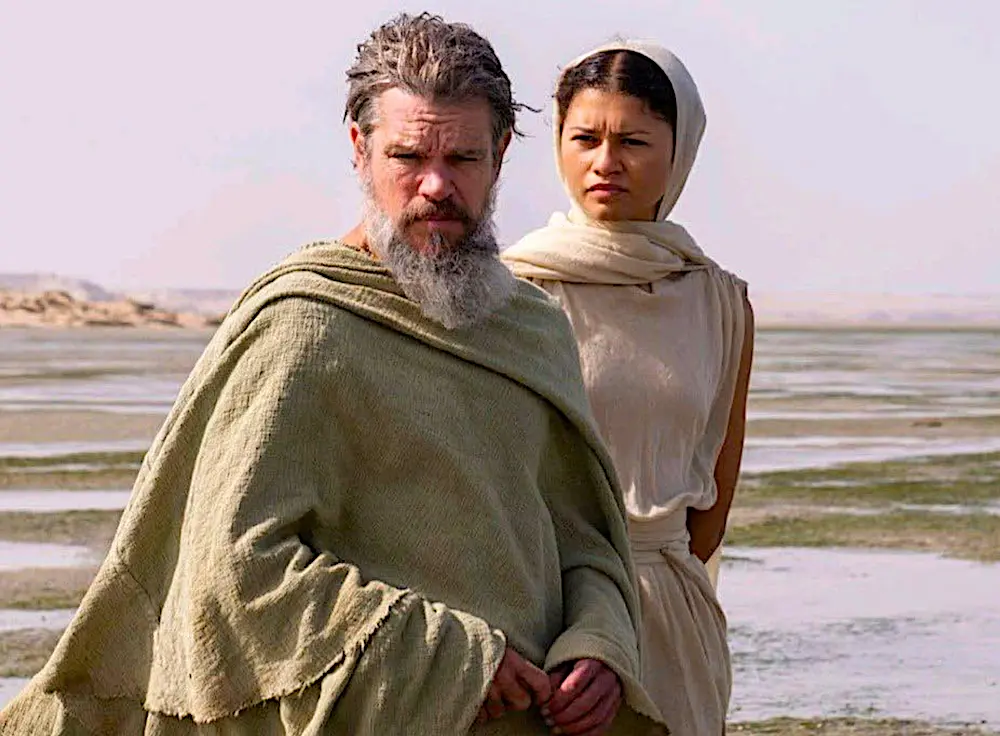
The Greek gods, so central to moving events along in Homer, nowhere appear in the film. It’s true that a character credited as Athena, played by Zendaya, is seen walking alongside Odysseus and talking to him. A climactic flashback in the film, however, calls Athena’s identity into question and suggests that she is merely a hallucination borne of Odysseus’s guilt.
From Goddesses to Victims
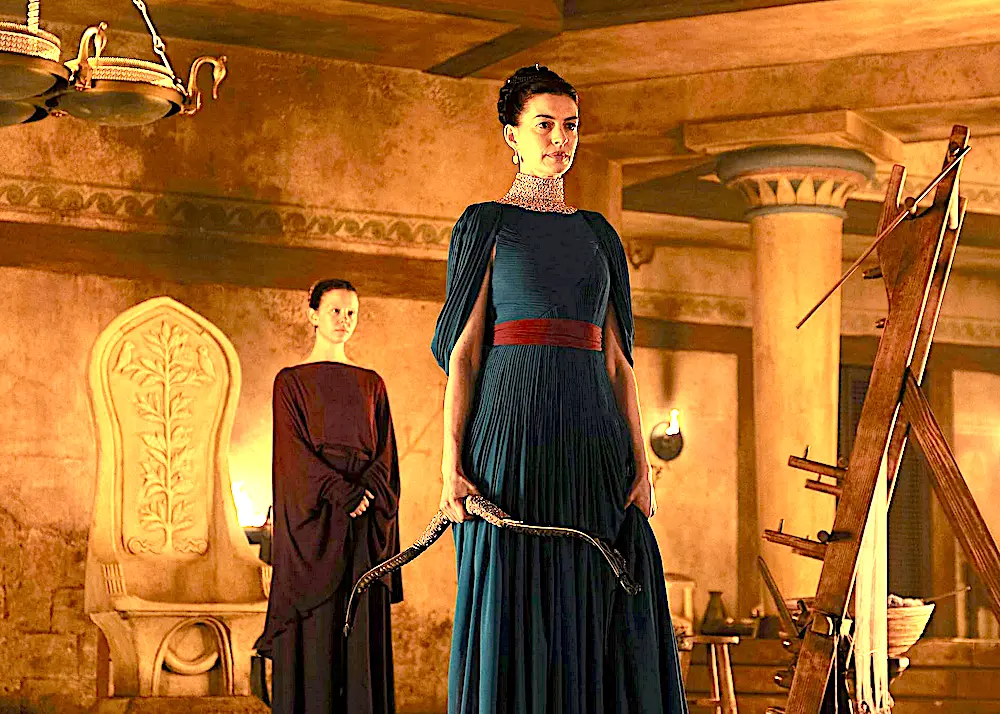
One of Odysseus’s less admirable traits in Homer’s version is his infidelity. While faithful Penelope waits on Ithaca for two decades, Odysseus takes up with Circe and Calypso. In his defense, the gorgeous goddesses don’t give him much choice, confining him in the splendor of their servant-filled palaces.Nolan’s film strips this dimension entirely. Calypso (Charlize Theron) loves Odysseus, but the relationship is an emotional bond. Odysseus is too busy with drug abuse to care about sex, and the film never suggests any explicit romantic entanglement. The protagonist’s relationship with Circe (Samantha Morton) is entirely hostile. Both women are presented as poor, living in a cabin or driftwood hut, not goddess-like in the least.
They aren’t the only female characters rewritten from seductresses into victims. Helen of Troy (Lupita Nyong'o)—“the face that launched a thousand ships”—has been disfigured, prompting her husband Menelaus (Jon Bernthal) to quip that her face now is worth “maybe five hundred.”
Sinon (Elliot Page, who identifies as transgender), the deceiver behind the Trojan Horse (a character invented later by Virgil, not Homer), is reimagined as a character who has himself been deceived. He didn’t know there was anyone inside the wooden horse when he convinced the Trojans to take it inside their city. Sinon accuses Odysseus of being a liar when meeting him in the underworld. There are few characters in this version of the Odyssey who don’t claim to be oppressed.
Renouncing Leadership
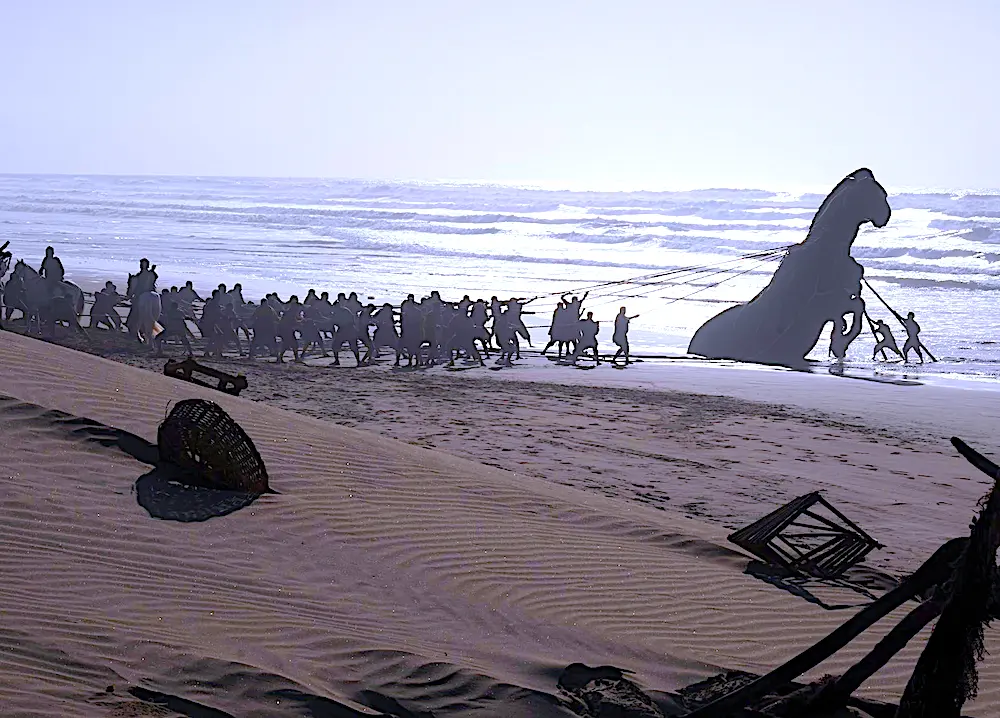
The idiom “between Scylla and Charybdis” has become shorthand for an impossible choice. In Homer, it’s a moment that shows Odysseus at his most decisive. He chooses to steer toward Scylla, sacrificing a few men rather than risking the whole ship in the whirlpool of Charybdis.Nolan does the opposite. As the ship drifts toward the strait, his crew turns to Odysseus for a command. But he has none to give, sinking into silence while the ship drifts toward Charybdis. His second-in-command, Eurylochus (Himesh Patel), takes charge instead, steering the crew toward Scylla and to the deaths of six sailors. Nolan’s “hero” doesn’t make the hard call at all. Someone else makes it for him.
The climax of the film, the slaughter of the suitors, is where Nolan’s revisions become most pointed. In Homer, Odysseus returns home to dispense harsh justice. He orders Telemachus to execute the palace’s unfaithful slave women, and Telemachus, taking it too far, has them hanged slowly rather than killed outright. It’s the poem’s most disturbing passage.
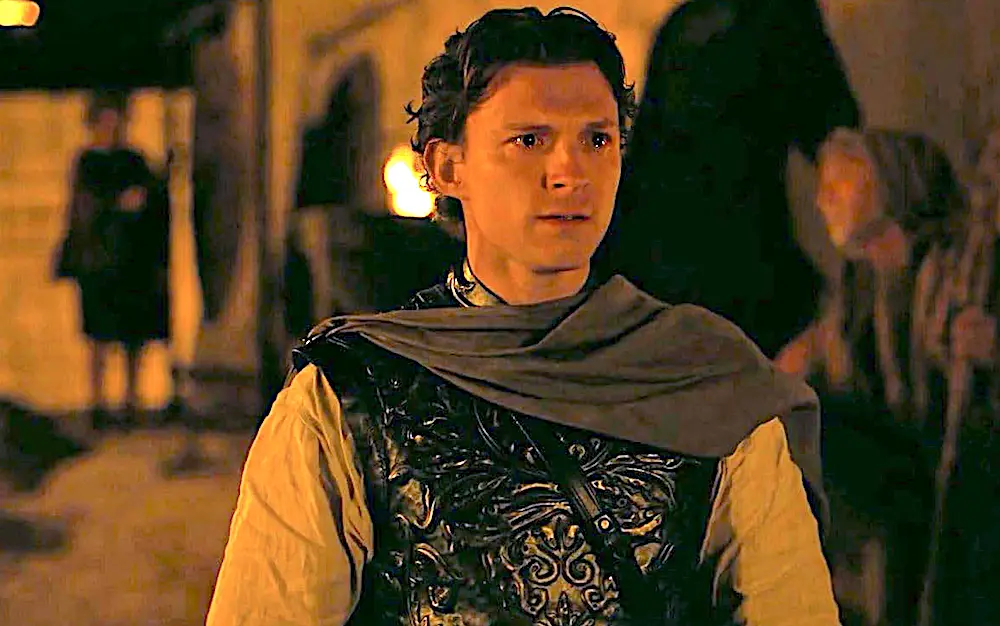
Nolan cuts it entirely. His Odysseus is also willing to spare suitors who bend the knee rather than fight. At the end, rather than reclaim his kingship, he renounces it. He passes the throne to Telemachus and sails west into unknown lands with Penelope, lamenting that “the Bronze Age is collapsing.” This is an anachronistic term that no one in his time ever would have said.
that which we are, we are; One equal temper of heroic hearts, Made weak by time and fate, but strong in will To strive, to seek, to find, and not to yield.
While the outward event is more or less the same, though, Nolan’s antihero never reaches towards such glory. His journey ends in abandonment, with a faint hope that “civilization will rise again.”A Different Kind of Hero
Most commentary around the film has focused on just how far this cinematic Odysseus drifts from his Homeric source. But there’s another literary precedent for exactly this kind of protagonist, and it isn’t to be found in the pages of the blind bard.In the “Argonautica,” Apollonius of Rhodes’s epic about Jason and the Argonauts, Jason is nothing like Odysseus or Achilles. He’s indecisive, prone to despair, and fairly unheroic. Compared to the invincible Hercules, also aboard the Argo, Jason has no exceptional qualities whatsoever. In fact, the crew initially votes on Hercules to lead them, who declines the opportunity and puts forth Jason as a candidate in his stead. Apollonius goes so far to describe his protagonist with the word “amekanos,” which roughly translates to “helpless,” “resourceless,” or “without a plan.” This is in explicit contrast to Homer’s description of Odysseus as “polytropos,” meaning “of many turns,” “wily,” or resourceful.
Jason reads much closer to a modern antihero than to the epic heroes who came before him. Notably, the real engine of the Argonautica’s plot isn’t Jason at all, or any other heroes aboard the Argo, but a woman. Medea’s magic drugs the sleepless dragon and her cunning allows Jason to steal the golden fleece and defeat other challenges set before him.
That inversion wasn’t an accident. Apollonius wrote five centuries after Homer, in a very different society. Alexandria, ruled by the Ptolemies, was part of a multicultural empire built in the wake of Alexander the Great. Under the Hellenistic political system, leadership was a matter of acclamation and negotiation, and Jason’s character reflects that world.
Nolan’s “Odyssey,” in this light, feels far closer in spirit to Apollonius than to Homer. Its women are consistently more capable and consequential than most of the men around them, even when the film frames them as paupers or captives on the surface.
Just as Apollonius rewrote the epic hero for his own political situation, Nolan does the same for ours. But is this really the “hero” we need today? We are hardly lacking in stories about weak, self-doubting men that laud victimhood. Nolan’s version is one more reflection of what our culture has descended to. One might even argue that, thanks to Nolan’s handwringing, we are sinking a bit faster.
Whatever one makes of the changes, Nolan has managed something unusual, if not unprecedented: He’s gotten audiences to discuss a classic text again, even if only for a summer.