There are houses of all styles, train stations, castles, farms, cable cars, and soccer fields.
Welcome to Bergen, Norway—in miniature, except there is an Eiffel Tower and the London Tower Bridge, too.
It has been a popular holiday destination here for more than 30 years. It is just last year, however, that Gingerbread Town has found a permanent home at Kong Oscars gate in the city center. (Until Jan. 11)
Bergen, a UNESCO World Heritage Site, is located on the west coast of Norway in the heart of the famous fjords. At the end of the Hurtigruten cruise to see the Northern Lights, we were glad to have time to explore this charming city in gingerbread and reality. And as tourists seek cooler climates, Bergen has been enjoying a spike in tourism.
Locals want visitors to see all that Bergen—and Norway—have to offer in the winter, as well as summer—skiing, cross-country skiing, and snowshoeing, history dating back to before the Vikings, the heroic tales of the Norwegian WWII resistance, and, of course, the Northern Lights.
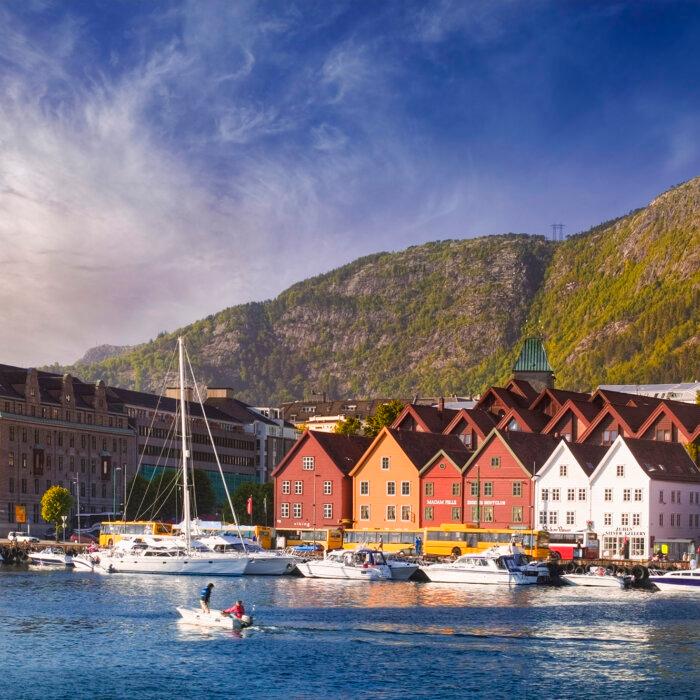
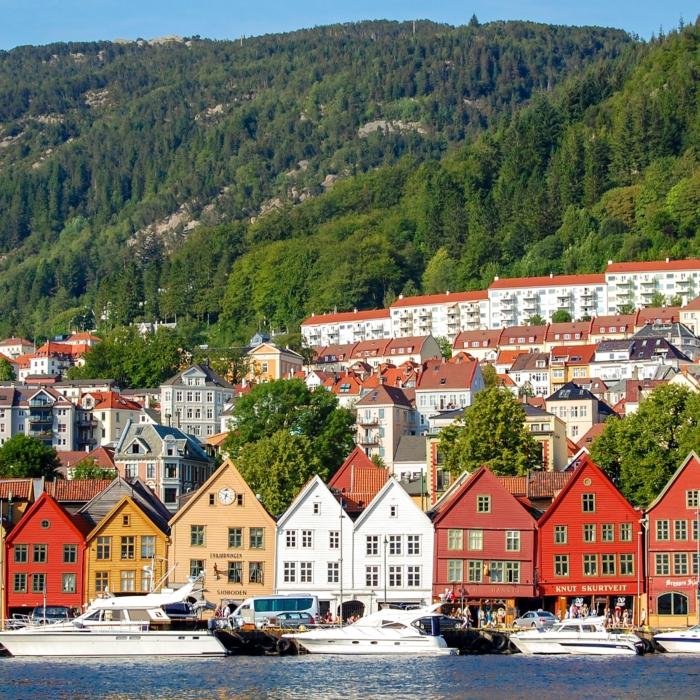
Fun Fact: With its colorful buildings, wharf, and surrounding mountains, Bergen was a major inspiration for the fictional kingdom of Arendelle in Disney’s “Frozen”, the 2013 award-winning megahit now beloved by a new generation of young fans, “Frozen 2” and the Broadway musical.
There are “Frozen” experiences at Walt Disney World, meet and greets with Anna and Elsa at Disney California Adventure and a “World of Frozen” expected to open next spring at Disneyland Paris.
However, the city of Bergen doesn’t promote its fictional counterpart and, of course, nothing can compare to the real thing, especially when the city is decked out for the holidays.
There is the Church of the Cross, City Hall, the famous Wharf Houses dating back to the 1700s that are now a UNESCO Heritage Site, the Stave Church, the popular Christmas Market, the cable car station that takes you to the top of Mount Ulriken, the highest of Bergen’s seven mountains and the station for the Floibanen Funicular, which takes you to the top of Mount Floyen, where there’s a restaurant. There’s also a forest where you will find trolls (not real ones), a playground, historic restaurant and more. (For a good workout, hike up and back down.)
The hotel has been built in 14 wooden houses with an early 20th-century Paris vibe complete with fringed lamps, flowered wallpaper and decorations sourced from antique and vintage stores. “We go all in.” joked one of the staff.
Reindeer filets are the most popular meat dish—more than 7,000 sold in the year. There is also Pinnekjott, lamb ribs traditionally served at Christmas in Western Norway or Svineribbe, a pork belly dish often served with red cabbage and a staple of Norwegian Christmas celebrations.
Then there is Lutefisk, a dried whitefish—usually cod—that is typically made with dried and salted cod and then rehydrated for several days and served warm with bacon, peas, bread, and mustard. Traditionally, friends gather for a Lutefisk dinner and the restaurant steams 13 tons during the season, between the end of September to the end of March.
But I’ll admit, for visitors, it is an acquired taste.