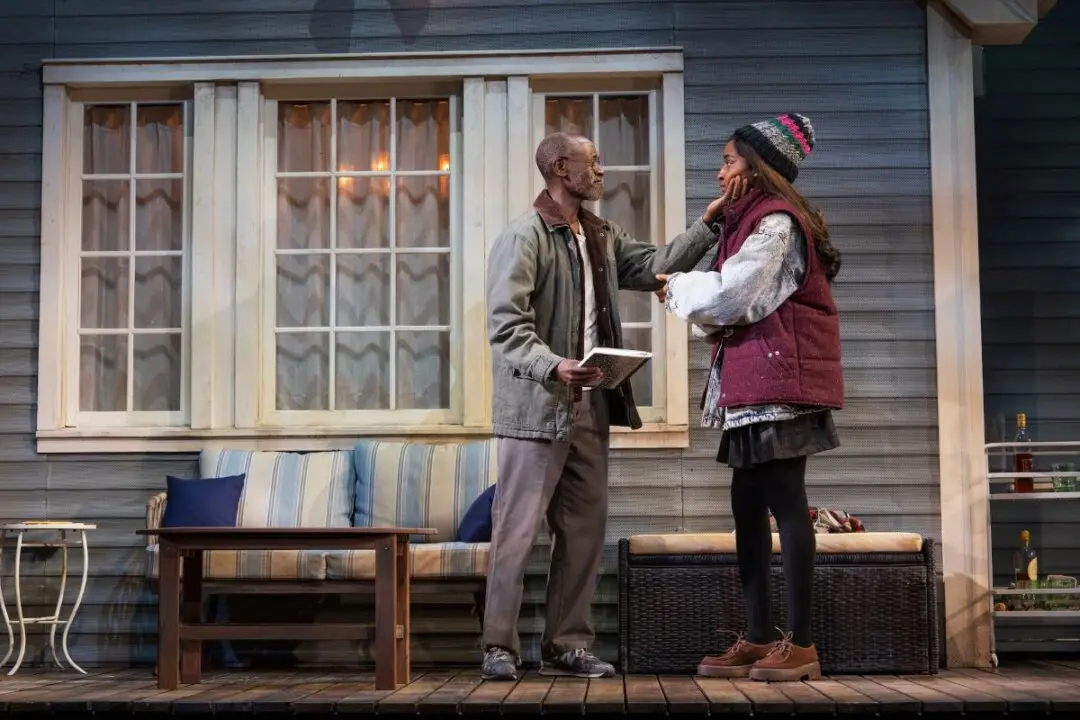
NEW YORK—The need to find common ground with those you love, even if doing so requires a degree of openness that has been lacking is the message in Matthew Leavitt’s comedic drama “Sukkot” at 59E59 Theaters.
Patrick (Andy Robinson) a recently retired college professor, finds himself emotionally adrift with the passing of his wife, Sharon, from cancer. Married for over 50 years, he feels the loss even more with the upcoming one-year anniversary of her death and the corresponding unveiling of her headstone.
During a telephone conversation with a rabbi, Patrick learns the unveiling of his wife’s tombstone will coincide with the Jewish holiday of Sukkot, a seven-day period and the one time of the year when God “directly commands us to celebrate.”
Character Conflicts
Sleeping in a sukkah however is the last thing on the minds of any of Patrick and Sharon’s children, each of whom has their own emotional baggage. Asher (Jonathan Slavin), a teacher like his dad and sensitive of being in his father’s academic shadow, has been living in his parents’ home for more than a year after a bad breakup and getting fired from his previous post. Asher was also the primary caregiver for his mother during the final months of her life, as Patrick was trying to wind up his teaching career and his sisters lived too far away to consistently help.
Mairead (Liza Seneca), seemingly the most stable and responsible of the three, is dealing with a troubled marriage and the stress of raising two young children. Eden (Natalie Lander), a free spirit who goes from one job and relationship to the next while always looking for a new adventure, feels continually judged by the rest of the family for her lifestyle choices.


The different personalities of the children also become apparent when Mairead tries to come up with a plan to care for their father should the need arise. Asher insists everything is fine for the moment so there’s no need to worry, and Eden simply refuses to deal with the subject.
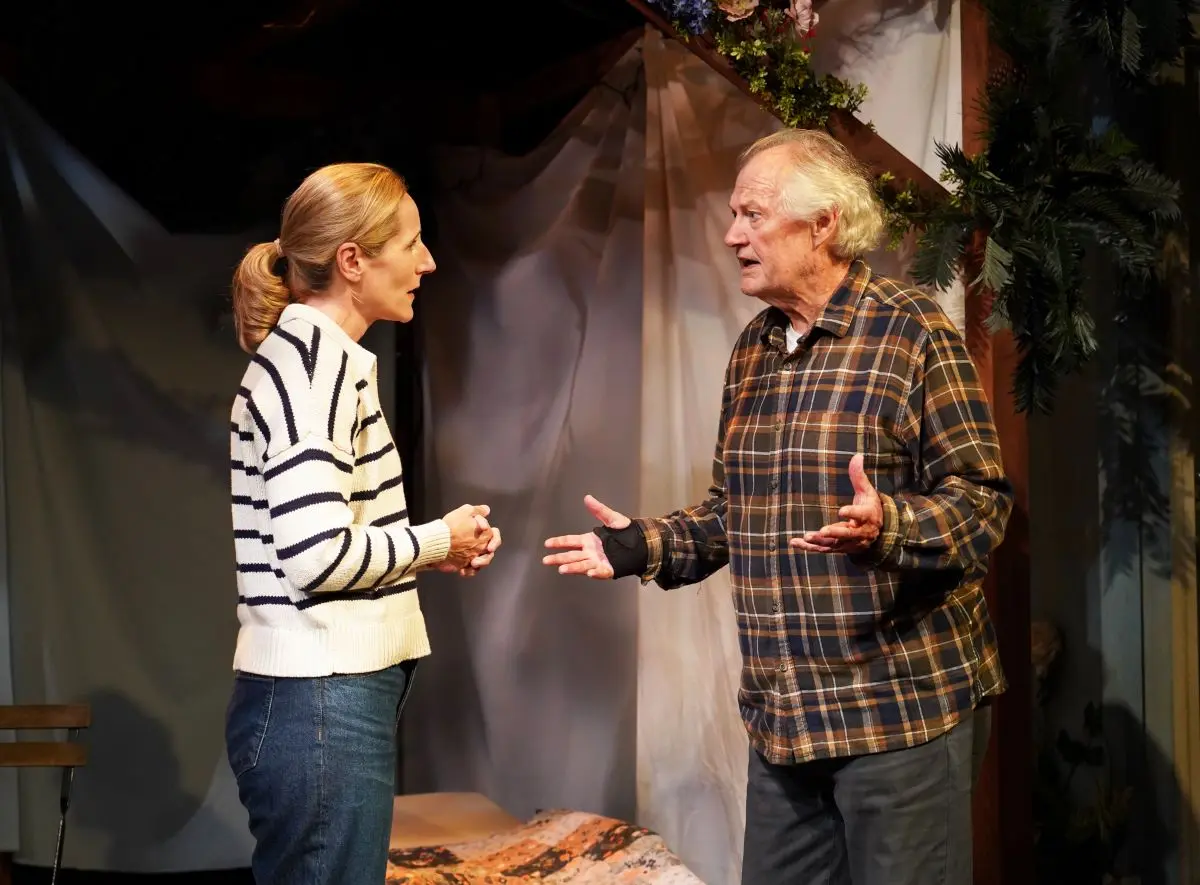
As the days pass, tempers become short as secrets and regrets are slowly revealed. It’s not long before what was seemingly sturdy begins to crumble. Patrick tries desperately to help his family come together, while his offspring are more intent on getting their own points of view across with little regard for others’ opinions. They continually talk over one another.
Dramedy
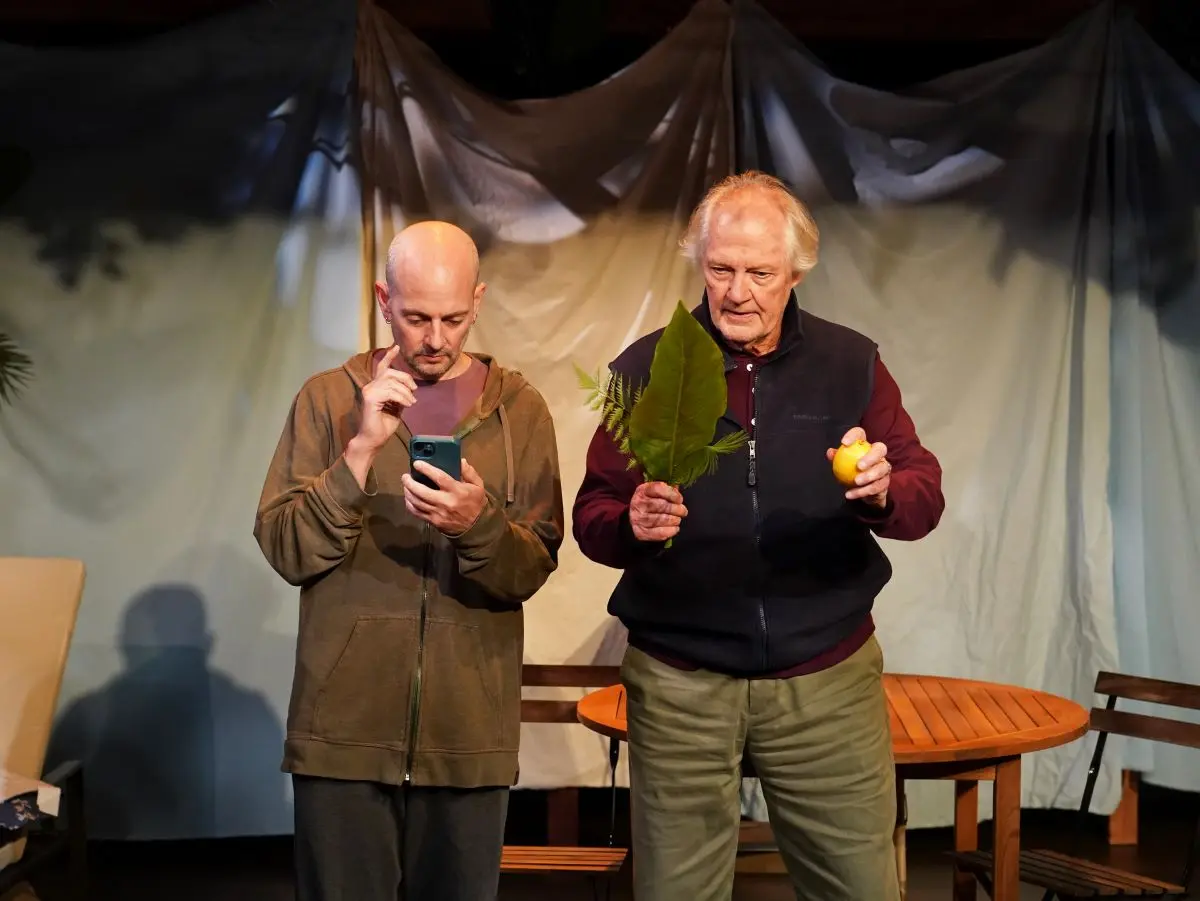
While the play covers familiar ground—yet another dysfunctional family—the use of the Sukkot holiday offers Leavitt and director Joel Zwick a refreshing hook for the tale. The Sukkot practices also become a source of humor as, aside from Sharon, no one in the family is practicing the Jewish faith. Their efforts to perform the Sukkot ritual involving three different plants, while they watch various online videos to explain the process, is quite amusing.Robinson’s quiet, powerful performance is the linchpin of the play as he explores Patrick’s desperate need for closure. His comments about not wanting to rewatch a favorite television program without his wife and realizing how, when things got tough in the past, he assumed traits of his own emotionally stunted father, helps drive home the point of just who this flawed but caring man is.
Slavin, Seneca, and Lander all work well together, although only Slavin’s character has any serious depth. This is exemplified in two spots: when he lets loose his frustrations about being the only one who really took care of their mother and in a conversation with Patrick when his father puts his foot down and orders his son to start looking for a job. Asher also has some of the funniest lines in the piece.
The play feels static feel at times, with 95 percent of the story taking place in the home’s backyard. There are also a number two-person scenes featuring the characters talking to or at each other. Amid it all are a few surprises and one confession no one sees coming as the siblings try to decide whether it is better to search for the truth behind their discovery or pretend it never happened.
An interesting look at a family trying to be there for one another despite their differences, “Sukkot” offers a hopeful note for this particular tribe and their future.