



NEW BRUNSWICK, N.J.—World-class performers of classical Chinese dance, a full orchestra, glorious costumes, and state-of-the-art staging enlivened New Brunswick’s State Theatre this weekend. The theater was a fitting venue for the performers and musicians on this stop of their world tour.
The State Theatre in New Jersey has its roots in 1921 vaudeville and silent films. Fully renovated, today the theater is a nonprofit venue that showcases premier performing arts and entertainment.
Performances hosted there include international orchestras, opera, Broadway musicals, world music, educational programs, and more. It attracts about 300,000 patrons every year.
The theater was designed by well-known theater architect Thomas W. Lamb, and opened on Dec. 26, 1921 for movies and other entertainment. Originally known as Reade’s State Theatre, it claimed the titles of one of the largest and most ornate and modern theaters in the region.
Located near Rutgers University in eastern New Jersey, admission was between 20 to 50 cents when the theater first opened. A few years later, the theater’s management was transferred to B.F. Keith theater chain, whose operators ran the largest group of vaudeville theaters and biggest booking agency for vaudeville acts in the east.
Eventually merging with Keith-Albee-Orpheum, the concern was acquired by The Radio Corporation of America (RCA) in 1928, which also became a large financial backer of Radio City Music Hall in New York City around the same time. The new subsidiary of RCA was dubbed Radio-Keith-Orpheum (RKO).
After a brief decline in the 1960s and 70s, the theater was purchased by the New Brunswick Development Corporation in 1979 as part of the New Brunswick revitalization project. In 1987, the State Theatre was rescued again by the New Brunswick Cultural Center, and turned into a state-of-the-art showplace. It opened its doors again on April 24, 1988, garnering rave reviews from the media and audiences alike for its visual and acoustic presentation.
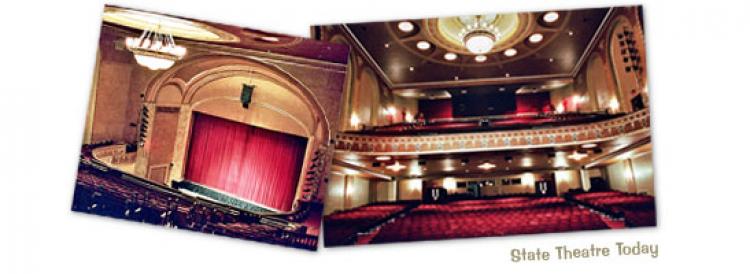
In December, 2003, the theater underwent another renovation—this time it was an extensive $3 million restoration and renovation intended to bring the theater back to its original splendor. The sound and lighting systems were updated to be state-of-the-art, while architectural experts watched over the cleaning and repair of the building’s terra cotta exterior.
Artists from a firm specializing in historic restorations oversaw the repair of the interior. The theater underwent ornamental plaster repair, decorative painting, replacement of house and lobby lighting, and installation of high tech sound and lighting systems.
The newly refurbished State Theatre was unveiled in October 2004. Today, the State Theatre is flourishing as a destination venue for the arts in New Jersey. It hosts annual festivals and community programs including dance, orchestra, opera, family events, and more.
Divine Performing Arts Chinese New Year Spectacular performed at the State Theatre Saturday and Sunday.
The Epoch Times proudly sponsors the Divine Performing Arts world tour. For more information, please visit www.DivinePerforminAarts.org
The State Theatre in New Jersey has its roots in 1921 vaudeville and silent films. Fully renovated, today the theater is a nonprofit venue that showcases premier performing arts and entertainment.
Performances hosted there include international orchestras, opera, Broadway musicals, world music, educational programs, and more. It attracts about 300,000 patrons every year.
The theater was designed by well-known theater architect Thomas W. Lamb, and opened on Dec. 26, 1921 for movies and other entertainment. Originally known as Reade’s State Theatre, it claimed the titles of one of the largest and most ornate and modern theaters in the region.
Located near Rutgers University in eastern New Jersey, admission was between 20 to 50 cents when the theater first opened. A few years later, the theater’s management was transferred to B.F. Keith theater chain, whose operators ran the largest group of vaudeville theaters and biggest booking agency for vaudeville acts in the east.
Eventually merging with Keith-Albee-Orpheum, the concern was acquired by The Radio Corporation of America (RCA) in 1928, which also became a large financial backer of Radio City Music Hall in New York City around the same time. The new subsidiary of RCA was dubbed Radio-Keith-Orpheum (RKO).
After a brief decline in the 1960s and 70s, the theater was purchased by the New Brunswick Development Corporation in 1979 as part of the New Brunswick revitalization project. In 1987, the State Theatre was rescued again by the New Brunswick Cultural Center, and turned into a state-of-the-art showplace. It opened its doors again on April 24, 1988, garnering rave reviews from the media and audiences alike for its visual and acoustic presentation.
In December, 2003, the theater underwent another renovation—this time it was an extensive $3 million restoration and renovation intended to bring the theater back to its original splendor. The sound and lighting systems were updated to be state-of-the-art, while architectural experts watched over the cleaning and repair of the building’s terra cotta exterior.
Artists from a firm specializing in historic restorations oversaw the repair of the interior. The theater underwent ornamental plaster repair, decorative painting, replacement of house and lobby lighting, and installation of high tech sound and lighting systems.
The newly refurbished State Theatre was unveiled in October 2004. Today, the State Theatre is flourishing as a destination venue for the arts in New Jersey. It hosts annual festivals and community programs including dance, orchestra, opera, family events, and more.
Divine Performing Arts Chinese New Year Spectacular performed at the State Theatre Saturday and Sunday.
The Epoch Times proudly sponsors the Divine Performing Arts world tour. For more information, please visit www.DivinePerforminAarts.org


