St. Augustine was once a notorious sinner. The incident of his stealing pears in his childhood is forever branded into the minds of readers of his “Confessions,” and he is famous for his prayer “Give me chastity and continency, only not yet” (Book VIII, Ch. VII). It is precisely his former sinful life that makes him such a saint of hope: He shows that no one is beyond God’s mercy.
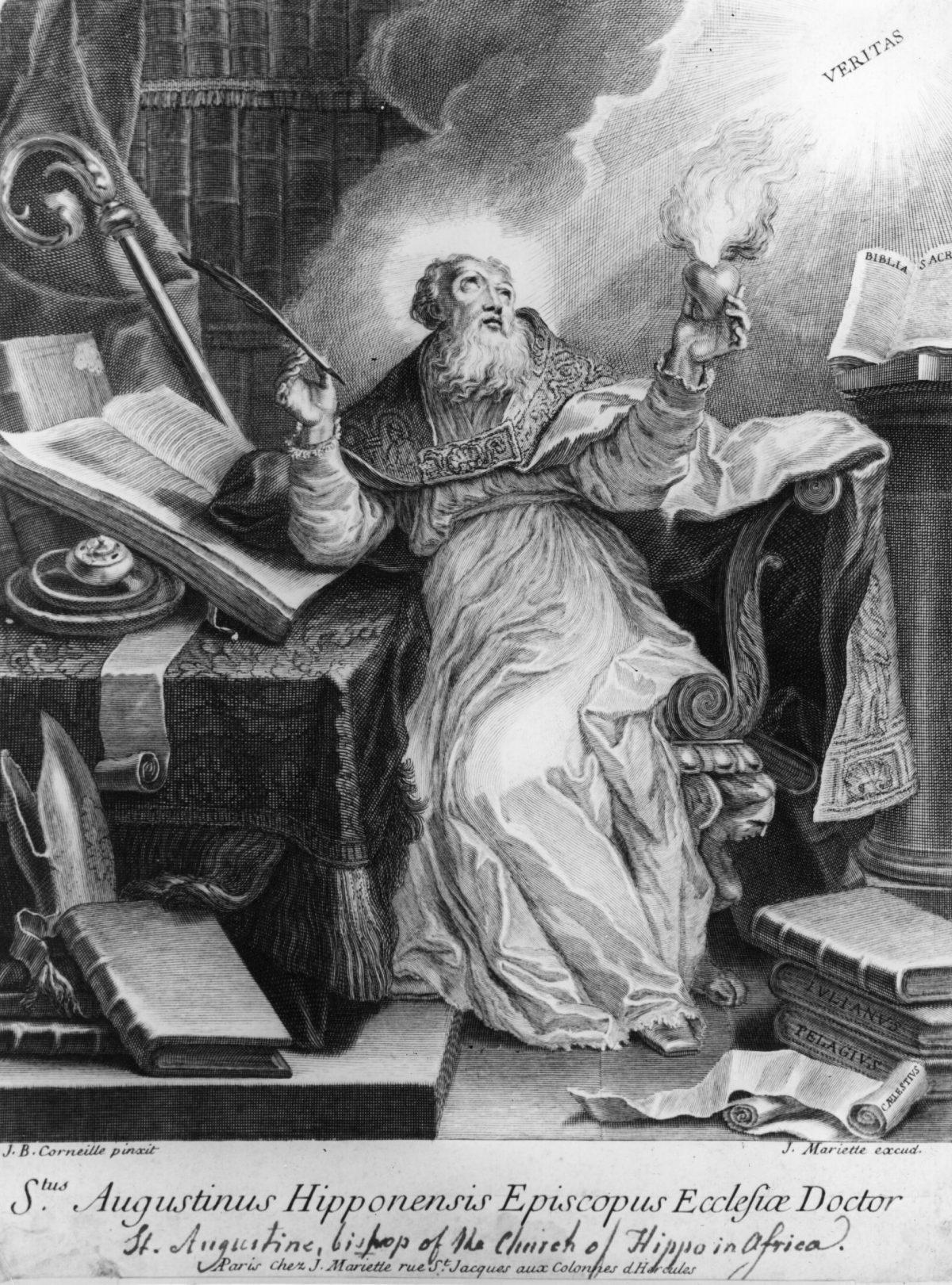
But beyond his witness to hope, St. Augustine had a take on love that may surprise many who think that faith simply labels all life’s pleasures as bad. After his conversion, St. Augustine realized that lust, gluttony, and drunkenness aren’t bad because their objects are dirty or impure. Instead, he realized that these sins are bad because, although their objects are good, sin keeps us from loving them appropriately.
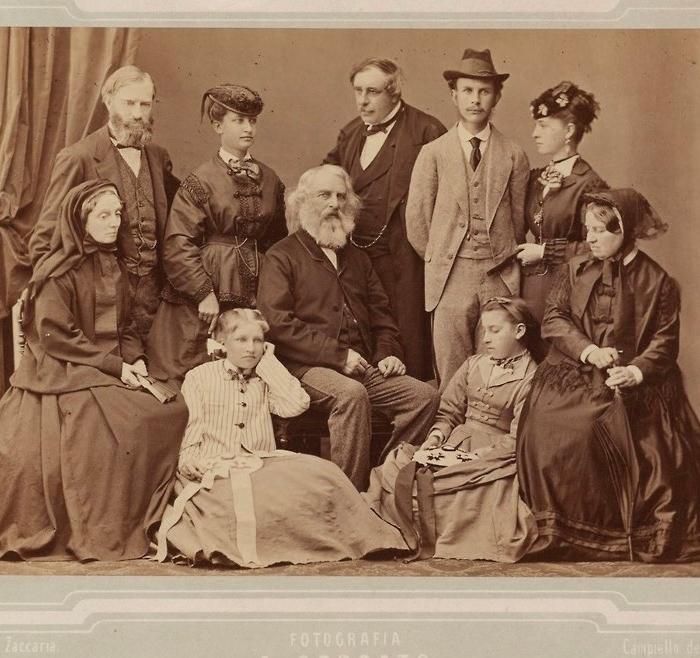
Longfellow’s poem begins with an acknowledgement that even our vices and the ordinary everyday moments of our lives can “frame a ladder” to God. God can bring forth good from both seemingly insignificant deeds and from our sins. In “The Enchiridion,” St. Augustine writes that God “would never permit the existence of anything evil among His works, if He were not so omnipotent and good that He can bring good even out of evil.” When these vices or circumstances are given to God to use, they become, as Longfellow wrote, “rounds by which we may ascend.”
Stanzas 3 through 5 list those things that must be corrected in order to ascend the ladder: our base desires, intemperance, hard-heartedness, and evil thoughts and deeds. I do wonder what St. Augustine would have said of Longfellow’s use of the phrase “the longing for ignoble things,” given that he believed that evil has no proper substance and that God made all things good. Evil is simply loving things inordinately; it is not the things that are ignoble but rather the desire to place them above God. Longfellow does, however, imply that it is not the desire for triumph that is in itself bad, but rather the “strife for triumph more than truth”; it is truth that should be sought first.
Man’s greatest achievements (such as the pyramids) and the natural beauty of mountains are good things that can lead us to God so long as we don’t stop short at them. If we lift our sights no higher than these things, we bear the weight of them “with shoulders bent and downcast eyes.”
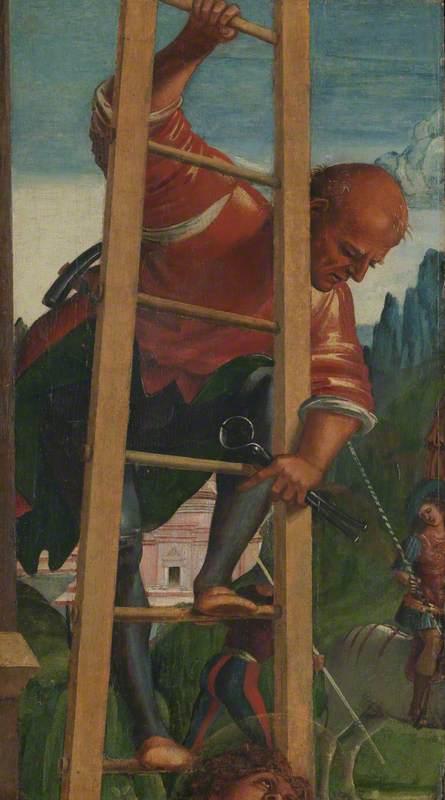
St. Augustine wrote, “The good make use of the world in order to enjoy God, but the evil, in contrast, want to make use of God in order to enjoy the world.” As Longfellow implies, both the world and the mind of man are too finite to fulfill man’s desires. If our happiness is sought in created things or in our own accomplishments, we will end up crushed by the weight of them instead of lifted upward by them. We can either use them as stairs in our ascent or end up like Atlas beneath the weight of the world.
It is interesting to note the tone of self-empowerment in the second half of the poem. If Longfellow diverges notably in any way from St. Augustine’s thought, it’s in the emphasis on how “we to higher levels rise,” “we may discern ... a path to higher destinies,” and “something nobler we attain” simply by merit of our own strivings. The poem paints a picture of man as a being who can free himself from the shackles of sin in order to make a triumphant march up the mountains to heaven. No mention is made of the role of grace in his ascent, and it’s unclear if the “something nobler we attain” is simply a life of virtue or true union with God.
By contrast, in “Sermon 153,” St. Augustine says, “Anybody who trusts in his own strength is laid low himself before the fight even begins.” Through sin, we are made unhealthy, but it is the Divine Physician who returns us to health. We lack the ability to heal ourselves or to rise to God without his help.
However, the last stanza brings us back to one of the core messages of St. Augustine’s life. Though the past is irrevocable, it is not wasted. Even the mistakes in our lives can be used for good, because the greater the healing that is required, the more God’s glory shines through. The more he has to help us in our ascent up the ladder, the more his goodness is revealed.
Our only task is to receive the good things God gives us and, through the practice of virtue, to maintain the proper order of our love for these goods. In this way, the good things of the world will direct us beyond ourselves to the ultimate Good we were created to love, namely God himself.