“Away with you, vile insect!” said a Lion angrily to a Gnat that was buzzing around his head. But the Gnat was not in the least disturbed.
“Do you think,” he said spitefully to the Lion, “that I am afraid of you because they call you king?”
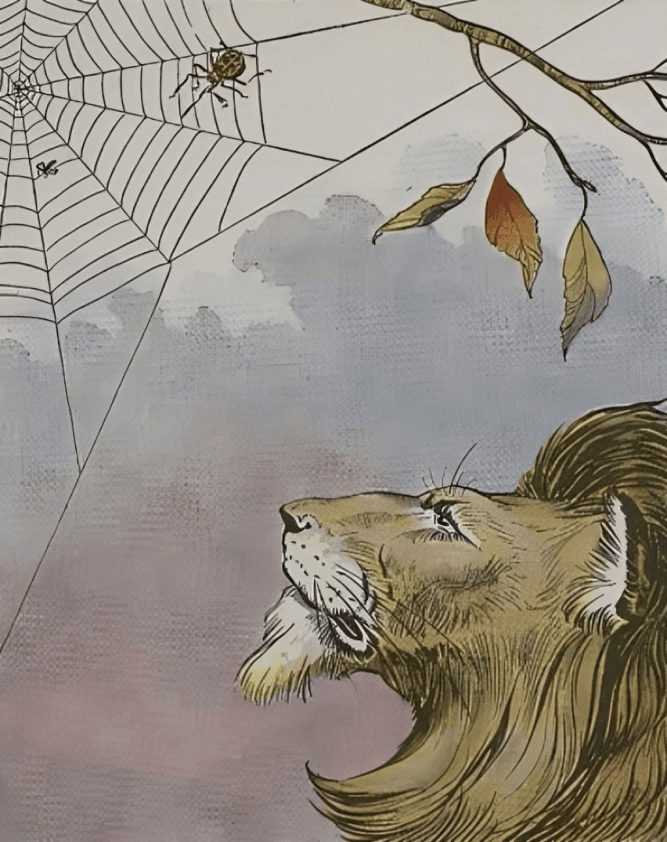
"The Lion and the Gnat," illustrated by Milo Winter, from “The Aesop for Children,” 1919. PD-US
The next instant he flew at the Lion and stung him sharply on the nose. Mad with rage, the Lion struck fiercely at the Gnat, but only succeeded in tearing himself with his claws. Again and again the Gnat stung the Lion, who now was roaring terribly. At last, worn out with rage and covered with wounds that his own teeth and claws had made, the Lion gave up the fight.
The Gnat buzzed away to tell the whole world about his victory, but instead he flew straight into a spider’s web. And there, he who had defeated the King of beasts came to a miserable end, the prey of a little spider.
Pride over a success should not throw us off our guard.
This fable is reproduced from “The Aesop for Children” (1919).Aesop (c. 620–564 B.C.) was a Greek storyteller credited with a number of fables now collectively known as “Aesop’s Fables.” His tales, with their moral value, have long influenced our culture and civilization, contributing not only to the education and moral character building of children, but also, with their universal appeal, to the self-reflection of adults alike who have chosen to embrace the virtues or heed the warnings within.
Share your stories with us at [email protected], and continue to get your daily dose of inspiration by signing up for the Inspired newsletter at TheEpochTimes.com/newsletter