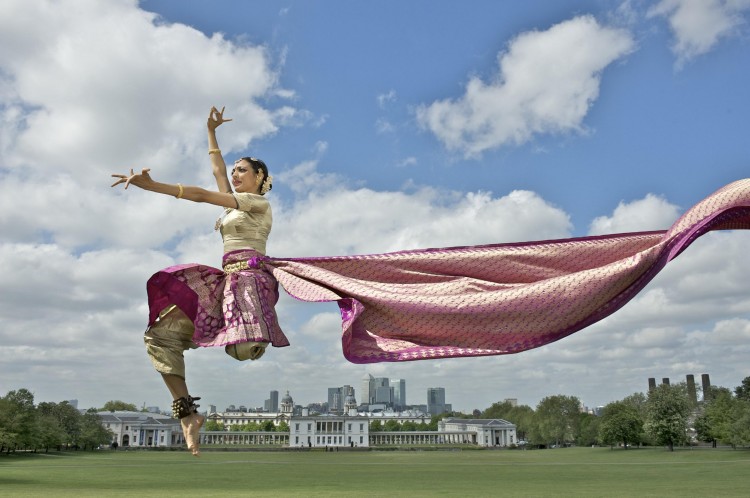
For many people, what they know about dance from India and Pakistan doesn’t extend much further than Bollywood. In fact its culture is vast, spanning thousands of years.
Christopher Bannerman, Professor of Dance at Middlesex University, has an extraordinary knowledge of South Asian dance. It’s unusual for any Westerner to be so well-schooled in another culture, and, says Bannerman, it partly stems from his upbringing.
“Although I wouldn’t have said this a few years ago, in the fullness of time one realises that one has had certain experiences in life that set something in place, so that I had a feeling for Asia and for the East. I didn’t realise it so much at the time thinking back on it,” he admits.
When he was growing up in Canada, he trained in the Canadian National Ballet. His father was doing a PhD in Chinese philosophy, and his house had many Chinese artifacts, his grandfather had apparently been a sea captain in Japan, and his family had some friends from India.
During his year out in South Asia, he absorbed the wonders of South Asian dance, practised yoga, and spent time in North India with the Tibetan community. In fact he watched the dance more than he performed it, when he realised how difficult it was.
The years of training dancers go through is most commendable. Dance is a tough discipline. It requires hard work, flexibility, strength, coordination, and proprioception - which Bannerman describes as “the internal feeling in your joints that allows you to sense where your arm is in space”. “That coordination, that proprioception of knowing where you are in space, that makes you a literate body, very watchable, very compelling.”