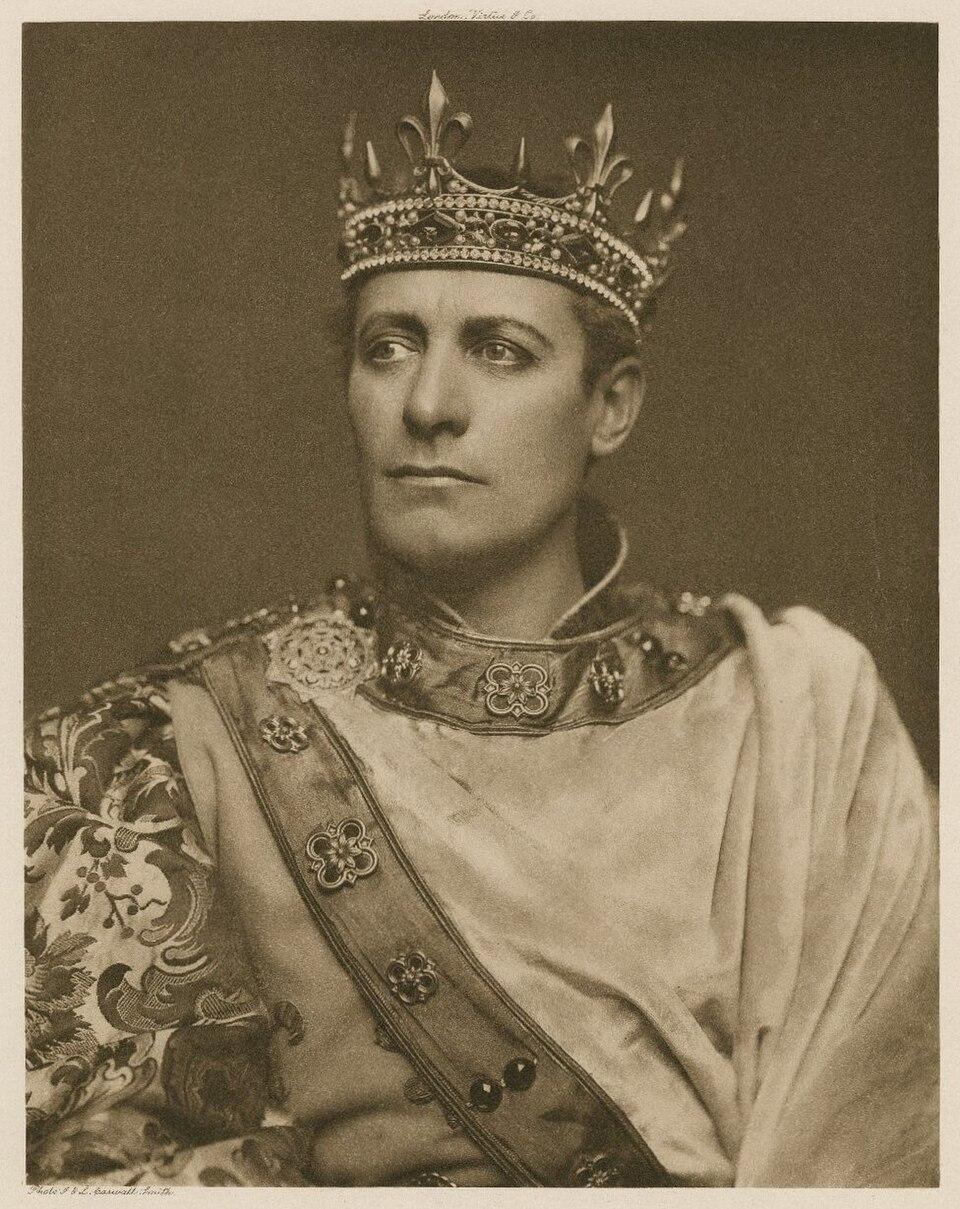
More than one critic has argued that in “Henry V,” William Shakespeare presents his ideal version of a king.
“‘Henry V’ is ... a dramatization of what makes for excellence in a good king,” wrote Shakespeare scholar Gideon Rappaport in his excellent book “Appreciating Shakespeare.” “In Henry, Shakespeare’s ideal king, we find virtue, justice, self-knowledge, wit, the power to inspire his followers, and humility before God.”
Assuming that that’s the case, what’s the value of a play about ideal kingship today, when the age of kings is long over? Here, we must conceive of kingship more broadly than we’re used to. Many of us fill the role of a “king” in some limited sense: a father, a business leader, a priest. The principles of kingliness remain valid and valuable for anyone who holds a position of authority, paternality, and leadership. Studying kingship—particularly Shakespeare’s depiction of its ideal form—teaches us about just rule and the traits necessary for a leader to achieve excellence.
What traits of ideal kingship do we see mirrored in the character of Henry V? He rises up from the page or the stage as an indomitable figure, powerful and lifelike. Henry exemplifies the most important trait of a good leader: acting responsibly.
Spirited Yet Mature
Even before Henry V takes the stage, we learn from the archbishop of Canterbury that the king recognizes the weight of responsibility entrusted to him. This is the first step for a leader: to take his or her role seriously. The archbishop recounts that after his rather wild youth, Henry quickly sobered up when he realized that the weight of the crown was descending upon his brow. The archbishop explains in Act 1, Scene 1:The breath no sooner left his father’s body, But that his wildness, mortified in him, Seem’d to die too ... Never was such a sudden scholar made; Never came reformation in a flood, With such a heady currance, scouring faults.
Henry rises to the burden of kingship with the gravity worthy of a great leader.Every leader must also wrestle with a paradox inherent in law and governance: the paradox between justice and mercy. As any parent, schoolteacher, or politician will know, a certain tension exists between maintaining order and maintaining compassion. If you never enforce any rules, you invite a chaos that is damaging both to the community and the individual. You become a weak leader, easily manipulated, no longer safeguarding the community entrusted to you.

Yet if you never suspend the rules, you create a burdensome environment devoid of human sympathy, devoid of mercy. As another of Shakespeare’s great characters puts it in “The Merchant of Venice,” mercy falls from heaven like a refreshing dew. Shakespeare’s Henry shows a balance between the two: He’s not afraid to punish when the good of the state demands it, yet he also seeks to avoid cruelty and to suspend the law when he can without damaging the common good.
Shakespeare establishes this character trait early on when, in Act 2, Scene 2, Henry deals with a plot against him. The treacherous Lord Scroop, the earl of Cambridge, and Sir Thomas Grey all advise Henry not to forgive a drunk who was caught criticizing the king—yet, ironically, they themselves have specific designs against the king. Henry forgives the drunk against the advice of the traitors, in an act of mercy. But then he brings down the rod of justice when he confronts the three lords with their treason: “The mercy that was quick in us but late,/ By your own counsel is suppress’d and kill’d.” He condemns them to death.
Rappaport wrote: “The scene is important in revealing both that Henry will not tolerate the kind of rebellions that his father had to war against all his reign, and that Henry, in his judgments, tempers justice with mercy. He is merciful when real danger to the state is not involved, but he metes out justice in response to dangerous treachery.”
The balance between justice and mercy is again visible in Act 3, when Henry insists that the French people be well-treated by his army.
Henry commands, “We give express charge that in our marches through the country there be nothing compell’d from the villages; nothing taken but paid for; none of the French upbraided or abus’d in disdainful language.” Henry will not tolerate cruelty, even to his enemies. If his own men engage in cruel actions that harm the common good, he will punish them.
At the same time, Henry doesn’t burden his men with loads he’s not willing to carry himself. This, too, is a trait of a great leader. He or she suffers alongside his or her followers, bearing their burdens with them. The best leaders are the first to set their hand to a hard task, the least likely to complain of wind and rain and hardship, the most cheerful in hard times, and the calmest under pressure. The leader doesn’t send others to “do the dirty work” while staying behind. The best leaders lead from the front.
Forth he goes, and visits all his host, Bids them good morrow with a modest smile, And calls them brothers, friends, and countrymen ... That every wretch, pining and pale before, Beholding him, plucks comfort from his looks.
Henry sleeps out in the cold along with his men. Disguised, he sits at their fires, sharing their meager rations. This demonstrates both his concern for his men and his commitment to his cause—he doesn’t expect only others to deal with the hardship necessary to accomplish the goal. He embraces it himself because he believes in the cause, which instills confidence in his followers.Henry inspires his men not only with his presence but also with his words and the fire of his convictions.
As Herschel Baker put it in the introduction to “Henry V” in “The Riverside Shakespeare”: “As he conveys to his bedraggled troops something of his own exhilaration he becomes the ideal man of action and the perfect leader of those ‘very valiant creatures’ who, supplied with beef and iron and steel, ‘eat like wolves and fight like devils.'”

Masterful Motivation
Shakespeare penned masterpieces of patriotic fervor in “Henry V.” These words ring with the courage needed in the heat of battle. The most famous example is the St. Crispin’s Day speech. It has grown beyond the confines of the play and into something immortal in its own right:“Westmerland: O that we now had here But one ten thousand of those men in England That do no work to-day!
Henry: What’s he that wishes so? My cousin Westmerland? No, my fair cousin. If we are mark’d to die, we are enow To do our country loss; and if to live, The fewer men, the greater share of honor ... If it is a sin to covet honor, I am the most offending soul alive. No, faith, my coz, wish not a man from England. God’s peace, I would not lose so great an honor As one man more methinks would share from me ... We few, we happy few, we band of brothers; For he to-day that sheds his blood with me Shall be my brother.”
Also noteworthy is Henry’s speech among the ruined battlements and blazing fires of the siege of Harfleur:“Once more unto the breach, dear friends, once more; Or close the wall up with our English dead. In peace there’s nothing so becomes a man As modest stillness and humility; But when the blast of war blows in our ears, Then imitate the action of the tiger; Stiffen the sinews, conjure up the blood, Disguise fair nature with hard-favor’d rage ... Dishonor not your mothers; now attest That those whom you call’d fathers did beget you ... And you, good yeomen, Whose limbs were made in England, show us here The mettle of your pasture.”
Such rhetoric gets the blood pumping and incites the fighting spirit. Every leader needs a way—verbal or otherwise—to encourage the team when things get hard, as they inevitably do. Henry knows how to do this.Still, in private moments, we see that Henry’s bravado wanes. Doubt enters his mind and he prays to God, fearing for his men. In Act 4, Scene 1, after the soldiers depart, he speaks of the burden that lies on the king: the burden of bearing responsibility for the fate of all his soldiers.
Then he prays, “O God of battles, steel my soldiers’ hearts/ Possess them not with fear!” But in front of his men he shows courage, confidence, and commitment. Sometimes leaders have to swallow their own fear in order to give others courage.
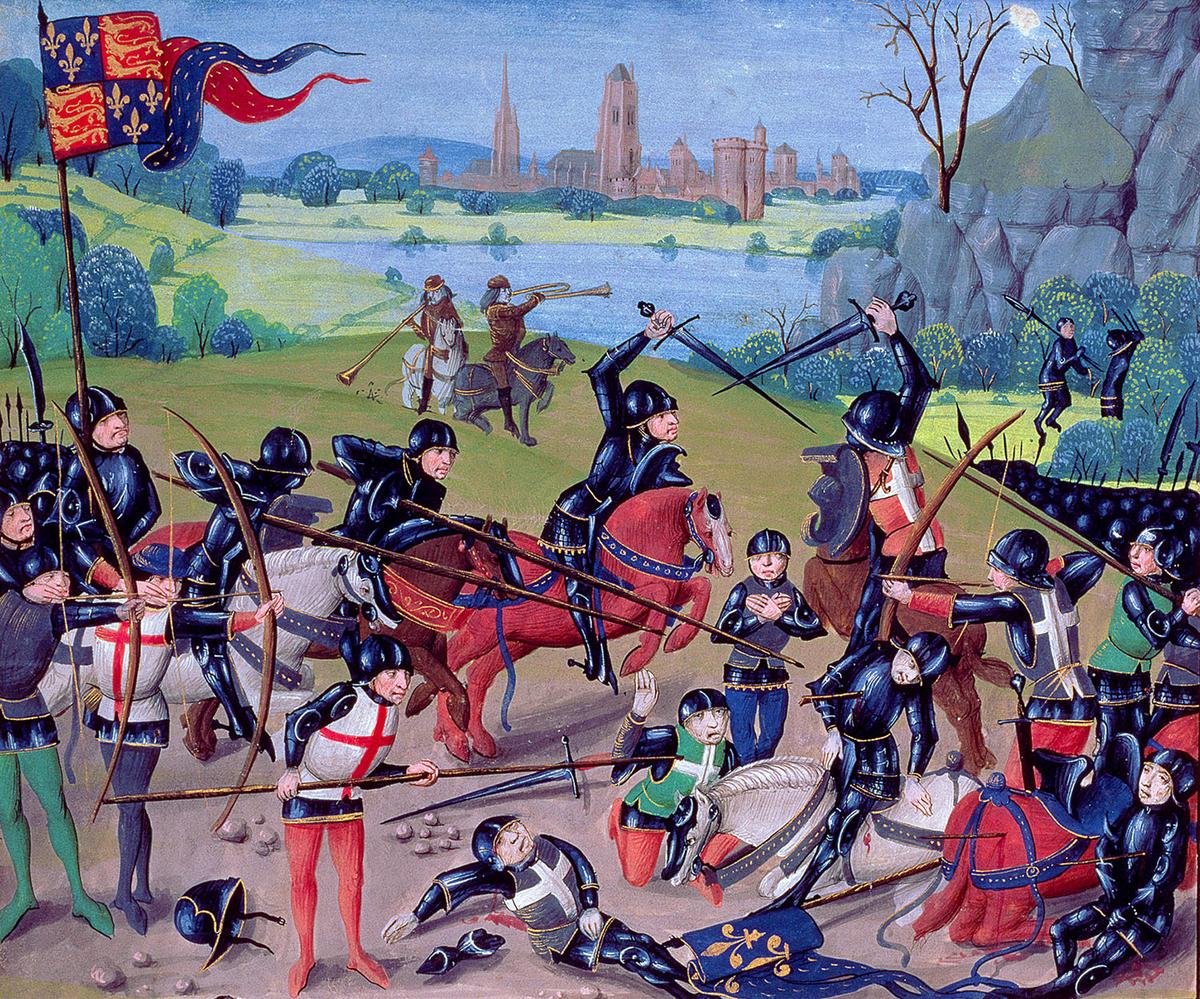
At the same time, great leaders are not arrogant. When Henry achieves a stunning victory at Agincourt, France, against all odds, he says, “Praised be God, and not our strength, for it!” and “O God, thy arm was here;/ And not to us, but to thy arm alone/ Ascribe we all!”
In Henry’s firmness and justice, tempered by mercy; in his high expectations of his followers, tempered by his willingness to hold himself to the same standard; and in his confidence and inspiring language, tempered by humility, we see flashes of shining brilliancy, of greatness, of the ideal leader. Of course, even Henry is a human character in the end (although perhaps less human and more idealized than many of Shakespeare’s creations. The traits he embodies are the traits real leaders should pursue—with all the courage and confidence embodied in Shakespeare’s interpretation of the king.