A Traveler had hired an Ass to carry him to a distant part of the country. The owner of the Ass went with the Traveler, walking beside him to drive the Ass and point out the way.
The road led across a treeless plain where the Sun beat down fiercely. So intense did the heat become, that the Traveler at last decided to stop for a rest, and as there was no other shade to be found, the Traveler sat down in the shadow of the Ass.
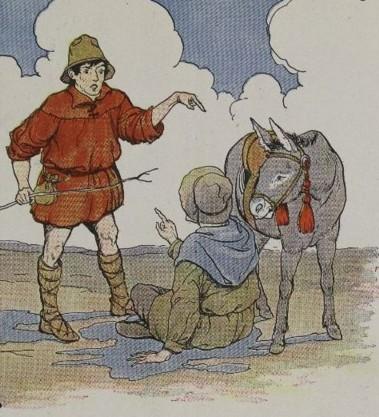
"The Ass and Its Shadow," illustrated by Milo Winter, from “The Aesop for Children,” 1919. PD-US
Now the heat had affected the Driver as much as it had the Traveler, and even more, for he had been walking. Wishing also to rest in the shade cast by the Ass, he began to quarrel with the Traveler, saying he had hired the Ass and not the shadow it cast.
The two soon came to blows, and while they were fighting, the Ass took to its heels.
In quarreling about the shadow we often lose the substance.
This fable is reproduced from “The Aesop for Children” (1919).Aesop (c. 620–564 B.C.) was a Greek storyteller credited with a number of fables now collectively known as “Aesop’s Fables.” His tales, with their moral value, have long influenced our culture and civilization, contributing not only to the education and moral character building of children, but also, with their universal appeal, to the self-reflection of adults alike who have chosen to embrace the virtues or heed the warnings within.
Share your stories with us at [email protected], and continue to get your daily dose of inspiration by signing up for the Inspired newsletter at TheEpochTimes.com/newsletter