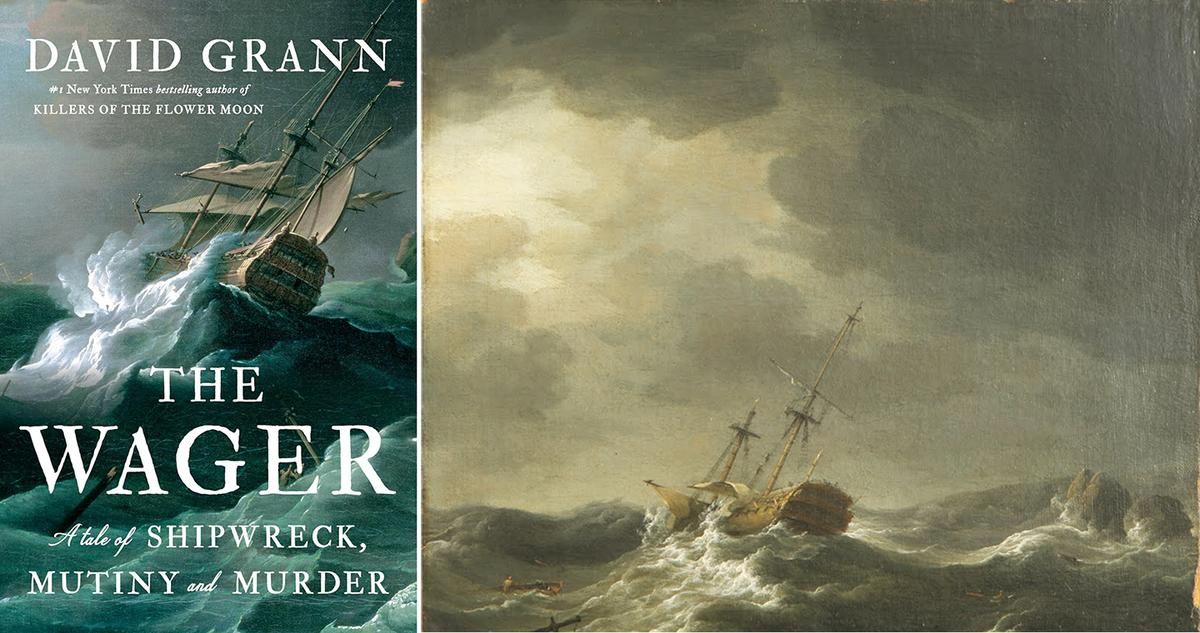
If you’ve read David Grann’s bestselling nonfiction book, “The Wager,” you’ve encountered the same maritime world Charles Brooking recorded in paint. His canvases captured the same conditions David Grann reconstructs from documents and testimony: the violence of open-ocean storms, the fragility of wooden hulls, the decisions that determine who comes home.
Early Life
Born in England, Charles Brooking (1723–1759) was largely self-taught and specialized in atmospheric marine painting. The details of Brooking’s biography are sparse, as is often the case for artists outside the patronage networks of institutions such as the Royal Academy. Founded in 1768, the Royal Academy quickly became a major gateway for exhibitions, commissions, and recognition in British art. Inclusion could open access to patrons and steady institutional work. At the same time, exclusion often meant relying on informal sales and dealers, with less stable income and fewer surviving records of an artist’s life and career.It is widely believed that his father, Charles Brooking senior, was a painter by trade. Young Brooking began working as an apprentice to his father by age 10, beginning a working life rooted in the decorative and pictorial trades from childhood. For much of his career, Brooking sold his paintings for well below their value, a circumstance not uncommon among artists without formal training.
Style and Artistic Influences
Brooking began, like most English marine painters of his generation, in the tradition established by Peter Monamy, the leading British marine painter in the early 18th century. Monamy also worked in the tradition of the Dutch masters, including Willem van de Velde the Younger and Willem van de Velde the Elder, who helped shape the visual language of British marine painting.Even so, Brooking’s mature style is distinct. Where the Dutch tradition often favors grandeur and formal balance, Brooking’s scenes feel observed rather than arranged. Light is specific, waves have direction and weight, and wind is shown through its effect on sails and rigging.
Across his works, Brooking built a steady visual language for Britain’s maritime world, moving between dramatic storytelling and tighter, more controlled studies of ships in motion and atmosphere. This focus on naval structure and maritime order is clear in “The Wager,” which depicts a Royal Navy vessel later wrecked off the coast of Chile in 1741. The ship carries a heavy, imposing presence, set against a brooding atmosphere that underscores the risks of imperial sea travel.
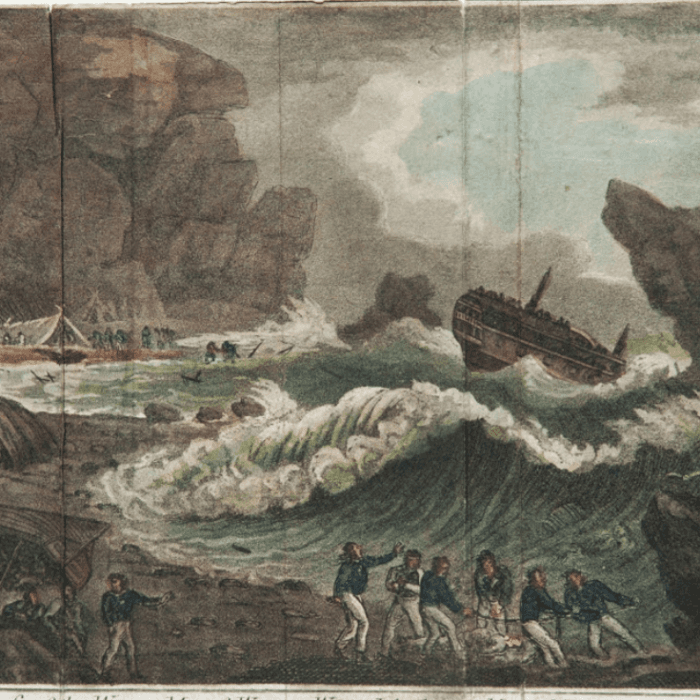

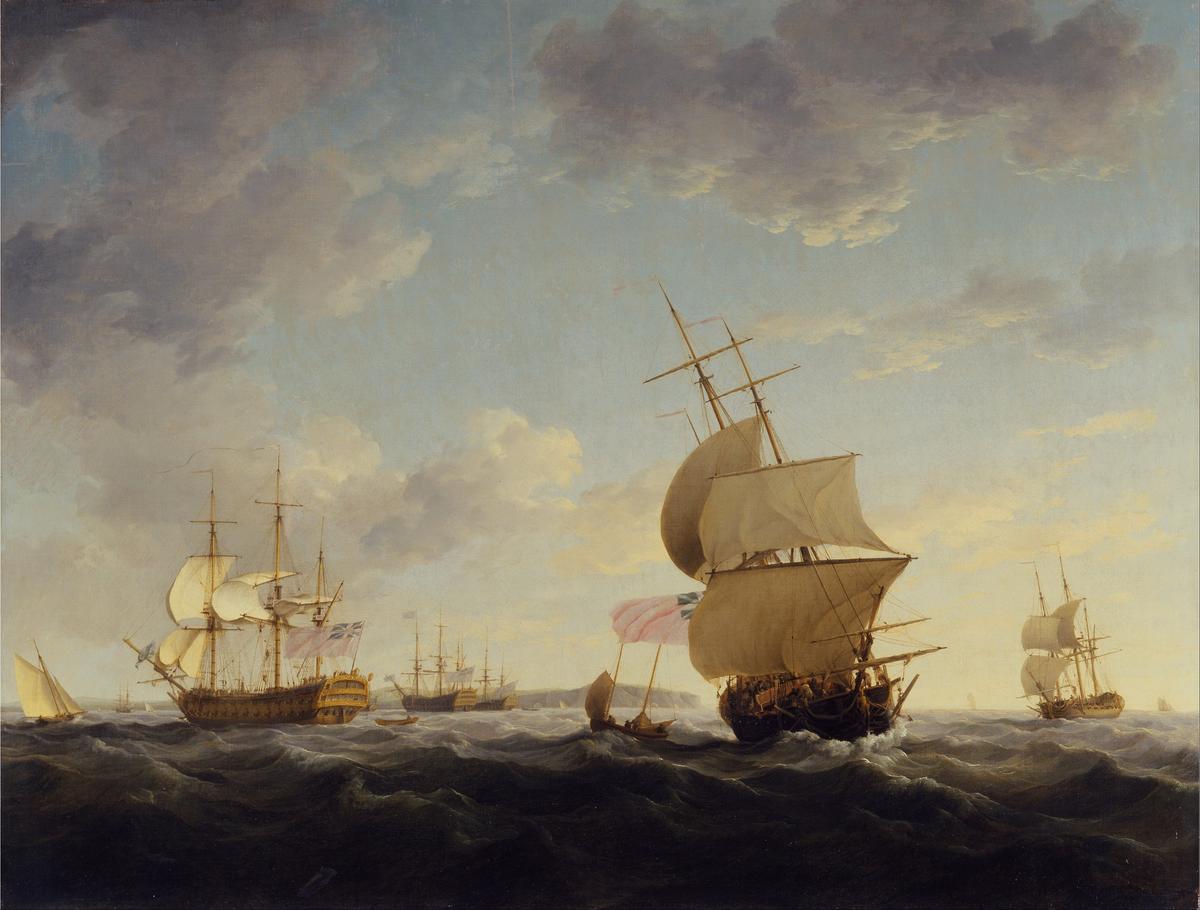
By the 1750s, in “Shipping in the English Channel,” Brooking shifted to a busier maritime thoroughfare. He carefully differentiates vessel types and uses shifting light and weather conditions to give the scene a sense of movement and flux.
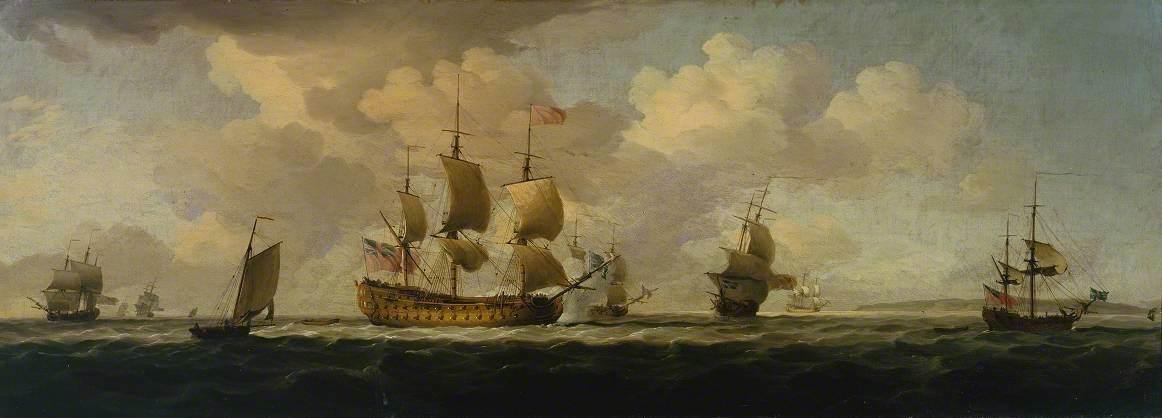
In “Ships in a Light Breeze,” he shows another side of the sea. The sea is relatively calm, and the clouds have parted for the sun. A 70-gun two-decker leads the way, flanked by smaller craft and distant warships. The result draws attention to the coordinated movement of naval forces. What holds all of this together is not the subject matter but the consistency of attention, and a refusal to let compositional difficulty get in the way of close observation.
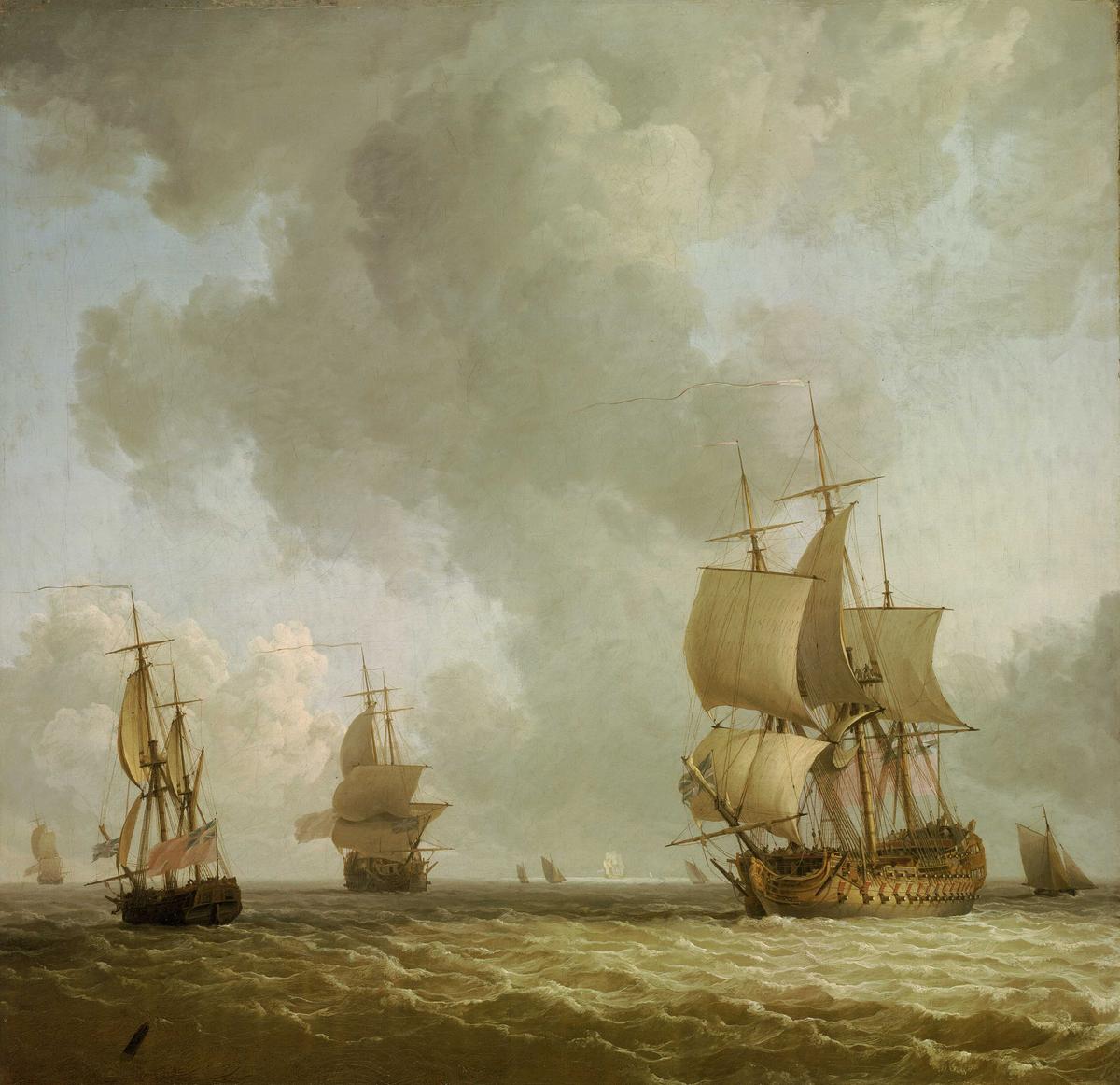
In 1754, Brooking secured a major commission from London’s Foundling Hospital, now the Foundling Museum. Because his own studio was too limited for the nearly 10-foot-wide canvas, he worked on site at the hospital. Brooking completed the maritime canvas in just 18 days. The painting, titled “A Flagship Before the Wind Under Easy Sail,” remains on display in the Picture Gallery of the Foundling Museum. That same year, Brooking was elected a governor of the Foundling Hospital, joining its governing body and helping oversee its administration and charitable work. In practice, the role also reflected the institution’s close ties with its artistic patrons, who were often drawn into governance as part of their cultural and philanthropic support.
Legacy and Collections
Brooking produced a body of work now regarded among the finest marine paintings in Britain, yet his life was marked by obscurity and poverty. His work can be understood by considering what he set out to depict: With paint on canvas, he captured fleeting conditions of wind and water at specific moments. The surviving paintings demonstrate the breadth of his achievement, from storm-driven drama to more subdued maritime scenes.Today, his paintings are held in major collections, including the National Maritime Museum, which houses 23 of his oil paintings. Brooking was also included in the 2016 exhibition “Spreading Canvas: Eighteenth-Century British Marine Painting” at Yale.