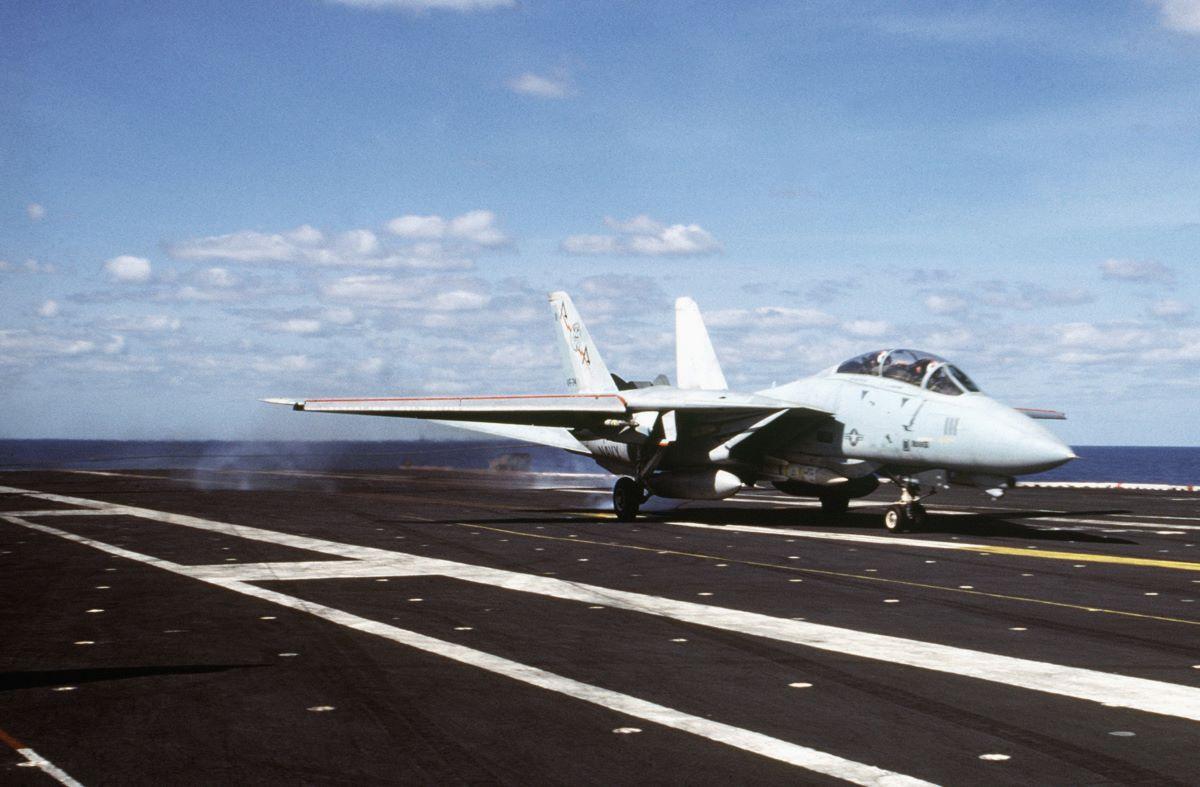
Nearing midnight during this week in history on Oct. 10, 1985, an EgyptAir Boeing 737 lifted off from Cairo International Airport. Its destination was Tunis, Tunisia. Seventy-five minutes into the three-plus hour flight and unbeknown to the EgyptAir captain, the commercial airliner was surrounded by fighter jets. It must have come as quite a shock when the captain’s request to land in Tunis was denied. It was the first of a number of shocking in-flight developments. The captain was also unable to communicate with Egypt. Scrambling for another alternative to land the plane, he requested to approach the airport in Athens. Denied. Soaring over the Mediterranean Sea, unable to contact Egyptian authorities for directions and being denied a place to land in the pitch of night, the captain appeared out of options. Suddenly, four F-14 Tomcats turned on their lights and moved wing-to-wing with the 737.
It was the Americans. They had arrived on the orders of President Ronald Reagan to intercept the flight and force it to land at the NATO air base in Sigonella, Sicily. The F-14 Tomcats had been guided to the 737 by the E-2C Hawkeye radar surveillance planes. When the EgyptAir captain attempted to communicate with Egyptian officials, it was the EA-6B Prowler that jammed the airliner’s communications. The captain of the commercial plane had little choice but to cooperate with the fighter jets.
The Achille Lauro
The reason for the chaos in the air originated several days prior on Oct. 7 aboard an Italian luxury ocean liner called the Achille Lauro. The cruise ship had embarked from Genoa on Oct. 3 and had spent several days cruising through the Mediterranean. Aboard the ship were 331 crew members, most of whom were Italian, and more than 750 passengers. When the ship arrived in Alexandria on Oct. 7, most of the passengers disembarked to visit the famous city. Approximately 70 passengers remained onboard to continue the cruise to Port Said.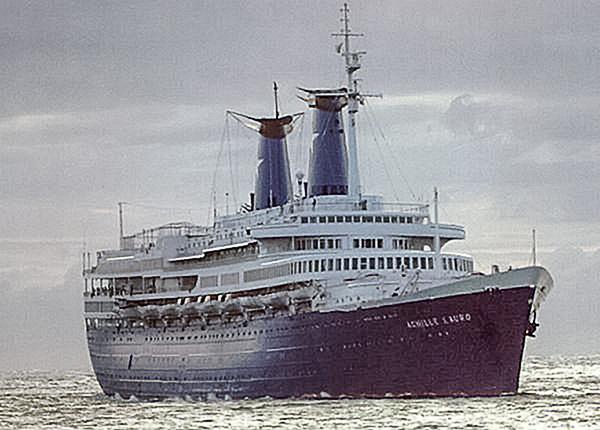
After leaving Alexandria and making for Port Said, four heavily armed members of the Palestinian Liberation Front (PLF)—a splinter group of the Palestinian Liberation Organization (PLO)—hijacked the ship. The terrorists demanded that Israel release 50 Palestinian prisoners who had been captured during an operation on the PLO headquarters in Tunisia. The PLF members forced the ship to sail for Tartus, Syria. The Syrians, however, refused the ship entry. The Achille Lauro anchored off the coast of Syria.
The Missing American
The terrorists had left the ship in the custody of the Egyptians under the guise that no one had been harmed. Gerardo de Rosa, the captain of the Achille Lauro, however, held the passport of a missing passenger. The missing passenger was a wheelchair-bound 69-year-old Jewish American named Leon Klinghoffer. It was soon made clear the resolution had not been peaceful.For two days, the world had awaited the outcome of what was indeed a most uncommon hijacking. The Italian government was especially interested considering the ship was Italian as well as nearly all the crew. On Oct. 9, shortly before going to the press, Prime Minister Bettino Craxi was informed there had been a fatality. Klinghoffer had been murdered. His body and wheelchair tossed overboard.

Nicholas Veliotes, the U.S. ambassador to Egypt at the time, was under the impression that no hostages had been killed. This was until he met with Capt. de Rosa who approached him with Klinghoffer’s passport. Upon receiving confirmation of the murder, he immediately contacted the embassy. Additionally, he made it clear that the Egyptians must be made aware of the death of Klinghoffer.
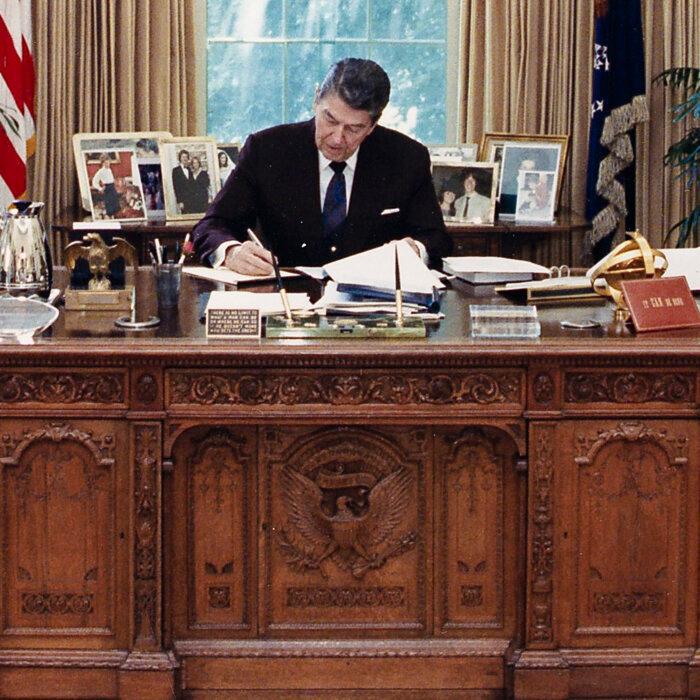
Reagan’s Call

Reagan had been giving a speech on tax reform at the Sara Lee headquarters in Deerfield, Illinois when he was informed that the terrorists were sent to Tunis. When asked by a reporter about his view of the situation, he expressed dismay that the Egyptians were releasing the hijackers, though he was relieved the hijackers were off the ship and that the surviving passengers and crew were safe. He was adamant, however, that the terrorists stand trial. In order for that to happen, they needed to be handed over.
“That is a problem we'll have to look at and find out,” Reagan said. “And if I had an answer to that specifically right now, I wouldn’t make it public.”
The American-Italian Standoff
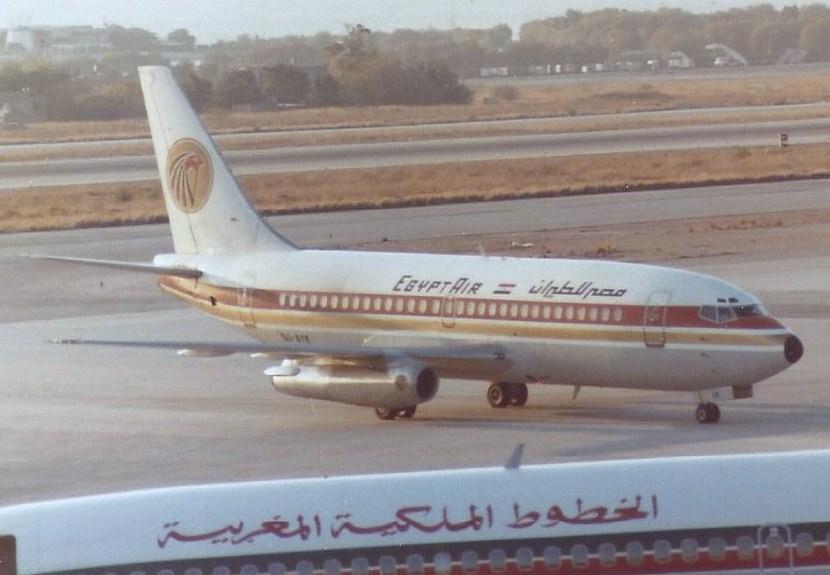
When the plane landed, it was immediately surrounded by a team of Navy SEALs. The objective was to secure the four hijackers along with another passenger, Mohammed Abul al-Abbas (later known as Muhammad Zaidan), who had been the mastermind of the Achille Lauro hijacking. The situation had gone from terrorist hijacking to peaceful resolution to revelation of murder to an illegal intercept of a commercial airliner. A new international incident was unfolding. The Americans surrounding the Egyptian airplane were surrounded by members of the Italian Air Force and Carabinieri, the Italian military police. A standoff had begun.
While the Americans and Italians were brandishing their weapons and senior officers argued over who could claim the terrorists, Reagan and Craxi scrambled to resolve what had become a crisis between allies. Reagan wanted the hijackers for their murder of an American. Craxi argued that the ship had been Italian and further claimed territoriality with the EgyptAir plane now in Sicily.
Thomas Longo, who was serving as a member of the U.S. Foreign Service at the White House at the time and proved pivotal in helping defuse the situation between the national leaders, recalled the situation.
A Sticky Situation
The moment of calm was quite brief as the affair was not simply about what to do with the terrorists. The White House now had to figure out how to address the situation with the Egyptians. President Mubarak had been placed in a difficult position for several reasons. The interception of a commercial flight not only usurped Egyptian sovereignty, but also put Mubarak in dire straits politically, some even marching in protests calling for his assassination.Mubarak was not the only one caught in the political crosshairs. The 1979 International Convention Against the Taking of Hostages required Italy to either extradite the terrorists or prosecute them. Craxi’s government chose to prosecute, much to the Americans’ chagrin. Turmoil within the Italian government reached a boiling point when it was decided to release Abbas. Craxi’s government immediately collapsed.
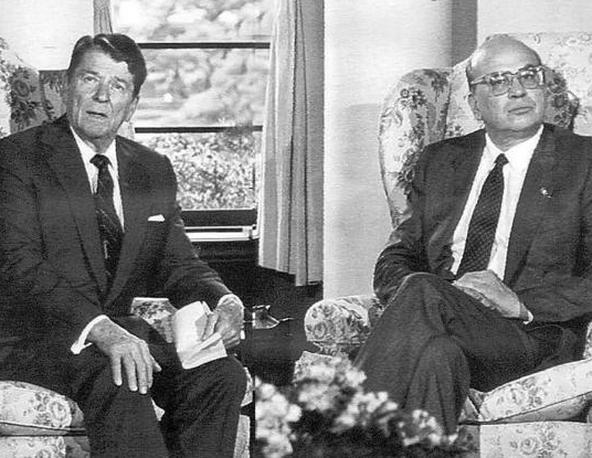
Dismayed and furious over Craxi’s decision regarding Abbas, the Reagan administration still much preferred Craxi over the Italian Communist Party, which was now aiming to capitalize on the situation. With diplomatic assistance from the Reagan administration, Craxi was able to quickly reassemble his government, which further proved crucial for broader international concerns.
The White House also moved to quell the strain with the Egyptian government. Despite not receiving permission from the State Department, Ambassador Veliotes assisted the situation when he went before the Egyptian press in Cairo and commended the Egyptian government for their successful negotiation aboard the Achille Lauro.
Stance of Terror
The Italians charged the four hijackers with hijacking, kidnapping, murder, and possession of arms and explosives. Altogether, the Italians indicted 13 individuals who were connected to the Achille Lauro affair, including Abbas and two others, who were sentenced, in absentia, to life in prison. Three of the four hijackers were sentenced to 15, 24, and 30 years in prison.Although the Achille Lauro affair finally came to a conclusion, the fight against terrorism was an apparent ongoing struggle. Known for hijacking planes, the hijacking of a cruise ship was an unexpected twist. Nonetheless, Reagan had made it clear where the Americans stood and where other nations should stand on the issue of terrorism.