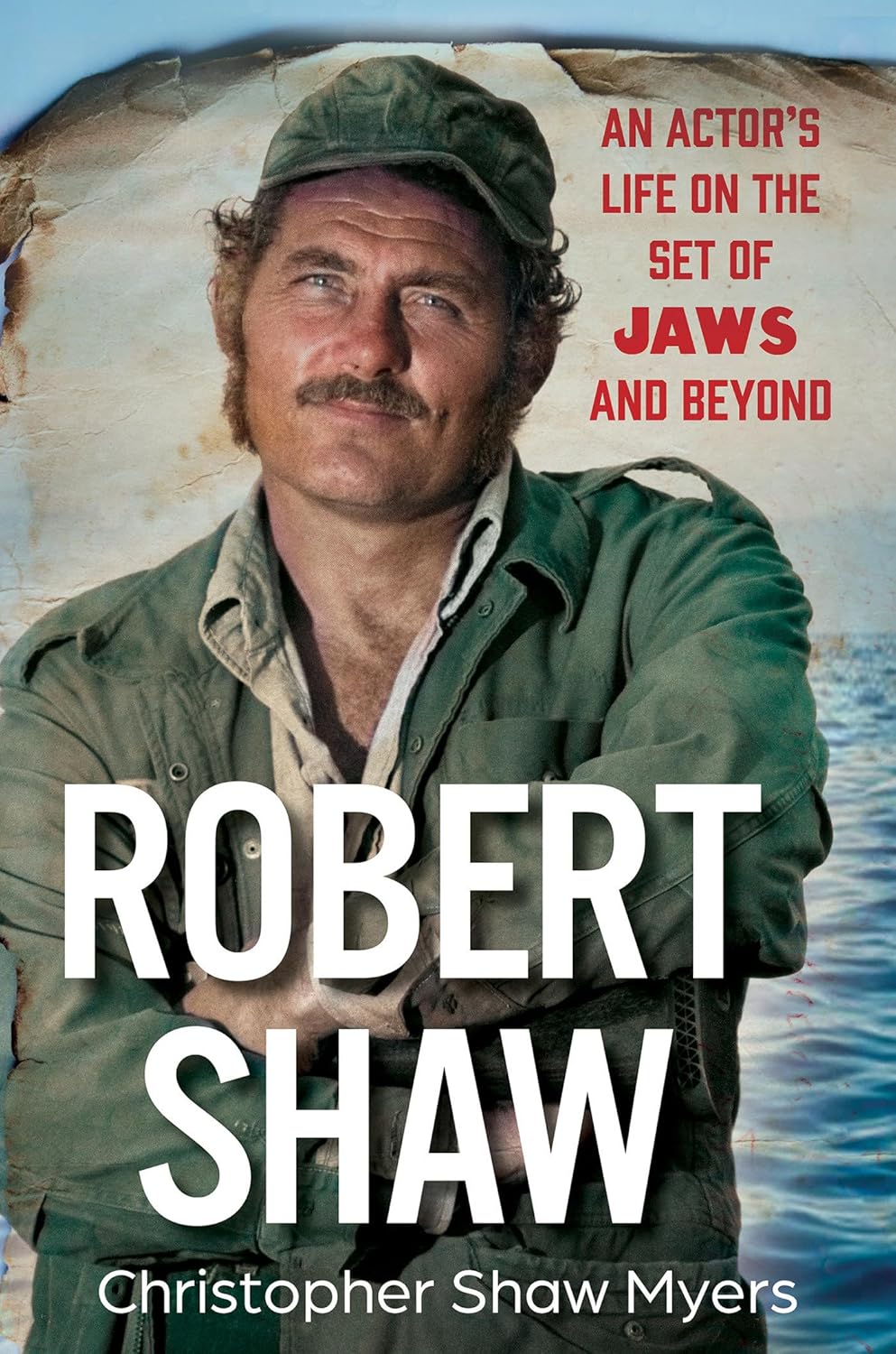
In Chapter 7 of Christopher Shaw Myers’s new book, “Robert Shaw: An Actor’s Life on the Set of Jaws and Beyond,” Nelson Mandela pays a visit to an apartheid-era South African school during the mid-1950s. What does this have to do with Robert Shaw, who played Quint in the 1975 film “Jaws”? Well, Mandela engaged in conversation with the actor’s sister Joanna, who was teaching at a blacks-only school in South Africa at the time.
That’s the big problem with this new biography. While the title suggests an in-depth consideration of the great British actor and writer’s work on the landmark film, the book is a bait and switch. It places a very heavy emphasis on Joanna Shaw, who is the author’s mother, and on Doreen Shaw, the family matriarch. The making of “Jaws” becomes a tenuous hook that holds this work together, and Robert Shaw comes across like a supporting player in what is supposed to be the story of his life and his greatest career achievement.
The book opens with a compelling sequence. Doreen Shaw defended herself in a judicial inquest in Scotland over the death of her husband, Thomas Archibald Shaw, a physician who served with distinction in World War I. Dr. Shaw suffered from alcoholism and committed suicide in January 1940.
The Shaw Family
Mrs. Shaw struggled to provide for her five children during World War II. This included a bizarre visit from novelist Daphne du Maurier, who used her position with the Women’s Royal Army Corps to force the struggling family to accept a child evacuated from Nazi-bombed London.Despite her challenges, Mrs. Shaw successfully raised her children. Joanna went to Cambridge, her sister Elizabeth attended Oxford, and Robert went into the Royal Academy of Dramatic Art. The book quotes Joanna’s details-free observation about other siblings, noting that Sandy went to “a prestigious medical school” while Wendy “became known throughout England for her work with autistic children.”
Presentational vagueness infects much of the book. Myers only mentions Shaw’s first wife by her first name and his third wife by her nickname. There is little attention given to Shaw’s 10 children plus the two stepchildren he adopted.
His second wife, Oscar-nominated actress Mary Ure, is treated very strangely. She isn’t identified by her last name or her achievements when she first turns up in Chapter 10. Then, she vanishes until Chapter 28 when the author details her career-ending alcoholism and her death in 1975 from an overdose of alcohol and barbiturates.
Faux Pas
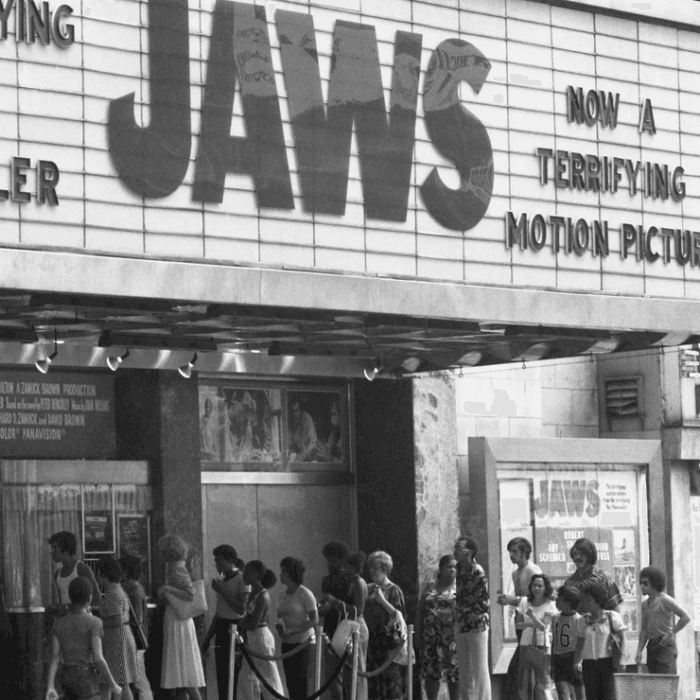
As for “Jaws,” which Myers insists on spelling as “JAWS,” that doesn’t become the crux of the story until page 115 of the 320-page book. Much of that section involves Shaw’s sister and mother visiting the set; Mrs. Shaw came uninvited.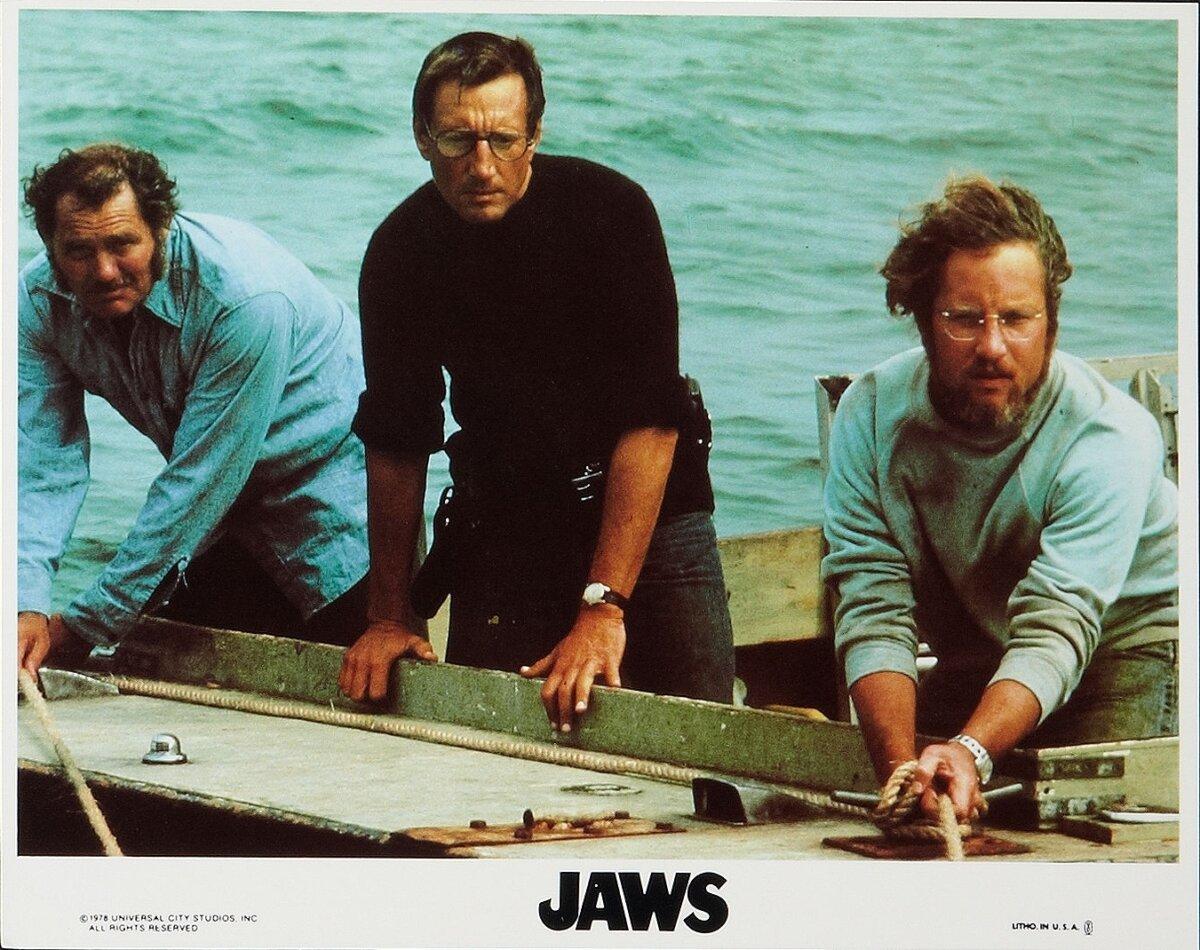
Joanna Shaw created a faux pas when referring to Steven Spielberg as “such an immature young lad” to Sid Sheinberg, the president of Universal Pictures. Sheinberg told her matter-of-factly that Spielberg’s hiring was his decision. Mrs. Shaw added to the unpleasantness later by loudly belittling the spending habits of her daughter and son during the production.
Myers cites the contentious relationship between Shaw and co-star Richard Dreyfuss, which was exacerbated by Shaw’s heavy drinking. His breakfast wake-me-up was coffee laced with vodka. Shaw and Dreyfuss had a rare moment of peace when Shaw detailed his unhappiness over the film adaptation of his Broadway drama, “The Man in the Glass Booth.” Why that exchange required its own chapter is a mystery. Their co-star Roy Scheider is barely present in the book.
While the “Jaws” story is still underway, Myers inexplicably switches back to the aftermath of Dr. Shaw’s death. Myers later provides an in-depth look at Joanna Shaw (by now, Joanna Myers) in her complaint about gender-based pay disparity against a Catholic college in the Philadelphia area. Myers calls the school “Mayapple Hill College,” but fact-checking this book with a Google search fails to turn up any school by that name.
Robert Shaw’s death is also handled in a bizarre manner. His passing is cited taking place in “August of 1978” with no details on when or how he died or even his age at the time of death.
If there is a positive element to this bewildering sloppiness, it would be to encourage the reader to do their own research into Shaw’s life and to revisit his classic films and acclaimed literary works. Don’t rely on this sloppy book for anything.