HOUSTON—When the French priest Claude Sicard rediscovered the Valley of the Kings in Egypt during the early 18th century, it practically placed a European welcome mat among the pharaonic ruins of Thebes, Egypt, now known as Luxor. The new curiosity about Egypt gave rise to a new archaeological discipline called Egyptology, especially after French soldiers discovered the Rosetta Stone in 1799 in northern Egypt.
Over the next 200 years, the Valley of the Kings was scoured by French and British archaeologists. They quickly came to realize that most of the tombs had been looted for many of their valuables.
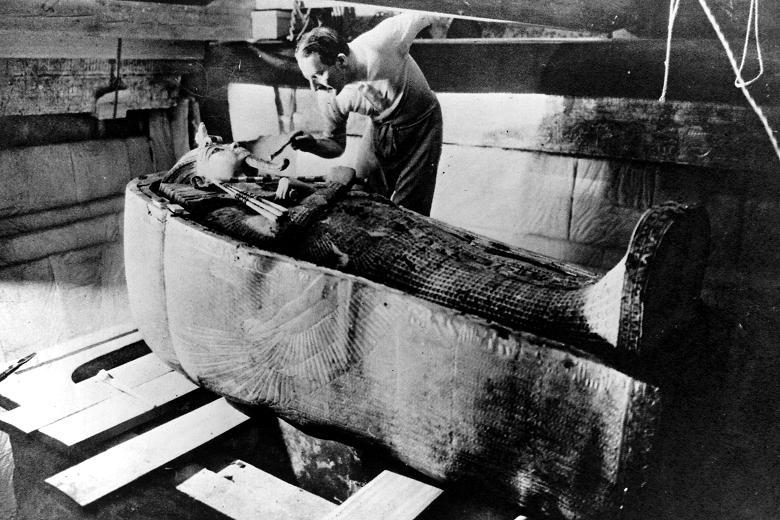
The turn of the 20th century did result in several new finds, including the tombs of Thutmose IV (1903); Yuya and Tuyu, the parents of Queen Tiye (1905); Siptah (1905); and Horemheb (1908). Howard Carter, a British archaeologist and Egyptologist who had discovered the Thutmose IV tomb while working for American businessman Theodore Davis, had remained in Egypt in hopes of more discoveries. He was soon hired by George Herbert, the fifth earl of Carnarvon.
Centennial Exhibits
After a century, the discovery of King Tut’s tomb remains a most fascinating adventure story. Far from the deserts, pyramids, and Nile River, one can witness the unfolding of this adventure here in the United States. Chances are, with King Tut exhibits in Houston, Las Vegas, and Asheville, North Carolina, an exhibit is relatively close by.In celebration of the 100-year anniversary of the discovery, these locations—the Houston Museum of Natural Science (HMNS), the Luxor Hotel and Casino, and the Biltmore—house “King Tut’s Tomb Discovery Experience,” “Discovering Tut’s Tomb,” and “Tutankhamun: His Tomb and His Treasures,” respectively. Each of these exhibits are ongoing and are ready for a second centennial celebration: the anniversary of the 1925 opening of the final coffin.
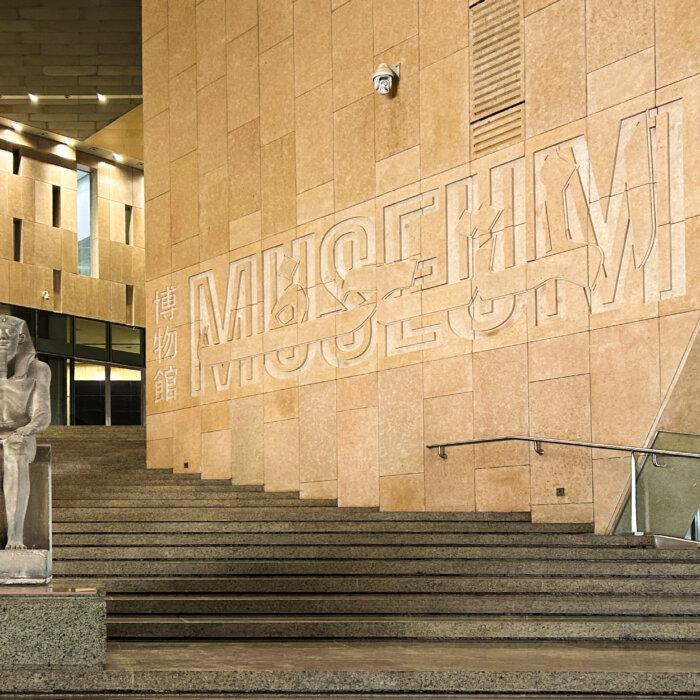
I recently visited HMNS’s “King Tut’s Tomb Discovery Experience.” Although there is no set expiration date for the large exhibit, one can never be too careful about these things. I felt that I should experience it before it’s gone, and I’m glad I did.
A Reconstructed Experience
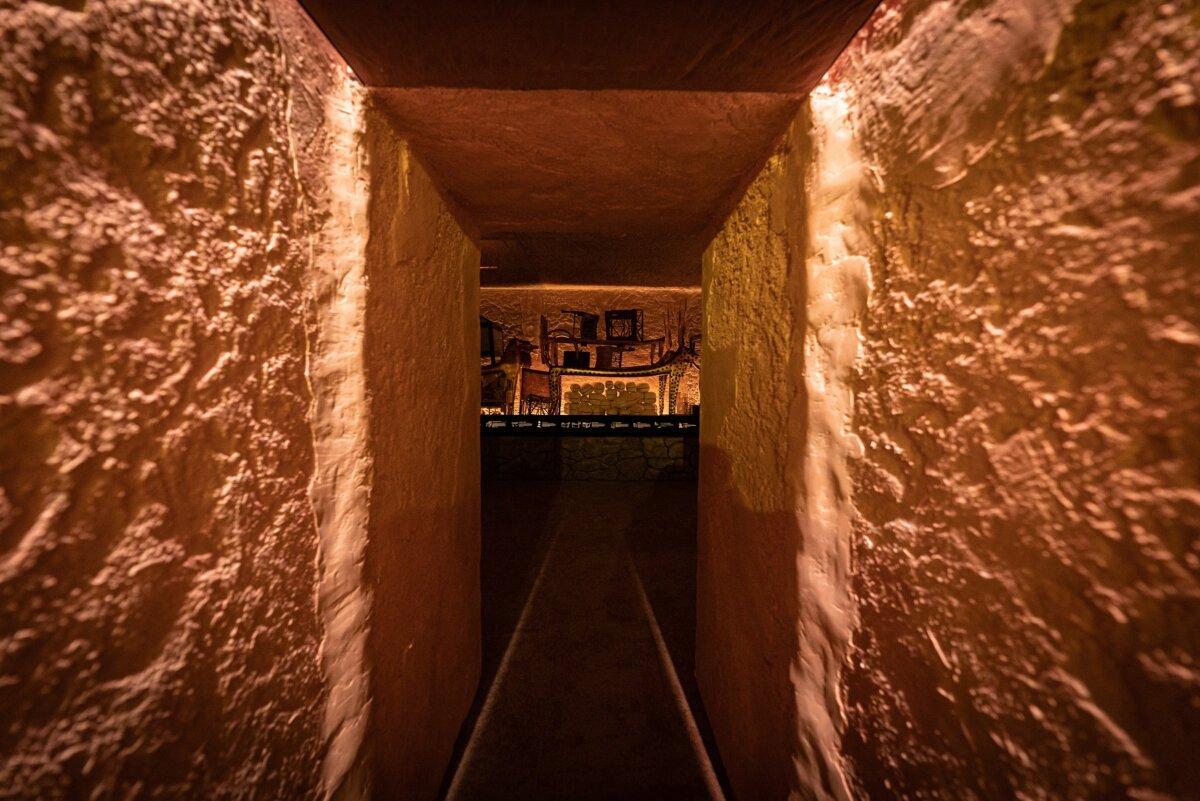
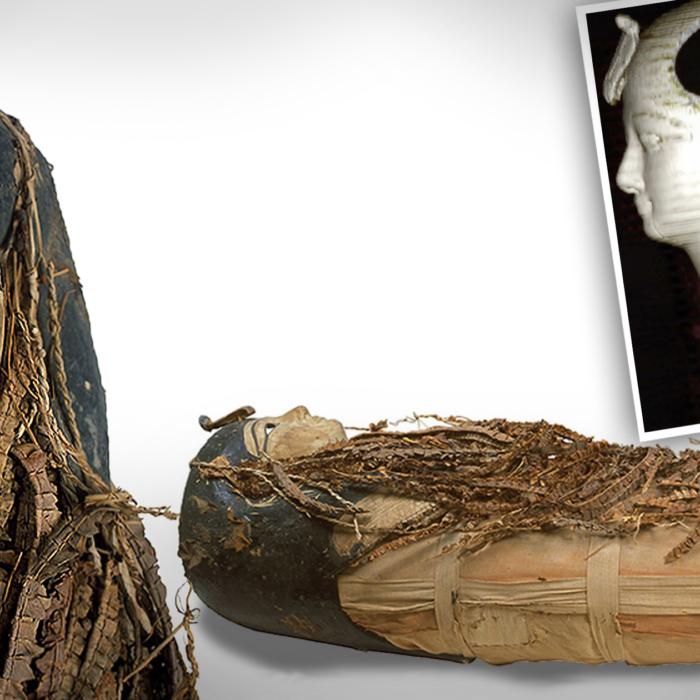
King Tut’s original tomb held 5,000 artifacts. But, just as at the other two locations, the artifacts on display at HMNS are not the originals. Those belong to the Grand Egyptian Museum in Cairo. There was a time from 1976 to 1979 when some of the original artifacts made their way to the United States, but that was orchestrated by the State Department under President Richard Nixon, although witnessed primarily during the Carter administration.
“The Egyptian Ministry created all the artifacts that are direct copies of the originals found in Tutankhamun’s tomb,” said Kathleen Havens, spokesperson for the Houston exhibit and HMNS director of curriculum and content.
Continuing to Inspire
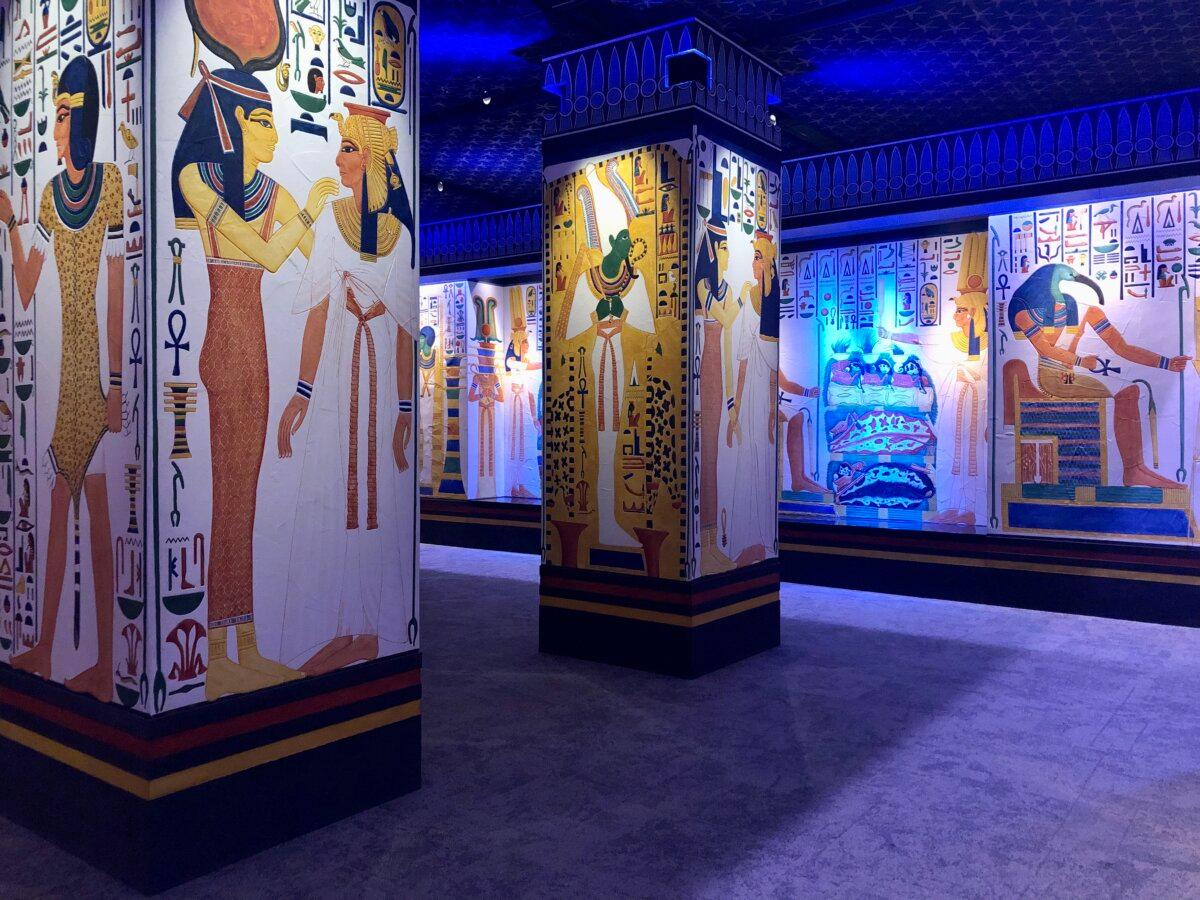
The exhibit not only demonstrates the world of ancient Egypt, but also how that world has influenced ours.
“Howard Carter’s discovery of King Tutankhamun’s tomb was a game-changer for archaeology,” Havens said. “It gave us an incredible window into ancient Egyptian life—how they buried their kings, what they valued, and their craftsmanship.
“It’s not just about the artifacts themselves; it’s about how that moment changed how we understand history and inspired many fields, from art to pop culture.”
When it comes to walking the elaborate exhibit, Havens noted that the crown jewel of the exhibit is the sarcophagus and its three nested coffins. They highlight the skill and artistry of the ancient Egyptians as well as the tomb’s grandeur and craftsmanship. Further, one of the primary goals of the exhibit, as with all three exhibits, is inspiration.
“We want people to feel the same excitement Carter must have felt when he first uncovered the tomb,” Havens said. “Walking through the exhibit, especially with the detailed re-creations, helps visitors, especially young people, connect with that sense of discovery. Our hope is that it sparks curiosity and inspires the next generation of explorers and scientists.”
For anyone interested in Carter’s discovery or the Valley of the Kings, or for any parents or grandparents looking to inspire the next generation, Carter’s moment is available for reexperiencing. Consider the American welcome mat to the pharaonic ruins laid.