The city of Ravenna in Italy lies outside of the main tourist axis of Venice, Florence, and Rome. And yet, its wonders are well worth admiring. As the last capital of the Western Roman Empire, back in the fifth century, Ravenna has a wealth of history; it lays claim to eight UNESCO World Heritage sites.
Dazzling in detail, color, and artistry, its famous mosaics cover the walls and ceilings of basilicas, baptistries, chapels, and mausoleums. The differences in scale are also bewildering, from the small Mausoleum of Galla Placidia, where the ceiling is an exquisite dark blue, starry sky of mosaics, to the Basilica of San Vitale, whose soaring columns draw the eyes heavenward to mosaics that glitter green and gold.
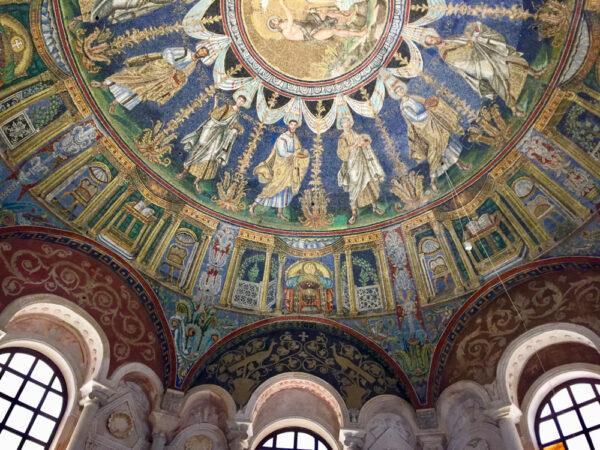
The ceiling mosaics in the Neonian Baptistery. Claudio Soldi/Shutterstock
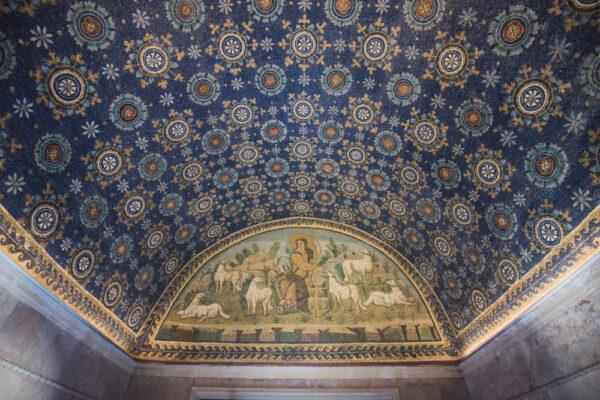
A night sky of mosaic stars covers the ceiling at the Mausoleum of Galla Placidia, dating from the fifth century. red-feniks/Shutterstock
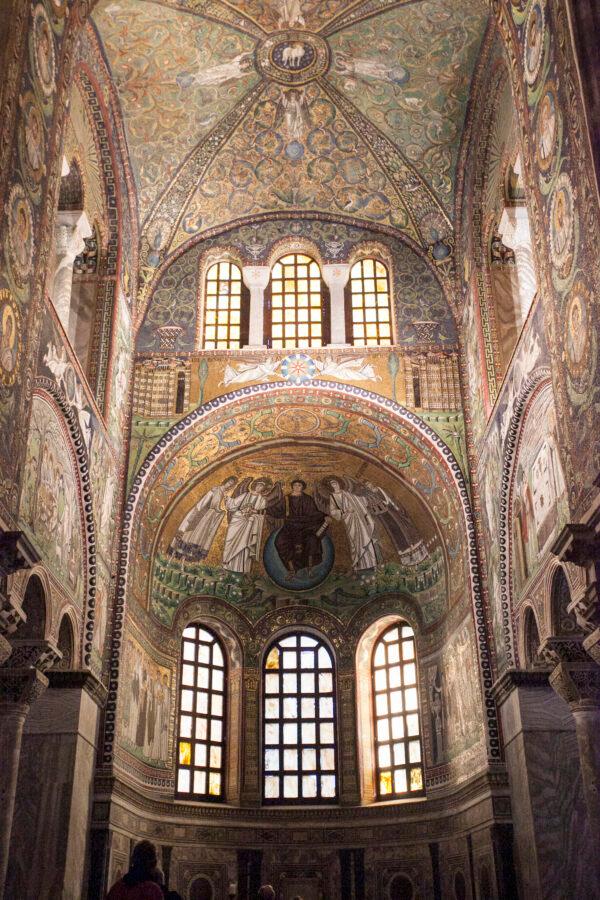
The Basilica of San Vitale is based on an octagonal plan, with an octagonal dome at the center, decorated with a Baroque fresco from the 18th century. Channaly Philipp/The Epoch Times
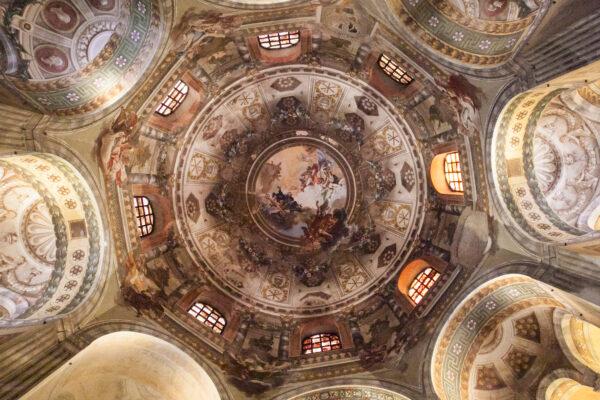
The Basilica of San Vitale, built in 547. Channaly Philipp/The Epoch Times
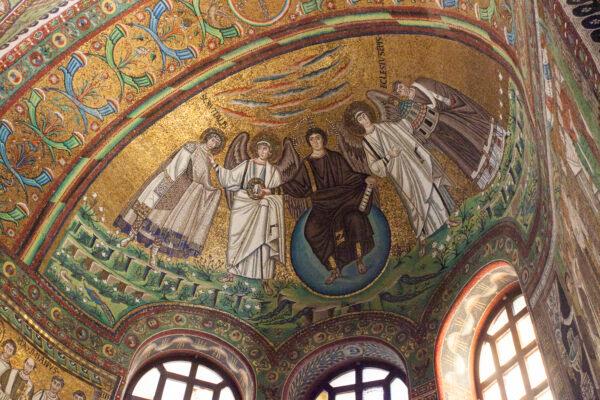
Apse mosaic in the Basilica of San Vitale, featuring (L–R) St. Vitalis, an archangel, Jesus Christ, a second archangel, and Bishop of Ravenna Ecclesius. Channaly Philipp/The Epoch Times
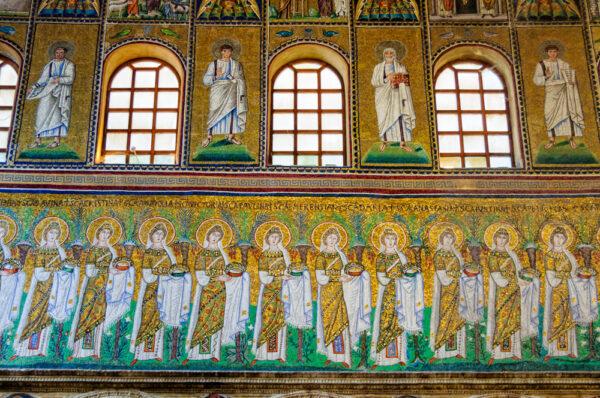
The Basilica of Sant' Apollinare Nuovo. lkonya/Shutterstock