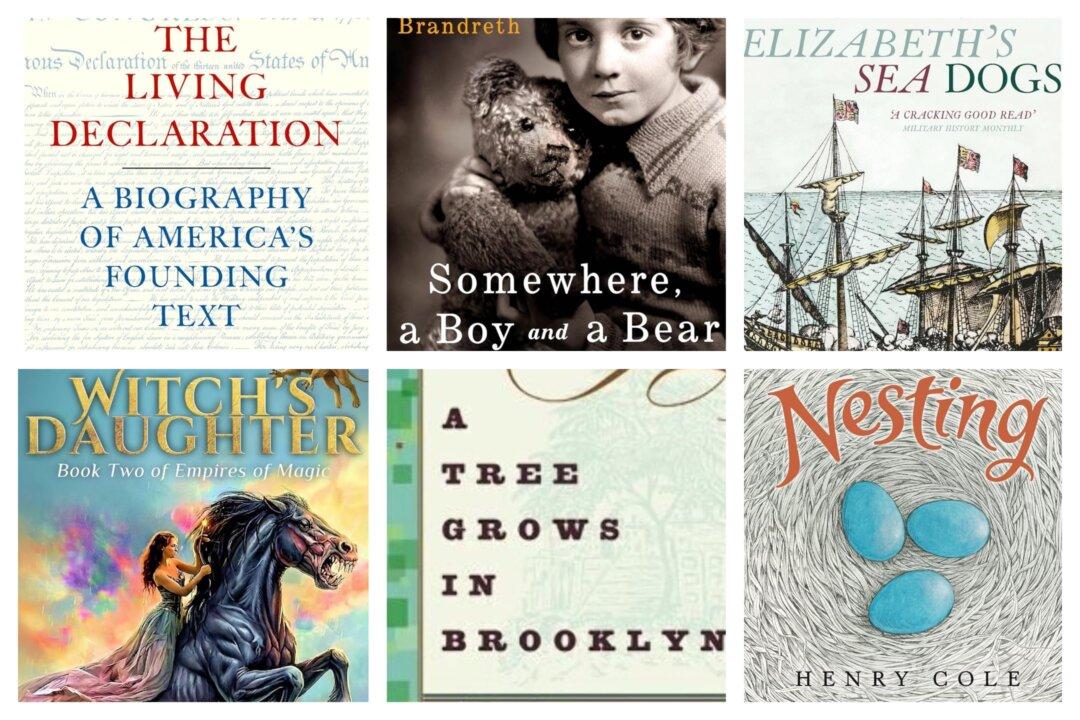
Occasionally, those who break out a book in public—in a café, for instance, or a doctor’s waiting room—will rouse some curious observer to ask, “What are you reading?” Given that most people nowadays have their eyes glued to a screen rather than to print and paper (in my favorite coffee shop, those staring into their phones or laptops outnumber bookies at least five or six to one), the question undoubtedly arises with less frequency.
A Few Stats
Since the advent of the digital age, the number of books Americans read annually has declined. The average American now reads around 12 books per year, down two or three books from a decade earlier. Given that today we can carry a vast arcade of games, movies, music, social media, and podcasts in a machine that fits in our pocket, the wonder isn’t in the decline but that anyone reads books at all. We have at our fingertips entertainment undreamed of just 50 years ago.Our specific reasons for diving into a particular book are as varied in nature as we are, yet there are common grounds for this motivation.
Bridges to Greater Understanding
In the first paragraph of the 1972 edition of “How to Read a Book: The Classic Guide to Intelligent Reading,” co-authors Charles Van Doren and Mortimer J. Adler wrote that their book is “for those whose main purpose in reading books is to gain increased understanding.” They acknowledged that “radio and especially television have taken over many of the functions once served by print,” but added an important truth: “But it may be seriously questioned whether the advent of modern communications media has much enhanced our understanding of the world in which we live.”Most of us, I suspect, would agree with this cautionary note in our own age of even more advanced communications. The wise and the experienced take much of the information gleaned online with at least a soupçon of doubt as to its veracity.


Moreover, books often serve as original sources of information. A case in point: Sept. 17, 2024, was Constitution Day in the United States. A number of articles appeared online celebrating the document, or remarking, negatively and positively, on its present-day necessity in our republic. Many of these pieces referred to “The Federalist Papers,” the defense of the Constitution by John Jay, James Madison, and Alexander Hamilton. We may gain some insights into this document so vital to our nation’s history and health from these commentaries, but reading “The Federalist Papers” would bring a much stronger comprehension of their meaning.
Golden Oldies
Published in 1997, “The New Lifetime Reading Plan: The Classic Guide to World Literature Revised and Expanded” is child to Clifton Fadiman’s 1960 “The Lifetime Reading Plan.” In the introduction to the revised edition, titled “A Preliminary Talk With the Reader,” Fadiman offered this description of a classic: “These books are life companions. Once a part of you, they work in and on and with you until you die.”Other such books, like Charles Van Doren’s “The Joy of Reading,” James Mustich’s “1,000 Books to Read Before You Die,” and “Invitation to the Classics” by Louise Cowan and Os Guinness, also throw open the windows on the greatest works of world literature, in particular that of Western culture.
From Homer’s “Iliad” to Melville’s “Moby Dick,” from Dante’s “Divine Comedy” to Borges’s “Labyrinths,” the books recommended in these compendiums are the champagne and caviar of our literature. Even if we never read them, we live with them, because they’re part of the bone and sinew of our culture.
Newer Books, Imagination, and Ways of Escape
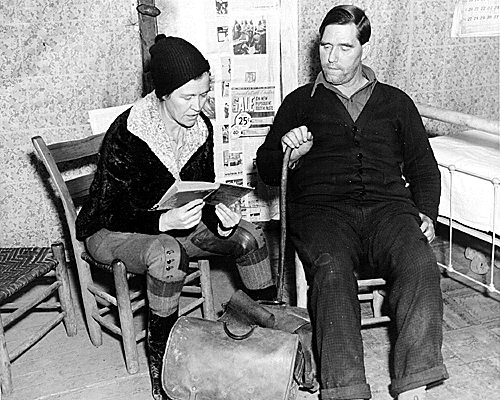
Dale Carnegie’s 1936 “How to Win Friends and Influence People” became an American classic and a staple in the self-help genre. Stephen Covey’s “The 7 Habits of Highly Effective People” influenced the lives of countless thousands of people. Shortly after graduating from law school, one attorney I know read Michael Gerber’s “The E-Myth Revisited,” absorbed its lessons, and today owns and operates a legal firm with a dozen offices.Books such as these allow us to break free of the mental shackles and prisons that either we or others have built. Those who benefit most read and reread these guides. Couple the reader’s imagination and desire for change with paper and print, and dreams become realities.
Special Conversations
Professor and writer Alan Jacobs wrote the excellent book “The Pleasures of Reading in an Age of Distraction.” The distractions are many and varied, but nearly all have a single source: our electronic gadgets. Spending hours on social media, whipping through cute cat videos on YouTube, or jumping here and there among news sites is now common behavior for many.A book is different. Whether you’re reading Tolstoy’s “Anna Karenina” or a “Jack Reacher” shoot-'em-up, you’re engaged in the story. You and the writer are in direct and solitary communication.
In his book, Jacobs discusses at length the advantages of reading guided by a plan or a program, such as the one proposed by Fadiman, as opposed to reading at whim; he comes down on the side of whim. Many of us also read by what I like to think of as the book-to-book hook, where one book leads us to another by the same author or in the same genre. But whatever method we follow, as Jacobs writes, “to pick up a book—to decide to read something, almost anything—is to choose a particular form of attention.”
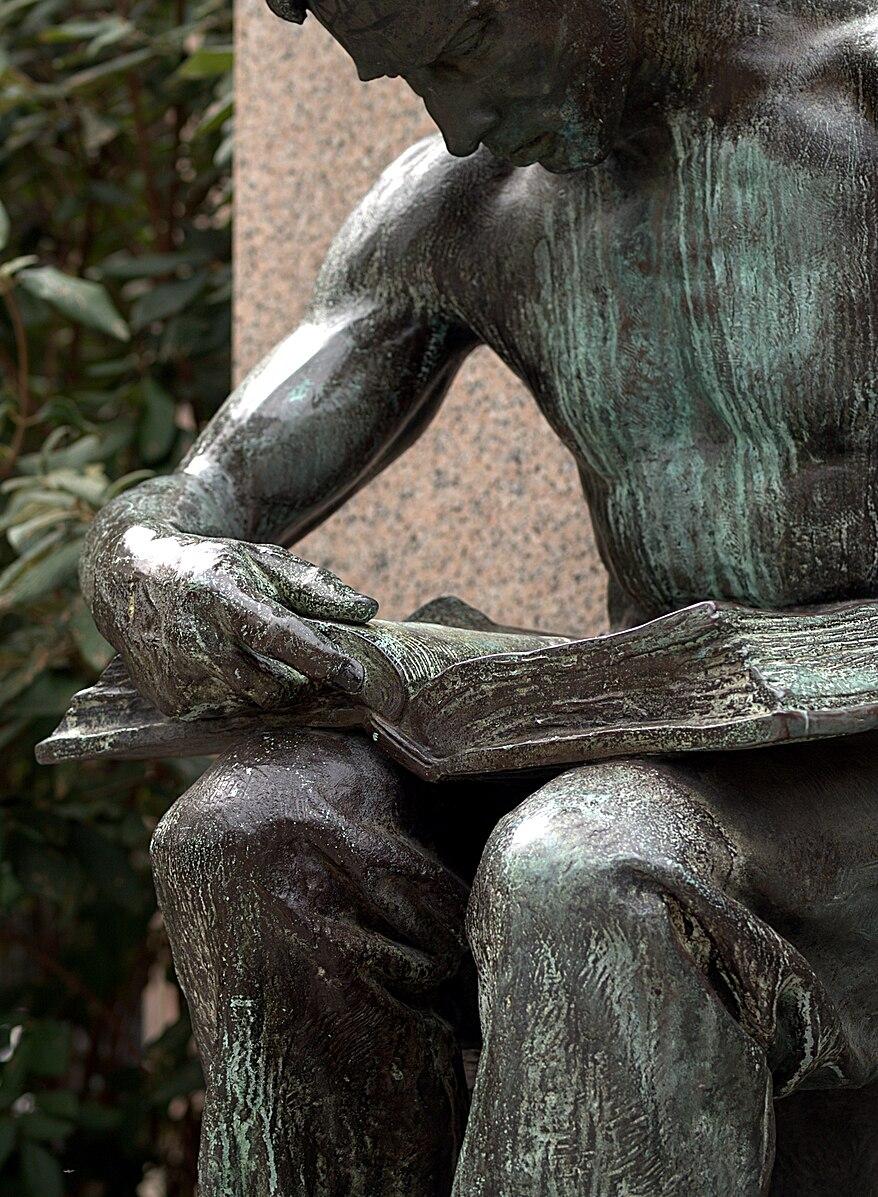
The particular form of attention that we bring to a book offers an anchorage and a harbor for us amid diversions and distractions, a haven where we can commune with another solitary soul and leave that conversation refurbished in mind and spirit.