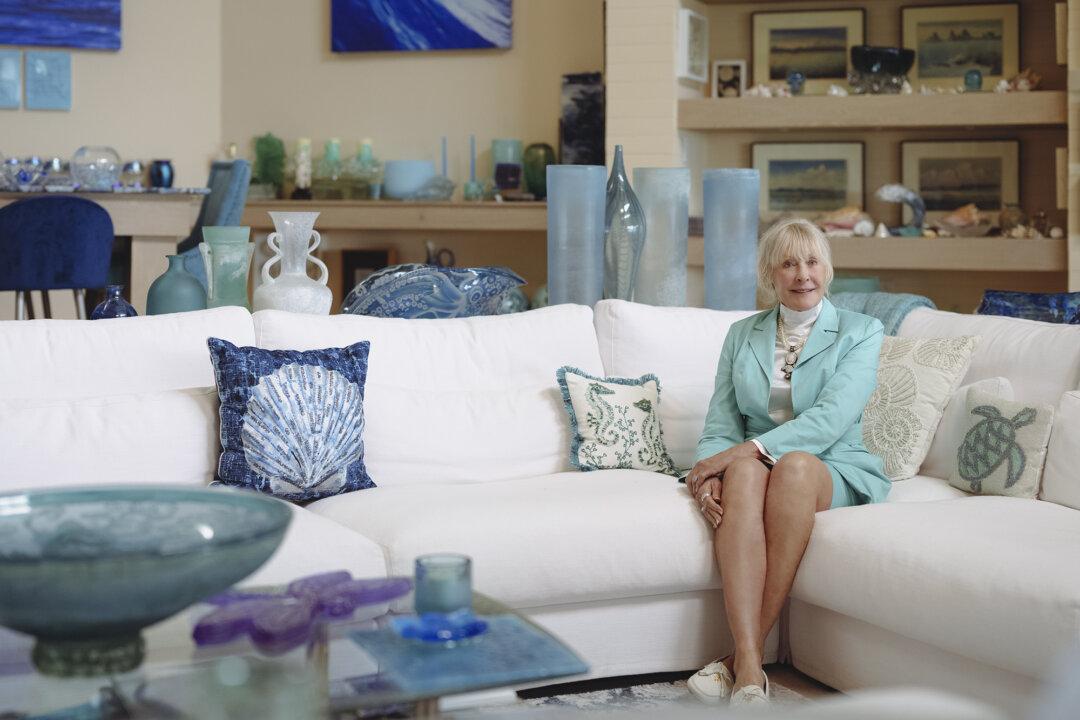
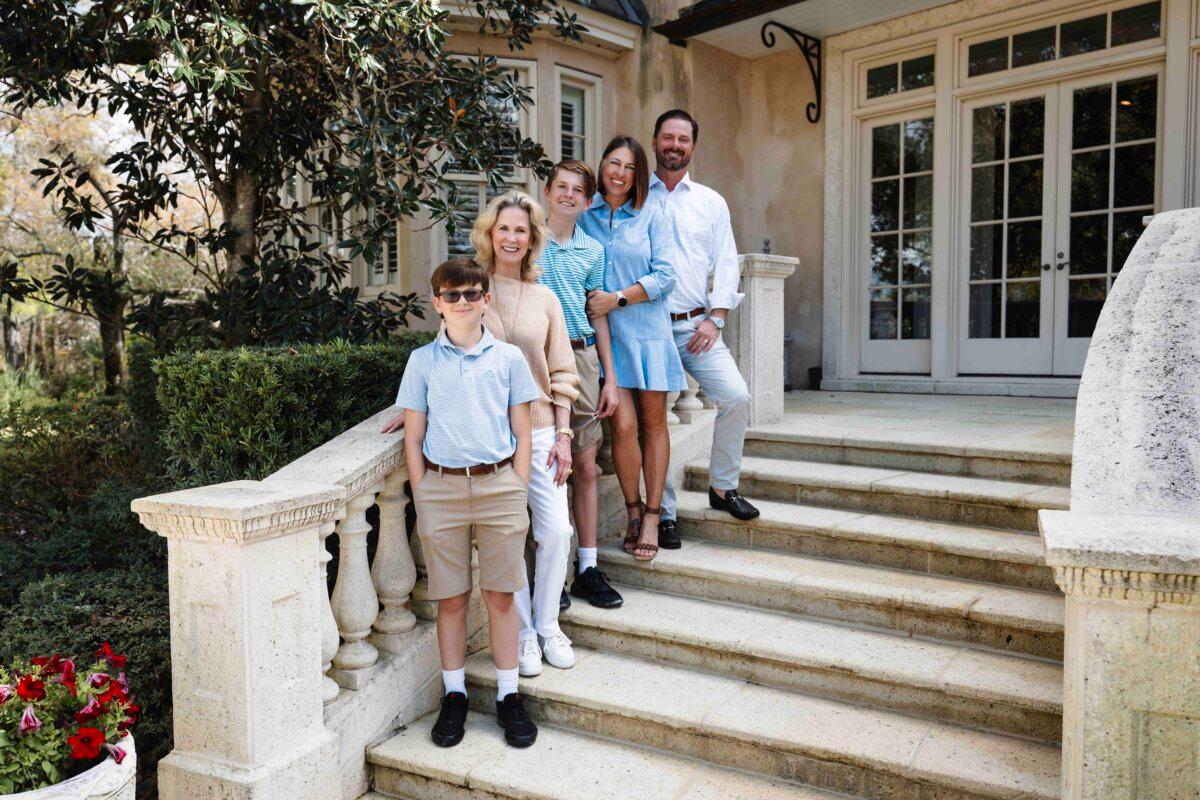
Philanthropist Rebecca Dunn lives a full and active life on the Gulf Coast of Florida. Her son and his family live only steps away. Dunn loves being with people and introducing newcomers, and she takes pride in hosting intimate dinners with meaningful conversations.
As a highly visible trustee of the Dunn Foundation, founded by her late husband Bill Dunn, Rebecca spends her time supporting people and organizations across the country through projects focused on freedom, education, and classical liberal values. It’s an endeavor led by her heart, which remains forever loyal to her faith, family, and the nation that made her incredible life possible.
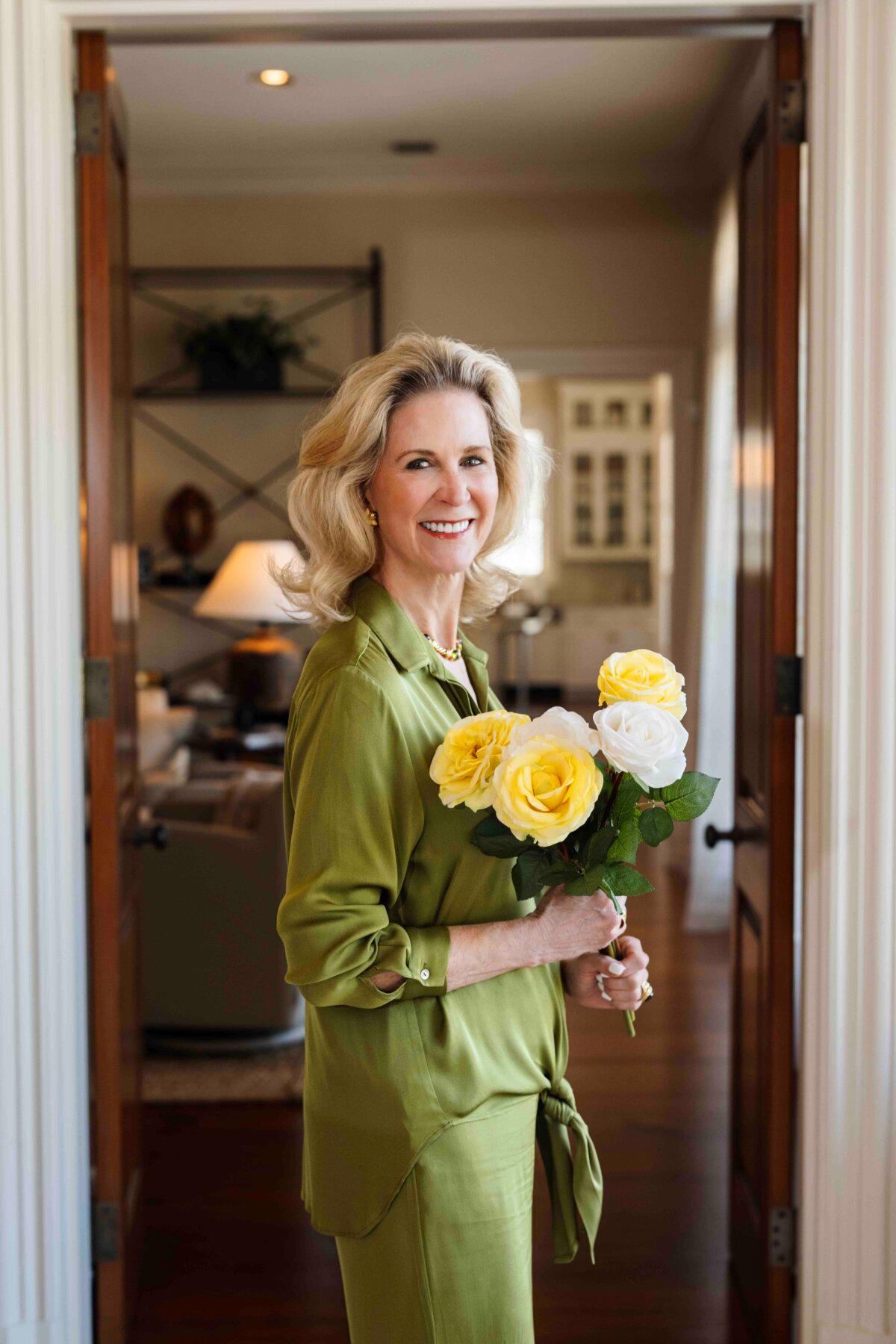
When her father sold the motel, the family moved to an undeveloped part of the island. There, Dunn would hike over a large sand dune after school, walk the empty shoreline, and gaze at the endless ocean.
Finding Love
After attending a Baptist girls’ college in Raleigh for two years, then transferring to Florida State University, Dunn met her first husband, Bob, a Yale graduate. They had a son together and moved to the Tampa Bay area. Though the marriage ended after 25 years, they maintained a warm friendship. Dunn said her father advised her, “Even if you have to walk away from everything, keep a good relationship with your husband because there will always be weddings, graduations, funerals, birthdays.”“Basically, we chose to love our son more than dislike each other. It was a wise and rewarding decision,” Dunn recalled.
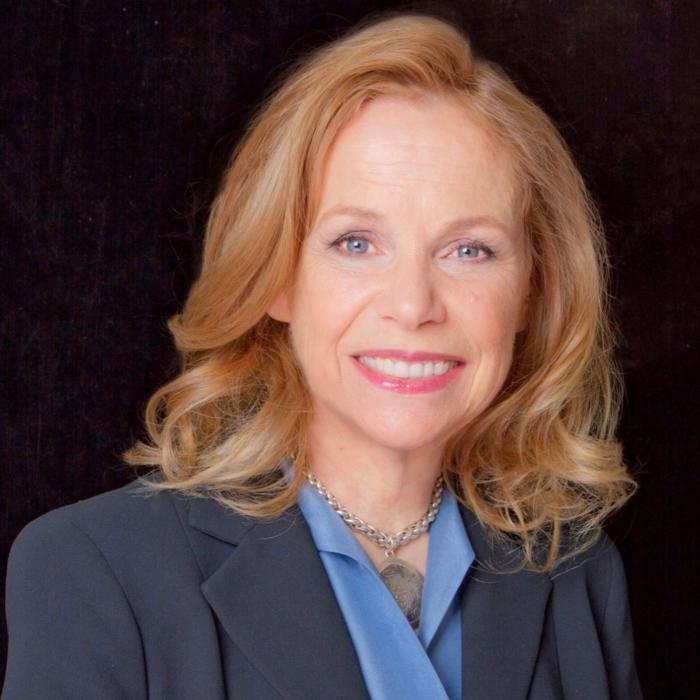
“One of the things I have learned in life is that holding onto negative thoughts is a huge burden. Forgiveness and a positive mindset help us to move forward in life with the joy our Creator wants us to experience.”
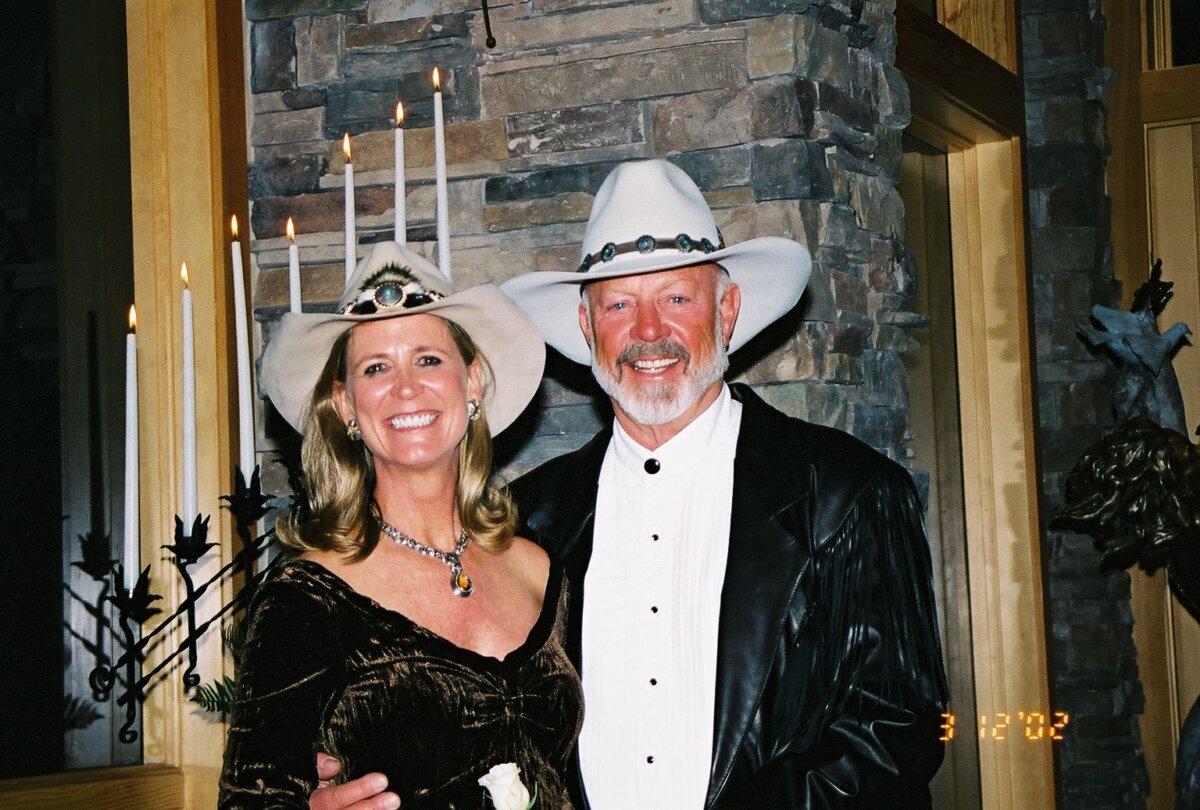
Rebecca later became friends with Bill Dunn through mutual philanthropic involvement in public policy organizations. He was a brilliant Marine veteran, futures trader, and fierce advocate for liberty. Initially, she thought there was no way they’d ever be involved romantically.
“I would have bet every penny I owned that we would never be in a serious relationship,” she said.
Then one day he asked her, “Do you think a cowboy like me and a lady like you could ever have any kind of future together?” From that day forward, he was her cowboy, and she was his lady.
They married in a spontaneous ceremony in Big Sky, Montana, during a blizzard in March 2002. Rebecca had just 30 minutes in town to buy a wedding dress while Bill replaced the tires on his truck. She found a long, brown velvet dress and wore it with her boots and cowboy hat.
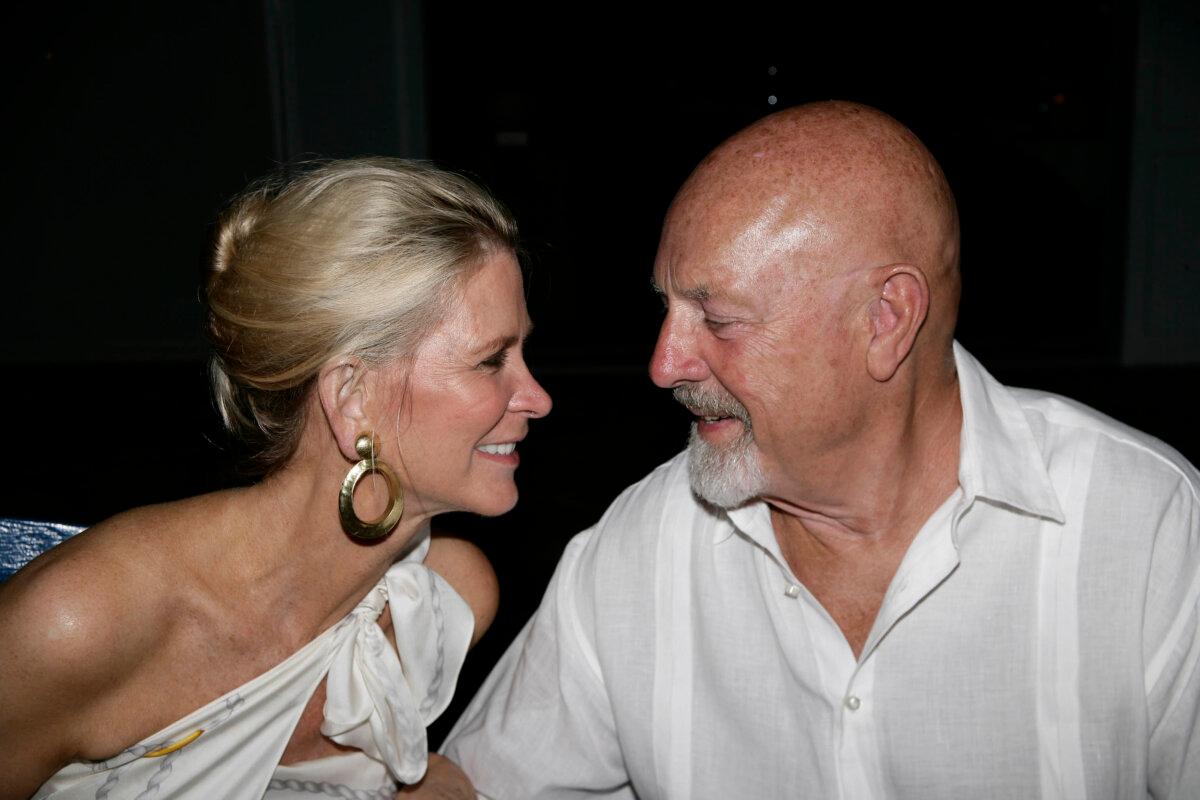
The Cowboy and the Lady
Bill influenced Rebecca’s passion for freedom and good character, she said. He lived by the ideas described in “Cowboy Ethics: What Wall Street Can Learn From the Code of the West” by James P. Owen. The book outlines 10 principles that Owen published in 2005 and that have since been adopted by the state of Wyoming: “Live each day with courage; take pride in your work; always finish what you start; do what has to be done; be tough but fair; ride for the brand; talk less and say more; remember some things aren’t for sale; and know where to draw the line.”Bill exemplified loyalty and integrity. He supported emerging leaders, seeing potential where others did not. He preferred supporting individuals and organizations over politicians, but he didn’t shy away from donating to politicians he felt were important to the conversation.
Dunn remembers seeing him write a substantial check for a political candidate who no longer seemed to have a chance of winning. When she asked him why he wanted to invest in a lost cause, he told her:
“He’s a good person with tremendous character. He elevates the conversation. The longer I can keep him at the table with my support, the more positive influence he will have on the other candidates, and our country will benefit.”
Bill’s quiet strength and generosity profoundly shaped Rebecca. Together, they formed a synergistic partnership greater than either could have been alone.
Through Thick and Thin
Tragically, Bill battled Alzheimer’s for almost 13 years, remaining at home with Rebecca until he passed in the spring of 2025. They had lived in Palm Beach for most of their marriage when Dunn decided to move back to Florida’s west coast, where her family was living.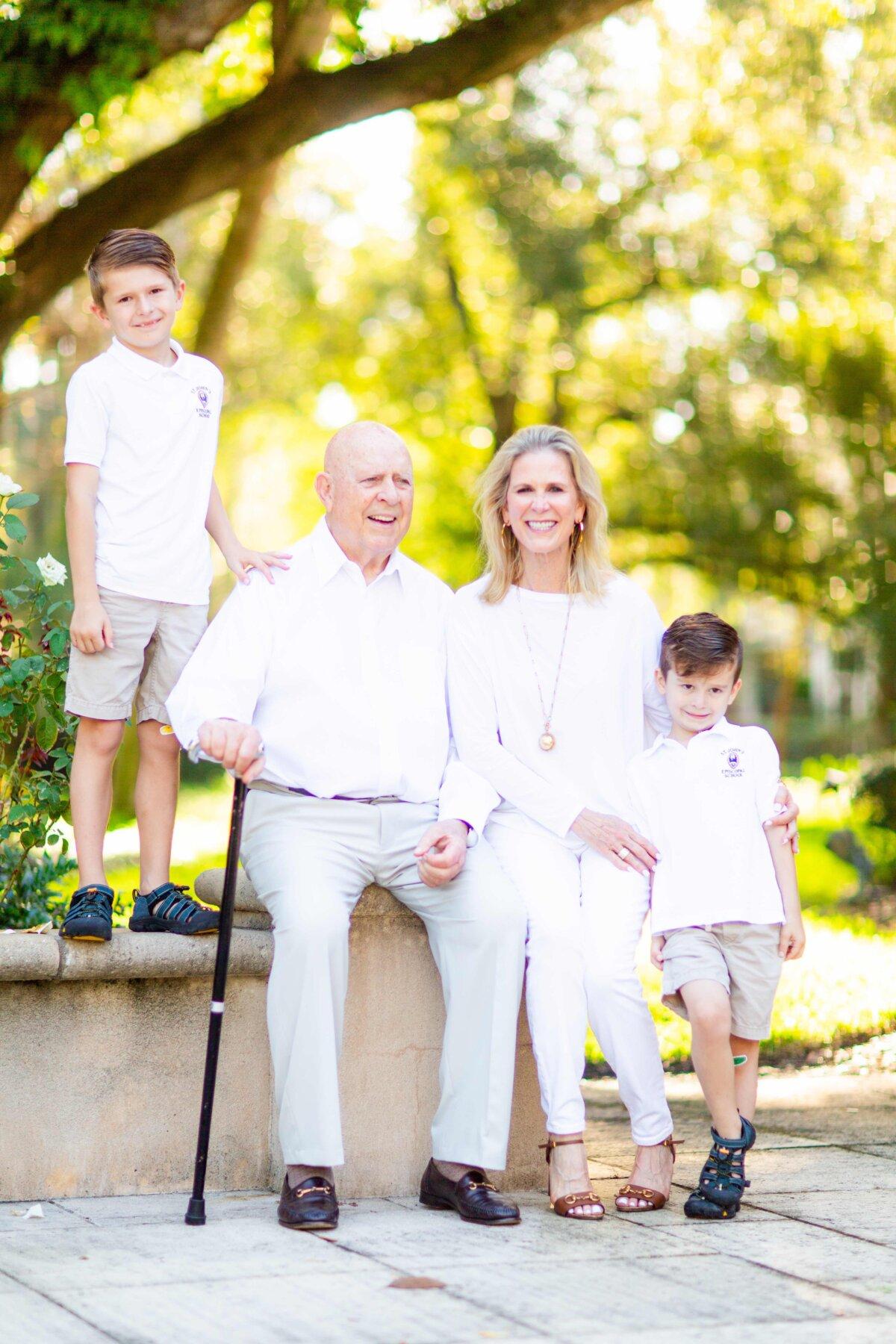
When friends in Palm Beach asked why she was leaving the exciting social life she had enjoyed there, she told them:
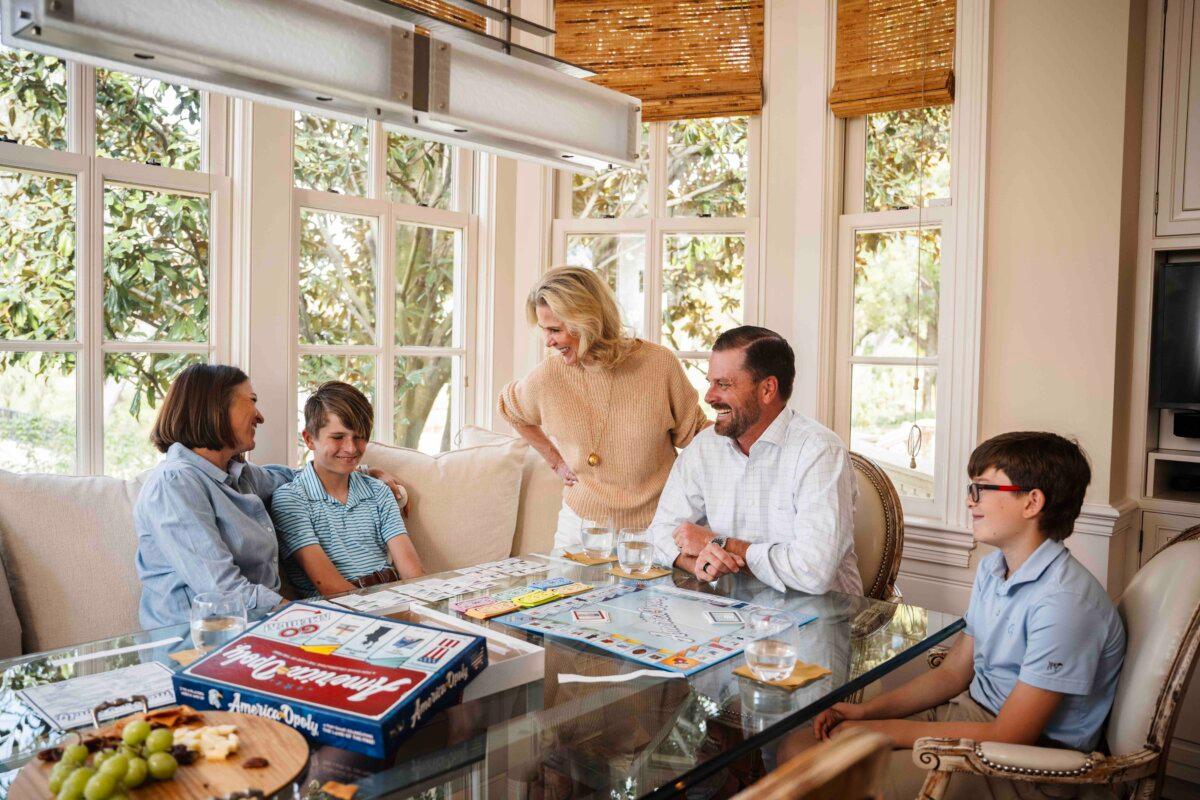
“You can always buy back a social life if you throw enough money around, but no matter how much money you have, you cannot buy back time. I am going home to be near my son and my grandsons, so that I can develop a closer relationship with them. That is more important than all the parties here.”
In his final years, as Bill’s ability to speak faded, he was left with just two simple phrases: “love you” and “thank you.” Even his caregivers cherished him for staying so gentle through such a devastating illness.
“Bill was a man who had been a Marine, a force to be reckoned with,” she said. “But at his core, he had a beautiful heart.
The Power of Faith
Like many people, amid the hustle and bustle of a busy life, Dunn slowly began taking her Christian faith for granted. It never left, but neither was it prominent. That changed on the eve of September 11, 2002—one year after the terrorist attacks.She felt incredibly connected to the tragedy, having been on a flight to New York on the day the Twin Towers came down. On this fateful day, one year later, she went out at night to buy an American flag from a neighborhood store in Florida. It was dark when she got back to her car, and suddenly she felt a gun pressed into her side. She was being mugged at gunpoint.
“I thought for sure I was going to die that night,” she recounted.
Then she remembered a Bible verse from her childhood about faith the size of a mustard seed—Matthew 17:20: “Truly I tell you, if you have faith as small as a mustard seed, you can say to this mountain, ‘Move from here to there,’ and it will move. Nothing will be impossible for you.”
With that memory she prayed, “God, if I’m going to live, only you can save me. Help me.”
Then these words came out of her mouth to her attacker: “You must be in a great deal of pain to be so desperate. How can I help you?”
Her words changed him. He froze. “I know you think harming me will make you feel better, but it won’t. It’s only going to make you feel worse, and I don’t want that for you,” she told him.
“I was so sure that God, angels, or whatever you want to call it, were surrounding me, that I then said to him, ‘I haven’t looked at you. I want you to feel safe.’ I was so calm. I said to him, ‘I don’t know how much money I have, but I know I have some. Would that help?’
“He said yes.
“So I took out whatever money I had, and I handed it to him, and I said, ‘I hope that this will help you. I am going to pray that your life gets better. I really want that for you, and thank you for giving me my life back.’”
Then he left.
Dunn said she promised God that night, “You saved me, and I belong to you for the rest of my life.”
A Foundation for Freedom
In addition to her strong commitment to family and faith, Rebecca stays active with the Dunn Foundation, remaining loyal to Bill’s vision. When asked how she chooses which projects to support, Dunn said she focuses on excellence:“Tell me what you do the best rather than trying to create a new area in your organization that seems to fit where we are giving support.”
She also likes to give new ideas a fighting chance—something she learned from Bill, who once told her, “You never know when that new idea may be one of the most important of the day.”
Their support of Charlie Kirk as a young man and his early vision for Turning Point USA is one example of their ability to see promise in a young leader who went on to inspire many.
To date, the Dunn Foundation has supported over 100 different nonprofits that work to preserve, defend, and educate about freedom.
Its latest initiative was two-fold: establishing a training academy at the Conservative Partnership Institute with a $5 million matching grant and creating Bellator Hall, the academy’s home in Washington.
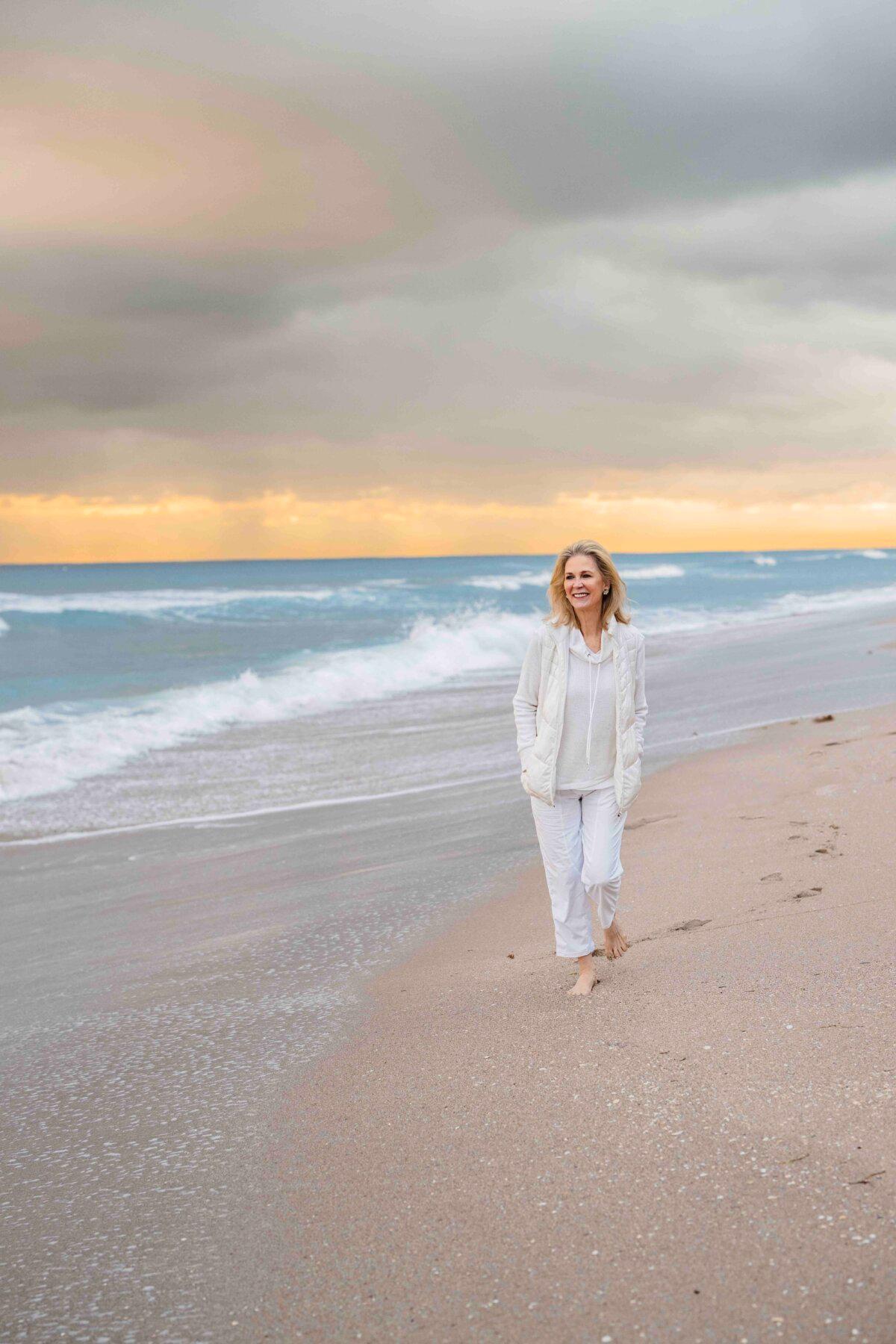
From her childhood dreams, standing atop a sand dune looking across the ocean, to the hard but beautiful days of caring for a dying husband while listening to her grandsons laugh and play outside—from a violent attack transformed into a moment of renewed faith—Dunn said she feels blessed.
“Every day offers us an opportunity to do something positive.”
Dunn said that when her son was still young, she began to see America changing, and not for the better. “I never wanted my son to come to me and ask, ‘Mom, didn’t you see things changing? Why didn’t you do something?’”
Even her aspirations for improving society return to family. “I always wanted my son to know that whether I succeeded or failed, I did something. I have tried to save what I felt was important to the soul of America. I believe this is more important than any wealth I can pass on to him or my grandchildren.”