This copy is for your personal, non-commercial use only. Distribution and use of this material are governed by our Subscriber Agreement and by copyright law. For non-personal use or to order multiple copies, please contact The Epoch Times Reprints.
Panoramic view of the ancient remains of Persepolis, the ceremonial capital of the Achaemenid Empire. The site chosen was called the Plain of Persepolis (known today as the Marvdasht Plain)—a remote but fertile plain crossed by two rivers in an arid mountain region. Specifically, it is situated at the foot of a mountain called Kuh-e Rahmat, which means “Mountain of Mercy.” Poliorketes/Shutterstock
At least 500 years before the birth of Christ, a city of luxurious palaces and gardens set upon tall terraces emerged. It became the ceremonial capital of the Achaemenid Empire, founded by the legendary Cyrus the Great.
Overseeing an exceptionally rich kingdom of a couple million square miles stretching from India to the Mediterranean Sea, Darius I—when he became king in 522 B.C.—desired a monumental royal residence. Thus, in 518 B.C. he embarked on the construction of Persepolis. It would become a visual representation of his importance and power, as well as for successive kings.
An ongoing archeological site adjacent to the ruins has enabled archeologists over the years to determine that Persepolis was one of the most impressive architectural achievements of the era—showcasing the utmost in engineering ingenuity. Not only were the structures remarkable, but so were the hydro-engineered network of integrated canals, underground channels, and sewers. The result was a water supply to the city and irrigation for the nearby farms and lush palace gardens.
Persepolis was maintained as an architectural wonder and occupied by various rulers until Alexander the Great’s army plundered and burned part of it in 330 B.C., during the rule of Darius III. The kings of the Achaemenian dynasty’s great capital city continued through 316 B.C., and Persepolis maintained its status as a province of the Macedonian empire. However, during the Seleucid kingdom (312 B.C.–64 B.C.), named for Alexander the Great’s leading general Seleucus, the city gradually declined, deteriorated, and eventually became a ruin.
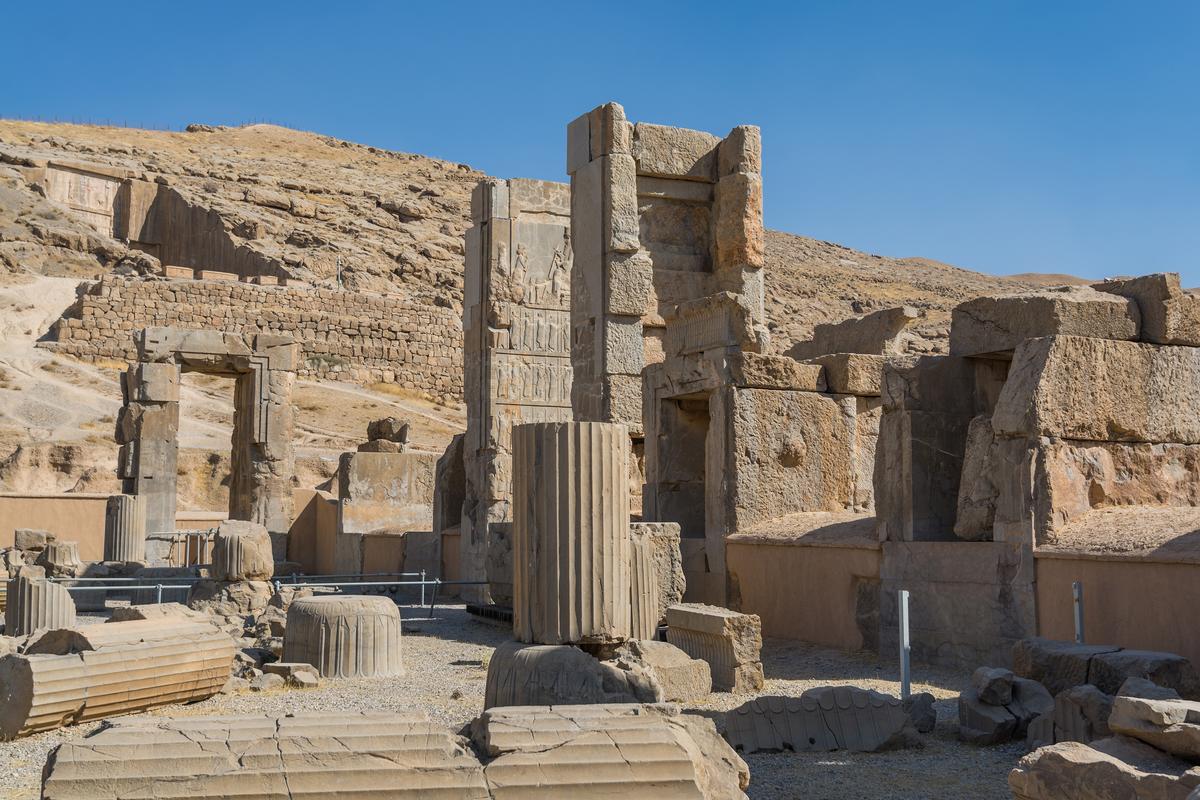
Today, still visible at what was once a dazzling and majestic site are the stone remains of foundations, steps, statuary, doorways, and columns. Yet, even though the city no longer remains, imagining Persepolis’s magnificence is possible just by viewing images of the ruins and by understanding aspects of its history.
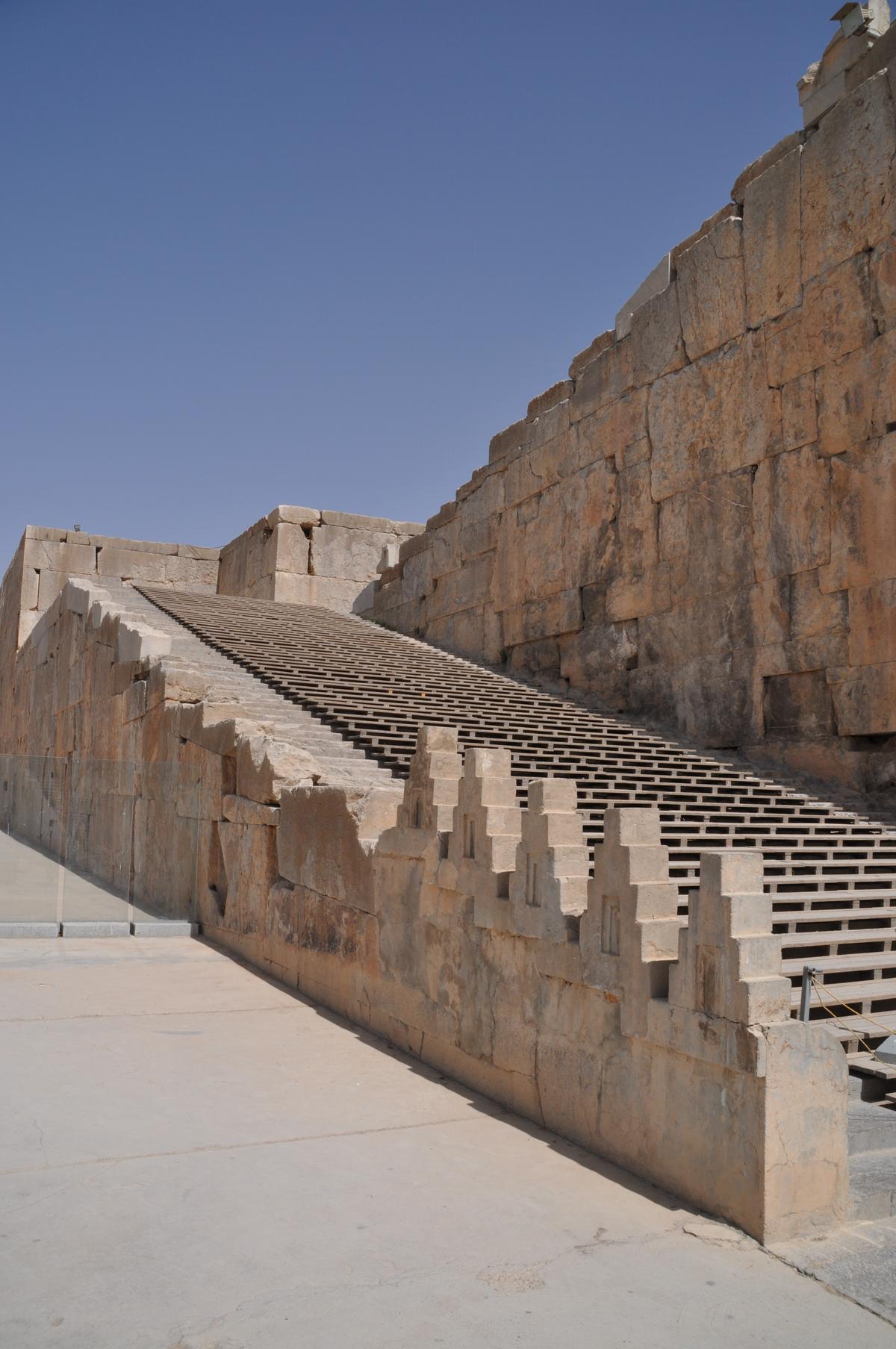
Palatial architecture in the Mesopotamian region of the Tigris and Euphrates rivers inspired Persepolis’s design. First to be built was an extremely tall and wide stone terrace on a mountainside; it comprised more than a million square feet. Impressively wide staircases, at least 111-steps each flight, were built to accommodate not only people but also animals. Styve Reineck/Shutterstock
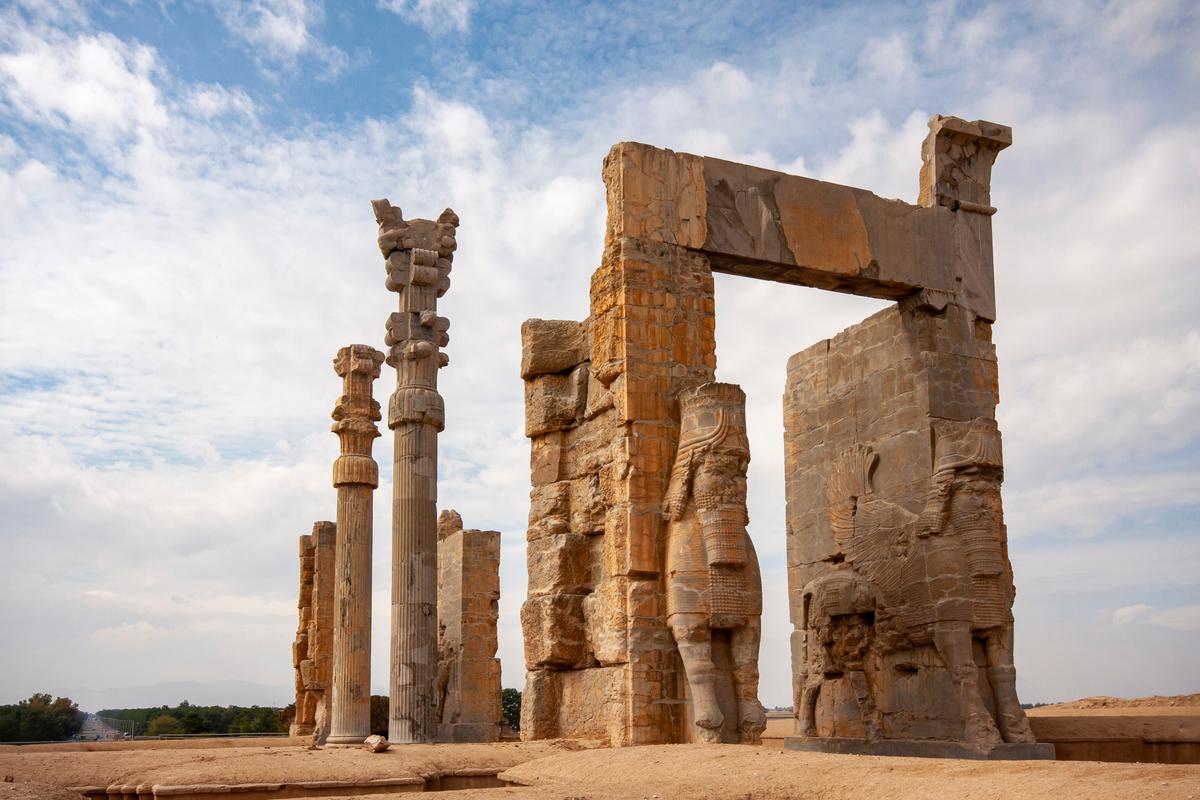
A nearly 65-foot-tall towering gate, referred to as the Gate of All Nations, greeted guests and visitors. Winged man-bulls, referred to as Lamassus, guarded the gate’s eastern entrance, while colossal bulls guarded the western entrance. Visitors had to pass through the gate to reach the Throne Hall (Apadana) and the royal palaces. mshirani/Shutterstock
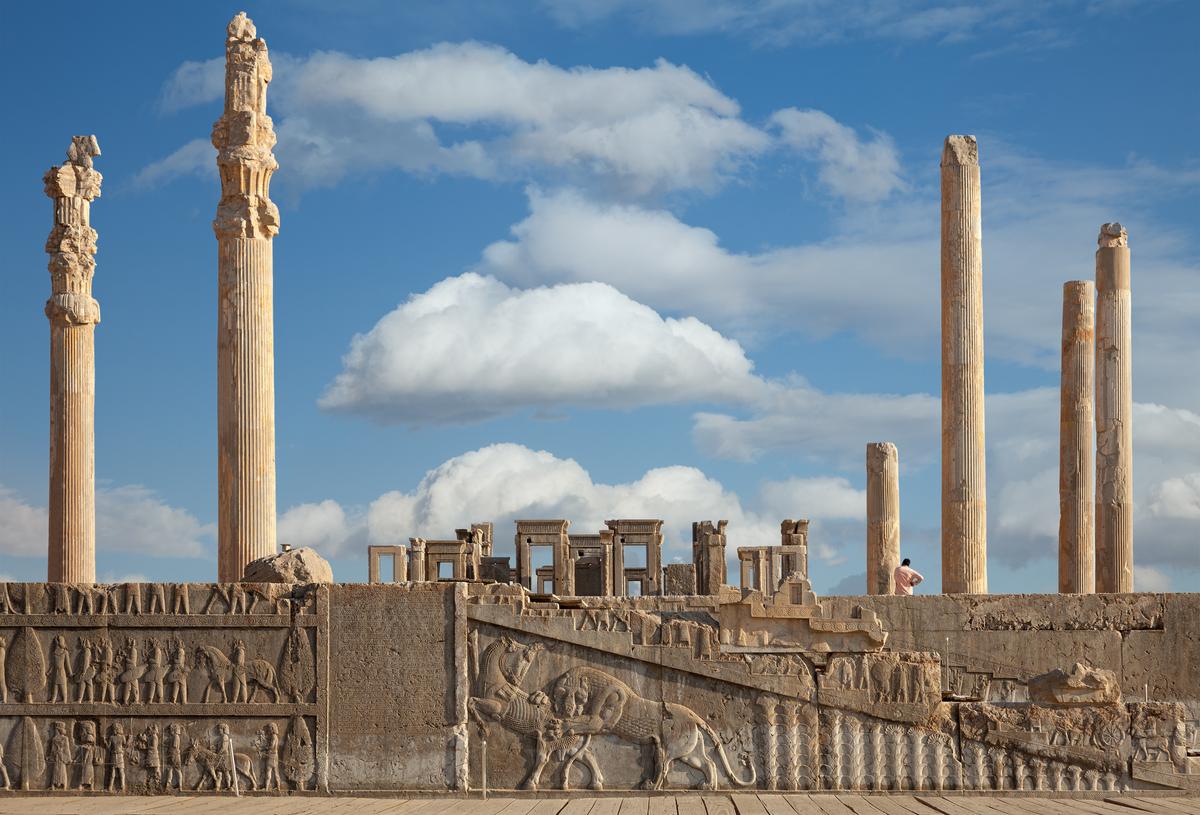
The Apadana Palace, where the king received nobility and emissaries, was the largest and most important ceremonial hall at Persepolis. Measuring over 10,000 square feet, the hall was originally supported by 72 stone columns, which stood nearly 80 feet tall. Today, only 14 columns remain intact. The eastern and northern staircases are adorned with bas-relief sculptures, illustrating delegates bringing gifts for the Persian Nowruz. (New Year) festival. Borna_Mirahmadian/Shutterstock
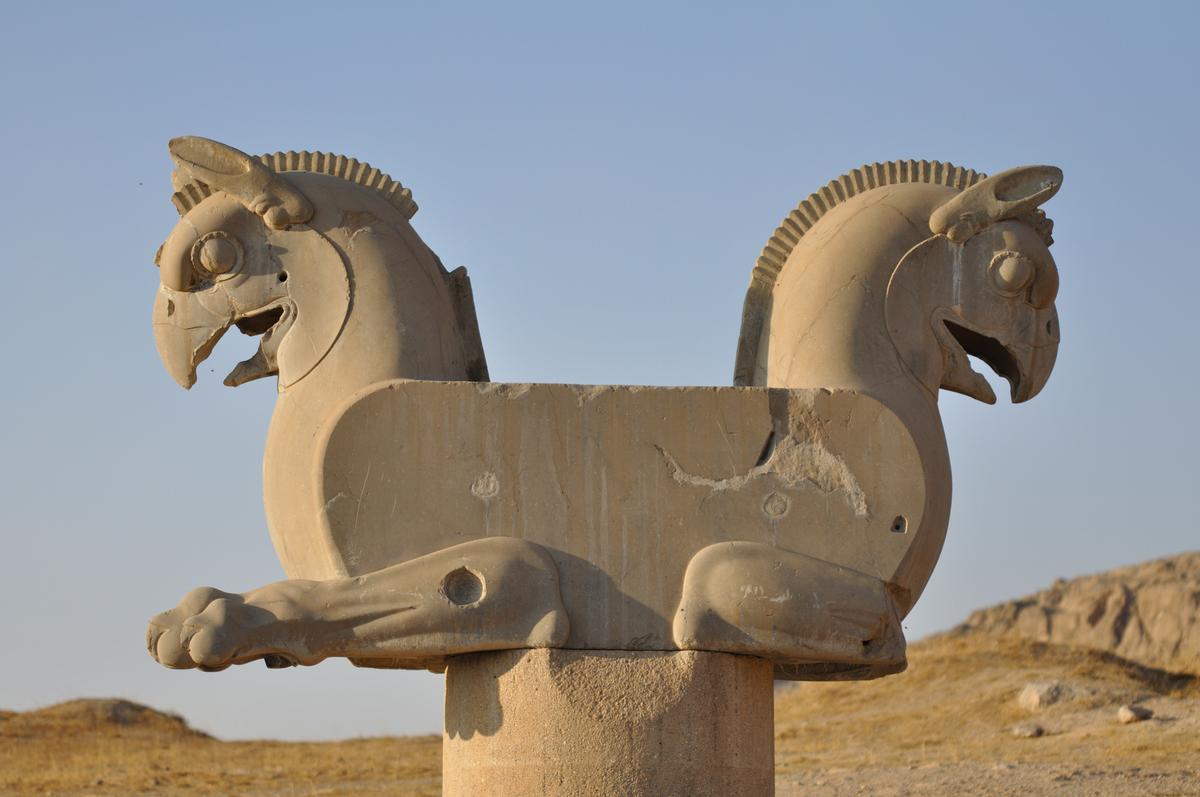
Palace halls featured columns topped by double-headed bull, lion, or "Huma bird" capitals. The Huma, also called Homa, is a mythological Persian bird similar to a Phoenix. The double-headed Huma capital at Persepolis is represented as similar to a griffin with lion feet. Milonk/Shutterstock
Visitors to Persepolis were treated to what was referred to as the Hundred-Column Hall. Fluted columns and columns adorned with intricately carved battle scenes, religious imagery, animals, and mythological creatures were in the expansive square space, which measured around 230 feet. Victor Jiang/Shutterstock
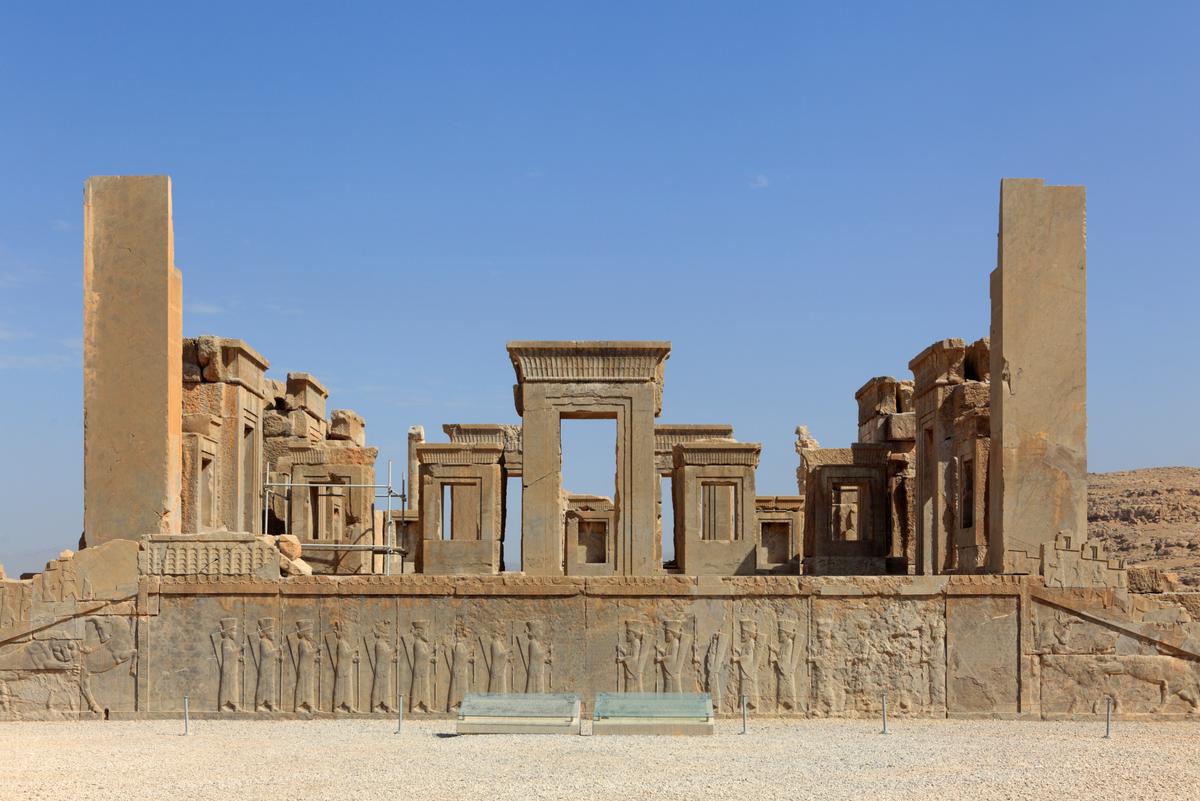
The Palace of Darius (also known as the Tachara or Winter Palace) was the first palace built at Persepolis, and it served as the private residence of Darius I. The southern façade features a double-reversed stairway that connects the main hall to the south court. The carved bas-reliefs depict royal guards, tribute bearers, and mythical creatures. The palace featured a rectangular layout (131 feet by 98 feet) with a 12-columned central hall and porticoes, or covered walkways. Massimo Pizzotti/Shutterstock
What arts and culture topics would you like us to cover? Please email ideas or feedback to [email protected]
A 30-plus-year writer-journalist, Deena C. Bouknight works from her Western North Carolina mountain cottage and has contributed articles on food culture, travel, people, and more to local, regional, national, and international publications. She has written three novels, including the only historical fiction about the East Coast’s worst earthquake. Her website is DeenaBouknightWriting.com