A War Within a War
After Allied forces gained control of Italy in 1943, they started using the Italian air bases to conduct raids against Nazi forces. From the fall of 1943 through most of 1944, American forces concentrated bombing missions on German petroleum sources and refineries in Romania. Many of these bombing missions ultimately ended in American planes being shot down and their pilots being forced to eject with a parachute.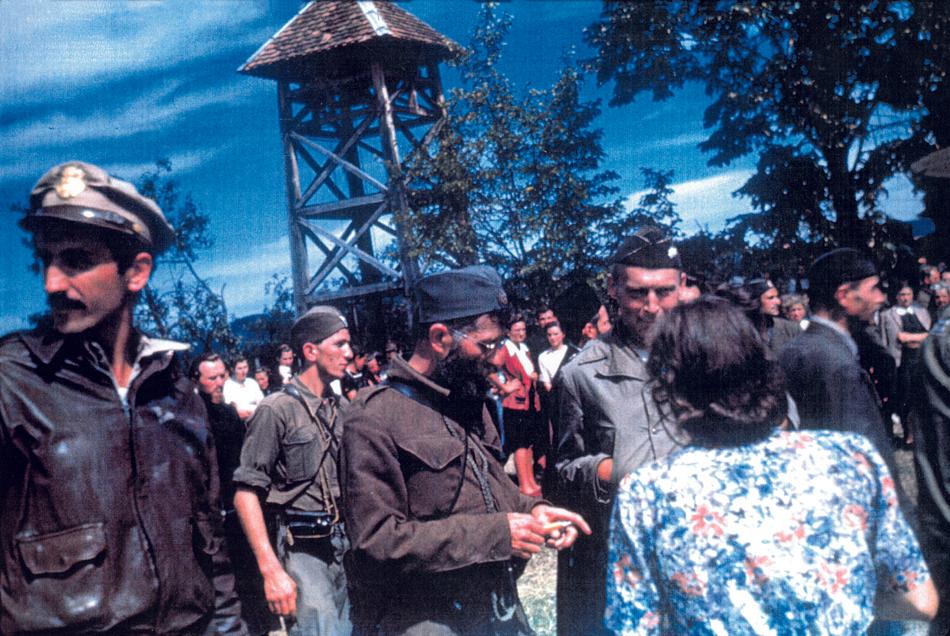
Serbian Protectors
Mihailovich and his guerrilla forces were anti-Nazi; they also didn’t want their country taken over by communists. Being friendly with the Allies, Mihailovich ordered the Serbian people to protect the fallen American pilots as soon as he heard word that several had landed in the Nazi-controlled Serbian mountains.The villagers in and around Pranjani, Serbia, waited for parachutes to land and sent rescue teams out to save the often-wounded airmen. “Those of us who were wounded received whatever medical supplies were available,” rescued airman Richard Felman recalled, according to an article published by the U.S. Marines in 2009.
Rescue Plan
Word of the stranded airmen made it to the Office of Strategic Services (OSS, the predecessor to the Central Intelligence Agency, or CIA). A rescue plan was difficult because the British had befriended Tito and the Yugoslavian communist party.The OSS director, Gen. William Donavan, went directly to President Franklin D. Roosevelt to gain permission to conduct the rescue. After President Roosevelt agreed, the British followed suit and agreed to help.
The OSS operatives made six unsuccessful attempts to fly into enemy territory. The planes either couldn’t find the stranded pilots, or they turned around to prevent being shot down. Agent George Vujnovich then put Operation Halyard into motion. Vujnovich formed a three-man team consisting of Lt. George Musulin, Master Sgt. Michael Rajacich, and radio operator Spc. Arthur Jibilian.
On the night of Aug. 2, 1944, the three parachuted into Pranjani. Musulin smashed a chicken coop when he landed on it. Rajacich landed in a tree and had to be helped down, while Jibilian landed softly in a cornfield.
Air Strip for C-47s
Then on Aug. 8, Musulin surveyed the air strip and decided that it would be ready for rescue planes to land the next night. But the next day when a group was keeping watch in the woods, they had a scare. Three German planes were flying directly above the makeshift air strip at an altitude of 1,000 feet. Luckily, just as the planes passed over, a herd of cows walked into the strip to graze. It looked like the field was merely a freshly plowed field.In the early morning hours of Aug. 10, four C-47 rescue planes flew into the air strip. Fighter planes protected them, pretending to run a bombing operation as a decoy. The C-47s then took 12 soldiers per trip back to Italy. Between Aug. 10 and Dec. 27, 512 airmen were rescued without a single casualty or loss of an aircraft.
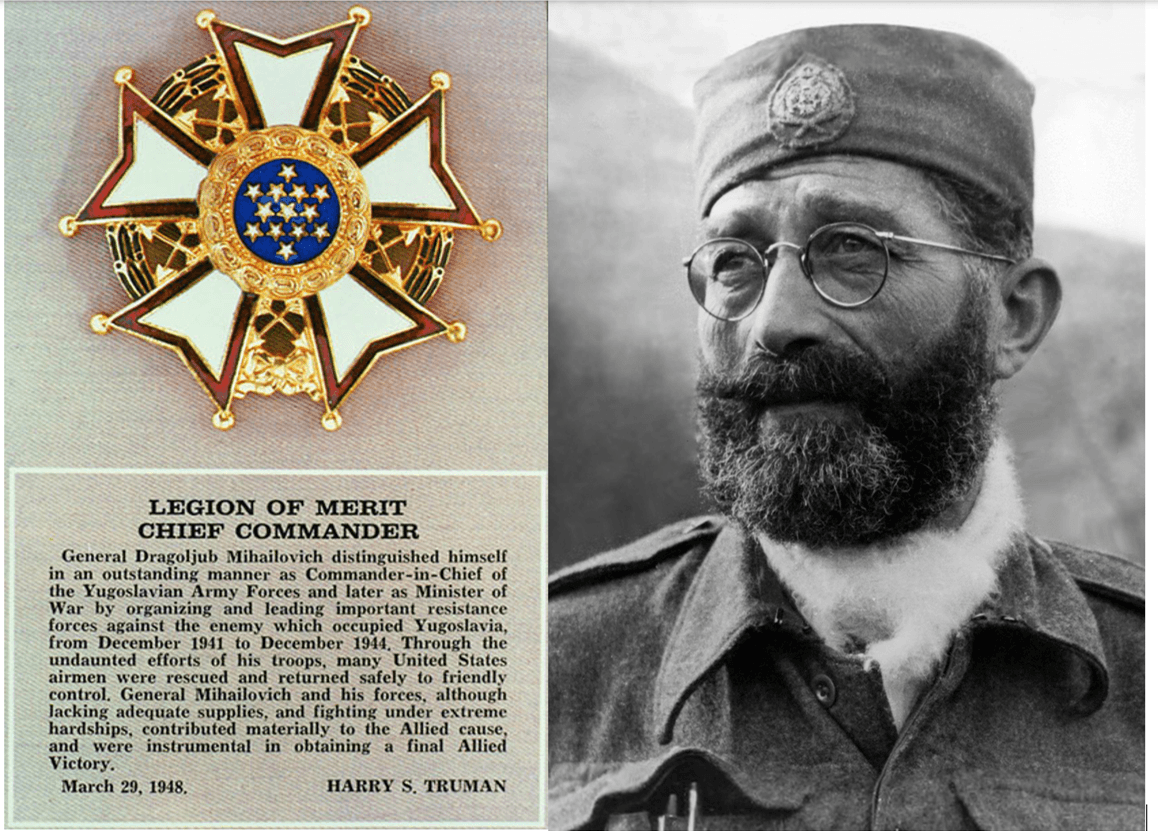
Even though he was seen by the Americans as a hero, Serbian resistance Gen. Mihailovich was arrested and executed after Tito and the communist party gained control of the country.
In 1948, President Harry Truman awarded Mihailovich the Legion of Merit posthumously for his efforts in aiding the Allied forces. So as not to upset Tito, the communist leader of Yugoslavia, the award was kept secret until his death in 1980. Operation Halyard wasn’t declassified until 1997.