Next month, just days after most major cities across the globe will have rung in the new year with fireworks, another fireworks show will appear 60 miles high in Earth’s atmosphere. On Jan. 3, one of the year’s four major meteor showers, the Quadrantids, will collide with Earth as it makes its annual pass through a debris stream in space.
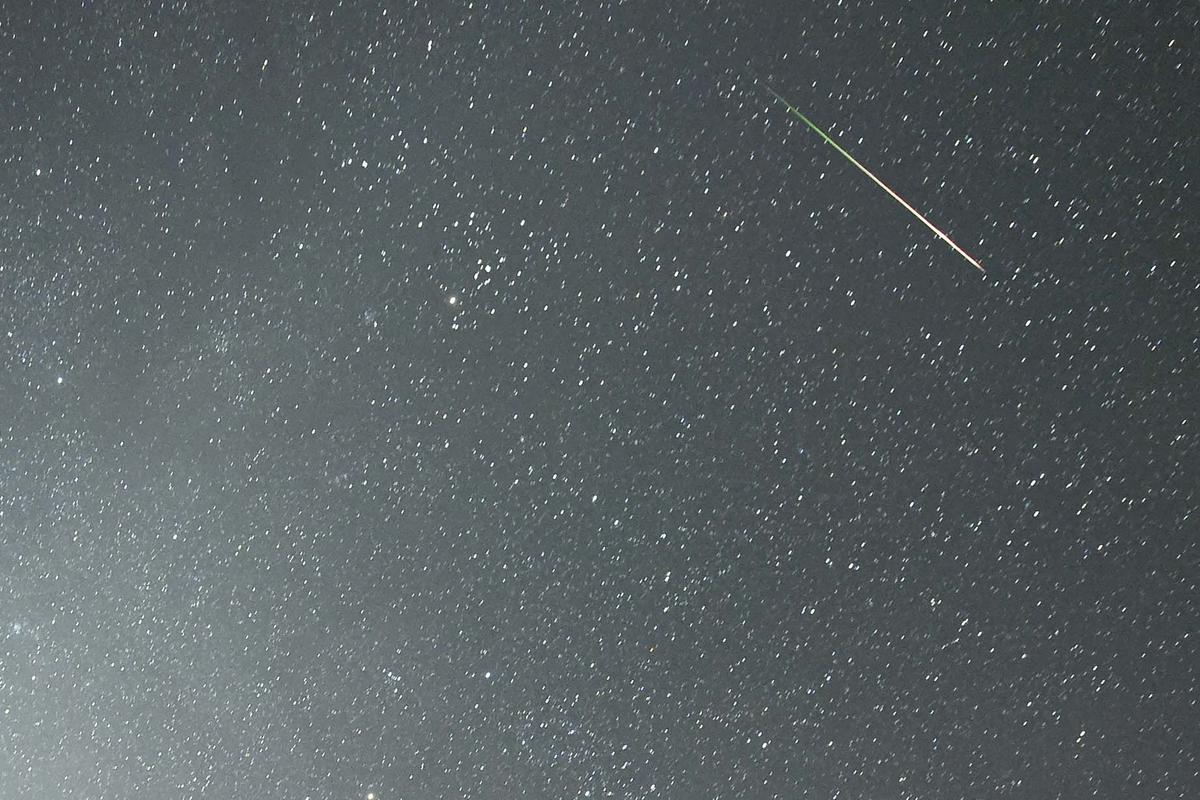
This shower has looked spectacular in past years, though it won’t look quite as good in 2026. Under ideal dark conditions, the Quadrantids may produce as many as 80 meteors per hour during peak, many of which are bright-burning, long-lasting shots of light called persistent trains or, more colorfully, fireballs. With the full moon occurring on the same night this year, however, significantly fewer sightings are expected.
But some meteors will appear weeks before the full moon has a chance to wash them out—even before Christmas—and afterward, as the Quadrantids tend to slow-drip a few sporadic meteors in late December and mid-January, outside the window of maximum activity. Compared to most meteor showers, which ramble on steadily for weeks, the Quadrantids’ peak is sharp, lasting just six hours on the night between Jan. 3 and Jan. 4.
For those wanting to watch the shower, knowing what place in the stars they will occupy and where they hail from becomes important. They will seem to shoot out of the constellation of their namesake, Quadrans Muralis, which doesn’t appear in modern astronomy books; it’s officially obsolete. Yet meteor watchers can find it if they look between Boötes the herdsman and Draco the dragon. All these are northerly stars, making the Quadrantids primarily a northern hemisphere spectacle.
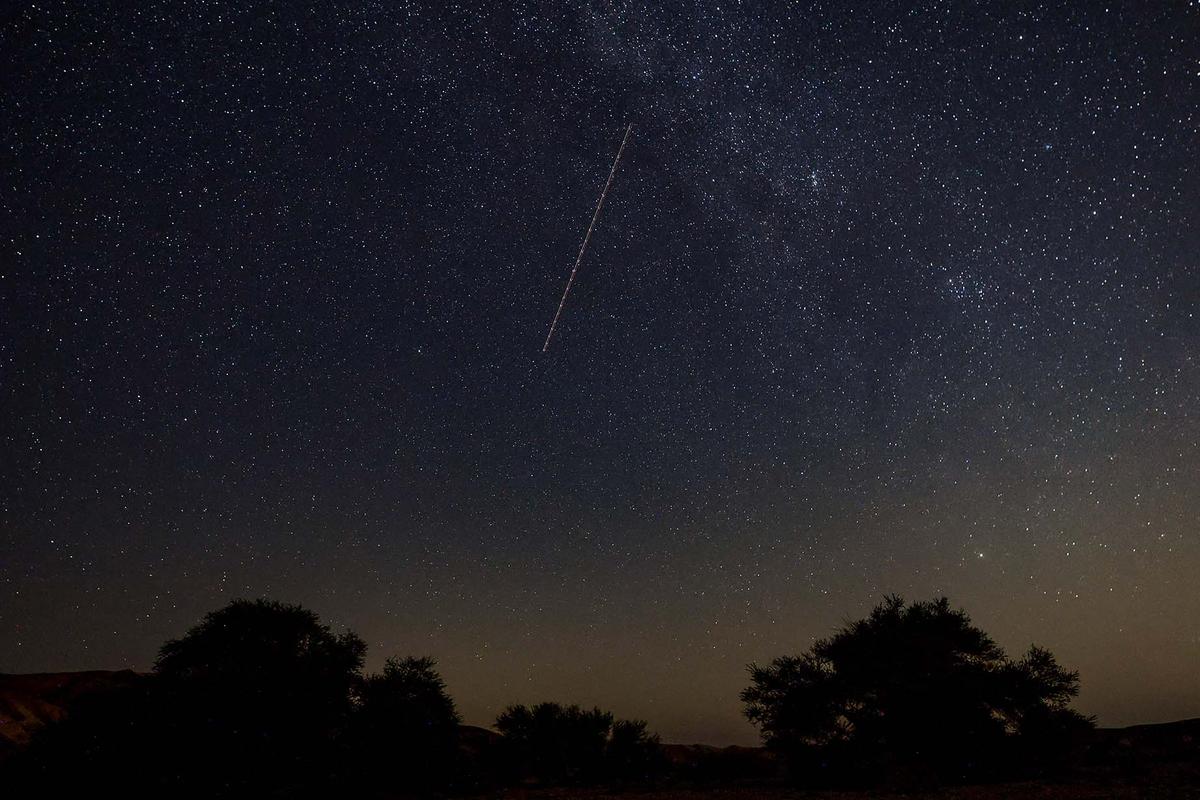
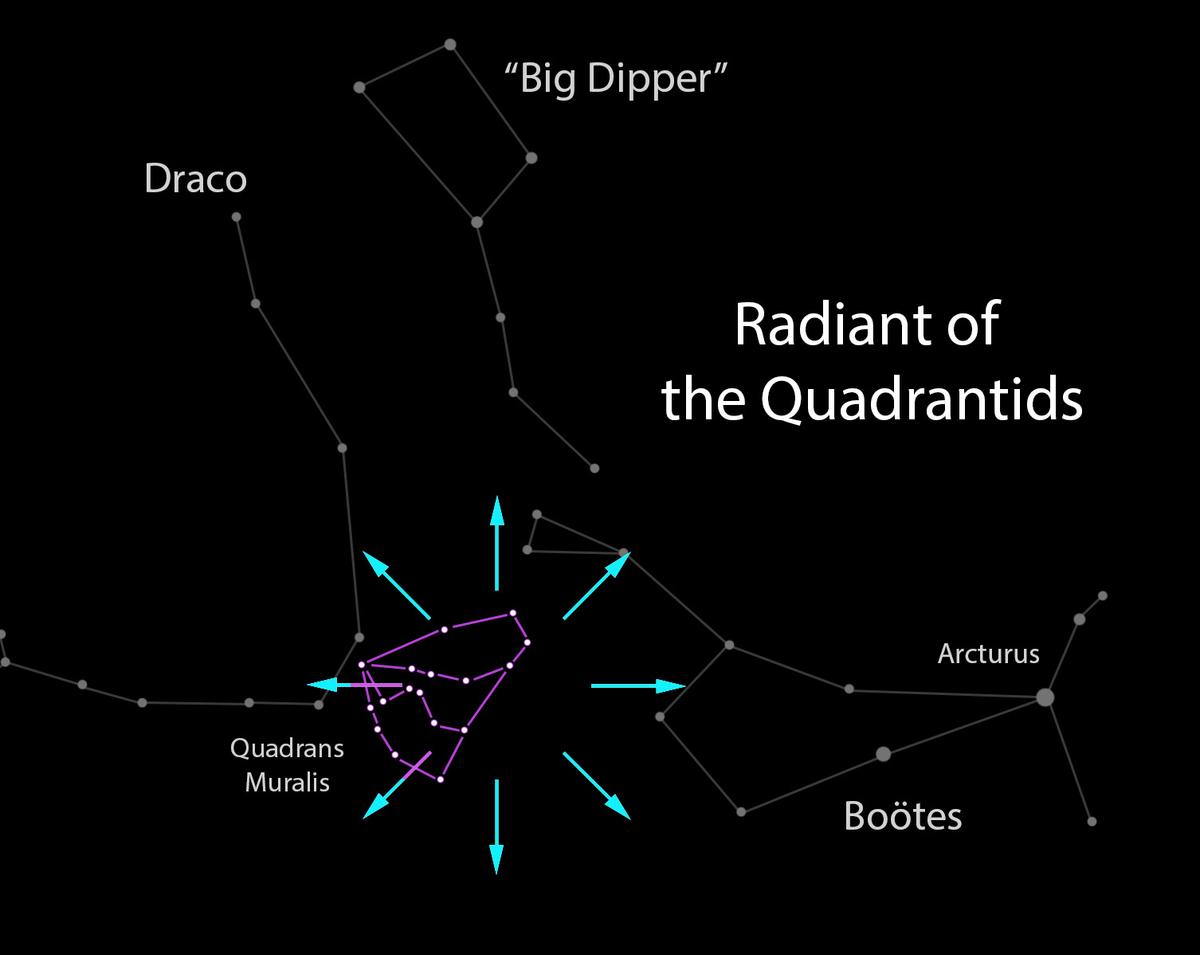
The one big caveat for meteor watchers is that meteors won’t appear near their point of convergence, or radiant, but will shoot across the entire sky. Observers will want to wait for the radiant to rise high—the Quadrandits’ radiant will rise highest at 7:36 p.m. Eastern on Jan. 3—as this will reveal the greatest search area where they might appear.
Born From an Asteroid?
Asteroids, which are solid lumps of space rock, and meteor showers, which begin their lives as vast streams of cosmic debris spread across millions of miles, might not seem the most natural common ancestors of each other at first. Scientists are still puzzling out why certain meteor showers, like the Geminids in December, for instance, share the same orbit as known asteroids, though there’s little doubt they were once indeed the same object.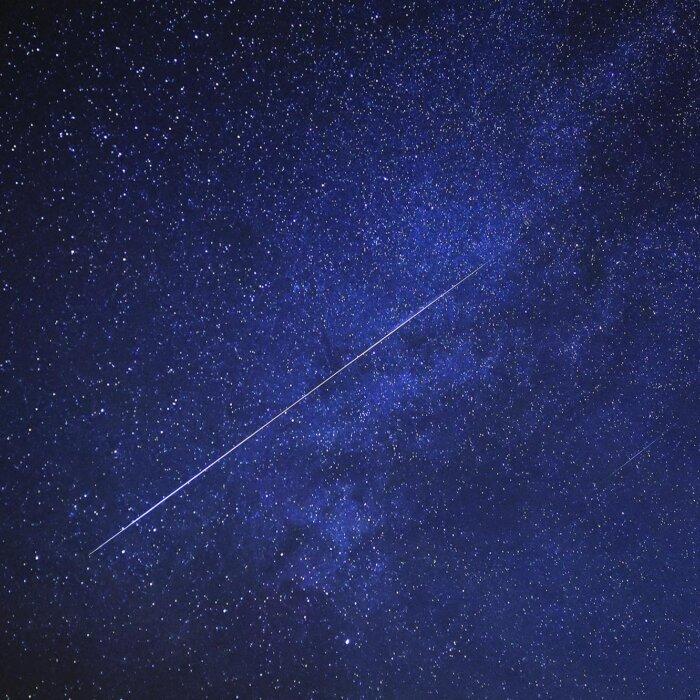
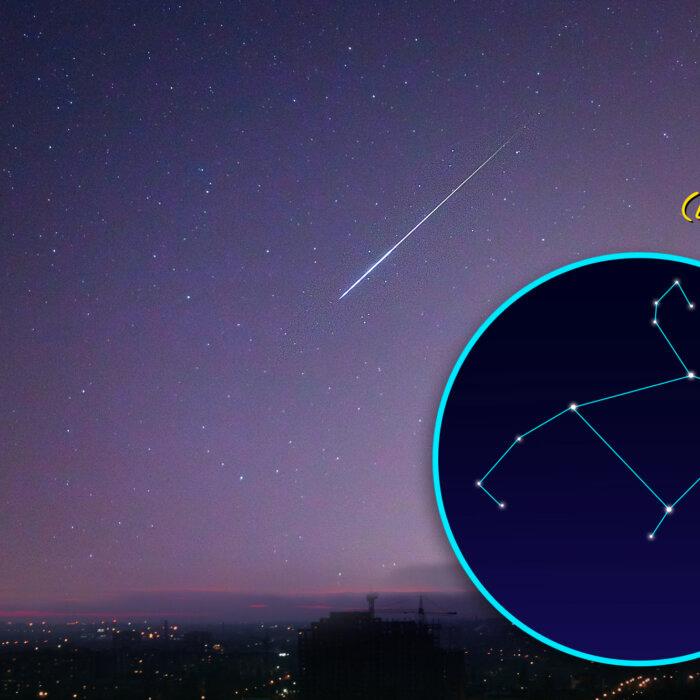
The story of these two comets is that they once may have comprised an even larger comet that was captured by the sun’s gravity 4,000 years ago. It then broke apart some time over 1,000 years ago and formed what is known as the Machholz Complex, which includes several comets and asteroids and eight distinct meteor showers.
One more object might play into the Quadrantids’ saga, Comet C/1490 Y1, which could be the ultimate source of all, though it disappeared mysteriously centuries ago. “It might have been thrown out of the solar system,” Machholz said. “That might be why we haven’t seen it since 1490. Or, the comet might have split up prior to its next return, producing the Machholz Complex.”
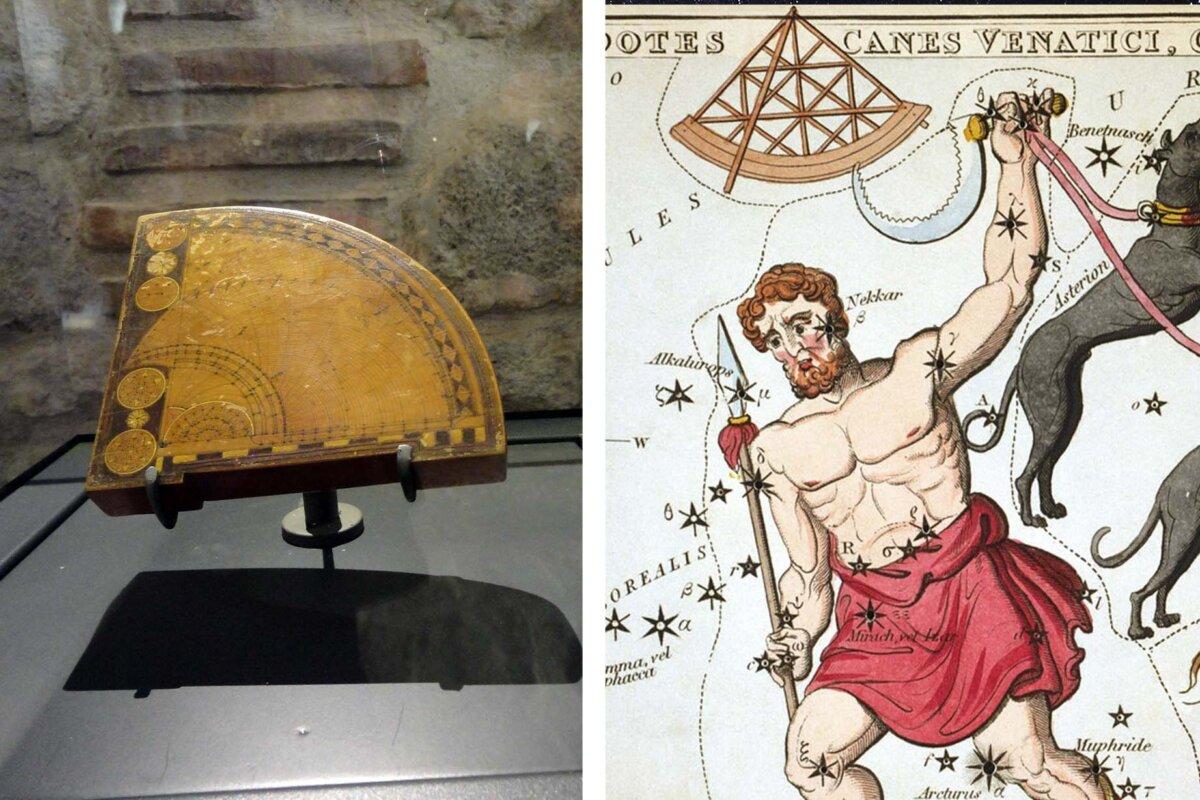
From a Far-Away Constellation?
It’s possible the Quadrantids did originate from a comet and, ultimately, beyond the solar system, but this shower probably has no connection with constellation Quadrans Muralis, even though its radiant is forever fixed among these stars. The meteors appear to radiate from there only due to a trick of perspective while their connection with the stars is merely coincidental.Meteoroids follow a fixed orbit and all travel parallel with one another like how train tracks run parallel, and, like train tracks, they seem to converge on a fixed point in space, travelling to infinity. It’s really not infinity though; they have a limit. The furthest the Quadrantids reach is just beyond Jupiter.
Still, astronomers have a history of making, and breaking, such connections. In 1839, Adolphe Quetelet of Brussels Observatory in Belgium and Edward Herrick in Connecticut were the first to suggest the Quadrantids were an annual shower, and it was christened after the constellation. But in 1922, when the International Astronomical Union compiled the official list of constellations, Quadrans Muralis was left out and it became obsolete. The name now exists only as a memory, while its annual meteor shower is a reminder every New Year.