I believe in the healthful benefits of wine consumed regularly in moderation with food. I have one glass per day, rarely more, and always with food.
Several doctors I know, including world-famous heart specialists, agree with me, at least in terms of what they say is wine’s beneficial impact on heart disease, the No. 1 killer of Americans.
However, some health agencies have recently come out with arguments that suggest that there are drawbacks to any alcohol consumption. As with most health-related issues, the real-world issues are complex and call for far more data than can be presented in a wine column.
The result of the controversy over the effects of alcoholic beverage consumption is that millions of people worldwide have begun seeking low-alcohol and zero-alcohol beverages to replace their standard glass of table wine. This has prompted wine companies to seek products that replace traditional wine.
Thus far, their efforts have been heroic, but not particularly exciting. It has long been known that wine with zero alcohol typically is not very appealing to wine lovers.
Alternatively, beer has been made without alcohol quite successfully for the past two decades, and advances in nonalcoholic beer have been excellent. Beer lovers might disagree. Nonetheless, at least two dozen exciting, zero-alcohol brews now sell widely.
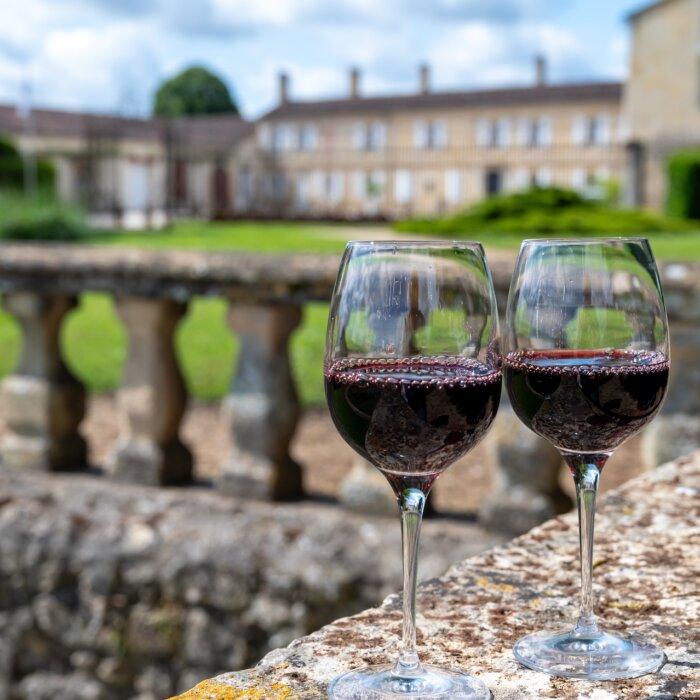
Although most nonalcoholic wines I have tasted aren’t very wine-like, the best examples aren’t bad. One reason is the fact that they typically contain grape juice, which carries some of the flavors of wine.
But grape juice alone is sweet, and most of it doesn’t work well with savory foods.
Efforts to make nonalcoholic wines that satisfy wine lovers have been ongoing for decades. Winemaker Clark Smith wrote about this in his 2013 book, “Postmodern Winemaking.”
Smith wrote that the late Bruno Benziger, founder of Glen Ellen Winery, asked Smith in the 1980s to investigate making a nonalcoholic wine “outside of the federal restrictions that forbid flavor additives to standard wine.”
The idea was to make a nonalcoholic product and then figure out how to do so entirely legally so that it could be sold as a nonalcoholic wine.
Smith wrote that one technique was to remove all the alcohol from, say, a chardonnay, and “then add essences like apple, pear, pineapple, and butter” to emulate chardonnay.
“But it didn’t work,” he wrote. “The flavors didn’t blend. We ended up with what tasted like a bland base (wine) with a bunch of flavor notes sticking out as bizarrely as spiked hair.”
Some of the best nonalcoholic wines today use a technique called vacuum distillation to remove most of the alcohol after traditional fermentation. Then some grape juice is added back in, along with sufficient acidity to balance whatever sugars remain.
Consumer demand for low-alcohol products has developed relatively recently, and it takes time for the wine industry to respond. It’s not easy to rush new technologies into a business such as wine.
As a result, the vast majority of wine now sitting on store shelves or on restaurant wine lists was produced two to four years ago, before the consumer demand for low-alcohol products became a trend.
At a recent major wine event in Sonoma County, California, most of the wines served had 15 percent alcohol or close to it. It was extremely difficult to find any lower-alcohol wines to consume.
My seat-of-the-pants solution was to add a little water to the chardonnay I was consuming. Yes, obviously, it tended to water down (literally) the flavors, but the product was at least palatable with the foods being served.