At the height of his fame, 72-year-old still-life and genre painter Jean-Baptiste-Siméon Chardin retired his paintbrushes and picked up pastels. Most art historians believe the 18th-century French artist chose pastels as his health waned and his eyesight diminished.
Artists like Chardin love the immediacy of painting with pastels; it allows them to capture fleeting moments almost as quickly as they happen. Rather than waiting for a layer of oil paint to slowly dry, pastelists can stop and start paintings at will, without noxious oil paint fumes.
Pastels use the same pigments as oil paints but are mixed with a binder and made into sticks. While the powdery nature of pastels makes the paintings fragile, it also refracts the light, producing the most luminous pictures. In addition, pastel paintings retain color saturation longer than oil paintings because pastel paintings cannot be varnished, which can discolor or damage oil paint.
Despite its origins in the Renaissance, pastel painting only gained popularity in the 18th century, initially in France. The works appealed to the clientele of the growing middle class seeking more affordable portrait options.
Along with Chardin, the era’s leading pastelists include Italian artist Rosalba Carriera, Swiss artist Jean-Etienne Liotard, and French artists Joseph Vivien, Maurice Quentin de LaTour, and Jean-Baptiste Perronneau.
The King and Queen of Pastelists
Lyon native Vivien (1657–1735) became the best pastelist in France. One admirer crowned Vivien the “Van Dyck of Pastel.” He first trained as a painter, in the Paris atelier of French court painter Charles Le Brun. He later focussed on portraiture and was accepted in the French Royal Academy of Painting and Sculpture as a pastel portraitist.
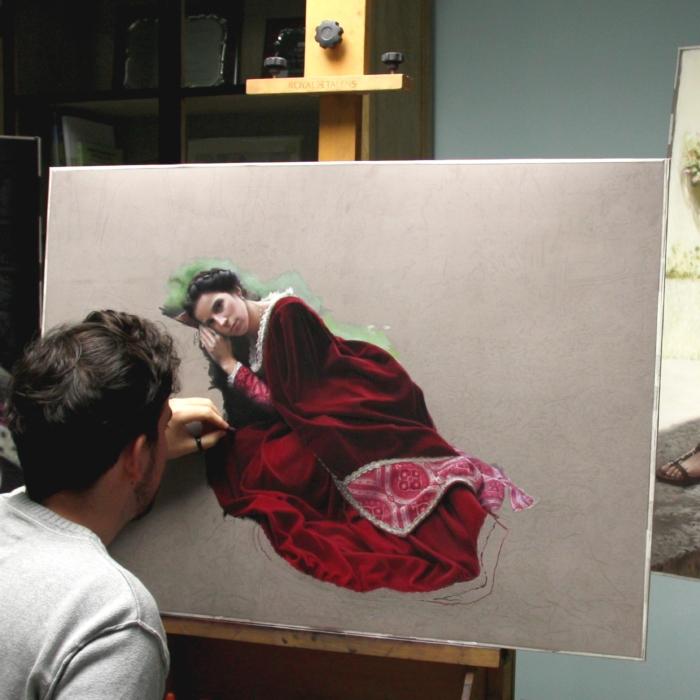
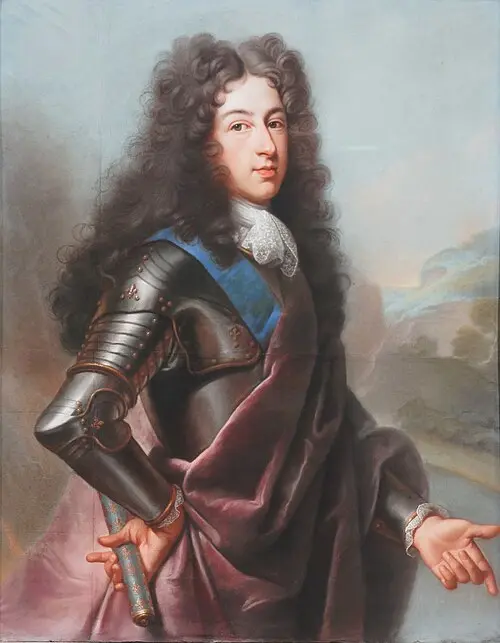
From 1700, Vivien worked for Maximilian II Emanuel, Elector of Bavaria, in Paris, Munich, Brussels. In a portrait of Louis of France, Duke of Burgundy, Vivien expertly rendered the hard sheen of armor and the soft hands of royalty.
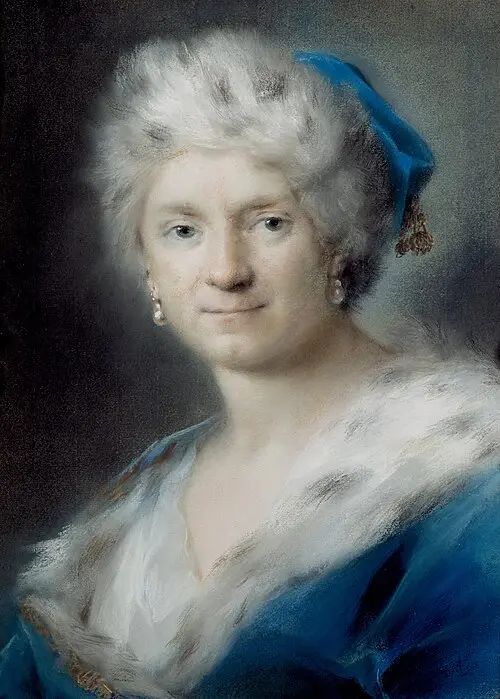
Venetian Rosalba Carriera (1673–1767), earned similar fame. Commonly known as Rosalba, her work was admired across Europe. She was a member of the Roman and French art academies and painted for French and Viennese royalty.
Rosalba forever influenced pastelists, including her peers, by introducing dry brushing to the medium. She also added water to the pastels to create painterly portraits with porcelain skin and velveteen textures.
Art scholar Roberto Longhi wrote: “She knew how to express with incomparable force the evanescent delicacy of an epoch.”
More Great Pastelists
Pioneering 18th-century pastelists Vivien and Rosalba were later joined by their equally skilled peers. Each artist brought their distinct flair to the medium.From 1737 to 1773, Maurice Quentin de LaTour (1704–1788) exhibited more than 100 pastel portraits at the Royal Academy of Painting and Sculpture Salons in Paris.
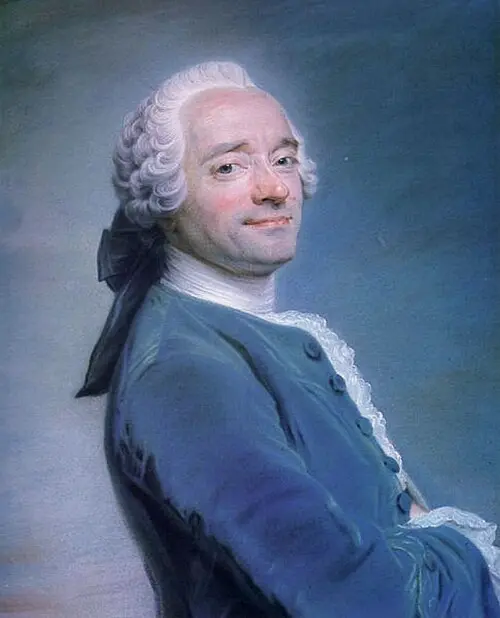
LaTour’s keen eye and deft draftsmanship earned him repute for elaborate and accurate character portraits.
LaTour’s jaunty “Self-portrait With Frill” depicts the artist’s playful character. It also showcases the artist’s signature style: the sitter’s direct gaze and exquisite details, such as the coiffed curls, delicate blush, and cheeky facial expression. He also favored light hues, as seen in the blue jacket.
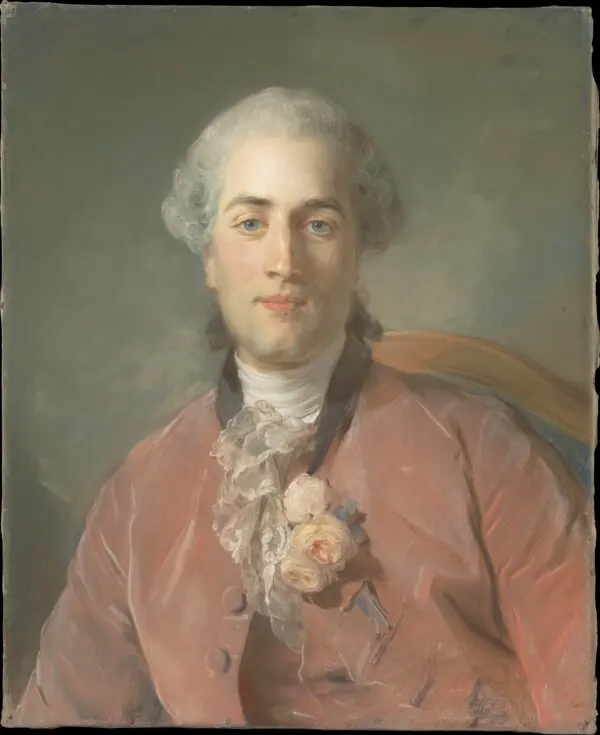
LaTour’s fellow countryman Jean-Baptiste Perronneau (1716–1783) was also a prolific pastelist. He originally trained as an engraver before taking up oil and pastel portraiture. He, too, became a member of the French academy. But he traveled more than LaTour: to Italy, Russia, and Amsterdam.
Perronneau’s striking portrait of shipping magnate Olivier Journu impressed the dandies of the day. It demonstrates the artist’s excellent rendering of character and different textures: the dapper peach suit, lace-frilled shirt, fresh flowers, along with the magnate’s piercing blue eyes that seem to follow the viewer.
Like Perronneau, Swiss artist Jean-Etienne Liotard (1702–1789) traveled widely. He worked in Paris between 1725 and 1738, and also in Holland, and had two stints in England. After his travels to the Far East, he depicted many sitters in eastern-style costumes.
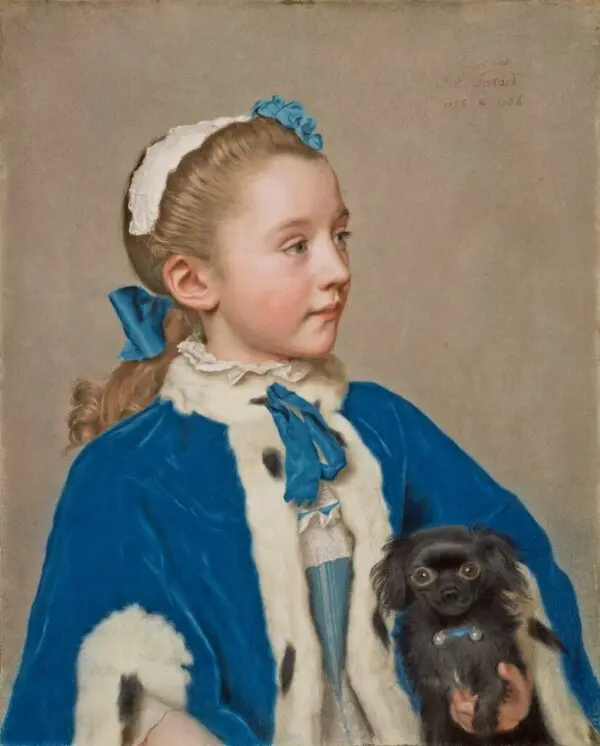
In Liotard’s “Portrait of Maria Frederike van Reede-Athlone at Seven Years of Age,” the young Dutch aristocrat gazes off to the side while her companion dog stares directly at the viewer. The girl’s sleeked back locks, china skin, and flushed cheeks epitomize youth, and Liotard’s brilliance at rendering any surface true in pastel.
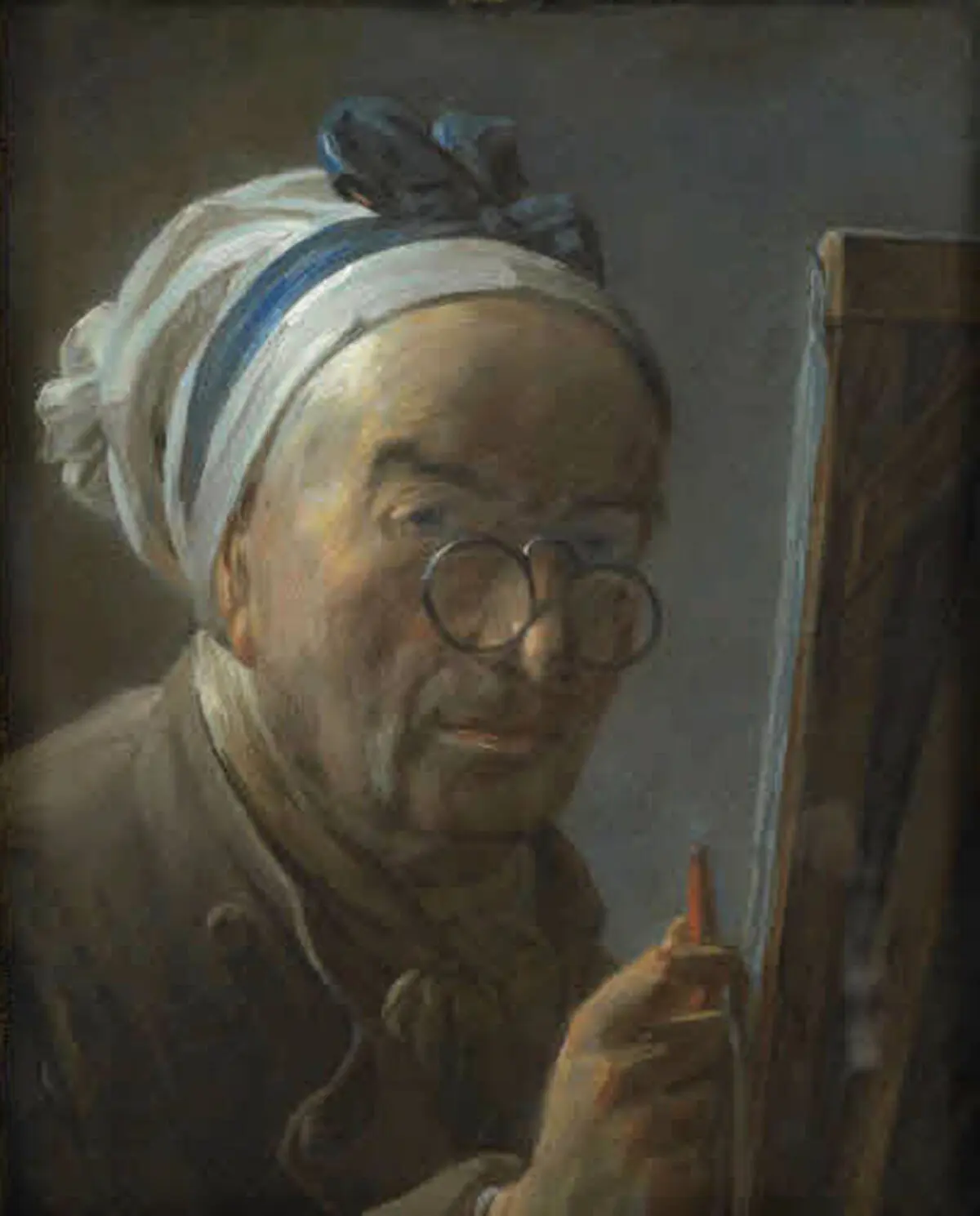
Then there’s Chardin (1699–1779), who already excelled at oil painting when he picked up pastels. Rather than his familiar genres of still-life and genre paintings, Chardin focused on pastel portraits. As a pastelist, he first exhibited three works in the 1771 Paris Salon, with one critic observing: “He is the father of the effects which the younger generation must consult often.”
LaTour wrote that Chardin painted in pastels because the medium allowed him to be as close as two or three feet from the sitter. Chardin’s “Self-Portrait at an Easel” confirms the bespectacled artist’s failing eyesight, as he proudly holds up a stick of pastel.
Today, oil painters outnumber pastelists but these luminous pastel paintings deserve the limelight once again.