
I have always longed to go to Yorkshire, England.
I was 10 when I first read “All Creatures Great and Small,” devouring each subsequent book that Alf Wight, under the pen name James Herriot, wrote about life as a veterinarian in his beloved Yorkshire Dales. I was a bit older when I encountered Bram Stoker’s “Dracula,” which opens in the seaside town of Whitby, where cliffs overlook the sea in which the ill-fated ship Demeter meets its end.
In my teens, I discovered the wild moors and ancient halls of “Jane Eyre” and “Wuthering Heights.” More recently, I have been entranced by the work of Sally Wainwright, whose string of critically acclaimed television series—“Last Tango in Halifax,” “Happy Valley,” “Gentleman Jack,” and “Riot Women”—have made her the modern bard of Yorkshire.
The Dales of James Herriot
In mid-April, I joined my friend Nancy in York, a city often mentioned in Yorkshire-based literature. On a sunny Saturday, we took a train to Thirsk, where Herriot, alongside Donald and Brian Sinclair (known in the books as Siegfried and Tristan Farnon), lived and worked in the building called “Skeldale House” in the books, now the World of James Herriot museum.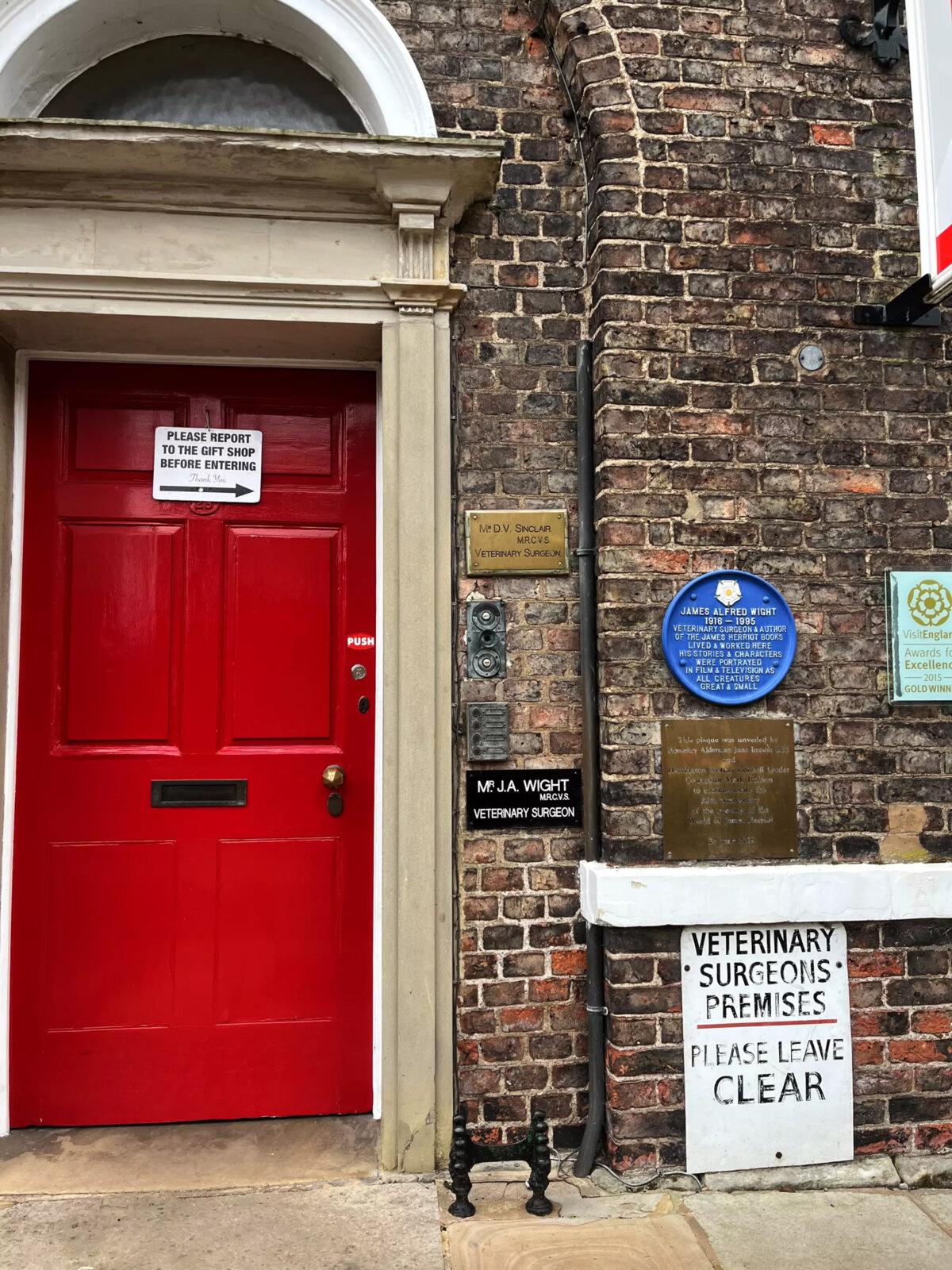
The city sprawl quickly gave way to stone-walled fields full of dazzling yellow rape and spring green grass dotted with sheep and frolicking lambs. April is lambing season, the perfect time to visit Herriot Country.

“All young animals are appealing, but the lamb has been given an unfair share of charm,” he wrote.
Situated between the North York Moors and Yorkshire Dales national parks, Thirsk (known as Darrowby in the Herriot books) is a market town, organized around a great open plaza in which stands a clock tower that on this day was decorated with rather splendid floral creations by the Thirsk Yarnbombers in celebration of its 10th anniversary.
Even so, it looks much as it must have when Herriot lived here—modern businesses housed in medieval and Georgian buildings. Surely the Ritz Cinema is the theater Herriot describes as he begins his courtship of Helen Alderson; a blue circle marker proudly declares its date of establishment as a picture house, 1912.
The World of James Herriot museum is a sudden splash of crimson and white signage on an otherwise ordinary, albeit charming, street; at the far end stands St. Mary’s Church, where Herriot married his actual wife, Joan Anderson. When we visited the church later that afternoon, they were cleaning up from a community tea and I spoke with a woman who remembered Herriot and especially his son, Jim, and daughter, Rosie, who were the town vet and doctor, respectively, for many years.
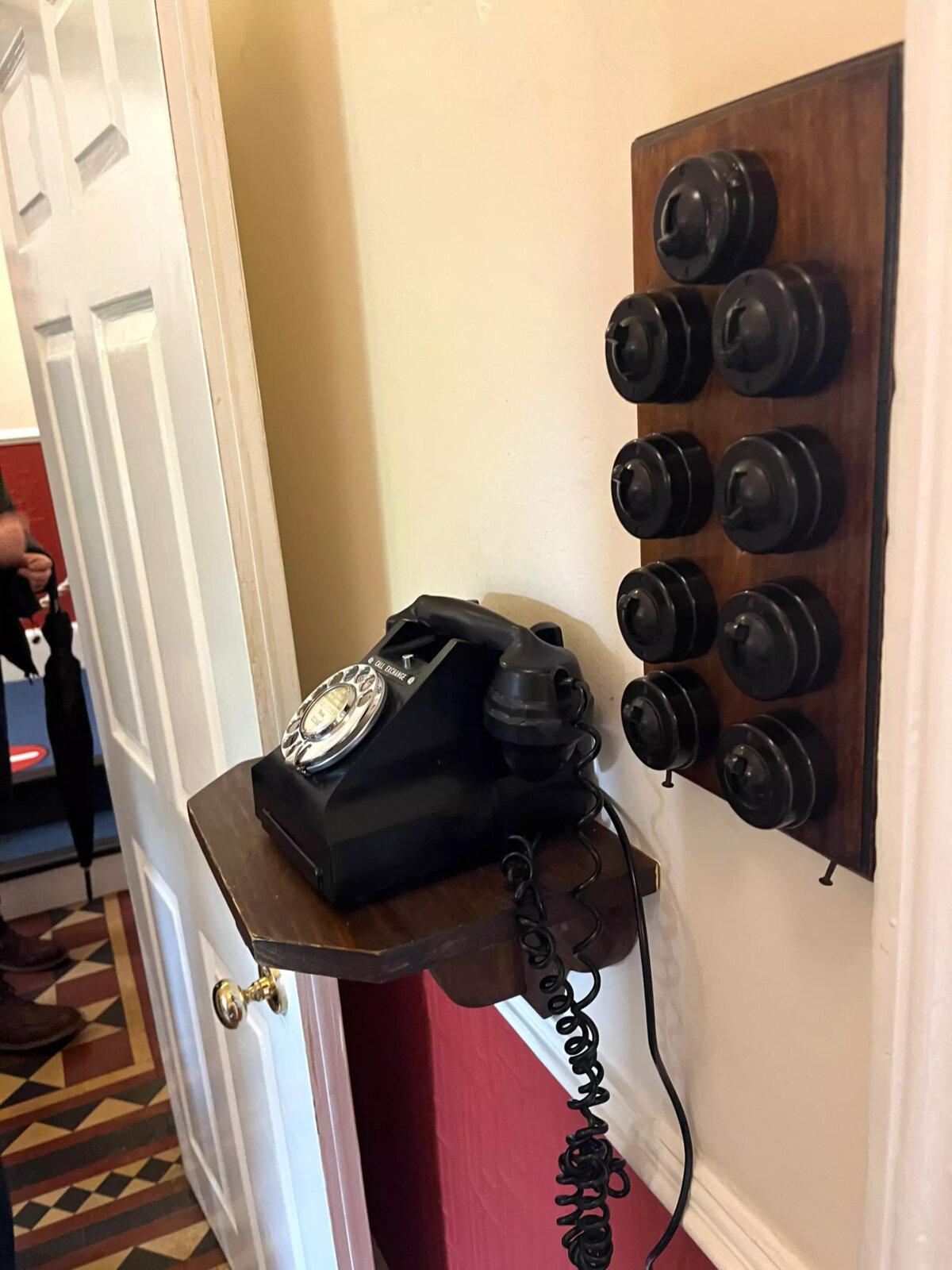
The museum, on the first floor, is a recreation of “Skeldale House,” down to the pint pot in which Siegfried Farnon kept the petty cash and the old central telephone. There’s a display documenting the evolution of the books—originally printed in the UK, beginning in 1972, under different names, until a struggling St. Martin’s Press published two of them with the title “All Creatures Great and Small” and helped turn Herriot into a franchise.
Various outbuildings now house a small screening room, where clips from a documentary on Herriot’s life play, as well as a recreation of the TV studio and set on which the 1978 television series was filmed. The set from the current PBS series, which began in 2020, is in another part of the museum, which also includes an extensive exhibit of historic veterinarian instruments.
As we wandered through the town and the museum, Herriot the man came to life as lyrically as his fiction. A country vet, whose career began before the age of antibiotics and many now-commonplace vaccines, wrote, beginning at age 50, a series of semiautobiographical novels that would become international bestsellers and launch several films and two series, one of which was filming 35 miles away in Grassington.
He never left the Dales or stopped being a vet; during his lifetime, fans would line the street outside his practice, waiting for autographs and photos. Twenty years after his death, Thirsk remains both an ordinary Yorkshire town (the only Herriot memorabilia advertised is in the museum gift shop) and an enduring tourist destination. (If you go, may I recommend lunch/tea at Upstairs, Downstairs, where I got a life-changing Yorkshire rarebit with bacon and fried egg, as well as a sack of the local sweet, cinder toffee.)
Deeper in the Dales, Nancy and I rented a “glamping pod” in Malhamdale. On our way, we stopped in Grassington, where the town was being transformed into Darrowby with period- and place-appropriate signs, advertisements, and community announcements.
“Open as usual but dressed for filming,” read a sign in the window of the Stripey Badger Bookshop, Coffee Shop, and Kitchen.
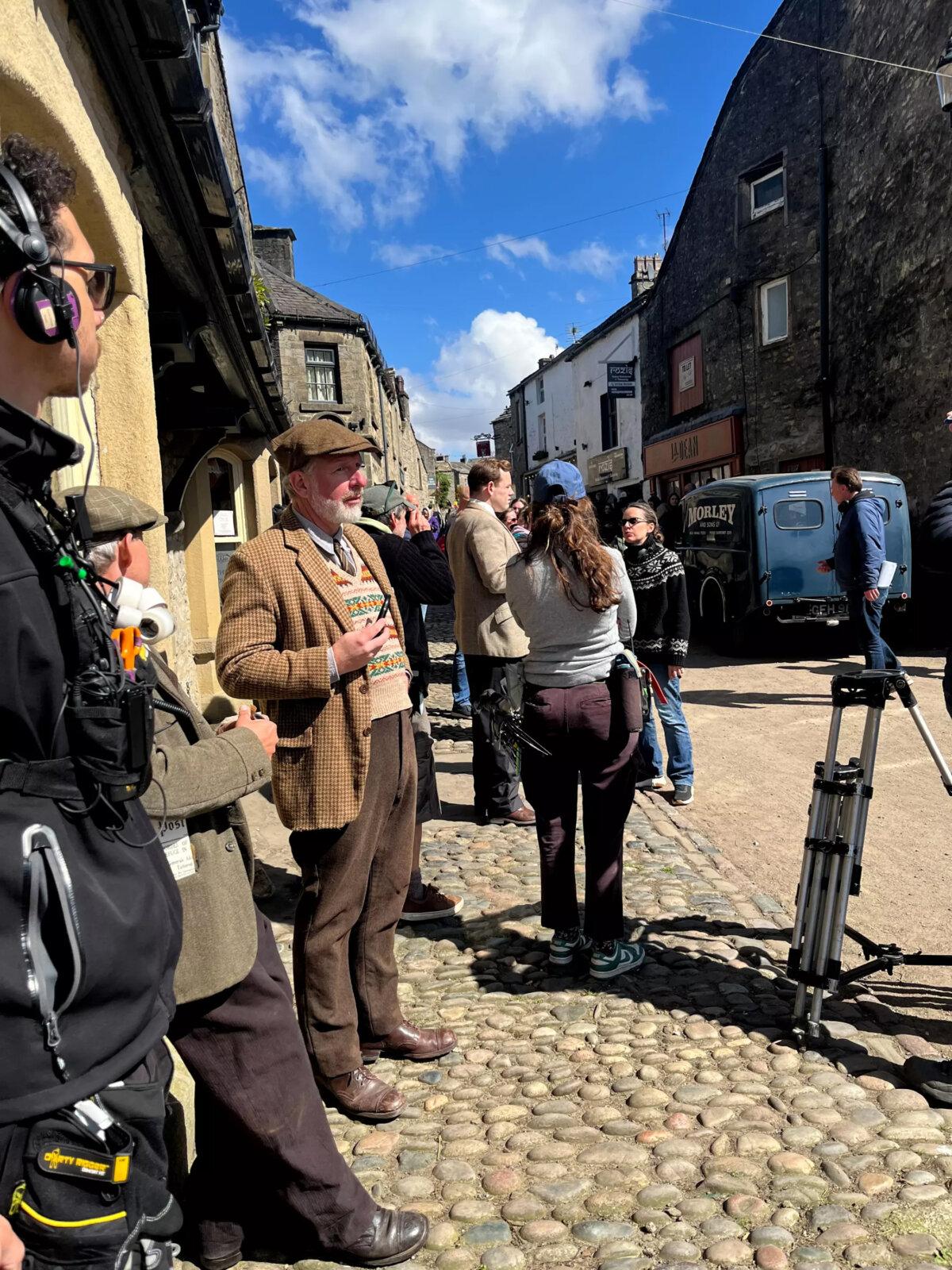
Filming would take place in two days’ time, so we returned then to see the square come alive with extras in period clothing. Within the crowd of fellow onlookers, controlled by lovely but firm crew members, we watched as a scene between Siegfried Farnon (Samuel West) and Tristan Farnon (Callum Woodhouse) was filmed outside the Drovers Arms.
We had chosen Malhamdale because its limestone topography is considered the most stunning in the Dales. And that it most certainly is.
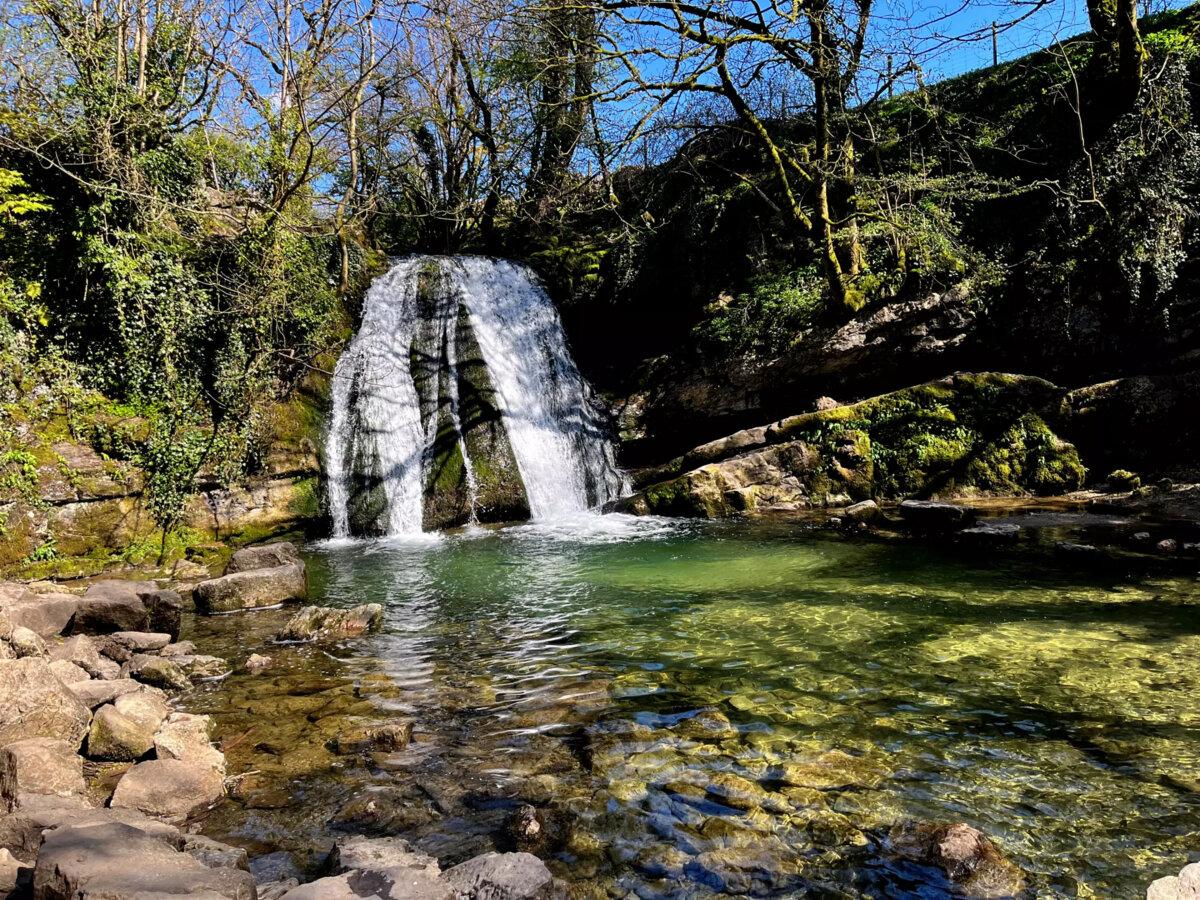
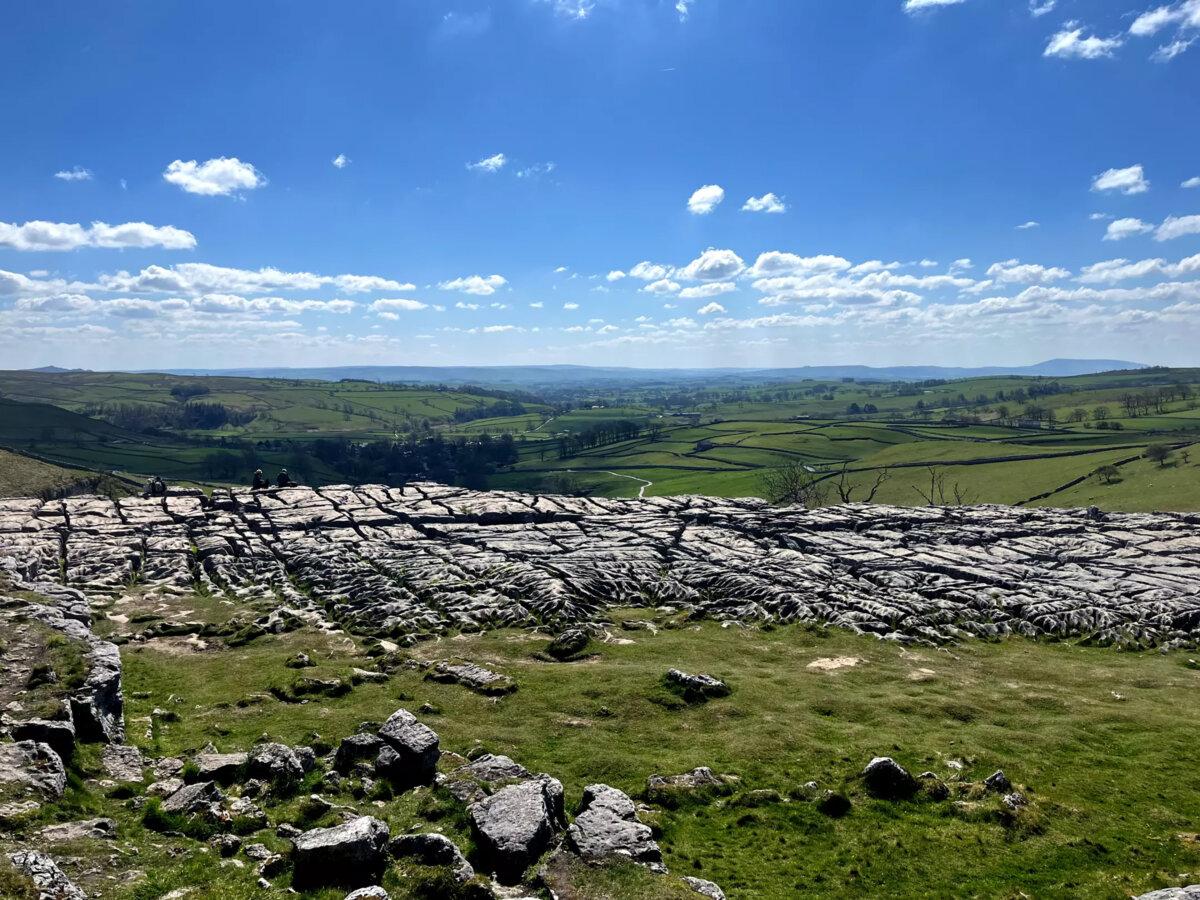
From the village of Malham we hiked to Malham Cove, which rose in near-miraculous silver splendor among the sylvan greenery, and then ascended the nearly 500 steps to its top. There, a breathtaking view and unique fractured “pavement” have been used in countless films, including “Harry Potter and the Deathly Hallows: Part 1” and the 1992 “Wuthering Heights.”
We followed the trail to the Gordale Scar, a glorious gorge and waterfall that is also a favorite filming spot, and thence to Janet’s Foss, a woodland waterfall and pool, beside a cave where the queen of the fairies is said to live.
After just three days in the Dales, I clearly understood why no amount of money or fame had convinced Herriot and his family to leave.
Dracula Town
Windswept Whitby sits on the east coast of Yorkshire, with its back to the North York Moors National Park and its face to the North Sea. It climbs either side of a valley created by the River Esk as it joins the port where whalers once launched and Capt. James Cook first commandeered the HMS Endeavour.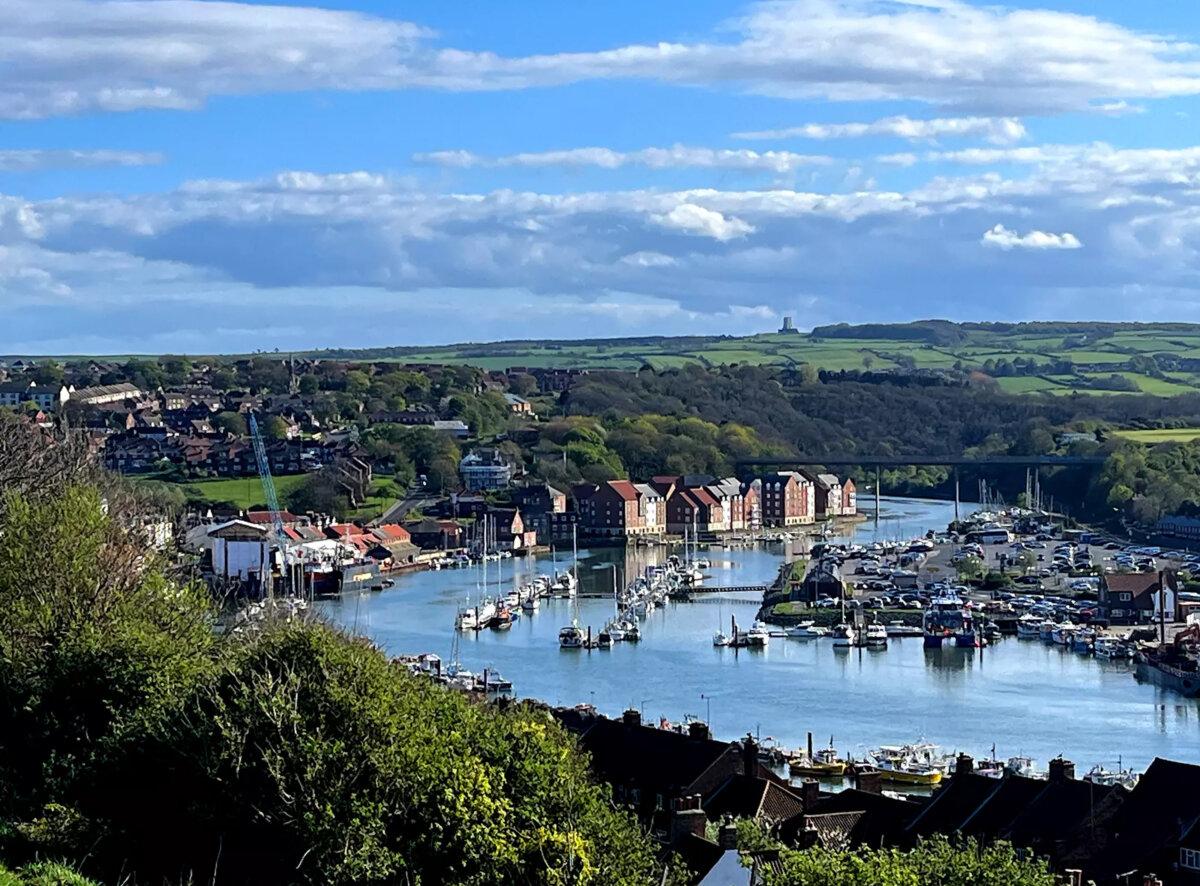
On the west side, the street along the harbor is chockablock with venues catering to tourists and day-trippers who come to enjoy the pier and small beaches. Families rent crab pots and put their catch in plastic buckets held by delighted children.
Atop the cliffs behind, Georgian homes, hotels, and guest houses stand in gracious testament to Whitby’s Victorian history as a popular spa town, as it was when Stoker visited in 1890. He stayed in a West Cliff guest house, gazing, as everyone must do, across the harbor, where the remains of the 13th-century Whitby Abbey dominate the East Cliff.
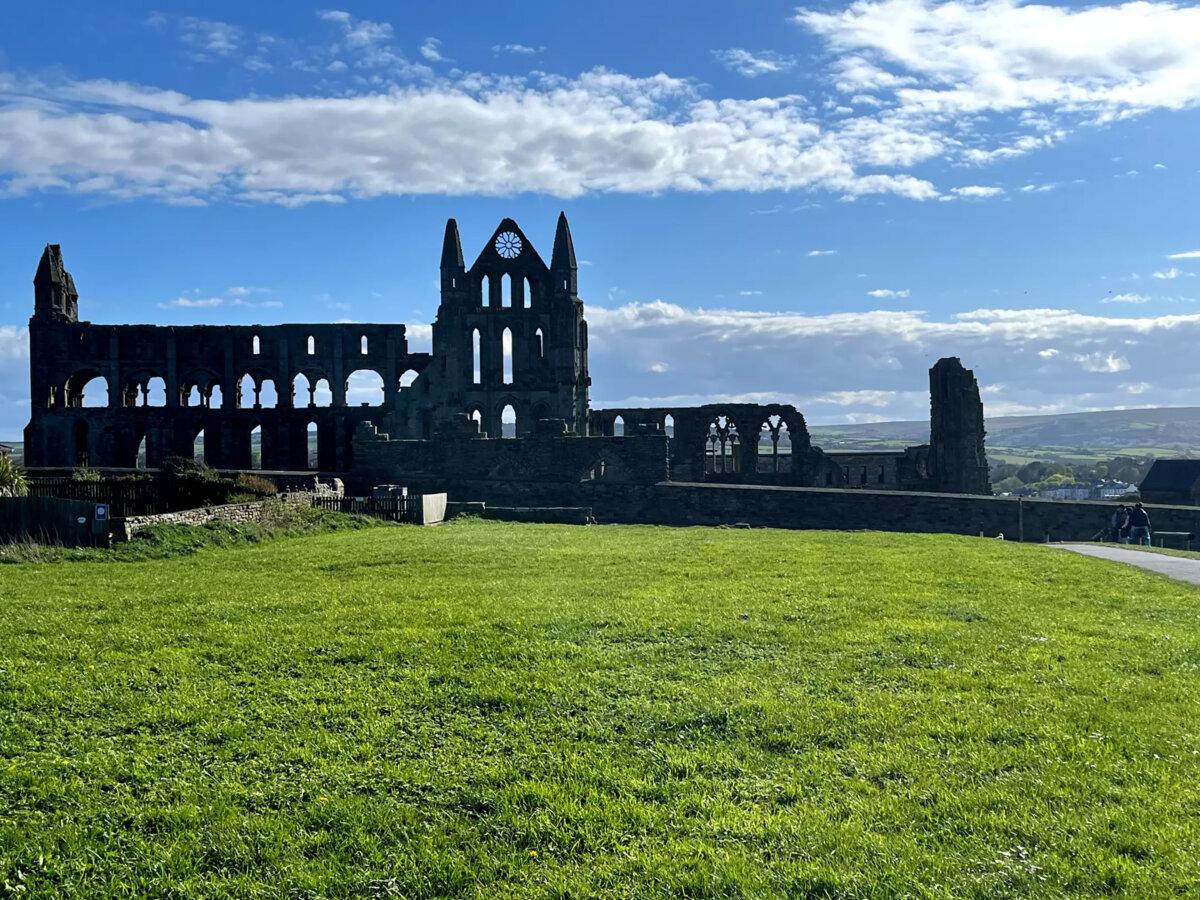
Even under a beaming sun, the ruins, aproned by the graveyard of the nearby Norman church of St. Mary’s, carve a formidable black silhouette against the sky. Below are the roofs and cobbled streets of the medieval Old Town, where ancient pubs stand among jewelers specializing in local jet. To reach the abbey, visitors must climb the town’s famous 199 steps that rise along the cliff.
“It is a most noble ruin,” the character Mina Harker writes in her journal in early chapters of “Dracula.” “Between it and the town there is another church, the parish one, round which is a big graveyard, all full of tombstones. This is to my mind the nicest spot in Whitby, for it lies right over the town, and has a full view of the harbor.”
Here Harker and her friend Lucy Westenra sit among the graves, sketching and talking, and later, watching clouds gather for the storm that would bring the Demeter and Count Dracula to Whitby. Here, too, Harker would see, from the West Cliff, her sleepwalking friend half reclining on their “favorite seat,” and for a moment it seemed to her “as though something dark stood behind the seat where the white figure shone, and bent over it.”
We visited on a sunny day, and the wind blew hard as we traced Harker and Westenra’s steps through the tombs and along the path past the abbey toward Robin Hood’s Bay. With its glorious views and picturesque harbor, Whitby is the antithesis of gothic horror. Still, it was here that Stoker, researching another novel, first read of Vlad the Impaler, otherwise known as Dracula, and no doubt heard of the wreck of the Russian ship Dmitry, which had run aground beneath East Cliff five years before his visit.
Bronte Country
It is difficult to imagine a fictional tale more gothic, inspirational, and remarkable than that of three brilliant sisters who lived in relative isolation on the edge of the Yorkshire Moors, secretly battling their socially conscripted futures by writing poems and novels that they dared not publish under their own names.Two of those novels—“Jane Eyre” by Charlotte Bronte and “Wuthering Heights” by Emily Bronte—are still considered masterworks, influencing subsequent generations and endlessly adapted for film and television. (In the ultimate Yorkshire crossover, Wainwright wrote the breathtaking two-part Bronte biopic “To Walk Invisible,” which everyone should see.)
The Bronte Parsonage Museum and the town of Haworth, which it overlooks, are very much tourist attractions. An information annex, gift shop, and public restroom have been added behind it, but once you enter the small garden that stands between the parsonage’s front door and St. Michael and All Angels’ Church, you are in another world.
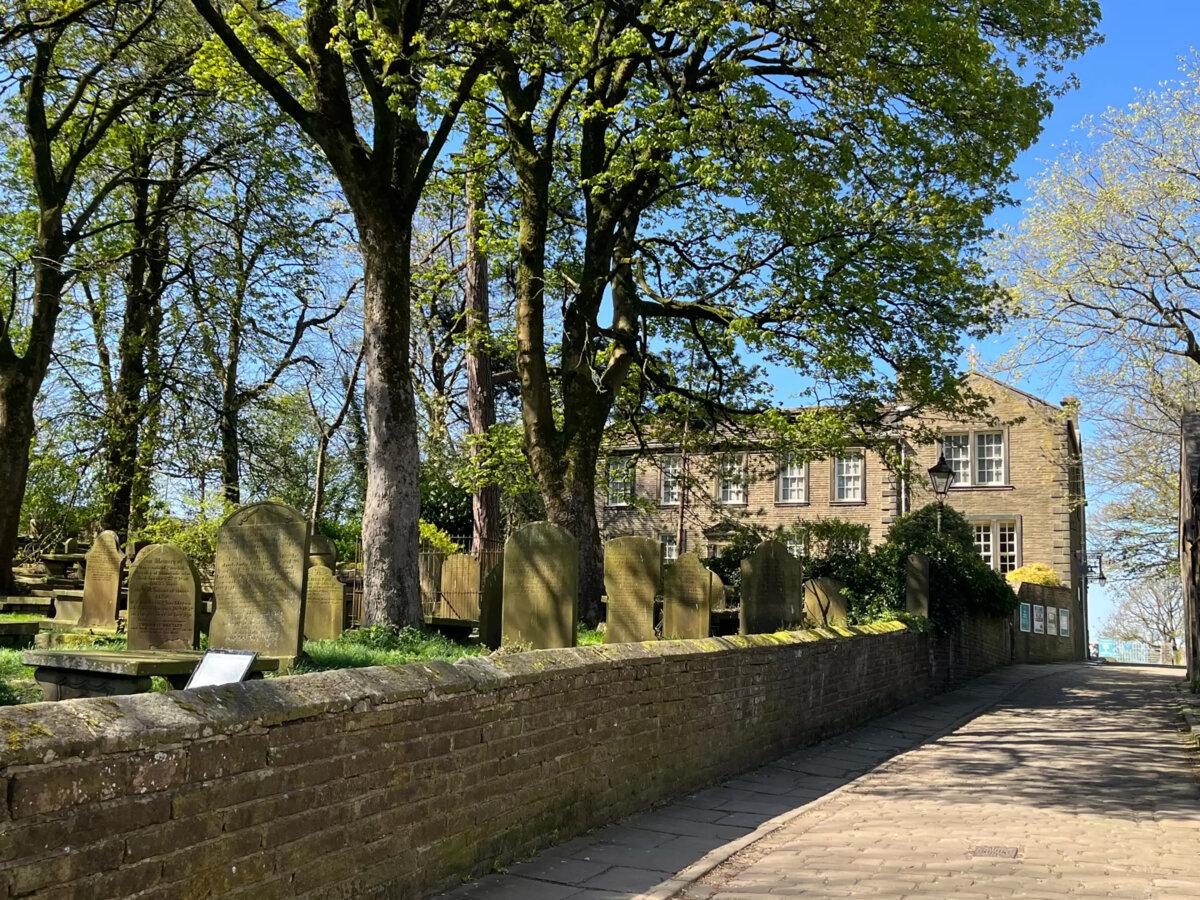
In 1820, Patrick Bronte, recently appointed incumbent of St. Michael, moved his wife, Maria, and their six children into the parsonage, where they all lived for the rest of their natural (albeit in most cases, short) lives. Maria Bronte died in 1821; the two older children, Maria and Elizabeth, died four years later after being sent to a typhoid-plagued school Charlotte Bronte would pillory as Lowood in “Jane Eyre.”
The museum is meticulously restored to reflect the years that the surviving children—Charlotte, Emily, Anne, and Branwell Bronte, the only son—were young adults. The dining room table, where the sisters wrote, is strewn with manuscripts, quill pens, and teacups; a bonnet and shawl bedeck a chair in the small kitchen. Patrick Bronte had his own study but it is difficult to imagine three women being able to write separate works, never mind classics, in such close quarters. Ironically, only Branwell Bronte’s room, papered with sketches and poems, looks like an artist’s refuge.
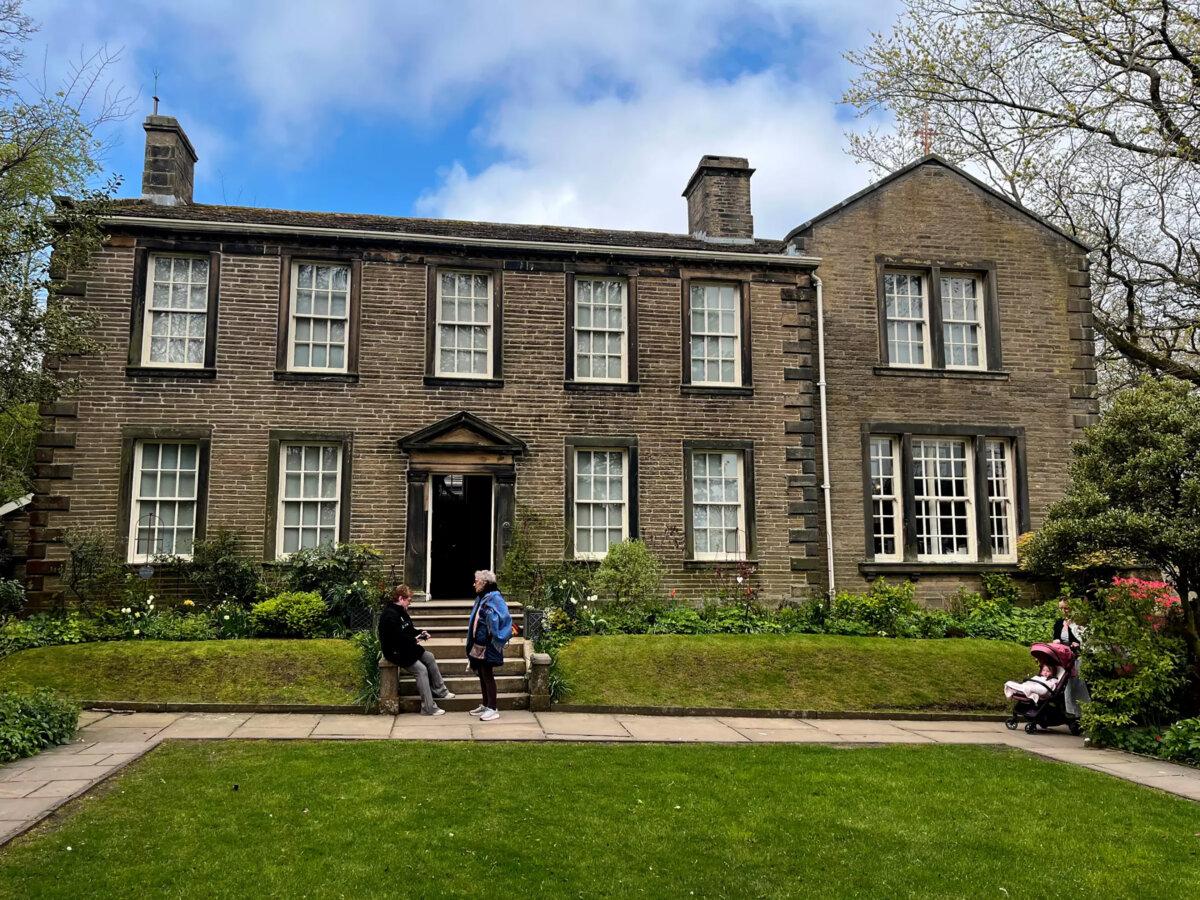
Unlike his three sisters, Branwell Bronte, whose artistic career was stunted by alcoholism and an opium addiction, never published. He died of tuberculosis in 1848 at 31.
If any place should be haunted, it is the Bronte parsonage. Shortly after her brother’s funeral (and just a year after “Wuthering Heights” was published), 30-year-old Emily Bronte also died of tuberculosis, expiring on the sofa that stands beside the dining room table. A few months later, after the publication of her second novel, “The Tenant of Wildfell Hall,” Anne Bronte, 29, succumbed to the disease in nearby Scarborough, just south of Whitby.
Charlotte Bronte, who wrote two more novels after “Jane Eyre,” was the only sister to be celebrated during her lifetime. She married and then died at the parsonage in 1855 at 38 of complications from her first pregnancy. Only Patrick Bronte lived to old age—84—dying in 1861 in the home where he had served for 41 years.
But it is not a sad house; instead, visitors are left to wonder at the genius, resolution, and audacity that roiled the quiet rooms and halls where the sisters secretly wrote and sent out their manuscripts, all initially under the names of Currer (Charlotte Bronte), Ellis (Emily Bronte), and Acton (Anne Bronte) Bell.
The steeply descending main street of Haworth is filled with tea shops, pubs, and stores clearly dedicated to pleasing Bronte pilgrims, but its basic form, including the original stationery store where the sisters once bought their paper, remains the same.
Wainwright’s Way
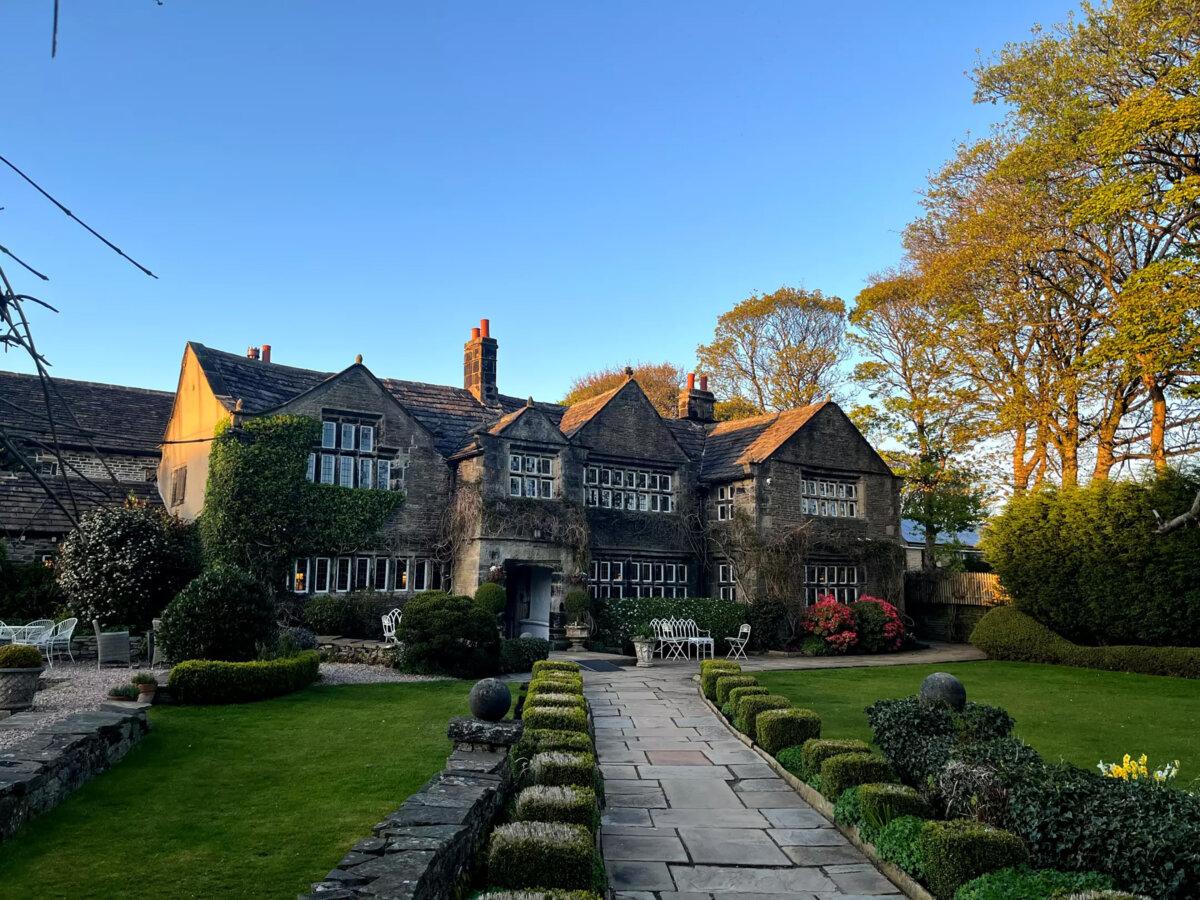
Our final accommodation on this literary sojourn was Holdsworth House, a manor hotel near Halifax where screenwriter Wainwright and her cast often stay during filming and where Alan (Derek Jacobi) and Celia (Anne Reid) were married in “Last Tango in Halifax.”With creaking floors, fireplaces, a first-class restaurant, mullioned windows, and a lovely garden, Holdsworth House would be glorious even without its famous connections (including a 1964 stay by the Beatles). Plans for at least two weddings were being discussed by staff during our sojourn.
On our way there, we stopped in Heptonstall, a tiny town above Hebden Bridge, where Sylvia Plath is buried in the St. Thomas á Becket churchyard. Her husband, Ted Hughes, was born in the nearby town of Mytholmroyd and although they were estranged at the time of her death, he was her next of kin and chose the site and the stone, on which the poet is identified as Sylvia Plath Hughes above an epitaph that reads, “Even amidst fierce flames, the golden lotus can be planted.”
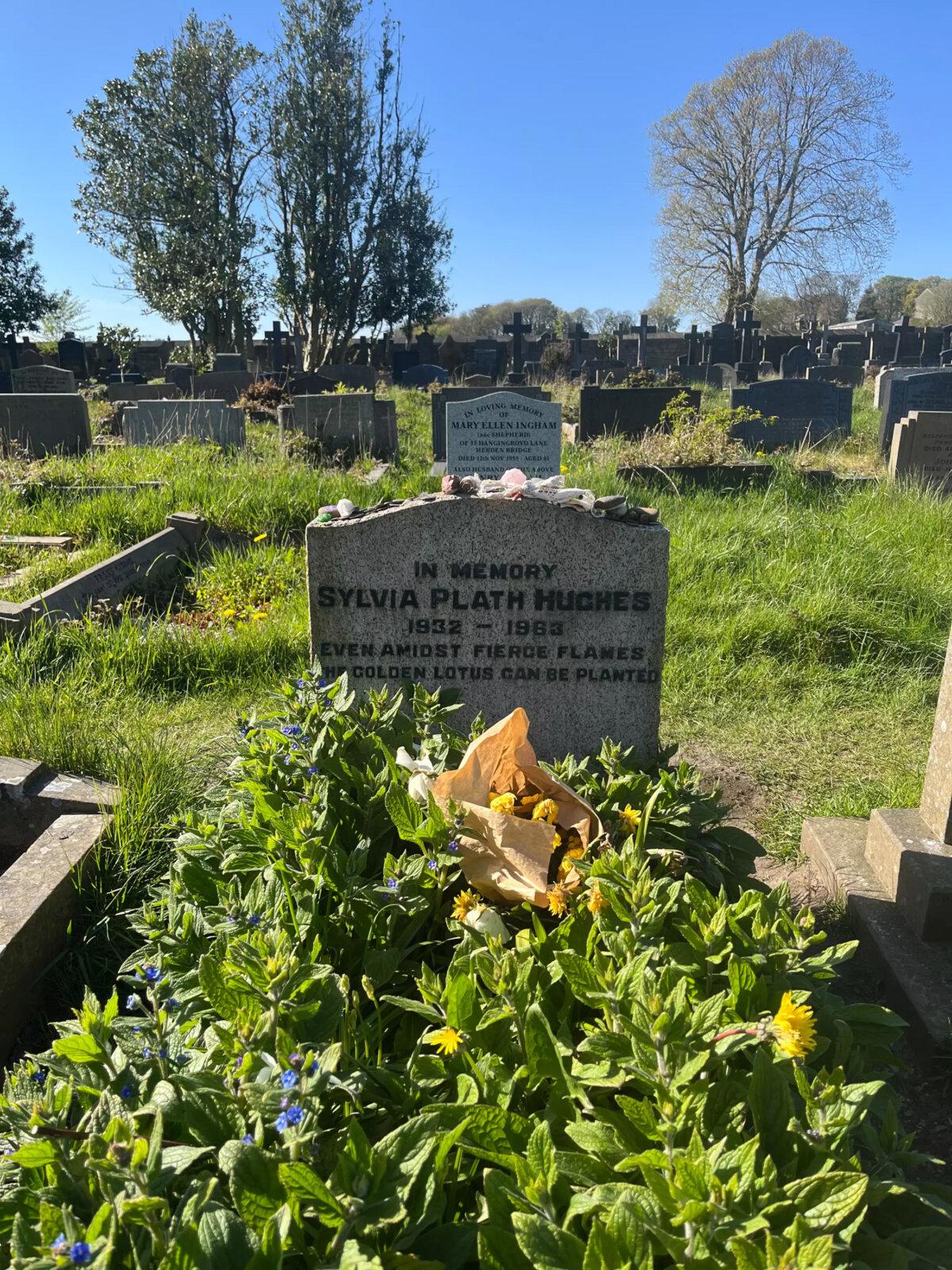
There are no signs directing visitors to Plath’s resting place; we relied on Apple Maps and my memory of a brief glimpse of it in Wainwright’s “Happy Valley” (Becky, the daughter of main character Catherine Cawood [Sarah Lancashire], is buried nearby). Looking for the piles of pens that once adorned Plath’s grave didn’t help; it is now blanketed in planted flowers. A few pens have been left on the headstone, which has been replaced at least once; generations of fans have attempted to obliterate “Hughes.”
Down the hill in Hebden Bridge, Wainwright’s world comes miraculously to life—the canals with their longboats, on which Catherine battled Tommy Lee Royce (James Norton); the Albert pub, which proudly announces on a placard that it is the Duke of Wellington in “Riot Women”; and even the public car park where Alan had his car stolen while meeting Celia for the first time in “Last Tango.”
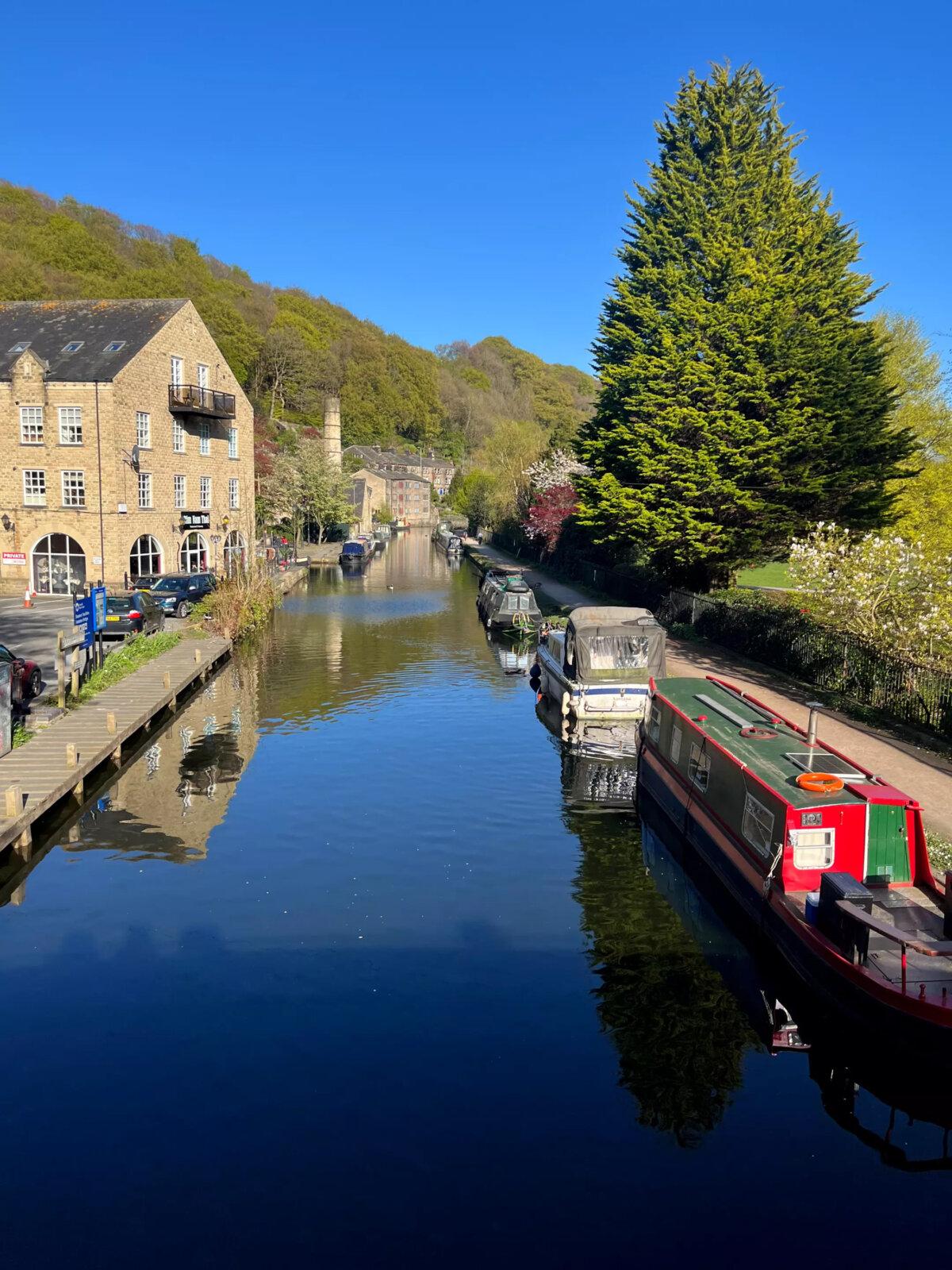
While driving around Hebden Bridge and towns surrounding nearby Halifax, I more than once imagined that I was Cawood and marveled at Wainwright’s loyalty to this land, its cities, towns, farms, and moors. Her series are inevitably female-centric and, like the work of the Brontes, who wrote 200 years and a few miles away, her work excavates the drama of daily life and the tension between good and evil that sings below any surface.
The sisters, I believe, would be very proud.