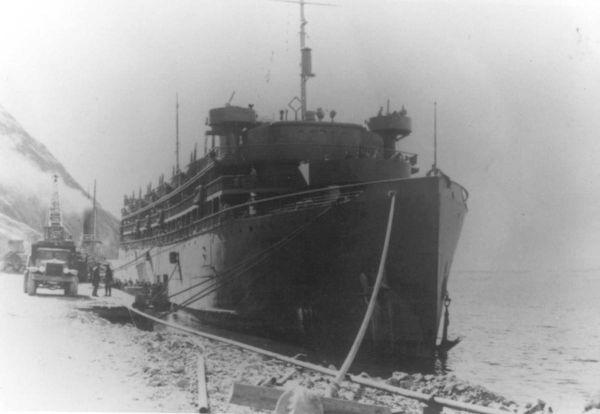
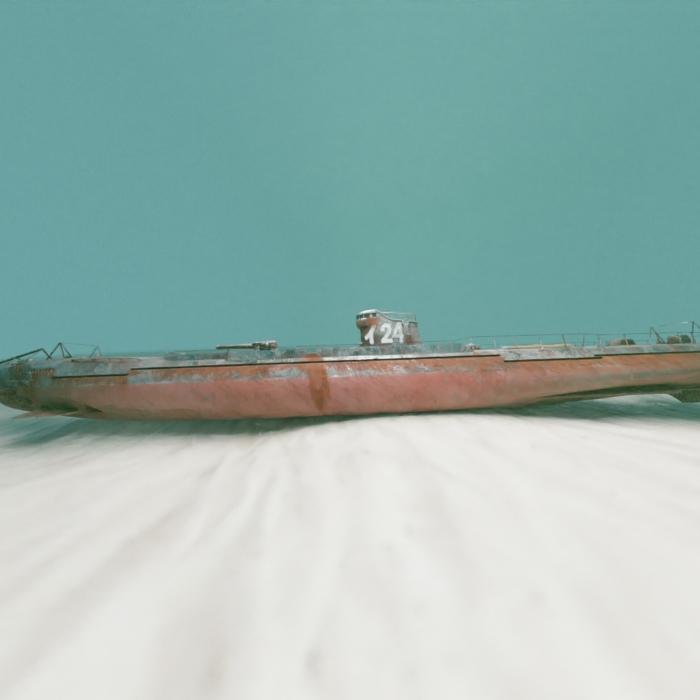
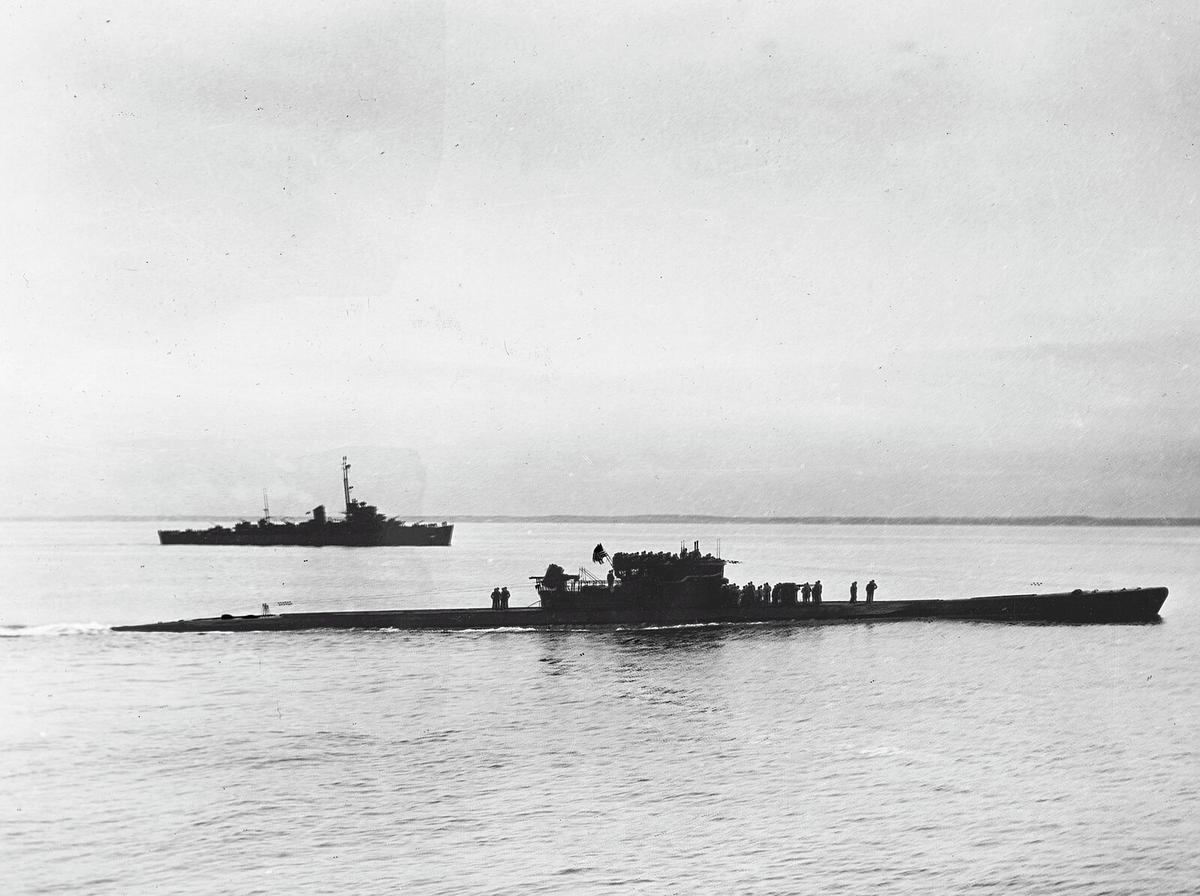
Just before 1 a.m. on the morning of Feb. 3, 1943, a torpedo launched by a German submarine, a U-223, slammed into the American troopship Dorchester. The explosion ripped an enormous hole in the vessel, immediately killing and wounding many of the men.
Aboard the Dorchester were 902 soldiers, civilians, and crew. Within minutes, the doomed ship had listed 30 degrees to starboard, throwing confused and panicked men from their feet as they tried to escape their berths and reach the upper deck. Those who were fortunate enough to gain the open air found more chaos and horror. Ice had frozen some of the release mechanisms for the lifeboats, men were shouting and racing about looking for escape, and the frigid waters of the North Atlantic meant death to anyone leaping from the decks.
Volunteers All
George Fox was the oldest of the Dorchester chaplains. Born in 1900, he grew up under the thumb of a tyrannical father. In part to escape that home, he enlisted in the Army and served as a medic in World War I, earning the Silver Star and several Purple Hearts for his heroism. As a civilian, he worked a number of jobs before attending seminary and becoming a minister, assigned to several Methodist churches in Vermont. Married and with two children, he rejoined the Army as a chaplain in 1942 on the same day that his son enlisted in the Marine Corps.Alexander Goode, born in 1911, was an excellent student and athlete intent on becoming a rabbi like his father. Though struggling to make ends meet during the Great Depression, he entered college, obtained his B.A., and in 1937 acquired another degree from Hebrew Union College. He married Theresa Flax, the daughter of a rabbi, and served in two synagogues before joining the chaplain corps after Pearl Harbor.
Born in 1908, and nearly blinded in one eye with a BB as a boy, John Washington was rejected by the Navy. Guessing correctly that his Army medical examiners wouldn’t notice, and hoping that God would forgive his deception, he covered his weak eye both times while undergoing the vision test, passed his physical, and joined up. Ordained in 1935, he had served in three parishes before joining the war effort.
Clarke Poling hailed from a long line of ministers. His father was a well-known radio evangelist and the editor for a Christian newspaper. Born in 1910, like Goode he was an excellent student and athlete. He attended college and then graduated from Yale’s School of Divinity. He had worked as a pastor for two churches when the war came, and June 1942 found him exchanging civilian life for the military.
In November of that same year these four chaplains found themselves stationed at Camp Myles Standish in Massachusetts. Hoping to be assigned to a combat unit, all four men were disappointed that they were being posted instead to an army base in Greenland. On Jan. 23, they were aboard the Dorchester when it sailed from New York, part of a convoy guarded by three Coast Guard cutters.
Exemplars of Faith and Friendship
In his book “Character Is Destiny,” John McCain writes of the good done by these chaplains on the stormy voyage across the Atlantic. They encouraged the frightened recruits, organized entertainments to distract the men from their fears, and offered counsel to all who approached them, regardless of religious faith. They also become friends and “were often seen talking, joking, and laughing together.”On Feb. 2, as the rough weather abated and the ship approached the safety of Greenland, one of the Coast Guard cutters reported to the Dorchester’s Capt. Hans Danielsen that sonar had detected German submarines stalking the convoy. Late that afternoon, the captain announced the presence of U-boats to the ship, and ordered all hands to sleep that night fully clothed and wearing their life jackets.
To relieve the tension sparked by this announcement, the chaplains organized a songfest, with Father Washington on the piano and the other three men, all of whom had strong voices, leading the men in song. Once that party ended, chaplains Goode, Fox, and Poling visited with the men, talking and trying to put them at ease while Washington said Mass in the ship’s mess hall.
The party did help ease the apprehensions of some who attended, but many of the men ignored the captain’s order to wear life jackets in their bunks. Sleeping in the hot, stuffy quarters was difficult enough without adding that discomfort.
Above and Beyond
After the explosion, Capt. Danielson quickly recognized that the Dorchester was going down and ordered all hands to abandon ship. After their rescue, survivors shared their impressions of that black night of cries and darkness, death and terror, as men slid down ropes into the sea or fought to clamber from a would-be grave below decks.Watching the chaplains give up their life jackets and assist the men, John Ladd later said, “It was the finest thing I have seen or hope to see this side of heaven.”
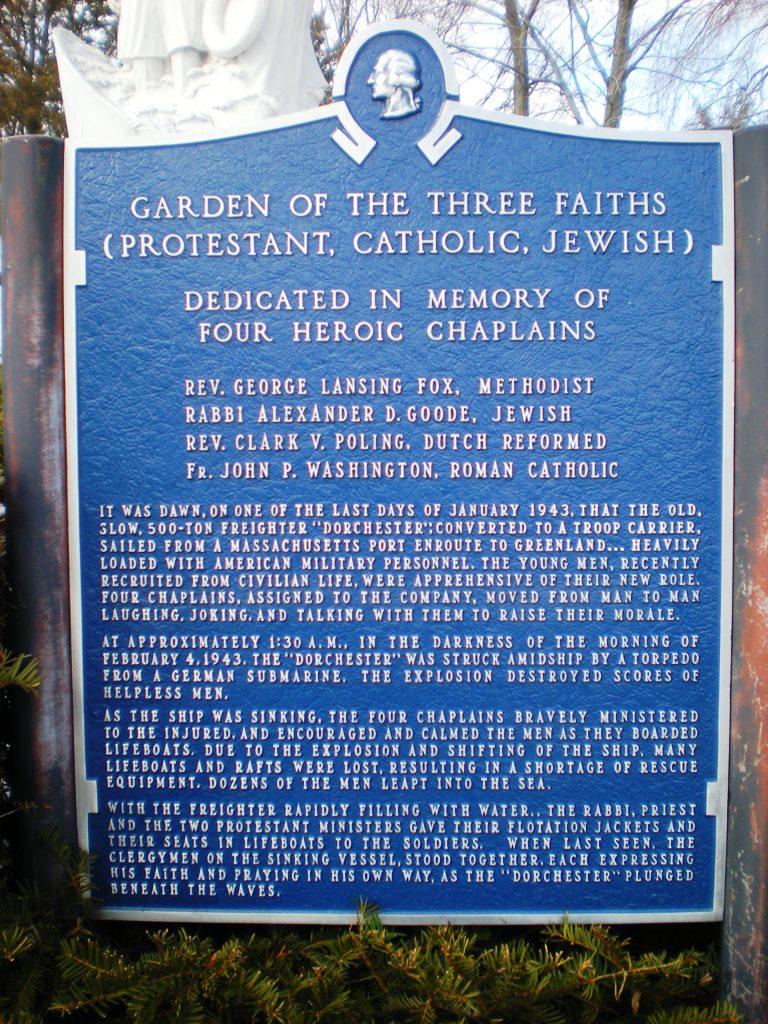
Several other survivors reported that as the Dorchester went down, they’d witnessed the four chaplains linking arms to brace themselves against the tilting deck and praying together. This demonstration of unity, courage, friendship, and faith became the image of the heroism of the four chaplains.
Their Legacy
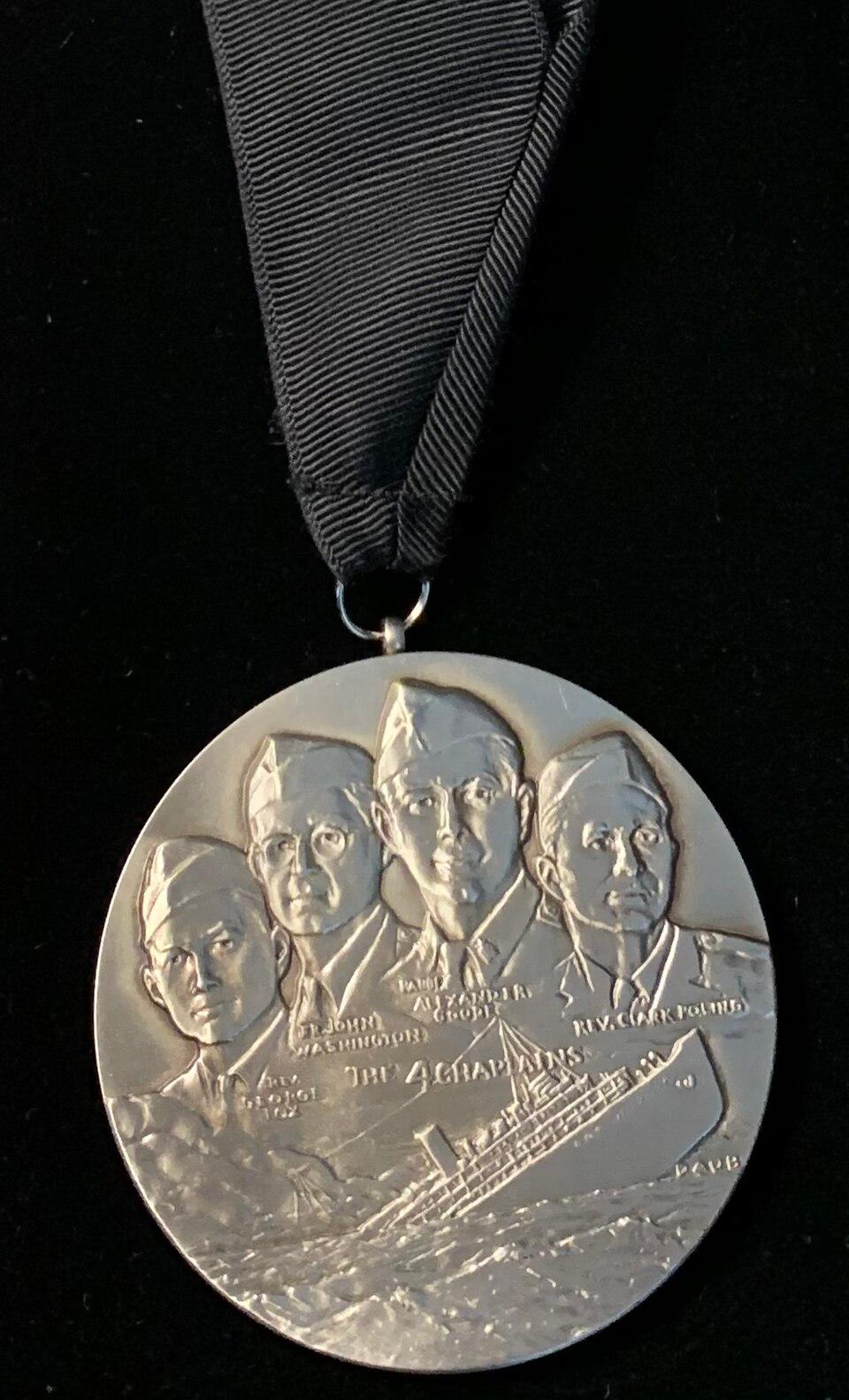
As reports of the Dorchester’s sinking made the papers, the American people grieved the tremendous loss of life on that February night and were awed by the story of the chaplains. In 1944, the nation formally recognized their heroic deaths with the Distinguished Service Cross, the Army’s medal second only to the Medal of Honor. Almost 20 years later, Congress authorized a one-time-only “Special Medal for Heroism” to salute their bravery and compassion.Meanwhile, the American people honored these heroes in their own way. Chapels, bridges, and memorials across America testify to their names and deeds. In Philadelphia’s Navy Yard stands the Chapel of the Four Chaplains, the heart of an organization striving “to ensure that their story lives on as a beacon of hope and inspiration for people of all faiths and backgrounds.”
Love—their love for the men they served and their love of God—gives the four chaplains a special place in the American pantheon of heroes.