I recently came back from sailing the Great Lakes on Viking’s unique Niagara and the Great Lakes expedition cruise itinerary, which began in Milwaukee, sailing four of the five Great Lakes and traversing the historic Welland Canal before ending in Toronto.
Along the way, I enjoyed visiting Mackinac Island, Michigan—a historic island that has been using horses and bicycles instead of cars for more than a century—along with Alpena, Michigan, known for its shipwrecks; Detroit, known for its industry and its cultural and artistic resurgence; Point Pelee, a Canadian National Park and the southernmost tip of mainland Canada; and scenic Niagara Falls, one of the world’s natural wonders.
Sailing the Great Lakes was a wonderful way to explore this underrated region of the world, home to a unique history and some of the world’s largest freshwater resources.
Lesson 1: Water Is Wonderful
One of the lessons that grew on me throughout the duration of my weeklong cruise was that there’s likely no other place on the planet quite like the Great Lakes region, at least in terms of its wealth of water.The five lakes hold about 20 percent of all the melted freshwater on the planet, and if all of it was taken up and splashed onto the United States, the contiguous United States would be under nine feet of water. That’s an insane amount!
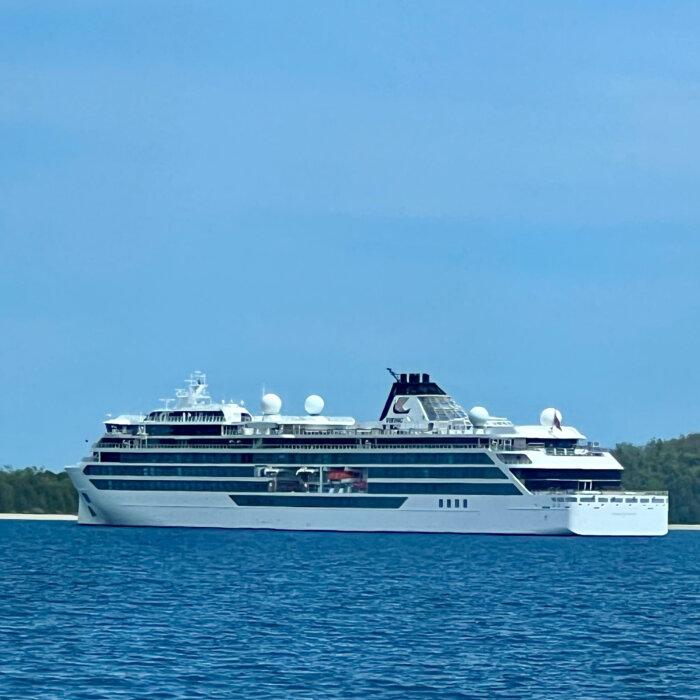
Sailing on it was similar to sailing on the ocean, although we were blessed with calm waters and relatively sunny, warm weather. Once we were out of port, we often couldn’t see land—just like on an ocean—and many guests were amazed to find that the lakes were so large that land easily disappeared from view.
Lesson 2: The Great Lakes Are Mostly Calm
While the Great Lakes have a history of shipwrecks from Lake Michigan to Lake Ontario, we had amazing weather and lake conditions throughout our trip.The Viking Polaris is a Polar Class 6 ship, the highest classification of Polar Class. Specifically designed to sail in some of the roughest waters in the world (including the infamous Drake Passage), it ensures a smoother ride than most ships.
I think that helped our smooth sailing, but the weather definitely helped, too.
Even tendering into port, the lakes were relatively smooth and calm. There was only one day that was a little windy, and that caused the waves to swell somewhat.
If you want to take an expedition cruise and you’re worried about getting seasick, the Great Lakes are a great choice for you.
Lesson 3: All About Expedition Days
We had one expedition day on the cruise, at Point Pelee National Park in the province of Ontario. The southernmost tip of mainland Canada, it’s a beautiful preserve that hosts a plethora of migratory birds and wildlife, including the elusive beaver.I chose to go on the kayaking expedition through the park’s marshland, and it was a really fun time. Because it was a little windy and rain was on the way, we donned the ship’s dry suits and dry booties and then wore life vests over our suits.
I’m not going to lie—I felt a bit like I was going to space and not out in a kayak, but I later grew happy that I had the dry suit.
We took a Zodiac ride from the Viking Polaris to the beach at Point Pelee, then walked a short distance to the marsh, where the kayaks were waiting for us. The expedition leaders helped us into the two-person kayak, then we shoved off.
The marsh was a beautiful landscape, full of cattails and other tall plants, along with tons of large lily pads sporting brilliant yellow flowers. We spotted plenty of birds and a beaver lodge, but no beavers.
One note about the kayaking expedition: We had to be tested on the proper way to get in and out of a kayak while in a Zodiac. If we couldn’t pass the test, we couldn’t go on the excursion.
While all of us passed, I do think it’s important to note that those with limited mobility may not be able to enjoy all of the expedition activities available, and for good reason: safety. The expedition team is good about explaining the importance of safety first, hence the kayak test.
There were a few other tours available that expedition day. Along with rotating Zodiacs taking people to and from the park to wander independently, there was also a Zodiac tour of the park by boat, an excursion to the beach that forms the tip of Point Pelee, and a ride in the Special Operations Boat, providing more than enough opportunity for people to choose the expedition that suits them.
Lesson 4: The Welland Canal Might Be Cooler Than the Panama Canal
The Welland Canal is an achievement in engineering, constructed in 1829 to provide an easy path from Lake Erie to Lake Ontario, and therefore out to the Atlantic Ocean via the St. Lawrence Seaway.Prior to the canal’s construction, Niagara Falls was the only connection point between the lakes, making shipping and industry challenging, as cargo had to be constantly changed from one ship to another.
Today, the Welland Canal boasts eight locks (more than the Panama Canal) and drops or raises ships about 300 feet. The Panama Canal is about double the length of the Welland Canal, but the Welland is older and, in my opinion at least, quite a bit cooler.
Unlike many Panama Canal cruises that merely stop in the lock for guests to view before the ship’s backing out the same way that it entered, the Viking Polaris actually went through all eight locks to enter Lake Ontario, providing a unique experience for guests onboard the ship.
Lesson 5: Each Destination Is so Different
I wasn’t sure what to expect with the destinations on our itinerary. I’d visited Mackinac Island as a child but had never gone to any of the other places.I was surprised by how different they all were. Mackinac Island, our first stop, was like something out of a Hallmark movie, all clopping horses and bicycling families, the scent of lilacs wafting through the air. It felt like heaven on earth.
Alpena was a sleepier small town undergoing an exciting revitalization, with the preservation of its coastal shipwrecks at the heart of its tourism growth. We also saw a ton of wildlife that day, from a deer along the lakeshore to a muskrat wandering the heart of downtown.
The town’s welcoming committee was also there to help us find our way, and members offered us a local treasure: a Petoskey stone, a fossilized coral found right on the local Lake Huron shoreline.
Detroit was so much more exciting than I expected, and I lamented that we didn’t have more time to explore it. The former boom city had bust long ago, and our local guide told us that at one point in time, 80 percent of the buildings in the now beautiful, bustling city center were abandoned.
Today, it’s undergoing a cultural and artistic renaissance, and historic buildings are being lovingly restored and renovated.
Point Pelee is a fascinating stretch of land and freshwater, a piece of unspoiled paradise in the middle of a land that has been shaped by human hands for about three centuries.
The Final Lesson
Viking’s Niagara and The Great Lakes itinerary is a unique choice for a cruise vacation—none of the destinations are considered heavily touristed, but all offer new opportunities for learning and exploration.It’s a great choice for travelers who want to discover the Midwest for the first time, or for those Midwesterners who prefer cruising over road tripping.
My final lesson? Expect the unexpected while in the Midwest. You never know what treasures you might find here.