Johnny Cash, a Fighter Throughout His Life

In this installment of When Character Counted, we visit the life of the man in black, who battled addiction while writing songs that made him a legend.
Johnny Cash, a Fighter Throughout His Life
Johnny Cash fought addiction for much of his life. Getty Images | Hulton Archive
|Updated:
0:00
It was a voice that took you back to another time, a bass-baritone weathered by cigarettes but steady, solid, and with an Arkansas drawl. It was the voice of a father or grandfather telling stories of love, life, and death that could bring tears or laughter, and the songs matched the voice, whether Johnny Cash (1932–2003) was singing “A Boy Named Sue,” “Ring of Fire,” or “Hurt.”
In his mid-20s, with his songs already climbing in the charts, Cash started popping amphetamines to fight off the stress and fatigue of road trips and nightly performances. According to Marshall Grant, a member of that early traveling band, Cash first took the pills only when he felt worn down and needed to gear up for a show.
And then, as so often happens, the pills took him.

Hooked

Raised on a hardscrabble farm—he was working in a cotton field by age 5—Cash grew up listening to gospel and radio music. He began playing guitar and writing songs while still an adolescent. After a stint in the Air Force, where he formed a band and continued his writing and singing, he married Vivian Liberto and moved to Memphis, where he broke into the music business. His first songs, like “Cry! Cry! Cry!,” “Folsom Prison Blues,” and “I Walk the Line,” made his name in country music and remain popular today.
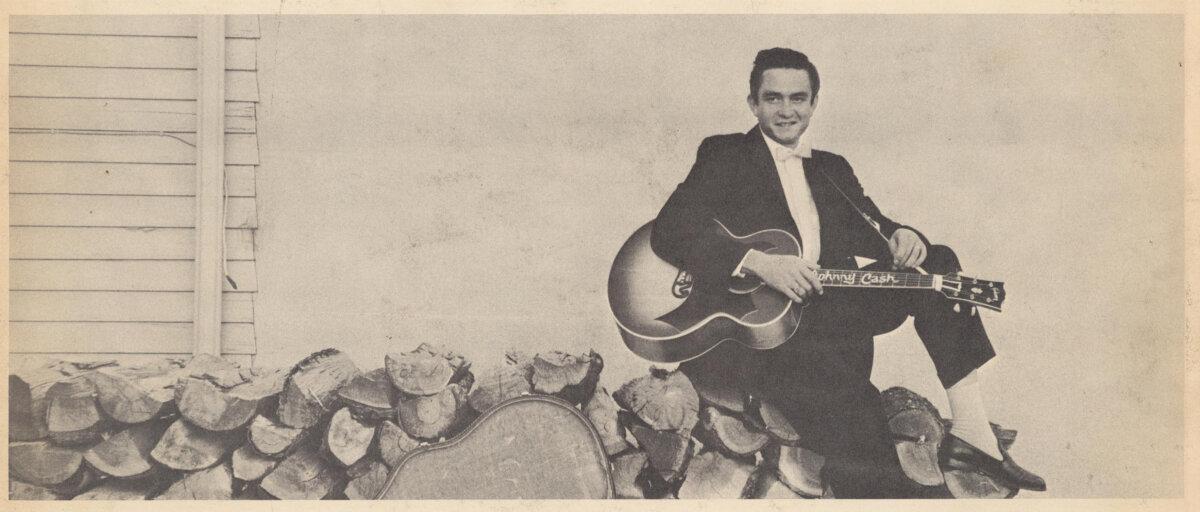
A photograph of Johnny Cash from his second studio album "The Fabulous Johnny Cash," 1958. Internet Archive. (Public Domain)
A photograph of Johnny Cash from his second studio album "The Fabulous Johnny Cash," 1958. Internet Archive. Public Domain
In 1958, Cash moved to Los Angeles, where guitarist Johnny Western helped assemble a band and toured with him until 1997. Western later recounted some of the stories about Cash when he was wandering through the fog of addiction, like the time he lost Western’s new Cadillac in Hollywood and those occasions when hotels refused to rent to the band because of the damage done to the room on prior visits. Western also noted, “His marriage was falling apart. He was falling in love with June and she still had a husband and he still had a wife, and both of them had children.”
When Vivian divorced him, she named her husband’s addictions as part of the reason for their failed marriage. After his marriage to country music star June Carter in 1968, Cash began his serious battle to beat the pills, a war of victories and defeats he waged for the rest of his life. After the birth of their son in 1970, for instance, and with June’s help and encouragement, he cleaned up his act for seven years, but then returned to the pills.

Fall Down, Get Back Up

Some may see in these relapses a character flaw rather than a strength, and they have a point. The man who keeps lying even after being repeatedly caught in lies clearly lacks either the intelligence or the willpower to tell the truth and take the consequences.
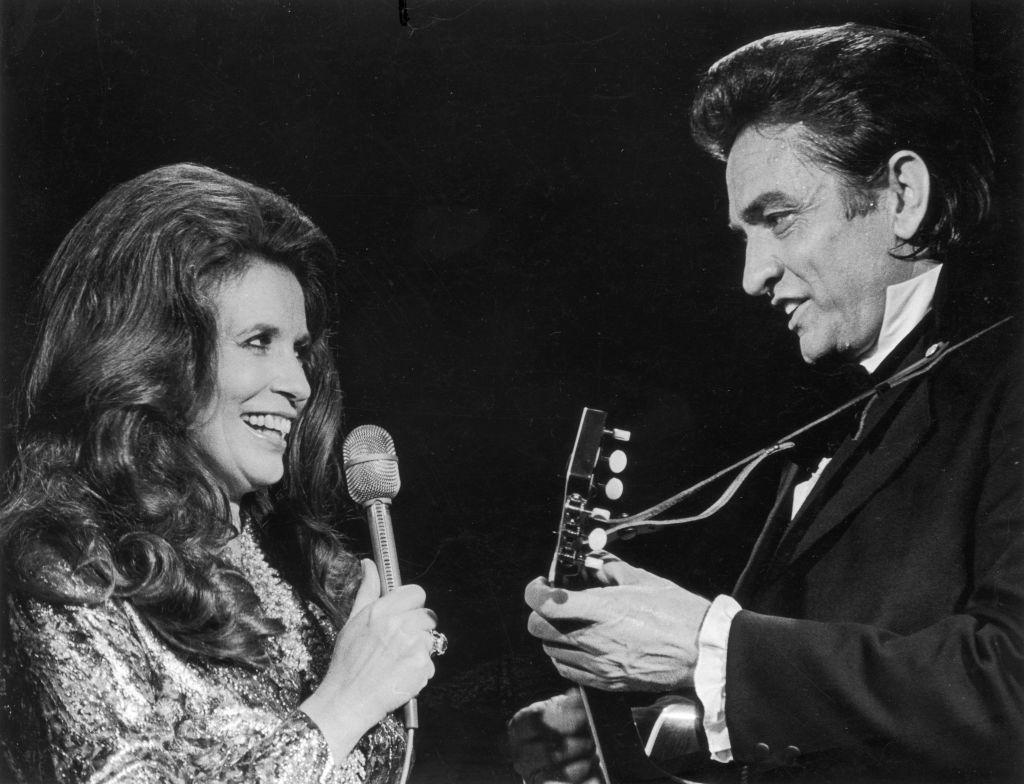
Married country singers June Carter Cash and Johnny Cash perform a duet on stage. (Photo by Archive Photos/Getty Images)
Married country singers June Carter Cash and Johnny Cash perform a duet on stage. Photo by Archive Photos/Getty Images

Yet if we look at the struggle between an addict and his addiction, we can admire those repeated attempts at recovery. He’s like a boxer who keeps getting punched to the canvas, but pulls himself to his knees, rises, and continues the fight.

So what gave Johnny Cash the strength and the power to again and again get to his feet?

His Deep Faith

Bass player Jimmy Tittle, who married Cash’s daughter Kathy in 1982, recalled in an interview how Cash was often torn between the Bible and his addictions. “We were doing the Billy Graham crusades and we would go to Switzerland and you could just walk in to the drugstores and buy amphetamines. That and painkillers became the drug of choice for everybody.

“He would fight that all the time, and at the same time he studied his Bible constantly. He had a strong moral backbone, but that addiction is always nipping at your heels.”
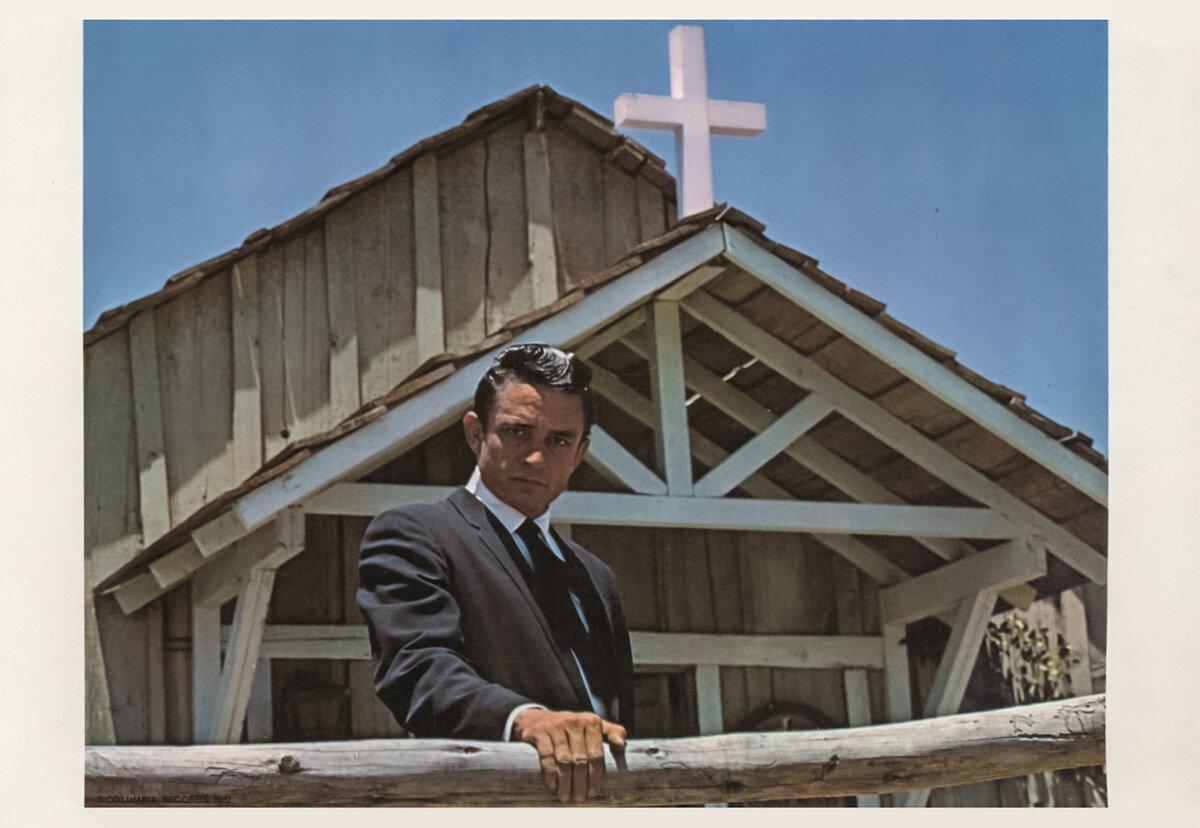
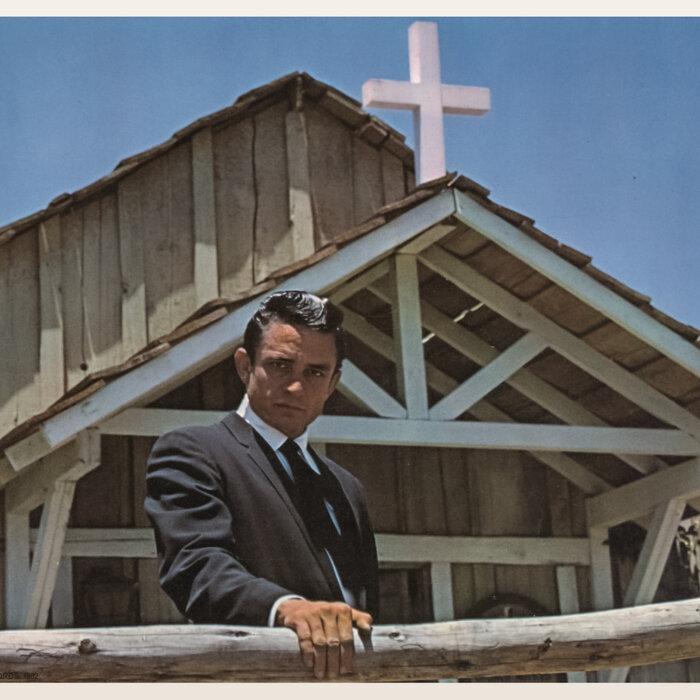
A detail from the cover of Johnny Cash's 1962 "Hymns From The Heart." Internet Archive. (Public Domain)
A detail from the cover of Johnny Cash's 1962 "Hymns From The Heart." Internet Archive. Public Domain

It was June who encouraged Cash to return to church. This transition was easy enough, as both had grown up in a religious faith and still enjoyed singing the old songs. In 1990, Cash recorded a reading of the New Testament, and he often spoke of the importance of God, forgiveness, and redemption.

In an interview after his father’s death, John Carter Cash said: “My father’s faith was defining of who he was. My dad fell short in many ways through his life, but he always went back to that faith. He always carried that with him no matter what, wherever he went. Everything that he did in his life, that was a foundation.”

The Power Within

The 2005 movie “Walk the Line” largely credits June for rescuing Cash from his addictions. But both Rosanne Cash, daughter of her father’s first marriage, and John Carter Cash, son of his union to June, have said this Hollywood story is a myth. “It’s nice and neat and clean and people can understand it,” Rosanne has said. “The truth is a lot more complicated. The truth is my dad struggled with addiction for the rest of his life.”
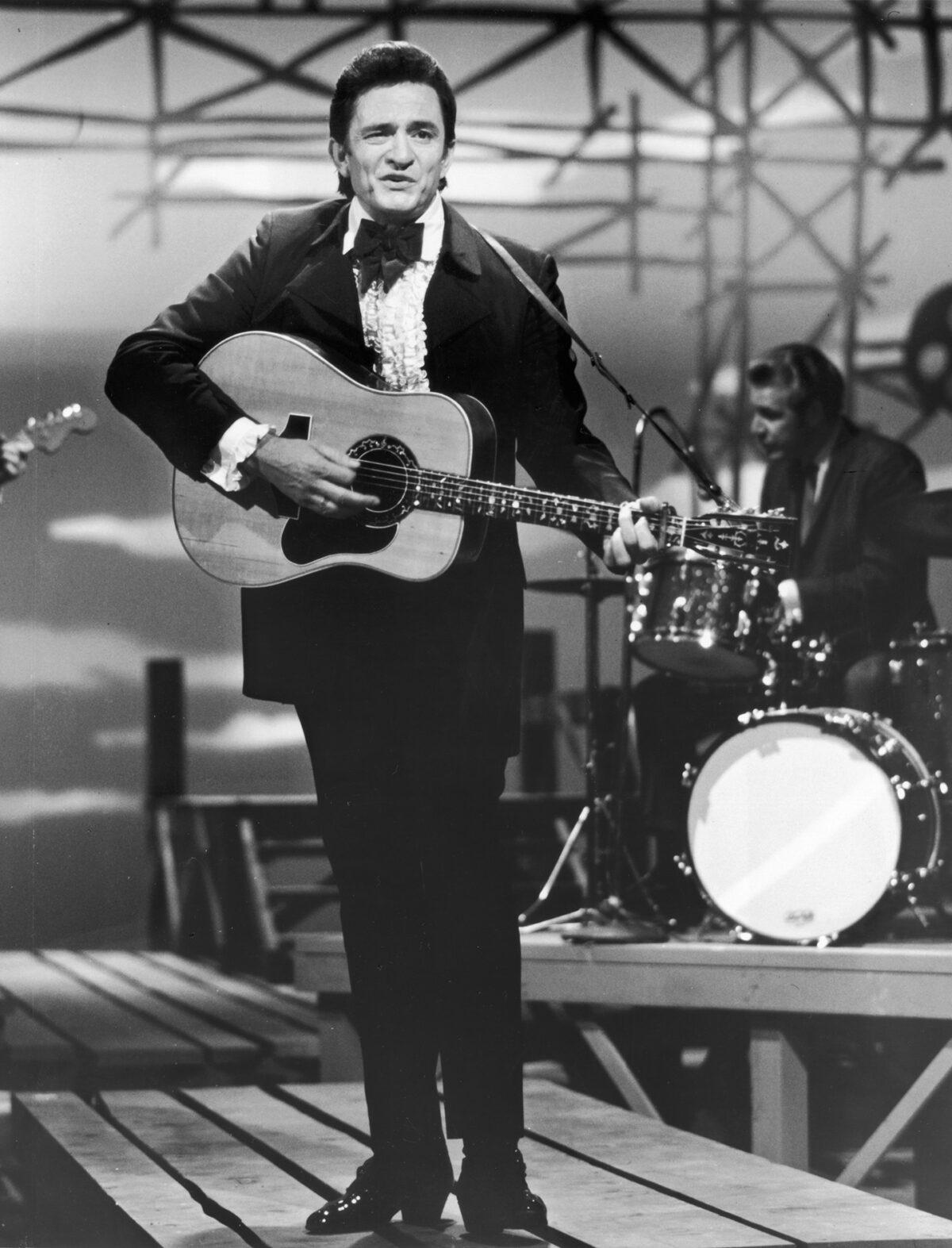
Country music legend Johnny Cash, circa 1965, during a television appearance. (Hulton Archive/Getty Images)
Country music legend Johnny Cash, circa 1965, during a television appearance. Hulton Archive/Getty Images

John Carter Cash supported his half-sister’s take on his parents’ marriage. “There’s an image that my mother saved my father in 1968 and everything was a bed of roses after that. And that just wasn’t true. There were as many struggles in the 1980s and the 1990s as there were in the 1960s. They were just different drugs. But my father always went back to what was true, and he would turn his suffering around. He learned from his lessons. But the very nature of addiction is that the addict is incorrigible. And my dad dealt with it all his life.”

In the end, it’s really up to the addict, the alcoholic, or the drug abuser to effect change, turn life around, and become sober.

Here, the analogy of the boxer in the ring again comes into play. Ministering angels in the form of friends and family members can play an enormous part in recovery, acting as cornermen, giving advice, and shouting encouragement. But it’s the fighter in the ring who alone must get up after being knocked down, who must take the punches and keep moving forward.

And Johnny Cash was a fighter.

What arts and culture topics would you like us to cover? Please email ideas or feedback to [email protected]
Google LogoMark Us Preferred on Google
Jeff Minick
Jeff Minick
Author
Jeff Minick has four children and a passel of grandkids. He has written two novels, “Amanda Bell” and “Dust on Their Wings,” as well as “Learning as I Go” and “Movies Make the Man.” You’ll find more of his writing at JeffMinick.substack.com.