Johann Wolfgang von Goethe’s Journey Through Italy

The artist’s travels reveal the power of beauty to make us whole.
Johann Wolfgang von Goethe’s Journey Through Italy
"Goethe in the Roman Campagna," 1787, by J.H.W. Tischbein. Public Domain
|Updated:
0:00
In the fall of 1786, Johann Wolfgang von Goethe (1749–1832) left Germany. Under the pseudonym “Filippo Miller,” the 37-year-old slipped through the Alps and embarked on a two-year odyssey in Italy. He described his travels in letters and diary entries, reminding readers about the importance of experiencing beauty firsthand.

Goethe’s Departure
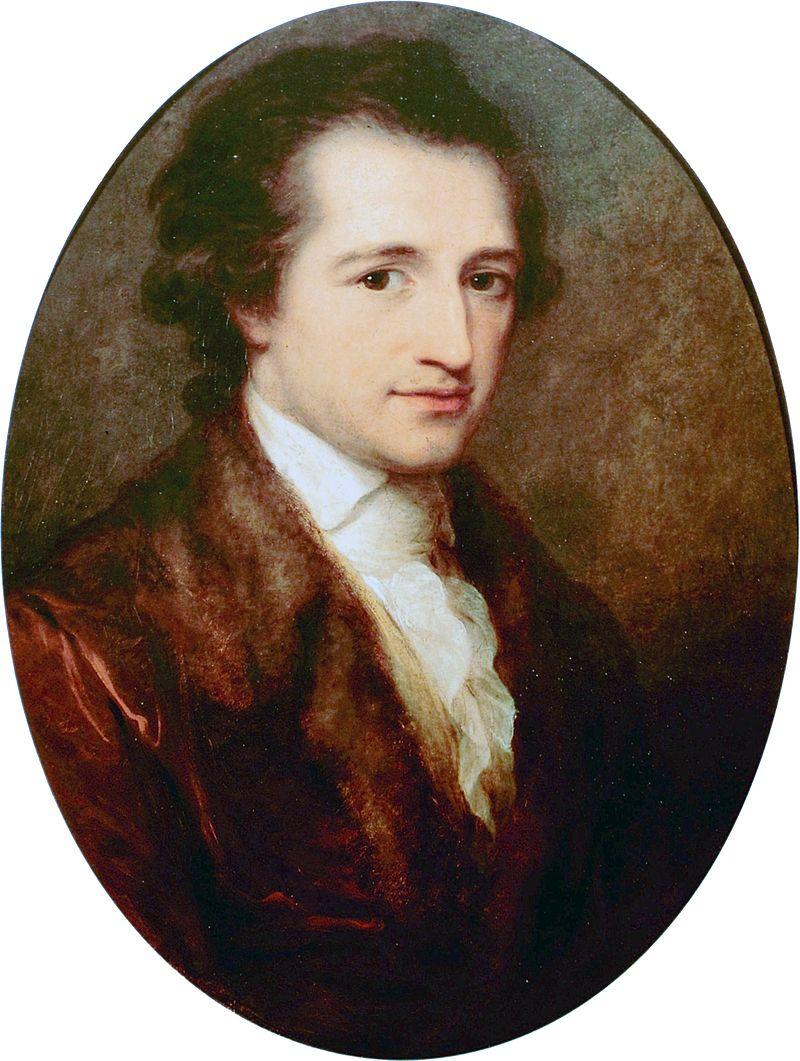
A portrait of Johann Wolfgang von Goethe, 1787, by Angelica Kauffmann. Goethe National Museum, Weimar. Germany. (Public Domain)
A portrait of Johann Wolfgang von Goethe, 1787, by Angelica Kauffmann. Goethe National Museum, Weimar. Germany. Public Domain
Born to a respected but modest upper-class family in 1749, Goethe took to learning at a very young age. As a boy, he studied grammar, modern and ancient languages, and other subjects common at the time. He enjoyed Latin and Greek but was most interested in religious and mythological books, like the Torah and the “Metamorphoses” by the Roman poet Ovid. In his autobiography, Goethe described his "singular habit of always learning by heart the beginnings of books,” which afforded him intimate knowledge of the Western canon.

From 1765 to 1768, Goethe studied law at Leipzig University. He disliked memorizing legal codes, and often skipped classes to attend lectures on poetry. Although he eventually established a small legal practice in Frankfurt, inexperience prevented his success. After a series of quarrels with his father and a life-threatening illness, Goethe finally turned to literature full-time. He knew writing was his calling.

The  German-Austrian tenor Jonas Kaufmann as the lovelorn poet in Jules Massenet's opera "Werther," based on Goethe's novel. (Ken Howard/Metropolitan Opera)
The  German-Austrian tenor Jonas Kaufmann as the lovelorn poet in Jules Massenet's opera "Werther," based on Goethe's novel. Ken Howard/Metropolitan Opera
At age 25, the budding author published “The Sorrows of Young Werther,” an epistolary novel about a young man’s struggles with unrequited love that quickly became one of the most-read books in Europe. Growing popularity brought him from his native Frankfurt to Weimar, a vibrant cultural hub. There, he connected with geographer and botanist Alexander von Humboldt, philosopher and translator Friedrich Schlegel, and other luminaries of the time.

Karl August, Duke of Weimar, quickly recognized Goethe’s brilliance. Partly because of his novel’s success, the Duke ennobled the young artist. He became an official member of the German elite, second in status only to royalty.

The Duke also invited Goethe to serve as one of his Privy Councilors. Goethe oversaw the reopening of silver mines, led a series of reforms at the University of Jena, sat on a war committee, and even supervised the planning of Weimar’s botanical garden. Although this administrative position gave him power over Weimar’s growth as the cradle of 18th-century classicism, it stifled his artistic life. Goethe was a creator. Political obligations took time away from reading, writing, and contemplation, making him increasingly frustrated with his circumstances.

The artist’s inner turmoil mirrored the times. In the late 1700s, the Enlightenment’s confidence in reason as a sufficient faculty to know and live well in the world began to wane. Goethe grew increasingly disenchanted with an outlook that favored detached scientific research and intellectual inquiry over intimate and emotional communion with the world. After convincing the Duke to pay for a leave of absence, he took off southward.

An Italian Journey

"Goethe in the Roman Campagna," 1787, by J. H. W. Tischbein. (Public Domain)
"Goethe in the Roman Campagna," 1787, by J. H. W. Tischbein. Public Domain

Goethe’s journey began in September 1786. His first stop was Innsbruck, an Alpine town in modern-day Austria. He then traveled through the Brenner Pass, entering Italy, which was divided into several kingdoms at the time. He visited Lake Garda, Verona, Vicenza, Venice, Bologna, Rome, and Naples, ending his trip in sunny Sicily. Although he’d heard of these historic cities and their countless relics, he knew his knowledge was limited to “empty names.” Goethe yearned for firsthand experiences. So he declared himself “the mortal enemy of mere words” and vowed to pursue tourism as a path to self-knowledge. As he wrote, travel was a way “to discover myself in the objects I see.”

During his journey, he wrote letters to friends and summarized noteworthy moments in diary entries, which he eventually compiled into “Italian Journey,” a two-volume collection published in 1816 and 1817. The volumes offer many examples of Goethe’s attempts at discovering himself, perhaps best captured in a visit to a long-forgotten site.

Encountering the Sublime

In March 1787, Goethe reached Paestum, Italy, a quiet, unassuming site south of Naples. Once a Greek colony named Poseidonia, Paestum is home to some of the best-preserved ancient temples in the world. Three colossal structures from the 6th and 5th centuries B.C. still stand on the flat, swampy terrain, surrounded by wildflowers and silence and the Italian coast.

Goethe was underwhelmed at first: “The country grew flatter and more desolate; the scarcity of the buildings bespoke a sparing cultivation.” Eventually, he began to recognize “the remains of temples and other monuments of a once splendid city,” which were too grand to ignore. The contrast with the surrounding vegetation was stark. Half-hidden by wild weeds, the 33-foot tall temple of Poseidon’s gauche Doric capitals, its uneven columns, and its hefty triangular entablature made for an ominous sight. Goethe felt astonished and confused. He didn’t know what to make of the shapes and textures of this “unpicturesque” and “perfectly strange world.” His eyes, and through them his “whole inner being,” were used to 18th-century Germany’s lighter architectural style, which sought to delight with thin lines and delicate materials. The heavy, coarse marble at Paestum was alien and perplexing, “not to say frightful.”

The ruins at Paestum an ancient Greek city in Italy. The ruins, of the Doric order, date from about 550 B.C. to 450 B.C. (Oliver-Bonjoch/CC BY-SA 3.0)
The ruins at Paestum an ancient Greek city in Italy. The ruins, of the Doric order, date from about 550 B.C. to 450 B.C. Oliver-Bonjoch/CC BY-SA 3.0

Silent contemplation allowed Goethe to turn his initial uneasiness into calm appreciation. The site gradually became more pleasant: “in less than an hour [I] found myself reconciled to it.” He began to admire this unfamiliar style as the signature of a people whose aesthetic sensibilities differed starkly from his own, but who nonetheless shared a commitment to the beautiful, and yearned to build monuments that would celebrate it.

Irish philosopher Edmund Burke (1729–1797) defined the sublime as a mixture of fear and delight, a thing much more powerful than the merely pretty. To Goethe, the temples of Paestum were strange and frightful, but also stunning and appealing. They were sublime.

At the time, Goethe was traveling with Christoph Heinrich Kniep (1755–1825), a fellow artist who specialized in architecture. Kniep had been sketching the sights, offering his friend “tokens for the aid of memory” he’d later cherish when reminiscing on his trip. As they gazed at the colossal temples, once adorned with colorful patterns but now spoiled and darkened by time, the two friends realized that the experience of beauty always surpasses descriptions: “It is only by going round them, and passing through them, that you can impart to them their real character; you evoke for them, not to say infuse into them, the very feeling which the architect had in contemplation.”

As Goethe expected, this encounter with ancient objects deepened his aesthetic sensibilities. He began to embrace the primal and unpolished as essential to the beautiful. The ruins of Paestum embodied grandeur and simplicity. They were austere, but also magnificent. They weren’t just symbols of a lost era and its people. They were gifts of the past that still afforded Goethe and travelers like him a chance to commune with what he called the “spirit of the age,” an epoch’s distinct aesthetic features that expressed beauty’s universal essence. In coming to know this spirit, Goethe was discovering himself.

Returning Home

“Pilgrims are we all, we who go searching for Italy,” Goethe wrote in 1790, two years after returning to Germany. When he returned, the calming leisure of travel gave way to the frantic pace of war. In 1792, he fought in the Battle of Valmy against revolutionary French forces. Shortly after, he assisted Duke August during the Siege of Mainz, which regained the strategic city from France. After two war-ridden years, Goethe turned to literature once again, as he’d done when he was a young man. He wrote poetry, plays, and prose until his death in 1832. He often pondered his trip to Italy, hence his decision to revise and publish his private notes.
In his translation of “Italian Journey,” the British-American poet W.H. Auden noted that “Some journeys—and Goethe’s was one—really are quests. ‘Italian Journey’ is not only a description of places, persons and things, but also a psychological document of the first importance.”

As he traveled landscapes and visited monuments, Goethe rediscovered a part of himself he thought he’d lost—that creative spirit that shines most brightly when kindled by the beauty of the world.

What arts and culture topics would you like us to cover? Please email ideas or feedback to [email protected]
Google LogoMark Us Preferred on Google
Leo Salvatore
Leo Salvatore
Author
Leo Salvatore is a teaching fellow of Greek at Ralston College, a tour operator for Alithea Travel, and a regular arts and culture contributor to The Epoch Times. He holds graduate degrees from Ralston College and the University of Chicago. A lover of history, literature, and philosophy, Leo aims to inform, delight, and inspire through well-researched essays. You can reach him at [email protected].