A Scholar Enters Politics
James Madison was a shrewd student of political history. Of his many thoughts on government, though, one concern was foremost. In “The Three Lives of James Madison: Genius, Partisan, President,” Noah Feldman observes: “The subject that most animated James Madison was the freedom of religion and the question of its official establishment.” He developed an academic interest in the topic at Princeton under the Rev. John Witherspoon, who filled him with ideas of religious liberty inspired by the Scottish Enlightenment.After graduating, Madison witnessed the persecution of religious dissenters in his native Virginia, where the Anglican Church was the established religion. In a letter to a friend dated January 24, 1774, Madison described traveling to a nearby county and encountering imprisoned Baptist ministers, “5 or 6 well-meaning men” who did nothing more than publish their orthodox views. That April, he wrote: “Religious bondage shackles and debilitates the mind and unfits it for every noble enterprise, every expanded prospect.”
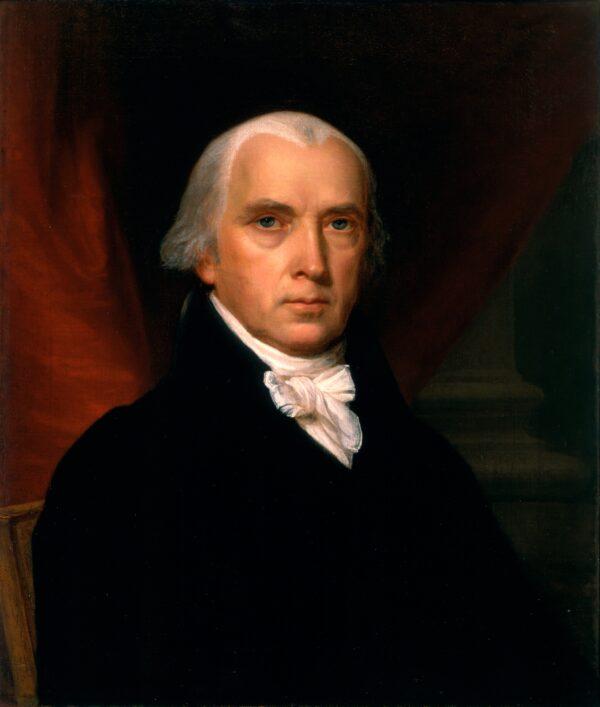
Madison entered local politics and attended Virginia’s constitutional convention in 1776. There, George Mason submitted his draft for a Declaration of Rights, which included a clause stating that “all Men should enjoy the fullest Toleration in the Exercise of Religion, according to the Dictates of Conscience.” Madison was not satisfied. He understood that a majority, in granting a minority permission to practice religion, could take it away as well. Going beyond John Locke’s idea of toleration, Madison successfully proposed changing the wording to reflect the right of “free exercise of religion.”
This guarantee ended the Anglican Church’s spiritual monopoly in Virginia. Eight years later, though, Patrick Henry spearheaded legislation to levy religious taxes. Madison opposed Henry but knew he was too soft-spoken to match the eloquent orator. He responded by writing a petition, “Memorial and Remonstrance against Religious Assessments.” Religious belief, he argued, “must be left to the conviction and conscience of every man; and it is the right of every man to exercise it as these may dictate.” Belief could not be coerced and must exist in a separate sphere from civil government. Even a small tax could become oppressive.
The Bill of Rights
By 1789, Madison had designed the Constitution and convinced most of the states to ratify it by authoring 29 of the articles that comprised “The Federalist Papers.” But the groundbreaking document was not safe. North Carolina and Rhode Island still had not ratified it. Opponents who favored states’ rights over federal power wanted to hold a second constitutional convention to undo the new government.“The civil rights of none shall be abridged on account of religious belief or worship, nor shall any national religion be established, nor shall the full and equal rights of conscience be in any manner, or on any pretext infringed.”This proposal had three aspects: guaranteeing equal treatment of minority views, barring Congress from establishing a national church, and establishing conscience as a right free from coercion.


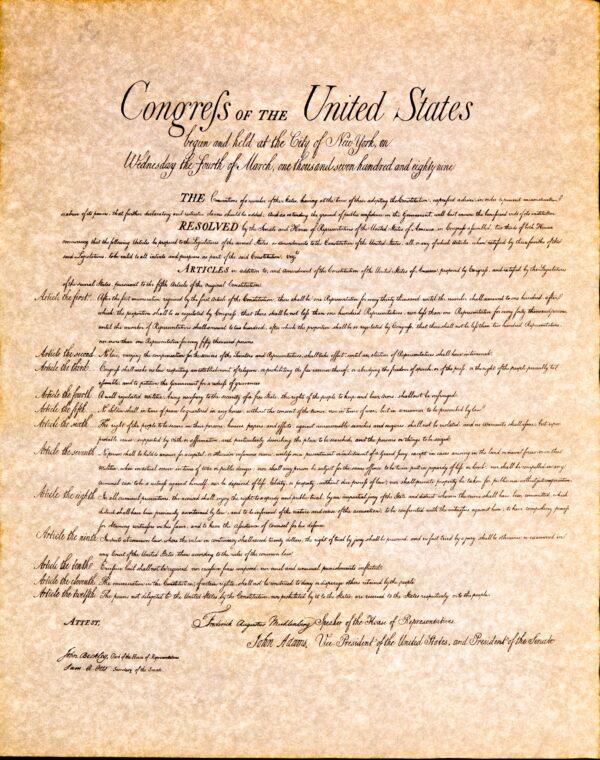
Madison struggled to get his amendments passed. Federalists ridiculed them as useless “milk and water.” Anti-Federalists unanimously opposed him. His old nemesis Patrick Henry called for a total revision of the Constitution, claiming a national bill of rights did not sufficiently guard them for individuals or states. An anonymous author, writing under the pen name “Pacificus,” asserted in a New York newspaper that Madison’s “paper declarations” were “trifling things and no real security to liberty.”
Madison defended his bill, arguing it would limit the tyranny of the majority and “establish the public opinion” in favor of rights. Federalist support began to trickle in. Madison wanted to fold the amendments into the Constitution itself, but he settled for appending them at the end. Representatives eliminated some of his proposals and altered others.
The final version of the First Amendment’s clause on religious liberty came to read: “Congress shall make no law respecting an establishment of religion, or prohibiting the free exercise thereof.” This slightly more restrictive version omitted Madison’s phrasing on the “rights of conscience,” but it is otherwise consistent with his intentions. Madison’s achievement made him the world’s foremost champion of religious liberty. His recognition of free exercise, rather than mere toleration, has been a model for other governments around the globe.