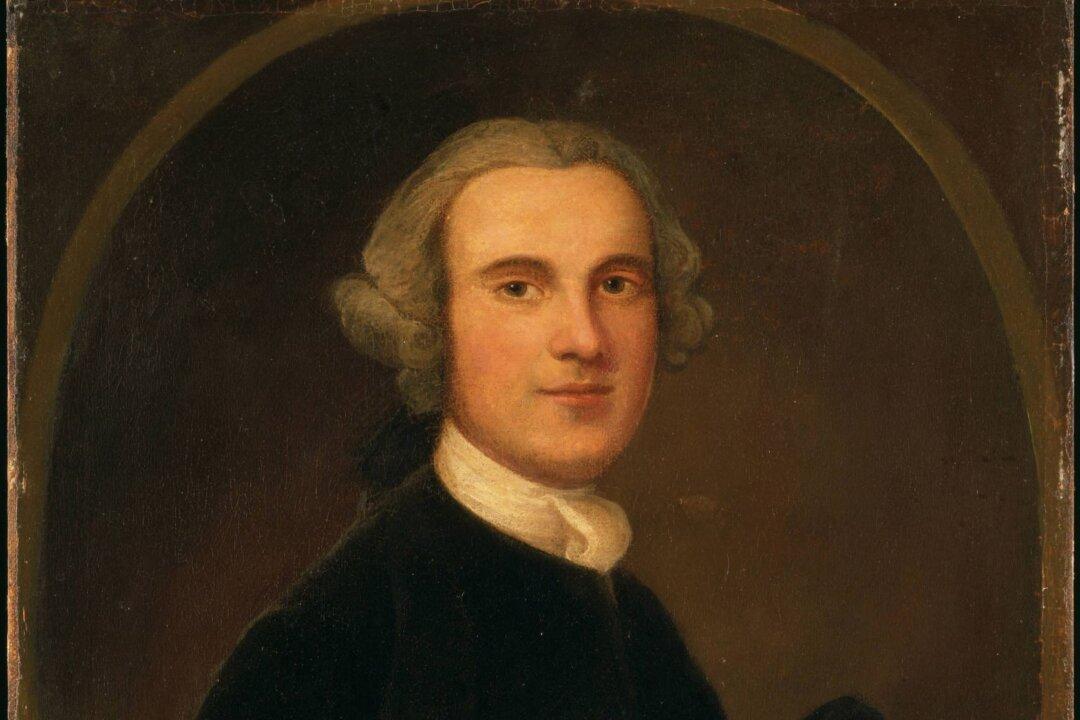
Founded by Cantillon-Murphy, his wife Grace, and other interested parents, Mater Dei opened in 2020 with 12 students. Today, some 60 students in secondary school, the equivalent of grades 7-12 in the United States, sit in its classrooms, where they receive lessons in the Catholic faith, Irish and the history and literature of Ireland, science and math, and a classical education. Additional students are enrolling in the school’s online and homeschooling courses or ordering its materials, which also cover the primary grades.
And unlike its ubiquitous American counterparts, Mater Dei Academy, Cantillon-Murphy said, “was the first independent classical school to be founded in Ireland.”
Bucking the System
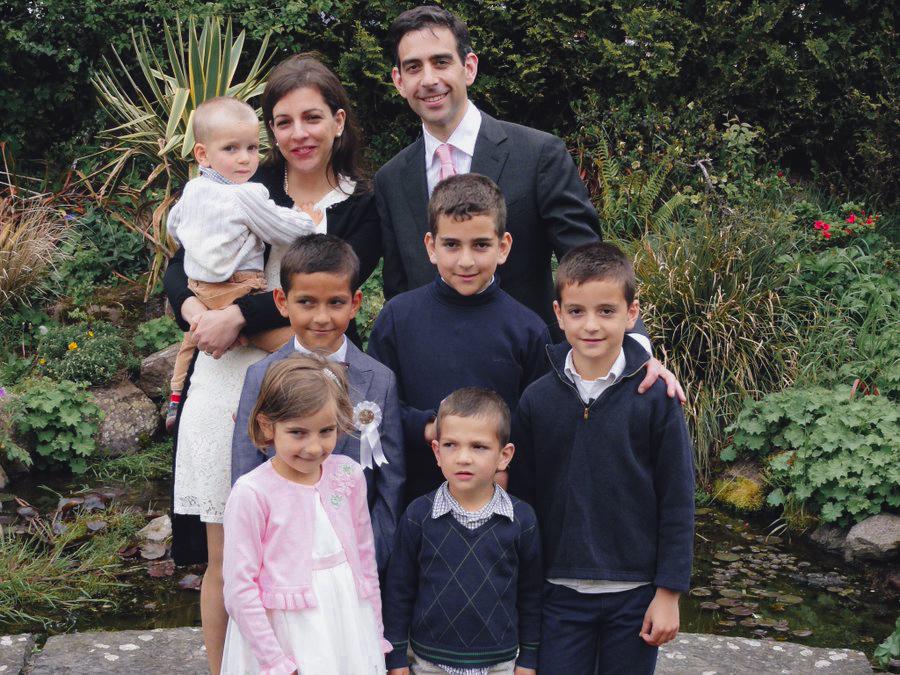
Cantillon-Murphy comes from a family of teachers. “My dad was a teacher. My uncle was a teacher. My brother became a teacher, and we grew up thinking that Irish education was excellent, and that it was also very much an education with an ethos. Catholic education and state education were essentially synonymous in Ireland for generations, which gave it a certain sense, an ethos, a set of values common in society.”When Cantillon-Murphy and Grace returned to Ireland from studies and work abroad in 2010 and enrolled their oldest two children in school—today they are the parents of nine, ranging in age from 17 to two—they discovered that the education he’d known as a child had disappeared. The schools were nominally Catholic at best, and the curriculum was missing, among other things, traditional values and its former pride in Irish history and literature. “The academic standards were certainly not the standard we would have hoped a public education system would provide for our children, and the values and the ethos that we wanted to instill in our kids were simply not present anymore in the school system.”
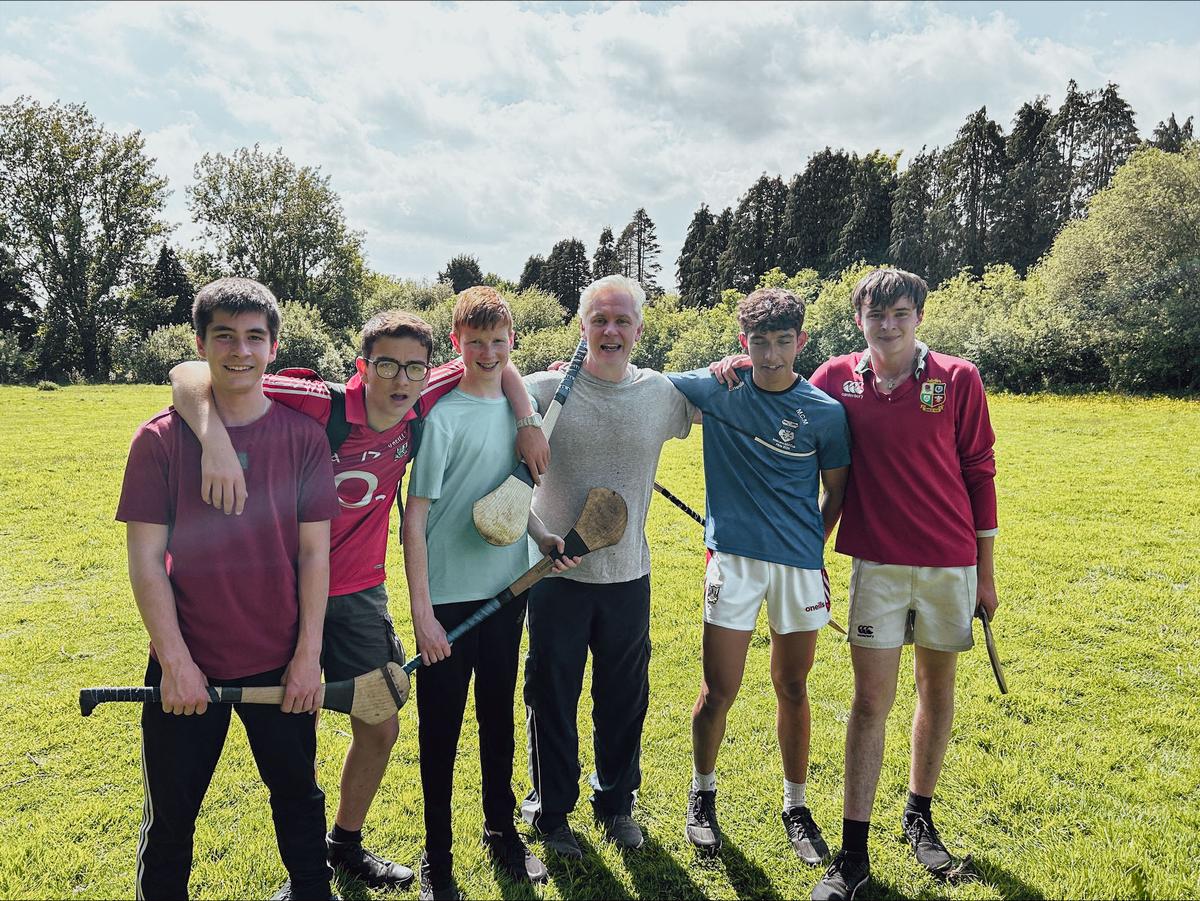
Speaking with other parents who were experiencing their own disappointment in the system “led to a small working group.” In 2019, the group moved from conversation to brick-and-mortar realities. “We started off with volunteer teachers, people giving their time for free, and slowly began to interest some donors in what we were doing so that we could offer an education to kids from families who otherwise would never have considered private education. So today, you have a significant number of families who benefit from scholarships, and we’ve always tried to not put financial means as an impediment to families wanting this kind of education.”

More American Connections
Grace and Cantillon-Murphy first met at World Youth Day in 2005, but it was later that year when they were both studying at MIT in Boston that their friendship deepened into love and then marriage. Their first son was born just two weeks before Cantillon-Murphy’s Ph.D. graduation ceremony. A respected and well-known professor invited them to his apartment, where another eminent associate of MIT and his wife were also guests.Grace later wrote on Instagram: “What struck me the most was how the two couples were more interested in each other’s families than in any professional achievements or accomplishments. It struck me that all our professional accomplishments pale in comparison to what we achieve as fathers and mothers.”
Unlike Cantillon-Murphy, Grace had received a classical education in her youth, and brought that experience to her homeschooling when her oldest children came of age. She and Padraig both began acquainting themselves with American homeschooling programs focused on a classical approach to learning, like Memoria Press. Grace, who manages the home education curricula being developed by Mater Dei, has incorporated elements of these American programs into those of the Irish school.
Inside the Classroom and Beyond
“The kids are very happy,” Cantillon-Murphy said. “They’re happy where they are and happy in themselves. They’re comfortable in who they are. They don’t have to be someone that social media tells them they should be. We don’t rely on technology in the school, and we interact as people, not screens. It gives the students a sense of confidence. They receive the opportunity for public speaking. We have debating societies. Many of our students perform music and choir publicly, and we begin and end the day with prayer.”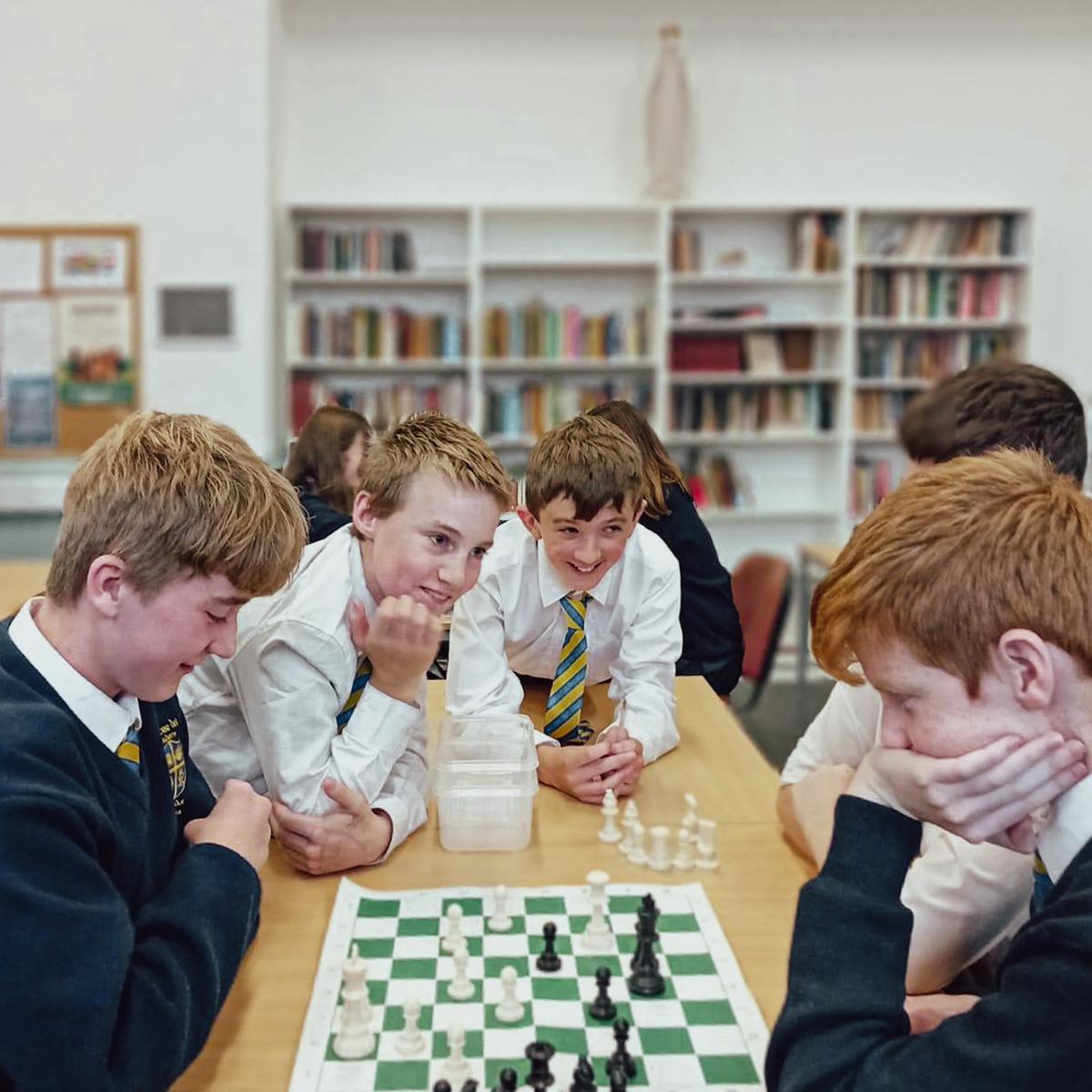
With roots in their faith and their culture, both nourished by a classical education, the hope is that these students will take what they’ve learned and how it has shaped them into the world. As Cantillon-Murphy also points out, this is an education for everyone. “There are kids looking to study medicine, to study law, and there are kids looking to take an apprenticeship in carpentry or to take on the family farm. It’s not an education for the elite. It’s immaterial whether the student becomes a doctor or a farmer, or the mother of a beautiful family. What’s important is that the education they receive forms them for life, as opposed to training them for work, which is what a lot of modern education is geared towards, as opposed to a life-based education.”
Mater Dei continues to face challenges. Chief among these right now is locating the land and buildings that can accommodate the rising number of students, a growth that Cantillon-Murphy predicts will accelerate. “Thankfully, we’ve identified a beautiful property, but it will require somewhere in the region of a $2 million investment. Raising that money will be a large part of my role for the next number of years.”
Yet some confident words in the school’s mission statement signal the passion and grit that has so far overcome such obstacles: “Mater Dei Academy is the beating heart for a new missionary pulse which seeks to revitalize Irish and European society with the values and traditions of our Catholic forefathers.”
Many centuries ago, Irish monks helped preserve Western civilization, copying out the writings of the ancients and founding schools and monasteries across Europe. It’s the hope of Padraig Cantillon-Murphy, his wife Grace, and all those involved in Mater Die that their students will follow this venerable model and play a part in a similar restoration of Western culture.