From Mount Athos to the Rusenski Lom
In the early 13th century, the monk Yoakim established the rock monastery of St. Archangel Michael, drawing the site into the orbit of the Second Bulgarian Empire. Yoakim began his spiritual formation on Mount Athos, a mountainous peninsula in northeastern Greece that functions as a self-governing center of Eastern Orthodox monasticism.Known as the Holy Mountain, it shelters 20 historic monasteries within its borders and has been home to communities of monks practicing contemplative life for more than a thousand years. After spending years in continuous prayer, fasting, and vigil there, Yoakim returned to Bulgaria and settled with three disciples in the gorges of the Rusenski Lom.
Inspired by the spirituality and remoteness of Mount Athos, he and his disciples set about carving a monastery of their own into the remote cliffs. Word of the ascetic’s reputation reached Emperor Ivan Asen II, who made a pilgrimage to the site. Moved by what he found, he donated generously toward the construction of the Church of Archangel Michael, the structure now known as the Buried Church.
As the monastery attracted more monks and gained religious and political influence, Joachim’s standing within the Orthodox Church also rose. In 1234, he was elevated to the rank of archbishop, one of the highest positions in church leadership. The following year, he was recognized as the first Patriarch of the restored Bulgarian Patriarchate, making him the head of the Bulgarian Orthodox Church.
This restoration was a significant milestone for medieval Bulgaria: After a period during which the Bulgarian Church had lost its highest level of independence, it regained the right to govern itself rather than remain under the authority of another Orthodox church. Joachim’s appointment symbolized both the revival of an independent Bulgarian Church and the growing strength and prestige of the Bulgarian state.
He presided over the Bulgarian Church during a period of cultural and economic flourishing, devoted much of his tenure to pastoral work among the poor and vulnerable, and after the death of Ivan Asen II in 1241, served as regent for the young Kaliman I Asen. He died peacefully in 1246 and was canonized shortly afterward.
Set in Stone
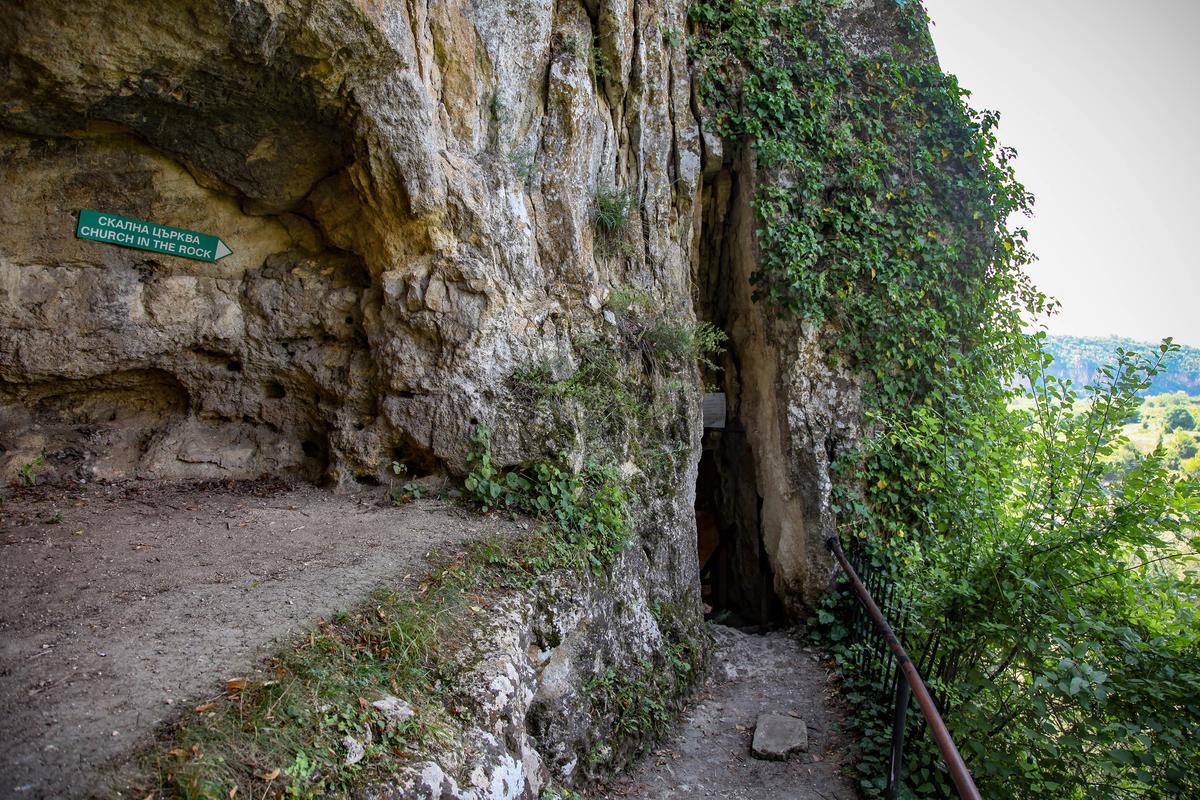
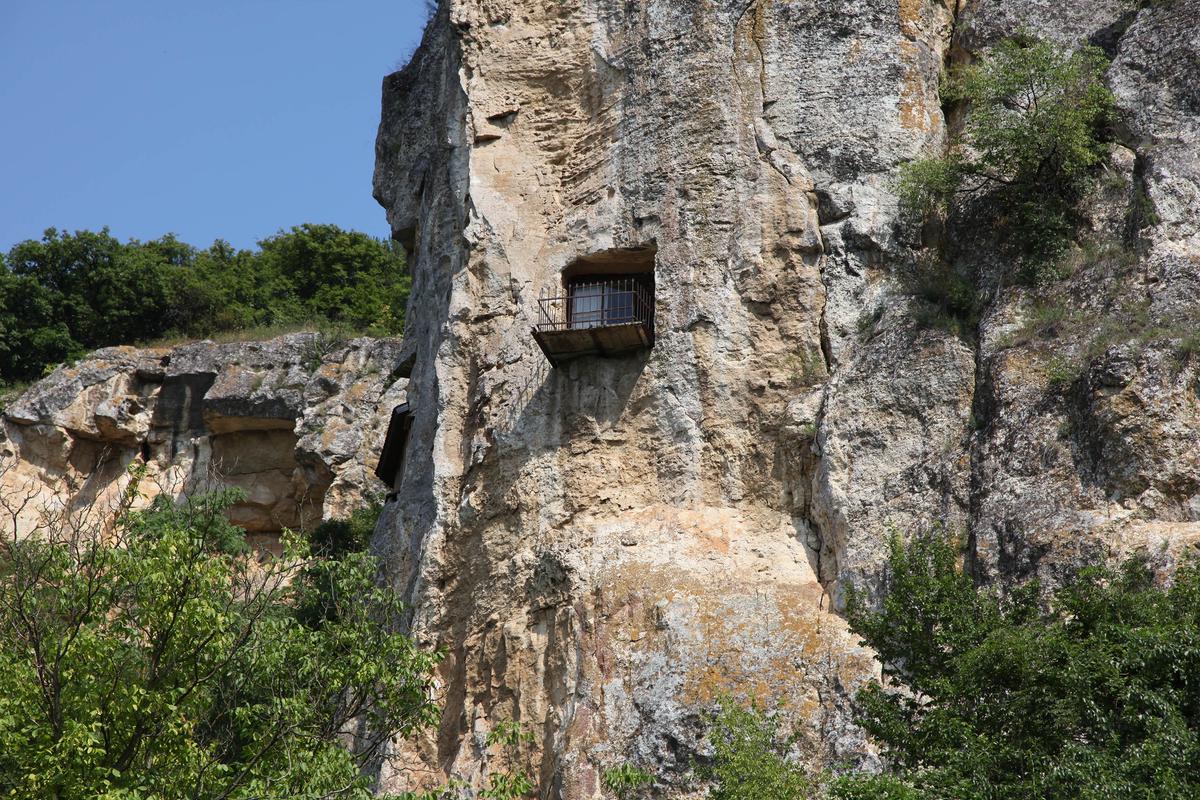
The karst limestone of the Rusenski Lom gorge shaped everything that followed. Over thousands of years, the river carved its way through the terrain, creating the steep cliffs and winding canyon that define the region today. As the limestone gradually dissolved and eroded, natural caves, overhangs, and sheltered recesses formed throughout the canyon walls, providing an ideal foundation for the hermit monks who later expanded them into churches, chapels, and monastic cells.
The architecture of Ivanovo belongs to a tradition that works against rather than with its material. There are no grand facades or soaring vaults here. Instead, the builders and monks who shaped this complex bored inward, hollowing chambers and corridors directly into rock. The limestone was soft enough to carve but durable enough to hold its form across centuries, and the monks exploited both qualities fully.
The Frescoes of Ivanovo
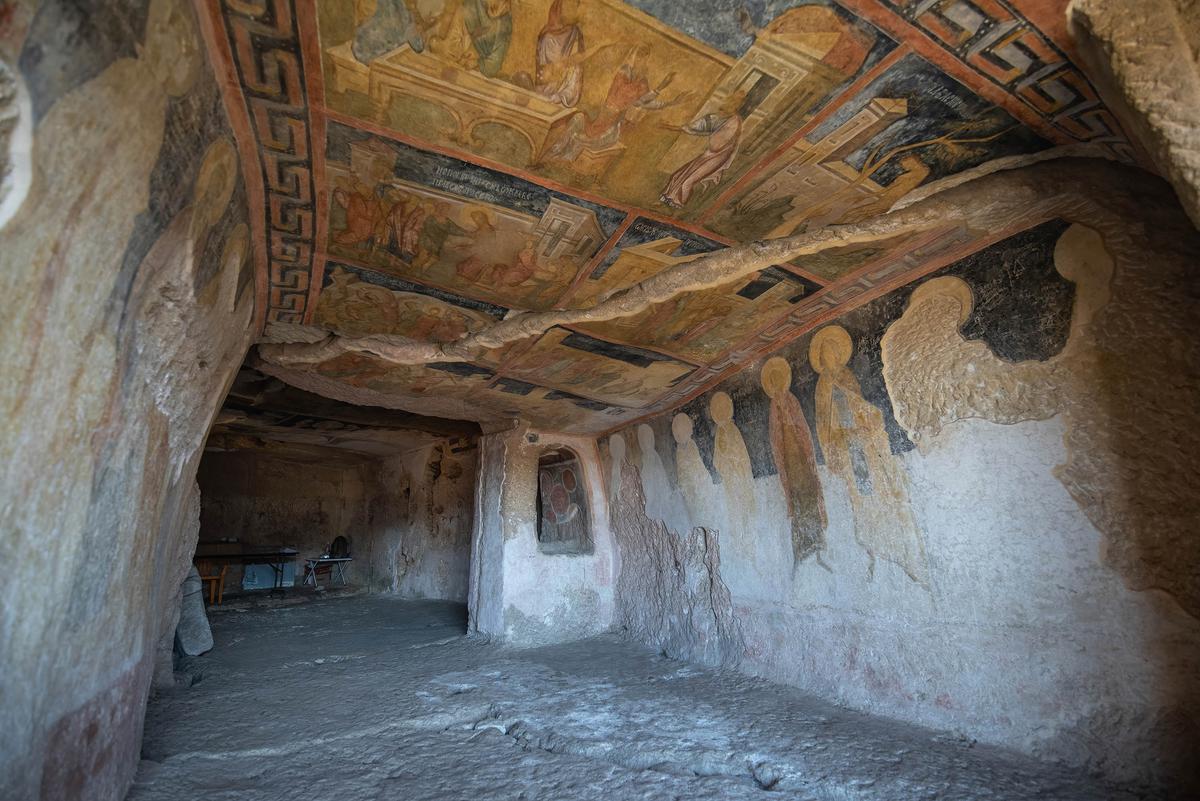
The interiors are intimate by necessity, their low ceilings and narrow passages shaped as much by geology as by design. What the architecture sacrifices in scale, it makes up for entirely in its painted interiors. The paintings covering the carved walls were rendered largely in the 13th and 14th centuries in the Palaeologan style. Their figures are uncommonly graceful and psychologically deep, rendered with a fluidity that sets them apart from the more rigid conventions of earlier Byzantine painting, and it is in these qualities that the true artistic and spiritual ambition of Ivanovo resides.
Five churches survive with enough of their painted interiors intact to give a sense of what the complex looked like when its sacred spaces were fully adorned and actively used for worship and monastic life. The principal church in the complex, the Holy Mother of God Church, also known as the Church of the Holy Virgin, is noted for its extensively preserved 14th-century frescoes. Its walls are covered in layered mural cycles that include narrative New Testament scenes, rows of saints, and donor portraits characteristic of late medieval Bulgarian painting.
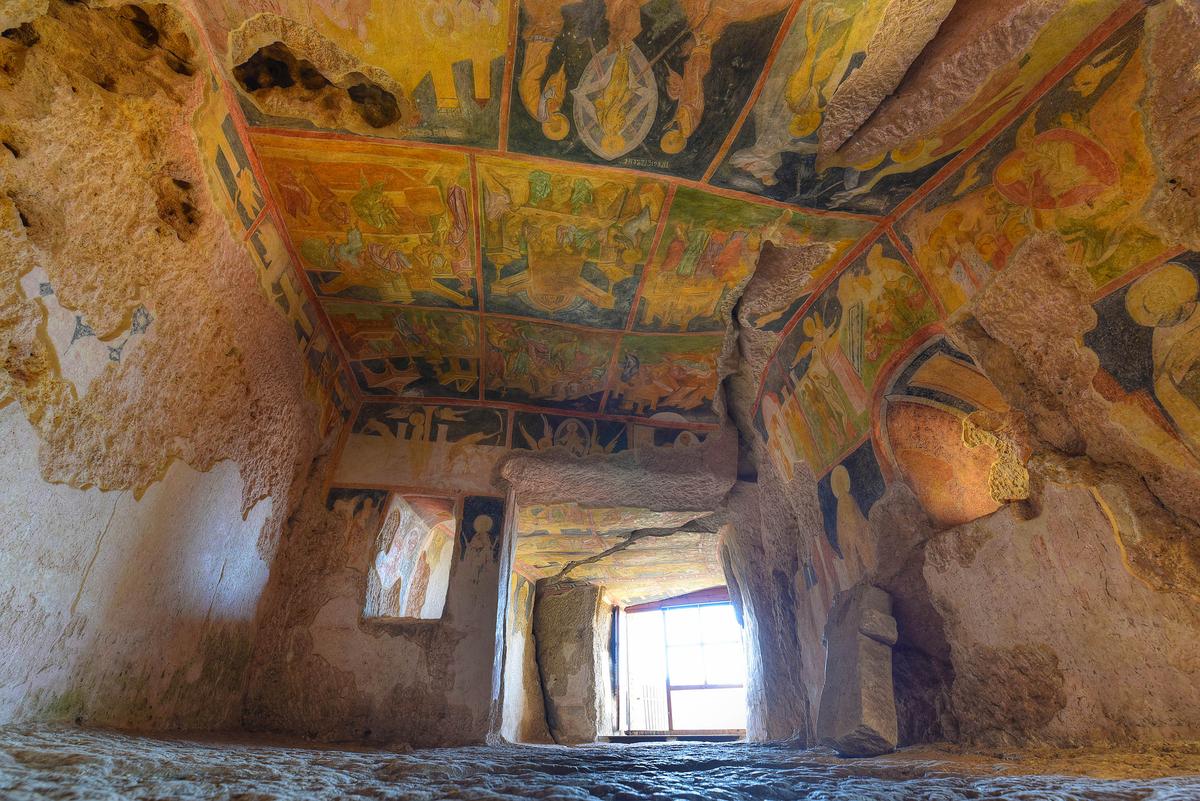
The St. Archangel Michael Chapel, known as the Buried Church, retains fragments of its 13th-century painted ceiling; too little survives to reconstruct the chapel’s full decorative program, but the remaining frescoes likely formed part of a traditional Orthodox scheme depicting Christ, saints, angels, and scenes from the New Testament.
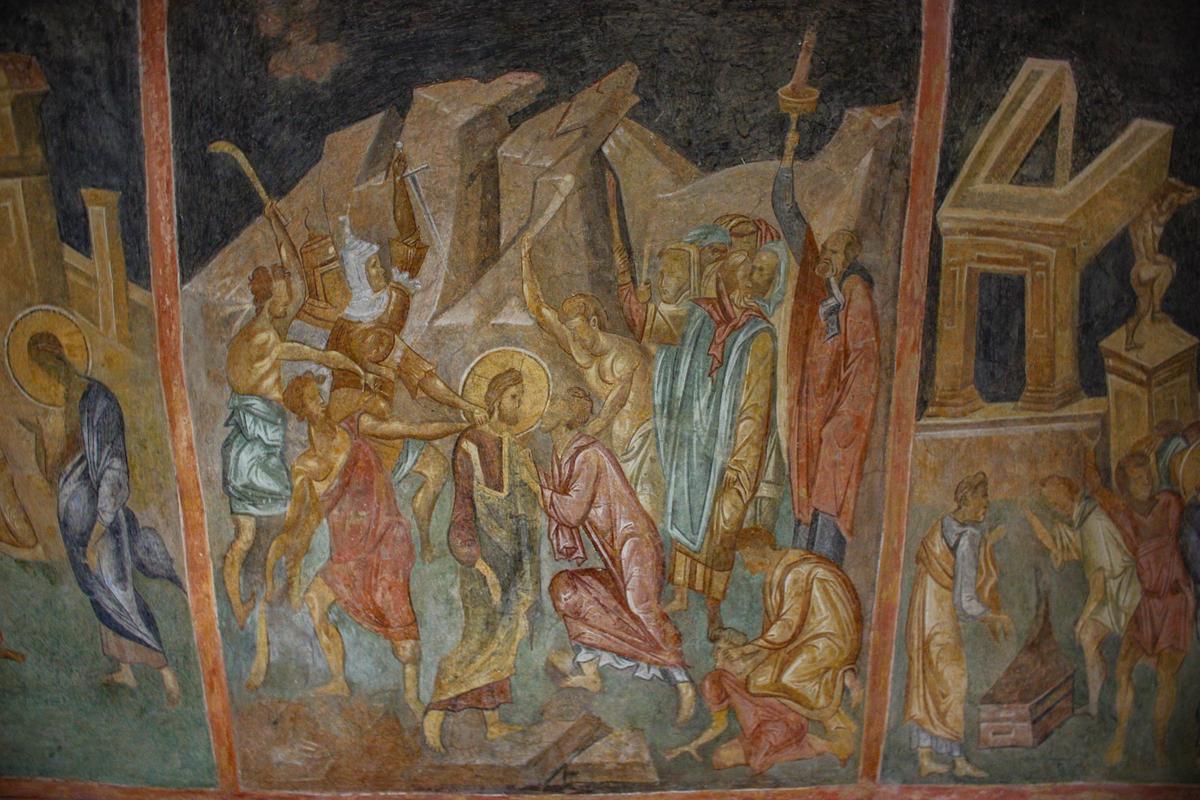
St. Theodore Church, sometimes called the Demolished Church, survives in a more fragmentary state following structural collapse, its remaining 14th-century wall paintings stabilized and displayed in situ, preserving traces of finely modeled saints and ornamental borders in the expressive style of the Tarnovo School.
Survival Through the Centuries
Today, the site is a UNESCO World Heritage property, designated in 1979, and it sits within the protected boundaries of Rusenski Lom Natural Park. The porous karst rock presents a constant challenge, with periodic collapses and trapped moisture threatening the site’s integrity. Conservation work continues on the surviving frescoes, involving cleaning, stabilization, and minimal retouching intended to preserve authenticity while arresting further deterioration.Ivanovo survived Ottoman rule, geological instability, centuries of obscurity, and the slow erosion of neglect. For anyone willing to follow the Rusenski Lom through its gorge to find it, the reward is an encounter with a place that has preserved, in pigment and limestone, an entire atmosphere of devotion that the modern world rarely offers undiluted.