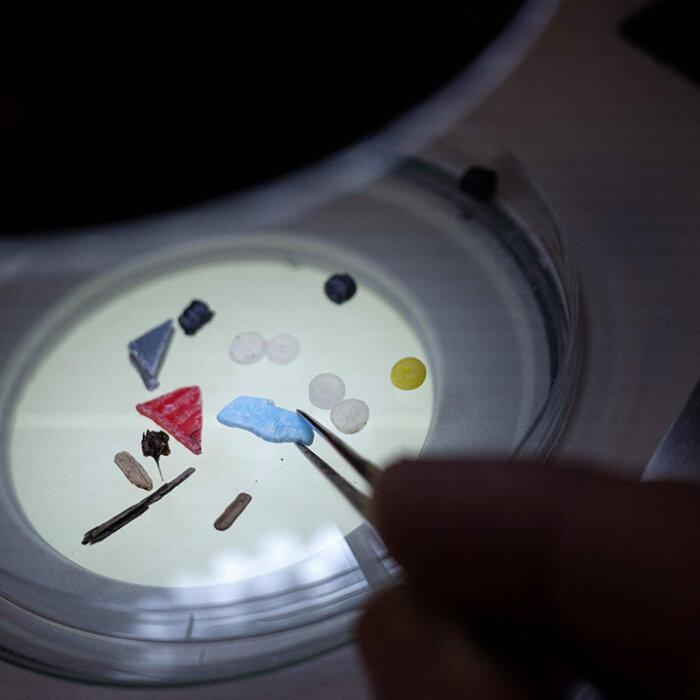
Most microplastics are the result of plastic breaking down into pieces, usually smaller than 5 millimeters. Sometimes, they’re intentionally manufactured for products such as cosmetics and cleaning products.
There’s an ongoing debate between scientists and physicians about whether microplastics are harmful to you or the environment.
Where Are Microplastics in the Bathroom?
According to Savage, “common sources in the bathroom include any personal care products, toothpastes, and even your shower curtains.”There are synthetic polymers in shampoos and conditioners. Textured or abrasive toothpaste has microplastics. And due to hot water, vinyl shower curtains release microplastics and phthalates over time.

If you want to know whether your product has plastic in it, check the information panel on the side or back of the product’s container. Plastic labeling for personal care products in the United States must comply with the Food and Drug Administration in addition to any relevant state laws and voluntary recycling standards. Plastic labeling requires a clear identification of the product, its ingredients, and the resin type of plastic packaging. Ingredients are listed in descending order of predominance.
Microfiber and Plastic Brushes
Start with your cleaning supplies. Microfiber cloths may be effective when cleaning, but they shed plastic particles with every use. Synthetic sponges are also a microplastic culprit. Instead of these, use cotton, hemp, or bamboo cleaning cloths. They have the added bonus of being biodegradable at the end of their lives, unlike synthetic options that live on in the environment.Similarly, plastic cleaning brushes shed microplastics from their bristles and can release even more as the handle degrades over time. The act of scrubbing causes the plastic bristles, which are usually made of nylon or other synthetic polymers, to wear down. They break off into tiny, often invisible fragments.
Plastic Shower Curtains
Vinyl shower curtains release microplastics and harmful chemicals in the bathroom’s warm, humid environment. Instead, use natural shower curtain liners such as cotton, hemp, or linen. They can be easily washed in your washing machine.Plastic Toothbrushes
Microplastics are released from toothbrushes when the plastic bristles wear down or break during use. According to a ScienceDirect study conducted on various brands of toothbrushes, they found that all brands released microplastics every day, with the most expensive brand releasing 39 particles every day.Soaps and Scrubs
At one point, plastic microbeads were added to facial scrubs. And while some countries have banned them due to their environmental impact, a recent study from the National Library of Medicine found that microbeads are still being used in facial scrubs even in the banned regions. It’s essential to check the label and the company’s website if you’re concerned.When it comes to avoiding microplastics, using natural products will go a long way.