A Naval aviator and a test pilot, he joined the National Aeronautics and Space Administration’s (NASA) training program for crewed flights in 1962. On his Gemini 7 flight, he and fellow astronaut Frank Borman set a record for the longest number of days spent in space and for the first time rendezvoused with another spacecraft. Later he was aboard Gemini 12 with Buzz Aldrin, the last flight of the Gemini series.
In 1968, Lovell, Frank Borman, and William Anders crewed Apollo 8, the first craft to orbit the moon. On April 11, 1970, with Lovell in command, fellow astronauts Fred W. Haise and John L. Swigert boarded Apollo 13 in Florida’s Kennedy Space Center and set out to land the spacecraft on the moon.
That landing never occurred.
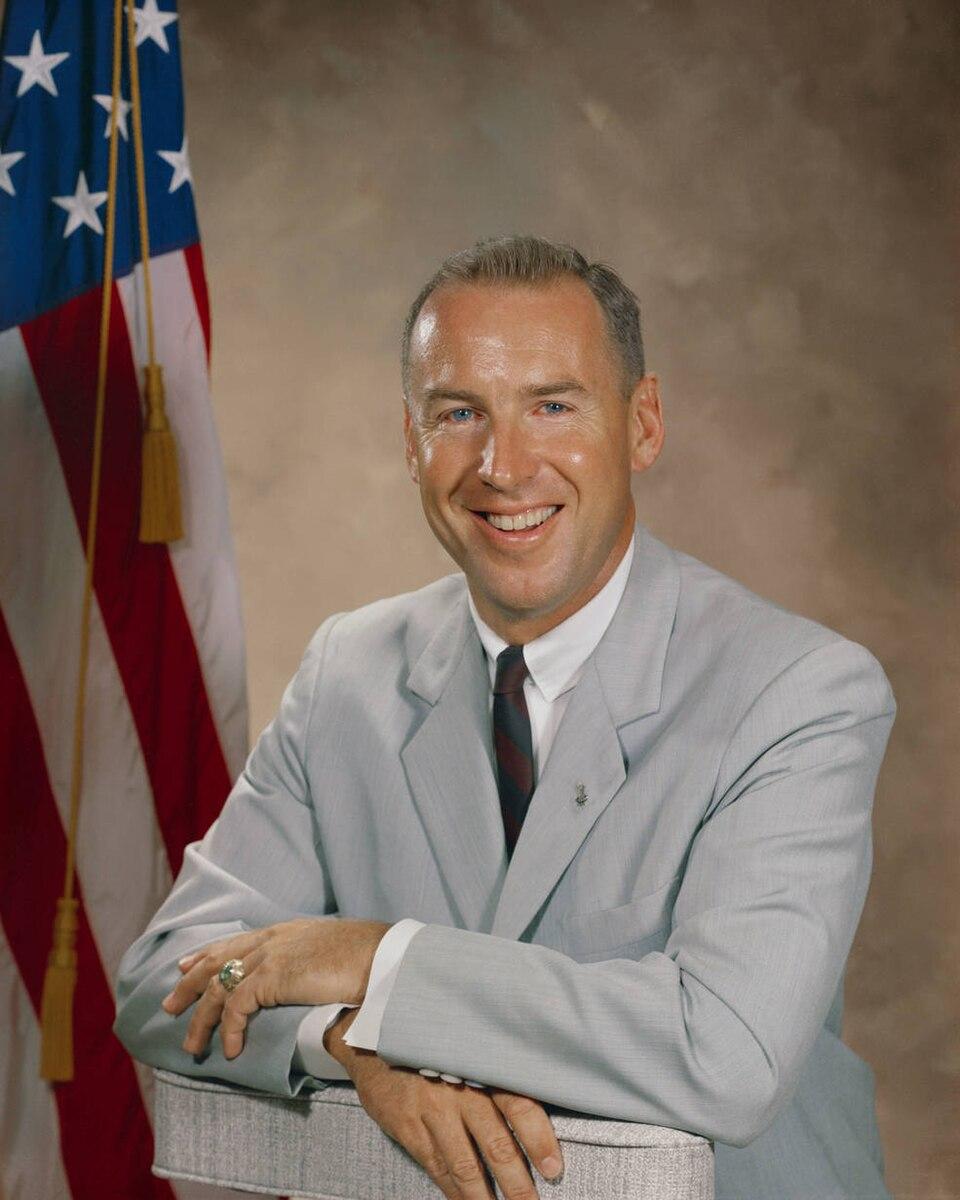
Astronaut Jim Lovell's official 1964 portrait. Public Domain
Crisis
On April 13, some 200,000 miles from earth, Lovell and his crewmates heard a bang. They quickly realized that one of the ship’s oxygen tanks had exploded, damaging the other as well. The electricity, water, and light of the command module would soon be extinguished. After a short time, the three men switched off the module’s power and crammed into the lunar lander, which was designed for two.
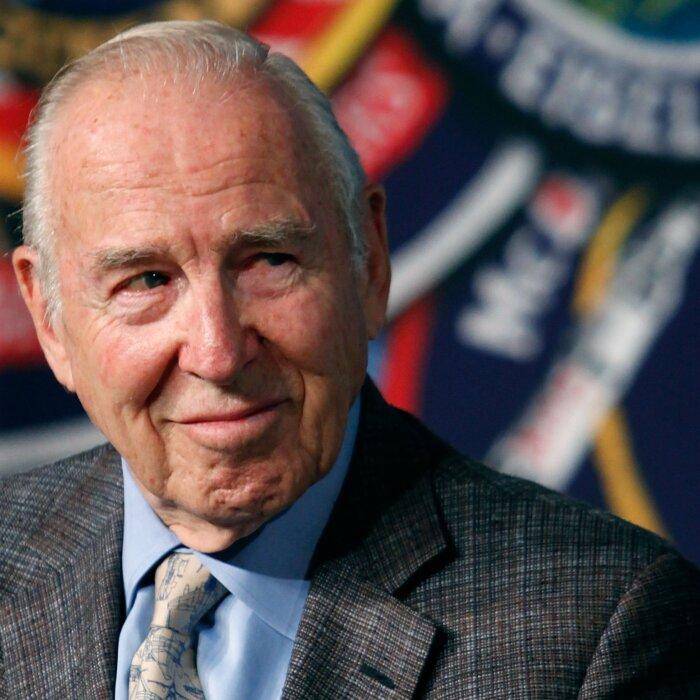
“For the three-and-a-half-day journey back to Earth, the three-person crew only had food and water intended to last two people a day and half. Each of them could only drink six ounces of water a day, and temperatures dropped to under 40 degrees Fahrenheit as the crew turned off the instruments to preserve power.”
Worse, the lunar module lacked the necessary number of canisters for filtering out carbon dioxide, putting the men in danger of death by asphyxiation. Following instructions from the ground control, and using ordinary items like plastic bags, cardboard, and duct tape, they rigged up a way to fit the command module’s cube-shaped canisters to the round openings in their cramped quarters.
Meanwhile, a mesmerized world prayed and watched the astronauts’ dramatic swing around the moon and back to earth. Those prayers were answered when, on April 17, the spacecraft splashed down safely in the Pacific.
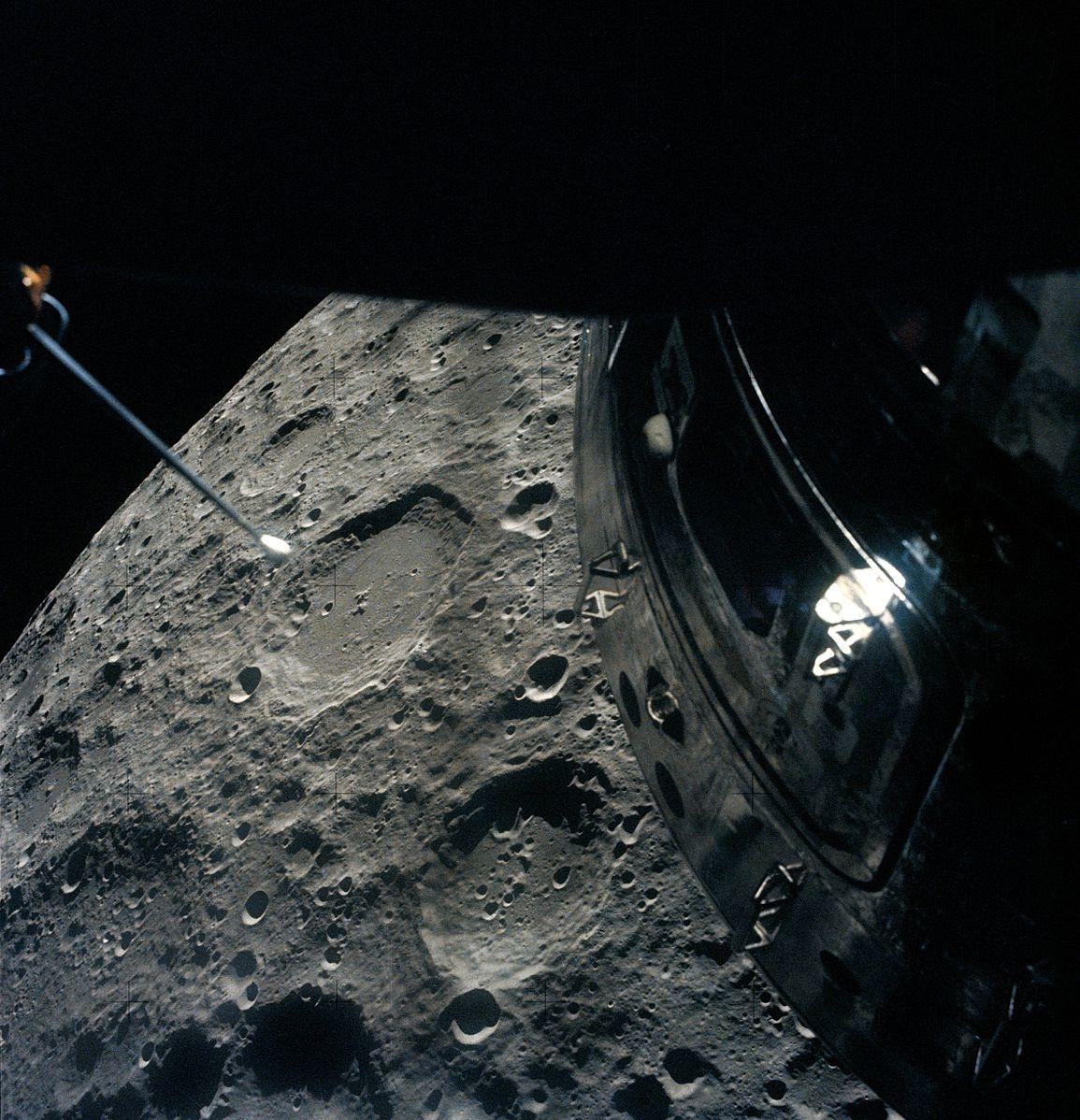
The astronauts' view of the Moon's surface from the "life boat." Public Domain
Training Fortifies Character
Throughout this nail-biting ordeal all three men remained cool and collected. In their exchanges with the space center their voices never betrayed fear or anger, and the same was true with their treatment of one another.About 50 years later, astronomer Richard Talcott asked Lovell, “How did you hold your composure in such an extraordinary and unprecedented moment of crisis?”
Lovell’s reply spoke of his years of time in the air:
“Well, when you’re in a situation like this, I could have bounced off the walls for 10 minutes trying to figure out what to do, and then nothing would have changed. And remember, the crew was former test pilots. So I had been used to an engine quitting occasionally when testing airplanes and things like that.”
In short, training had gifted Lovell with valuable tools fashioned for this emergency. The discipline he’d undergone at the U.S. Naval Academy and the thousands of hours he’d spent flying had drummed into him the ability and the confidence to master fear and regard calamities as obstacles to be overcome.
The Power of Love
On the return of the spacecraft to earth, when others asked Lovell if he was afraid or feared dying, he often answered that he knew he’d arrive safely because he had promised his wife, Marilyn, that he’d be coming home.High school sweethearts, Marilyn and Jim Lovell had a strong marriage unlike many of the other astronauts. Writers and interviewers have commented on Lovell’s devotion to his wife, who died in 2023, age 93.
A humorous incident that he retold several times, reveals his respect for Marilyn. At the press conference following Apollo 13’s return, a reporter asked Lovell whether he hoped to be taking another shot at the moon. Lovell nearly answered in the affirmative, but then saw a hand go up in the audience and give a thumbs down signal. It was Marilyn.
“No,” Lovell said to the reporter. “I think this is the last flight I’m gonna make.”
He knew how his wife had suffered through this ordeal, and so called an end to his days in space.
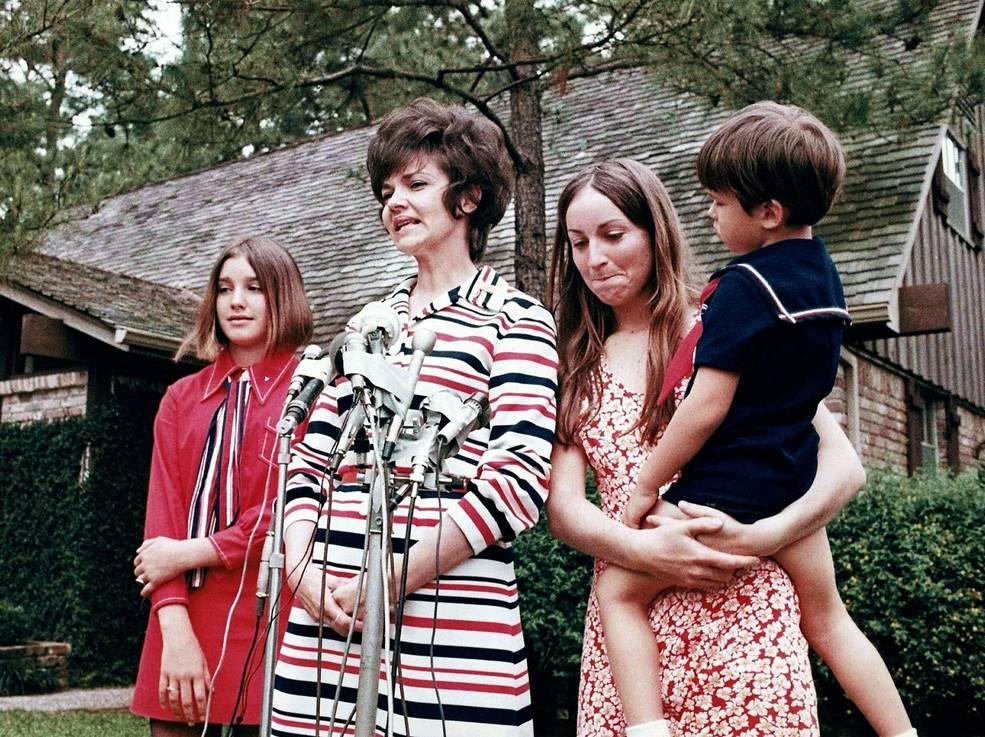
On April 17, 1970, the Lovell family greets reporters after Apollo 13's safe return. Public Domain
A Quiet Valor
In the movie “Apollo 13,” with Tom Hanks playing Jim Lovell, viewers hear the line “Houston, we have a problem” after the oxygen tank explodes. That line became popular everywhere for summing up some difficulty or summoning irony.But the actual words, spoken by Swigert and then repeated by Lovell, were “Houston, we’ve had a problem.” Writers for the movie script decided that this verb tense lacked drama and changed it.
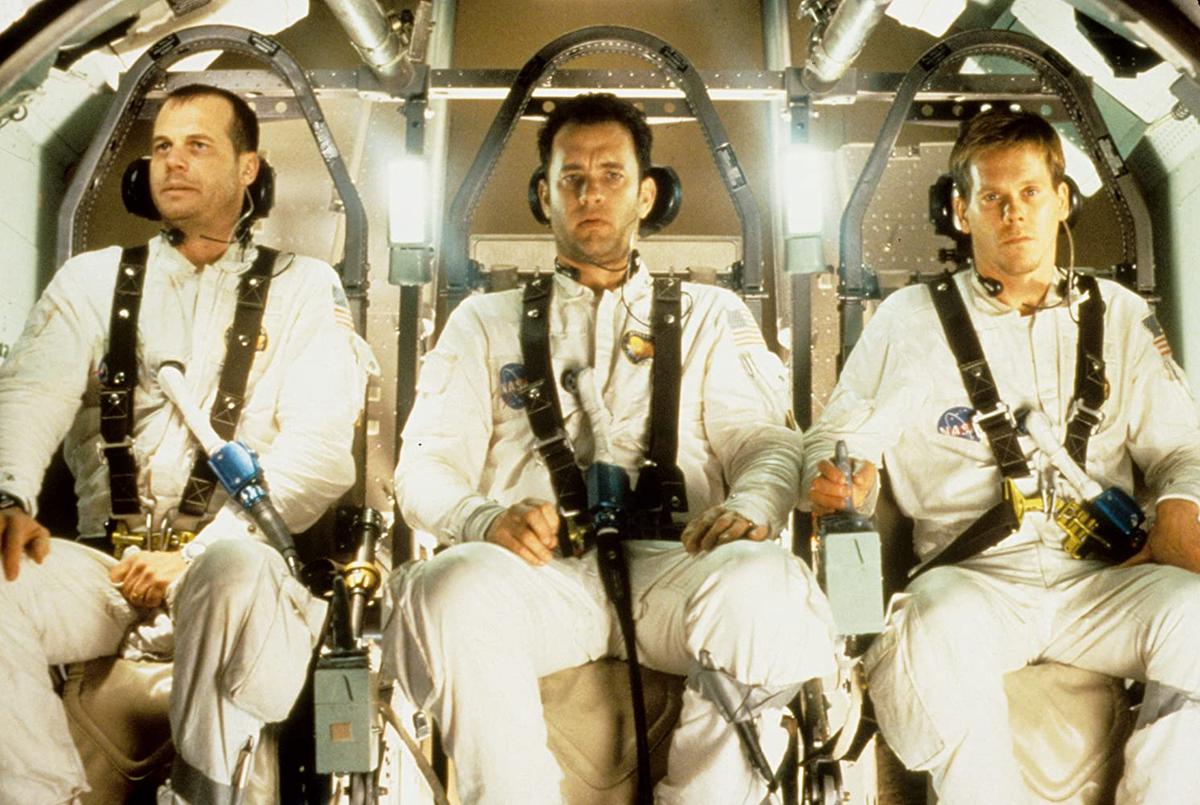
(L–R) Bill Paxton, Tom Hanks, and Kevin Bacon star in “Apollo 13.” Universal Pictures
There you have one more proof of these men’s calm approach to an emergency. In the real crisis, they were low-key and steady in their language. That’s years of training at work. That’s courage coupled with experience.
That’s character.
What arts and culture topics would you like us to cover? Please email ideas or feedback to [email protected]