The results of the Republican nomination for Vermont’s 1936 gubernatorial race had come in. Horatio Nelson Jackson had fallen just shy of winning, coming in second behind George Aiken, but ahead of many other contenders. For the 64-year-old businessman, it may have been the only time he came up short in an endeavor he‘d committed himself to. It was why he’d been one of America’s most famous individuals.
Horatio Nelson Jackson (1872–1955) was born in Toronto to a minister. He received a fine education in Canada before moving to the United States to earn his medical degree at the University of Vermont. He graduated in 1893 and soon began practicing medicine in Vermont. In 1899, he married Bertha Richardson Wells , who came from one of the state’s richest families. The wealth that came from the marriage proved providential in the coming year.
In 1900, Jackson contracted a mild case of tuberculosis, and the disease forced him to close his medical practice. Despite the loss, the young couple could still afford just about anything they wanted. They purchased Providence Island in Lake Champlain, bought shares in mining operations, traveled Europe, and eventually purchased racehorses. Soon, they bought automobiles—a term that was coined for the “horseless carriage” the same year Jackson married. It was the automobile that would turn Horatio Nelson Jackson into a household name.
A Gentleman’s Wager
In 1903, the Jacksons took a cross-country trip by train to San Francisco. One night in May while dining at the city’s prestigious University Club, a debate ensued: Was the automobile a fad destined to be a mere toy for rich people or was it was the future of transportation?The First Cross-Country Road Trip
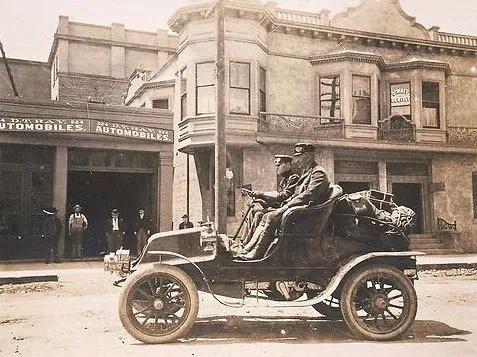
In the coming days, he hired Sewall Crocker, a young professional cyclist, who was also a car mechanic and driver, to join him in what would be the first-ever road trip across the country. Jackson needed a reliable vehicle and Crocker suggested the 1903 Winton, a 20-horsepower two-cylinder automobile capable of reaching speeds of 30 miles per hour. Jackson called the car “Vermont.”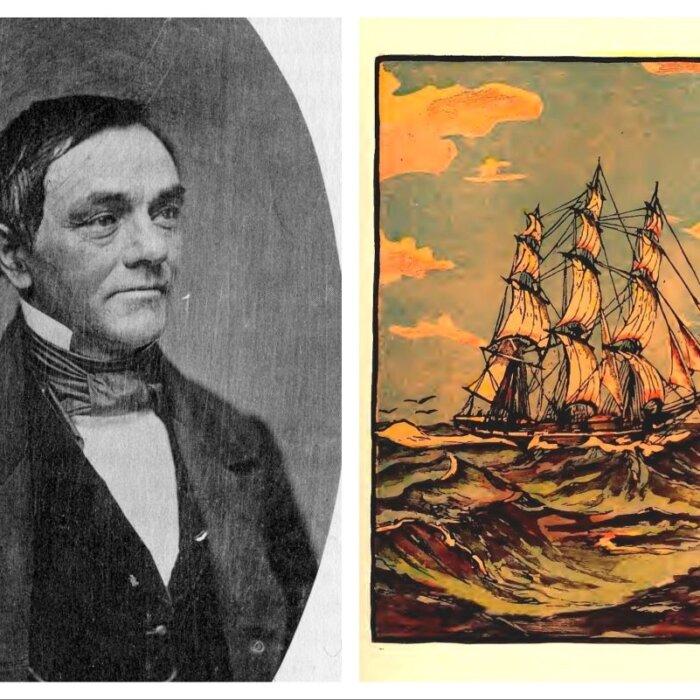
Of course, reaching 30 mph during those days was easier said than done. In 1903, there were only about 150 miles of paved road in the entire country. Additionally, there were no gas stations fixed along routes and highways. Jackson and Crocker would only occasionally encounter places where fuel was available. To counter this obstacle, the two removed the car’s backseat to make room for extra fuel tanks as well as sleeping bags and blankets, food, water, mechanic tools and spare parts, fishing gear, an ax, guns and ammunition, pots and pans, and a Kodak camera. After Bertha hopped on a train back to their home in Burlington, Vermont, Jackson was ready for the long adventure ahead.
Bud and the Drive
To avoid the Sierra Nevada Mountains, the two headed north toward the Sacramento Valley and into Oregon. From Oregon, the Vermont headed east into Idaho, where Jackson added another traveler to the party. For $15, Jackson purchased Bud, a bulldog that quickly learned to love the road and certainly set the standard for future four-legged roadtrip buddies.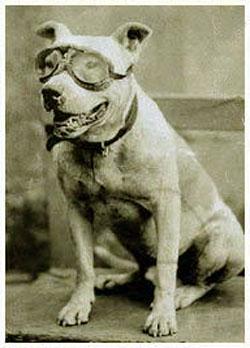
Jackson comically noted that Bud was the only one “who used no profanity on the entire trip.”
Since the Vermont lacked a windshield, flying dirt was a problem. The drivers wore goggles to keep the dust out of their eyes, and they quickly realized Bud needed his own pair. After buying a third pair, the three were now fully prepared to continue the journey.
From Idaho, the three travelers drove across Wyoming. While in Cheyenne, Jackson noticed his jacket was missing. It had fallen out while driving as had many items along the way. But along with his jacket was all his money. The loss forced them to go without food for about 36 hours, but Jackson was able to message his wife to wire money.
As the two drivers and dog continued their trek, their celebrity increased. Crowds met them in towns, photographers took photos, and newspapermen wrote articles. Obstacles continued to arise with busted tires, broken parts, and at times long walks to purchase fuel. Nonetheless, Jackson was determined to reach New York City before 90 days.
From Wyoming, the car passed through Nebraska and reached Omaha on July 12. They then crossed into Iowa, eventually reaching the Mississippi River and passing into Illinois. The Vermont was now practically home free. There were now far fewer obstacles, as the roads were better. After 63 days, 12 hours, and 30 minutes of travel, Jackson, Crocker, and Bud arrived in New York City on July 26, 1903, having completed the first transcontinental car trip.
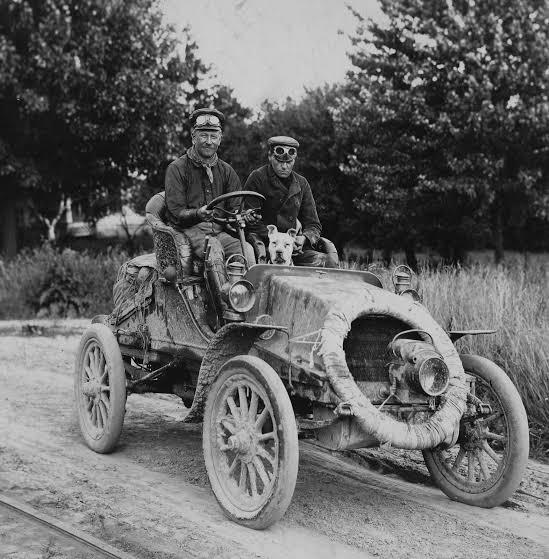
The journey cost Jackson $8,000 (nearly $300,000 today), including the car, which cost $3,000 (more than $110,000 today). Jackson, however, etched his name into automotive history, as did Crocker and Bud. Bud continued living the life of leisure at his new home in Burlington. Sadly, Crocker died only 10 years later. He had planned to conduct a six-month car journey around the world.
Entering the Great War
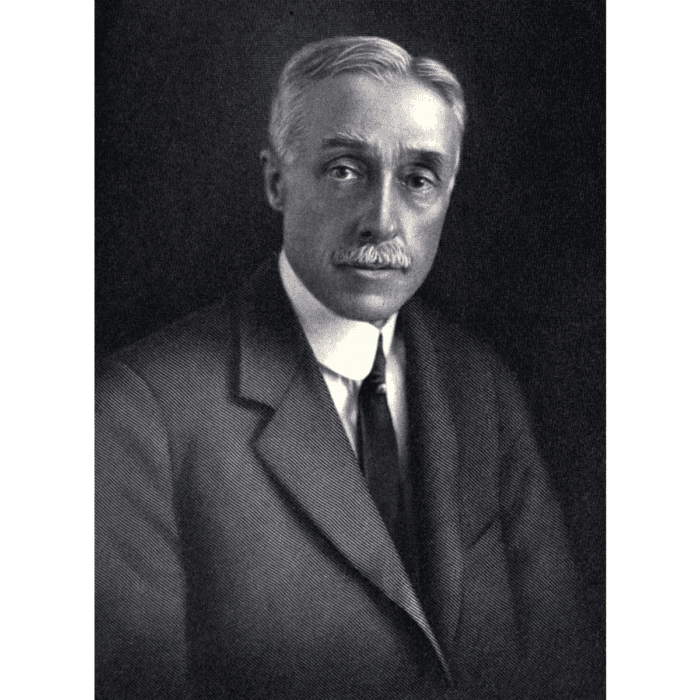
Jackson continued his business dealings, becoming the publisher and owner of the Burlington Daily News, as well as the owner of a radio station. When America entered World War I in 1917, Jackson tried to enlist, but was refused due to his age. Undeterred, he reached out to his friend Theodore Roosevelt, who was able to pull some strings and have Jackson added as a member of the United States Army’s Medical Corps.Jackson’s celebrity didn’t keep him out of harm’s way, but the Vermonter wouldn’t have had it any other way. As a medical officer, he was present during the Meuse-Argonne Offensive, which began on Sept. 26, 1918, and ultimately led to the Armistice. During the offensive, still the largest such operation in U.S. history, Jackson was wounded in the arm. His display of leadership and courage under fire earned him high praise from his commanding officer.
An Extraordinary Legacy
Earning the rank of major, Jackson was awarded numerous medals, including the French Croix de Guerre with Palm, the French Legion of Honor, and the U.S. Distinguished Service Cross for extraordinary heroism.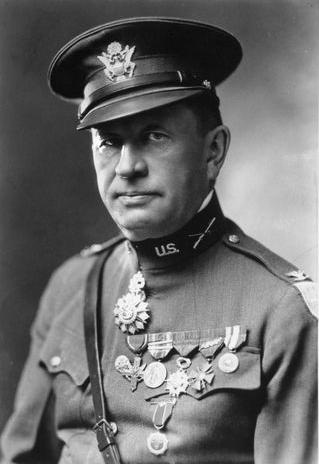
In 1919, Jackson was a founding member of the American Legion, and founded the American Legion Department of Vermont. Having been promoted to the rank of colonel in the Officers Reserve Corps, Jackson served in the 388th Infantry, 97th Division. In 1922, he became the director of the American Legion Publishing Corporation.
Jackson died in 1955 at the age of 83. In 2003, a century after his incredible feat of driving across the country, Ken Burns commemorated the accomplishment in a documentary called Horatio’s Drive, with Tom Hanks as the voice of Jackson.