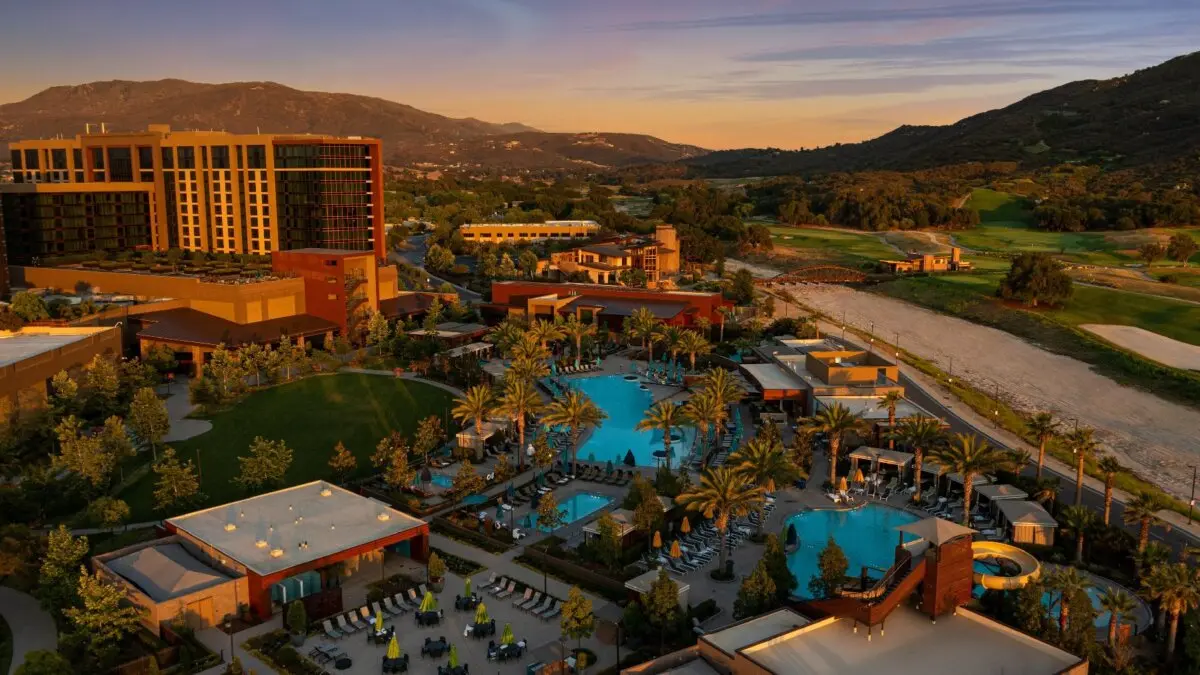
Set apart from the buzzers and bells of its vast casino, the comings and goings of its grandly scaled hotel, the greens of its golf course and the blue archipelago of its swimming pools sits the luxurious escape of Spa Pechanga.
Designed as an island of serenity and rejuvenation, every aspect of its elegant architecture and museum-quality displays is designed to celebrate the cultural history of the Indigenous Pechanga band—the Payomkawichum, “People of the West,” who can date their presence in California’s Temecula Valley back 10,000 years.
Placed on a reservation in 1875 after being evicted from their ancestral land, today the tribe oversees one of California’s largest tribal governments and operates the massive Pechanga Resort Casino. And its luxurious spa.
For 17 years Brad Munoa—who graduated from the University of Southern California’s School of Cinematic Art in 2005 on a tribal scholarship—has overseen Pechanga Studios. It’s a multimedia operation that handles all of the tribe’s marketing and outreach—from its presence on social media and advertising to political causes and a new 10-part series of documentaries, “People of the West.”
What if it were possible, Munoa thought, to communicate tribal history—not as an academic exercise or a succession of talking heads but through the meditative immersion of a spa treatment? The result is “Journey of the Payomkawichum,” a 20-minute journey described in the spa’s literature as a “Zero Gravity Soundscape Relaxation Experience.”
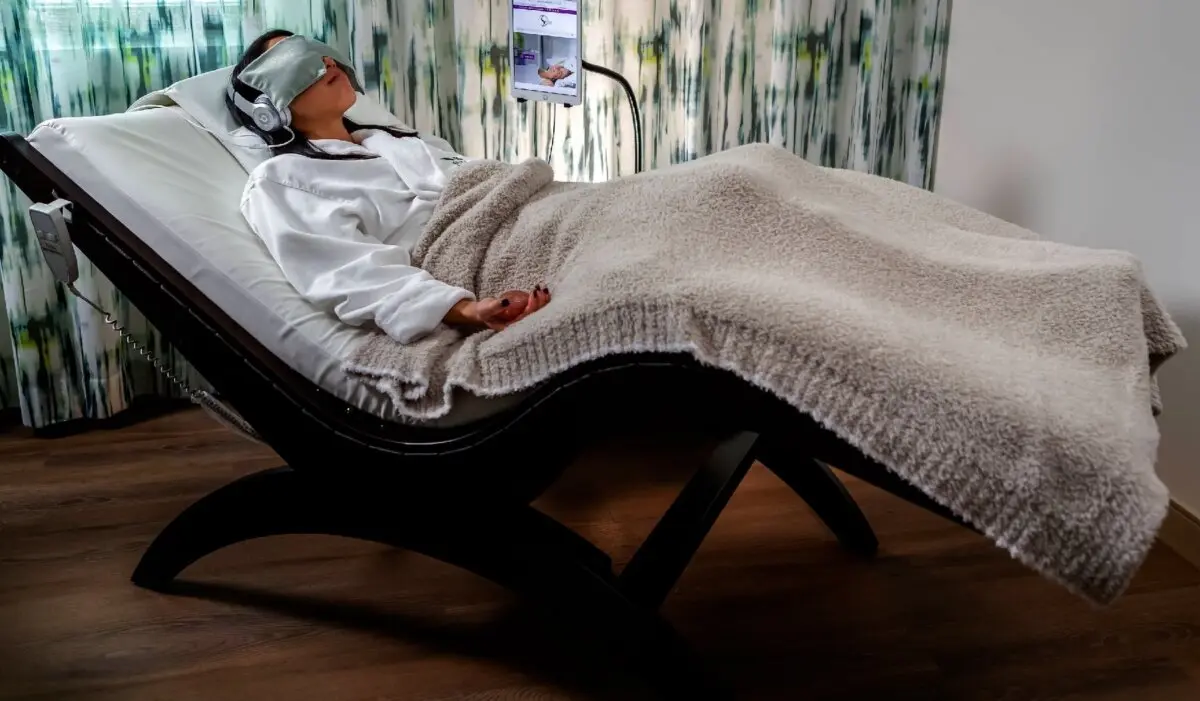
After being cleansed, robed, and offered juice, I had no idea what to expect as I was led to one of the spa’s softly glowing therapy rooms, which was dominated by a beautifully contoured recliner, referred to as the “Zero Gravity Chair” with its built-in audio features. Once I was settled in the chair, a warm blanket was laid over me, a soft blindfold covered my eyes and headphones were placed over my ears. As promised, the frenetic world of the hotel and the casino disappeared.
What followed (deep inside my mind) was a sonic journey along the trail that for countless generations connected the Natives of the Temecula Valley to the sea. As skillfully scripted and edited as any film, the journey unfolded as a series of atmospheric (exceedingly high-quality) field recordings made (whenever possible) in the actual settings—history without words.
As the world faded to black, I was transported to a rugged shoreline accentuated by the pounding of surf, rushing wind, and a chorus of seagulls that passed above and all around me. Gradually, pounding surf gave way to the rushing burble of a stream as I began my travels inland, seabirds changing places with the birdsong of forest dwellers as the wind remained a constant thematic thread. I (or we) made camp for the night and gathered around a crackling campfire to the hooting of owls. It was easy to imagine ancient tales being told around the fire as the burning logs faded to embers.
On the second day as I traveled, it became clear the wind was increasing, rustling through the trees as it grew ever close, accompanied by the rumble of distant thunder. Then the rain fell, first in drops, then in battalions until finally all that was left was a gentle drip, drip, drip to mark its passing. It all ended with the glowing aura of having arrived in the sun-drenched Temecula Valley.
“When I experienced the Zero Gravity chair for the first time with its prerecorded package of audio,” Munoa recalls, “I thought how amazing it would be, instead, to produce our own experience that would re-create a journey that was so important to our people.”
Having now experienced “Journey of the Payomkawichum, I know that the saddest part is when it’s over and you have to leave it all behind. However, your choice of a massage session is included as part of the treatment. That helps soften reentry to the ”real” world.