This copy is for your personal, non-commercial use only. Distribution and use of this material are governed by our Subscriber Agreement and by copyright law. For non-personal use or to order multiple copies, please contact The Epoch Times Reprints.
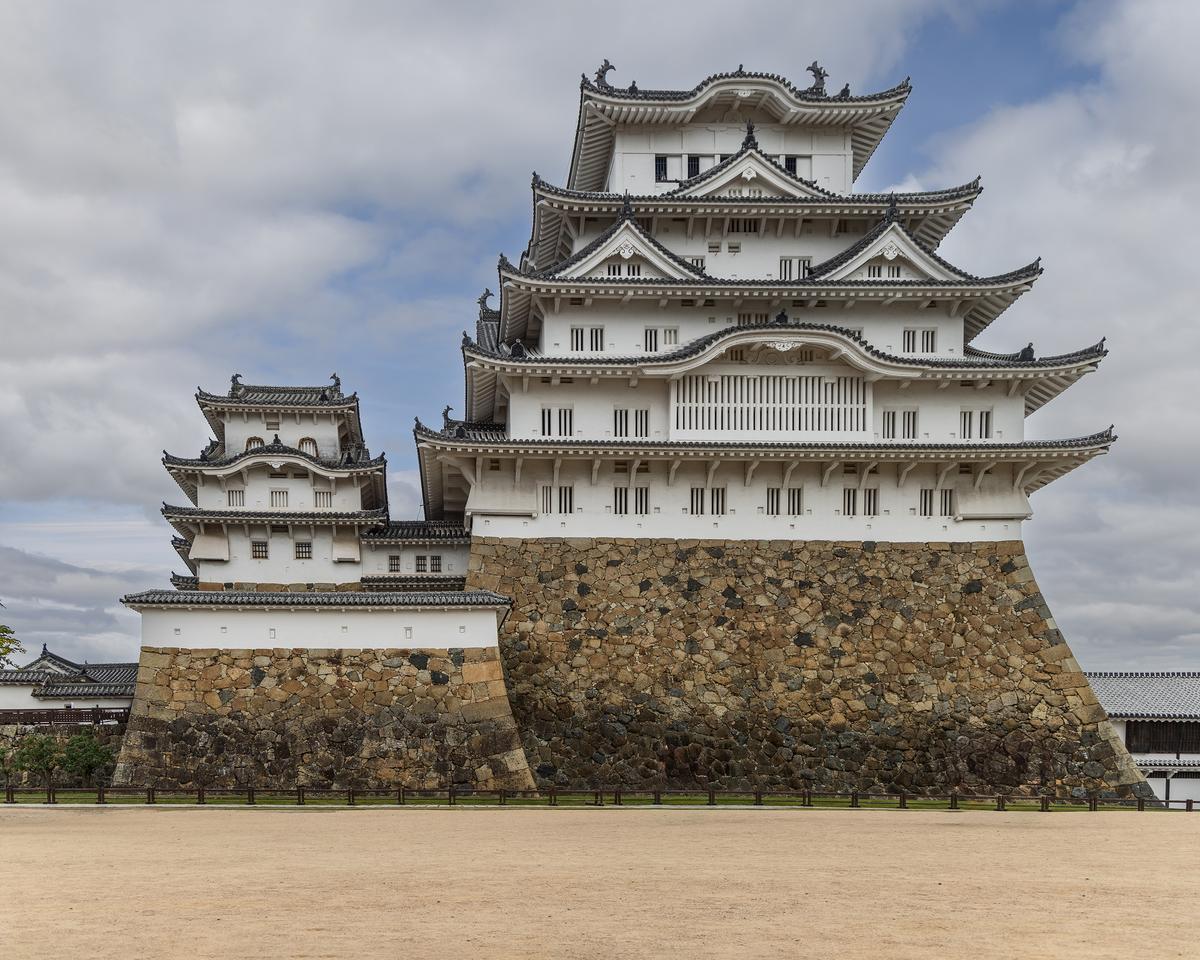
Himeji Castle rises atop Himeyama Hill, its white plaster walls supported by massive stone foundations. The central keep stands five stories tall inside, with seven tiers visible externally, surrounded by turrets and defensive walls. Its elevated position and design emphasize both military function and visual dominance over the surrounding landscape. This dramatic presence has inspired numerous film and television productions, including the James Bond feature "You Only Live Twice." JBernspang/Shutterstock
As morning mist drifts across Japan’s Mount Himeyama, the silhouette of Himeji Castle emerges, its white walls glowing softly against the sky. Layered roofs and the soaring main keep (central, fortified tower) give the impression of a heron perched above the city. Known as “Shirasagi‑jo,” or “White Heron Castle,” its gleaming white walls and sweeping roofs give the impression of a bird in flight.
For centuries, Himeji Castle has served as both a stronghold and a symbol of refined Japanese design. Although the earliest structures date to 1333, the castle reached its current form in 1609 under daimyo (feudal lord) Ikeda Terumasa, strategically positioned to oversee and secure trade routes and the surrounding plains.
Himeji Castle is a masterpiece of Japanese feudal architecture. Built mainly from wood atop massive stone foundations, its central keep rises six stories above ground. The fortress contains more than 80 rooms, connected by a labyrinth of corridors, gates, and hidden chambers designed to confound invaders. The white plaster walls resist fire, while steep stairs and narrow passageways enhance security. Rooflines curve elegantly, and interlocking eaves add both stability and aesthetic rhythm. Turrets and the main keep reflect the Momoyama (1573–1615) and early Edo (1603–1868) architectural styles, combining practicality with careful attention to visual detail.
Today, Himeji Castle stands as a UNESCO World Heritage Site and a beacon of cultural pride. Welcoming 3 million visitors annually, it is the most visited castle in Japan. The castle serves as a museum, a research site, and a source of artistic inspiration. Beyond its function, the castle remains a symbol of Japan’s historical craftsmanship and architectural skill. Its enduring presence connects visitors to the past while showcasing the balance of beauty and purpose in Japanese design.
The main keep is flanked by small yagura turrets, defensive watchtowers that protect corners and connected walls, featuring narrow slits for firing arrows or guns. Curved stone walls strengthen the base and impede attackers, while multilayered roofs and angled eaves protect against rain and assault. Fire-resistant plaster and sturdy timber framing support the multistory structure. Together, these elements reflect the Edo-period integration of military efficiency and architectural design. Artyart/Shutterstock
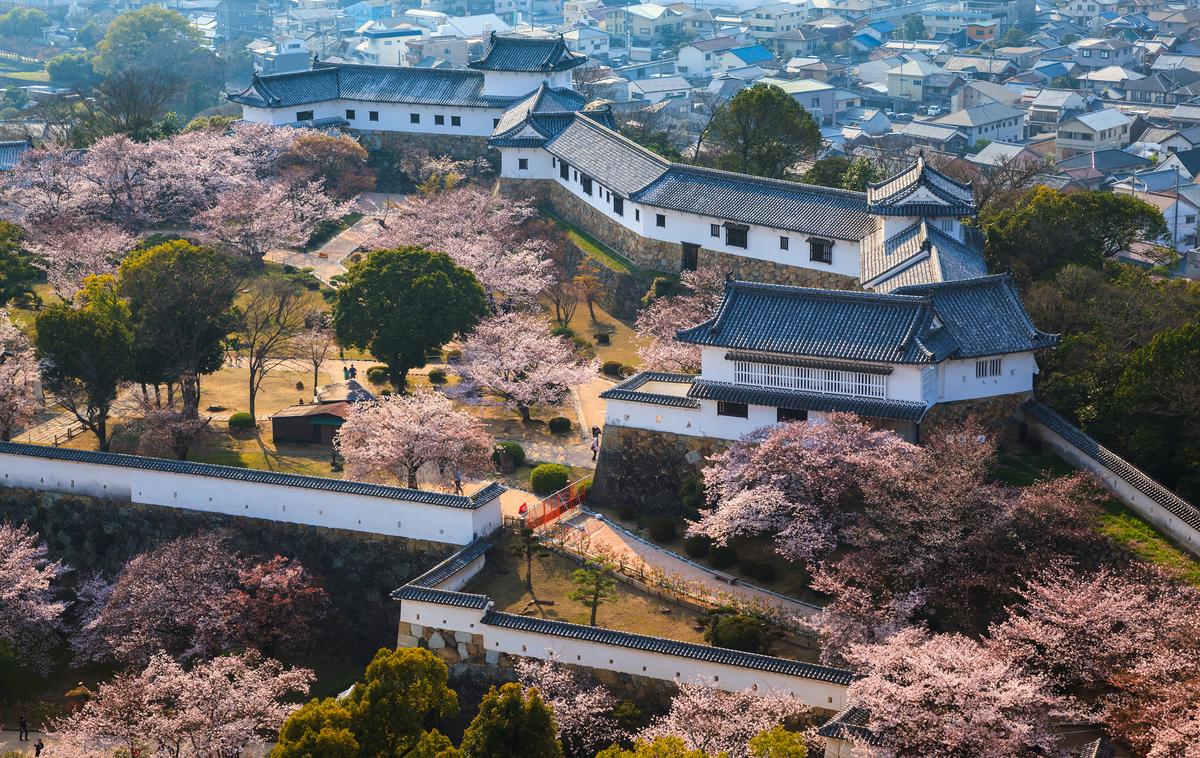
Himeji Castle's fortress walls encircle 83 buildings through maze-like, curved layouts that would disorient invaders. Massive stone foundations rise nearly five stories, topped with fire-resistant white plaster. Within these formidable defenses grow more than 1,000 sakura, or cherry blossom, trees. From late March to mid-April, they burst into bloom, transforming the fortress with clouds of delicate pink blossoms and filling the air with an enchanting floral fragrance. lkunl/Shutterstock
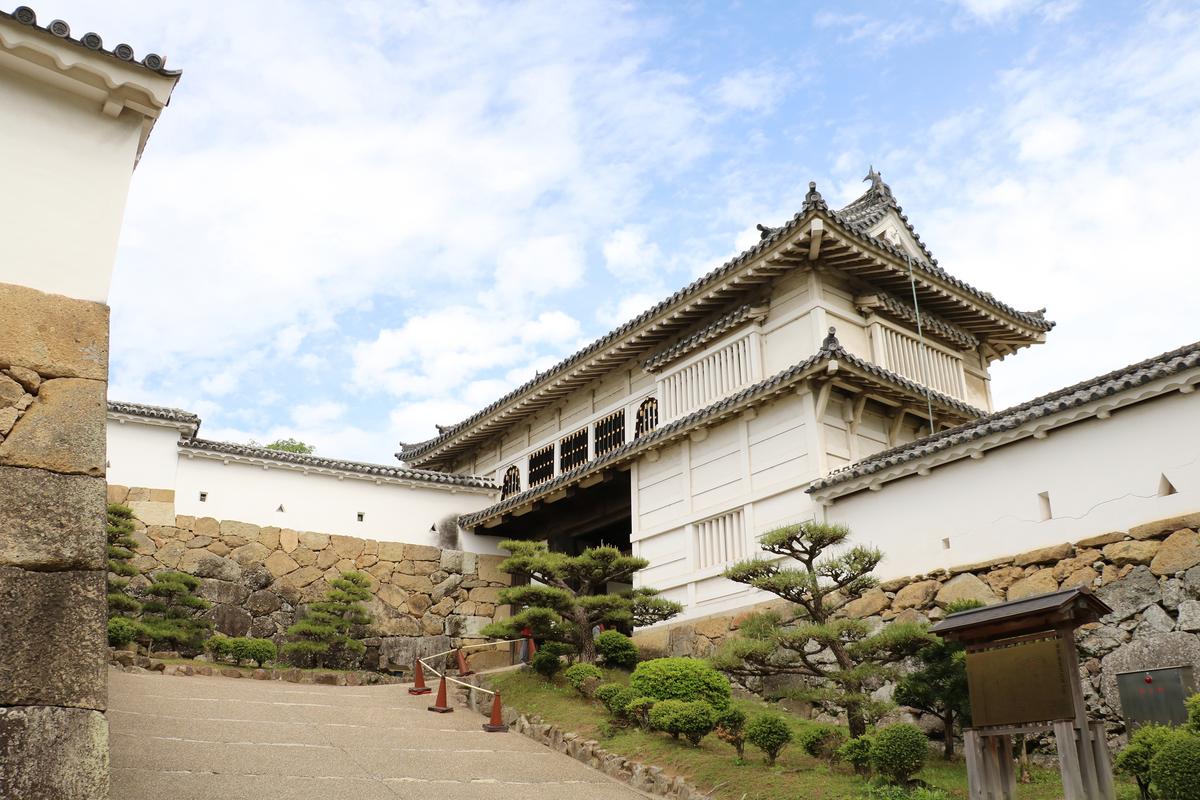
Himeji Castle's largest gate, Hishi-no-Mon (Diamond Gate), rises in bright white above stone walls leading to the second compound. The structure is a yaguramon-style gate, meaning that it has a defensive tower built above the passageway. The structure combines defensive stone steps and flanking walls with interlocking eaves. L.W.Wizard/Shutterstock
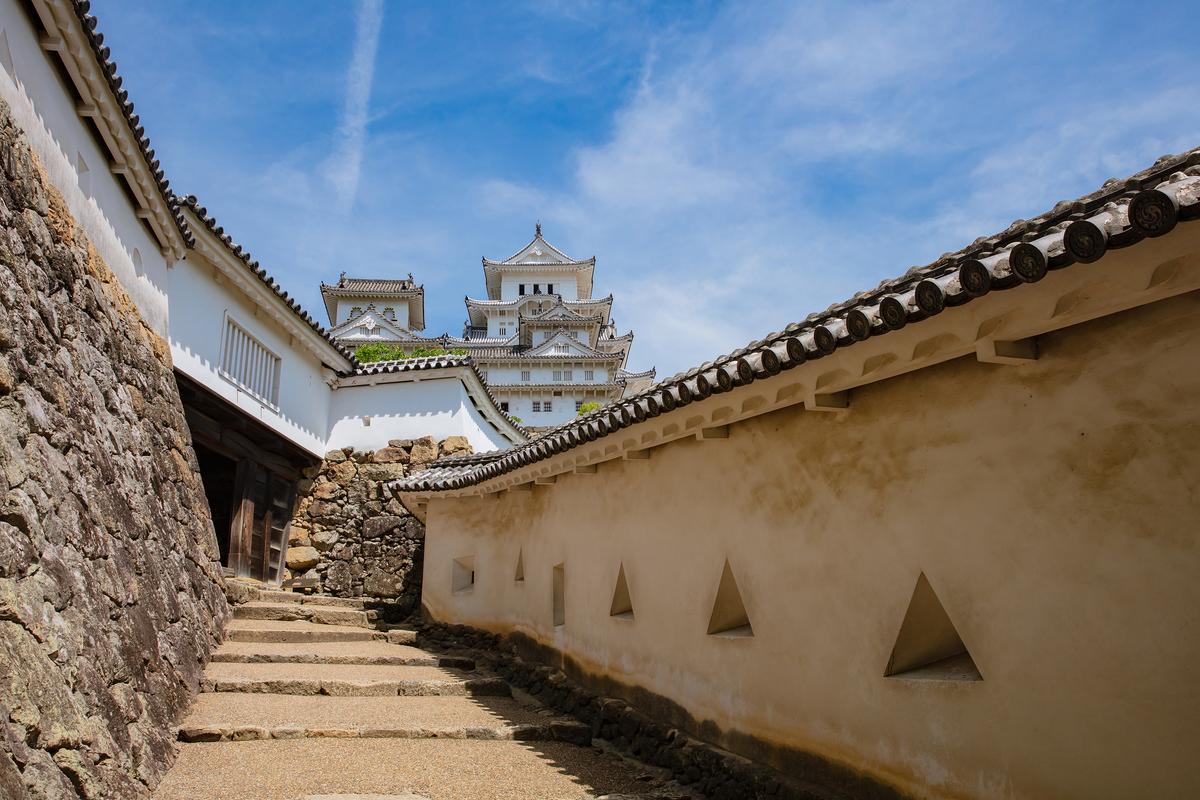
The Ha-no-Mon staircase at Himeji Castle showcases one of the castle’s many masterful defensive designs. The tight staircase features a sidewall with rectangular and triangular openings for firing weapons. Its sharply angled stone steps rise steeply, intentionally crafted to slow intruders and leave them exposed to castle defenders from above. Yellow Cat/Shutterstock
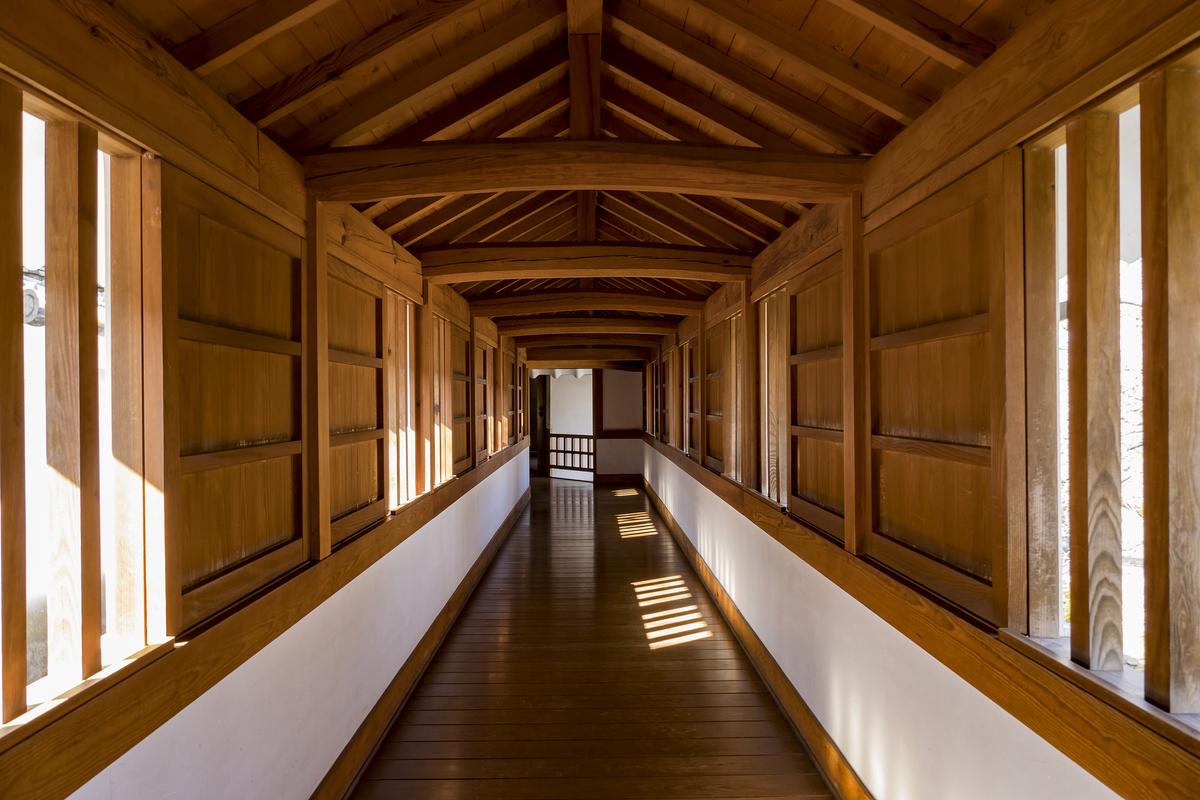
This slender corridor of dark wood is one of 11 corridors that link more than 70 of the castle’s internal rooms. Exposed beams, plank flooring, and narrow windows reflect the practical style of the Edo period. The hallway emphasizes practicality and security, with visible timber joinery crafted using traditional techniques that allow the structure to flex during an earthquake. Kit Leong/Shutterstock
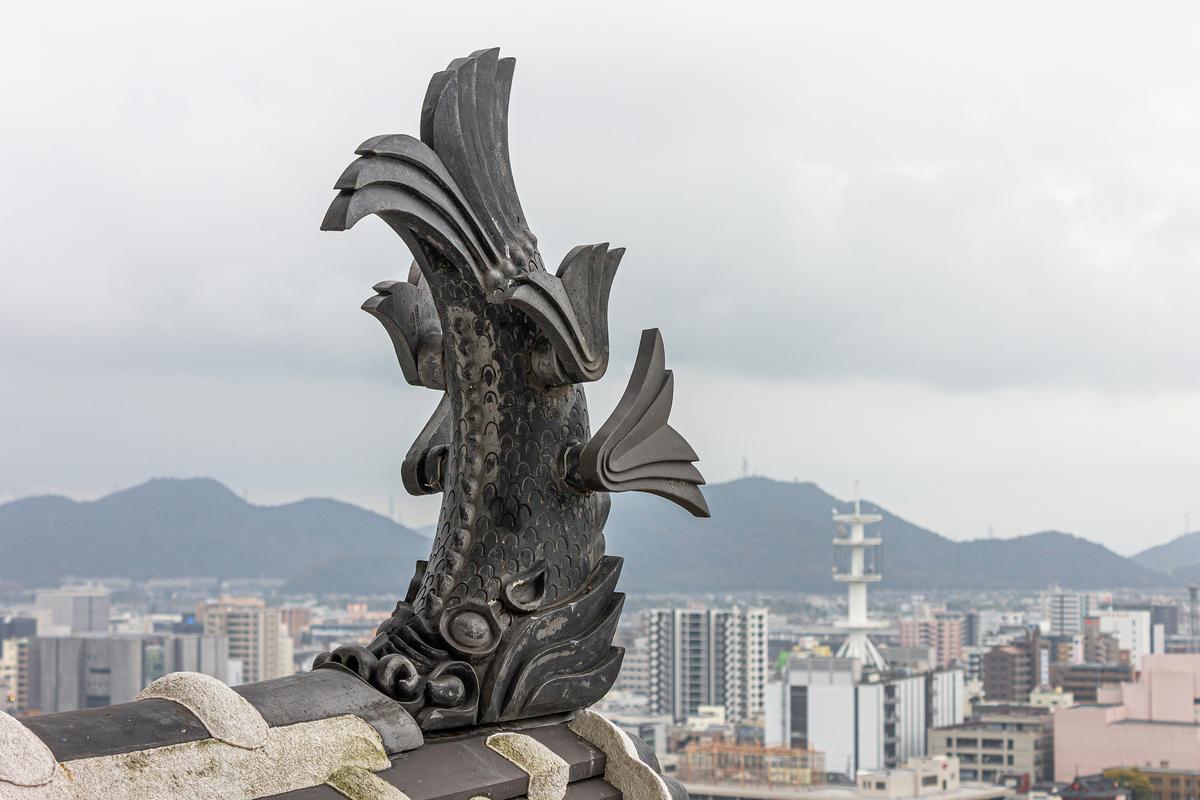
Perched atop Himeji Castle’s roof ridges, the shachihoko are mythical tiger-headed fish meant to protect the castle from fire. Each ceramic figure gleams in sunlight, adding grandeur to the castle’s silhouette. They are nearly six feet long, and their striking presence highlights both the castle’s beauty and the protective role the builders intended. Joaquin Ossorio Castillo/Shutterstock
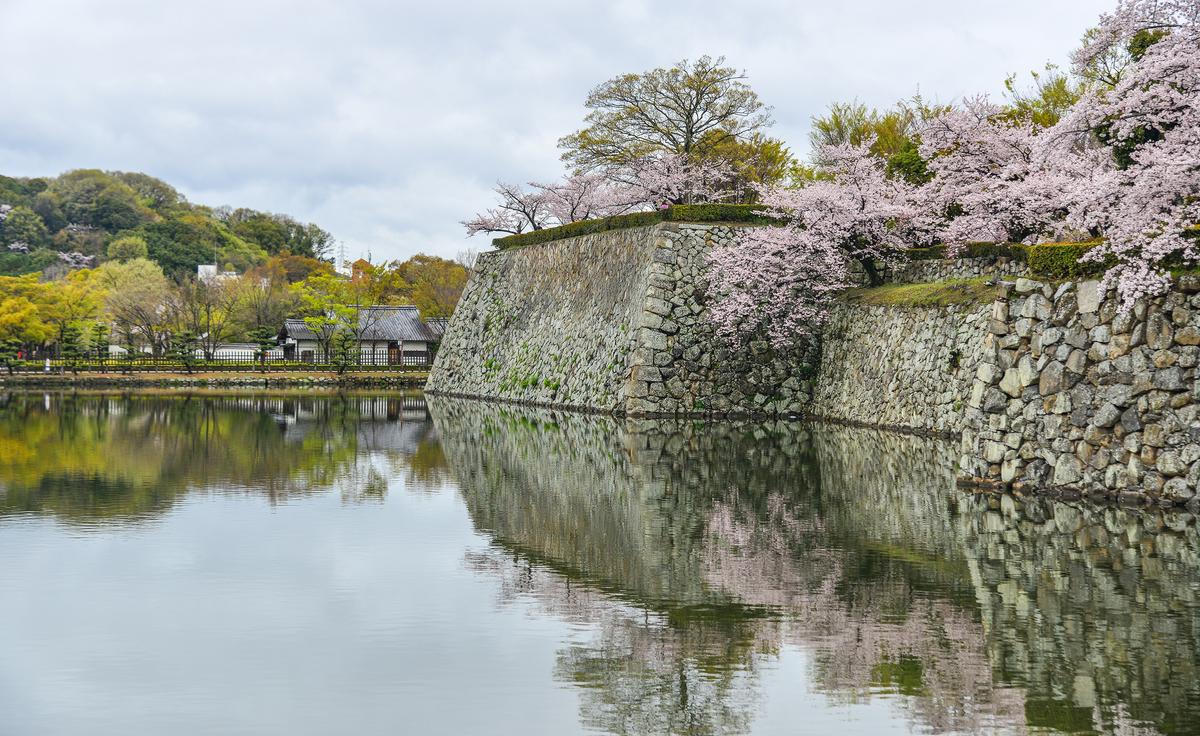
Himeji Castle was once safeguarded by three moats. Today, only the innermost moat remains fully intact, while fragments of the middle moat are still visible. Together with fortified walls, the moats formed a strategic defensive system, incorporating blind spots to hinder approaching enemies and bridges that allowed for controlled entry. The integration of water, walls, and landscape showcases Edo-period attention to both defense and visual appeal. Phuong D. Nguyen/Shutterstock
What arts and culture topics would you like us to cover? Please email ideas or feedback to [email protected].
Sarah Isak-Goode is a writer and art historian rooted in the Pacific Northwest. Her name—pronounced EYE-zik-good and meaning "good laugh"—hints at the warmth she brings to everything she does. Equal parts scholar and storyteller, Sarah brings the past to life through a distinctly human lens, exploring what connects us across the centuries. Away from her desk, she feeds her curiosity through traveling, painting, reading, and hiking with her dog, Thor.