
When we say “philosophy,” we usually think of aloof students, brooding hermits, or long-winded conversationalists. Auguste Rodin (1840–1917) may have had the first two in mind when he sculpted “The Thinker”: a crouched figure with a fixed downward gaze who has become an emblem for those who relish thinking for thinking’s sake.
Though partially justified, these caricatures of philosophy are quintessentially modern. During its inception in Ancient Greece, and for centuries afterwards, philosophy was always paired with physical activity. Without an active body, thinking, for the Greeks, was unthinkable.
The Olympics
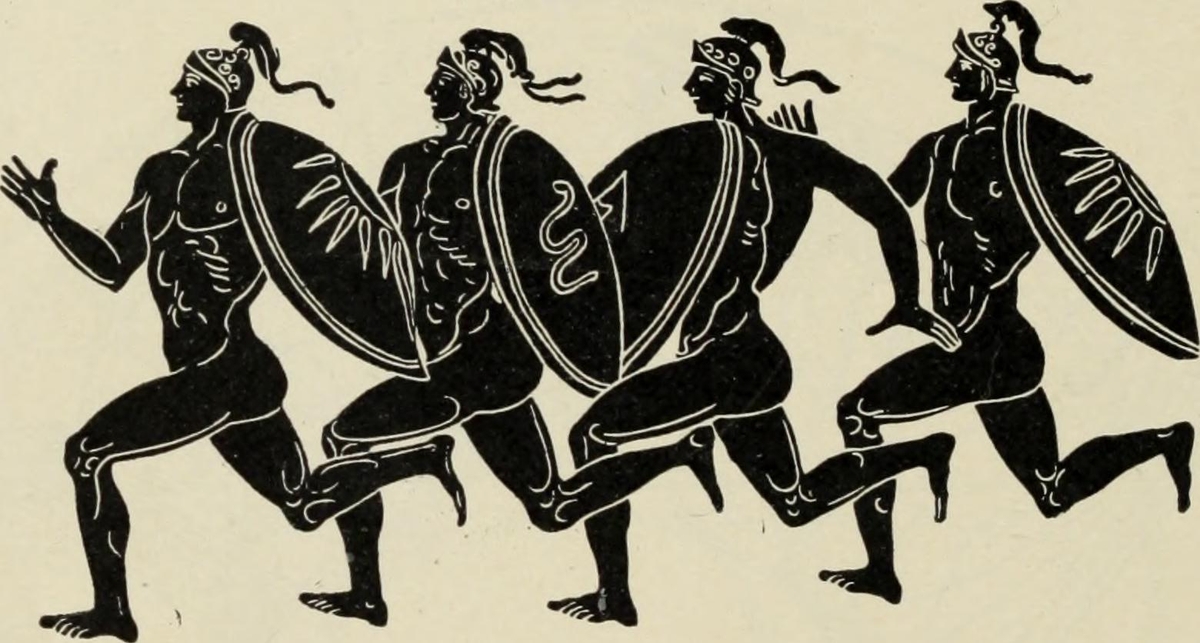
The Greeks were fiercely competitive. In sports, their obsession with contests gave birth to the Olympics, which remain the most important global athletic event. The Olympic Games were “panhellenic.” Virtually every Greek city-state sent representatives to compete in one of 23 sports, including boxing, wrestling, chariot racing, long-distance running, and many more.There were three other panhellenic festivals, which took place in turn every four years. These athletic events had religious and political functions. Held at Olympia, the Olympics were devoted to Zeus, the supreme Greek god who ruled on Mt. Olympus. In the name of this common deity, city-states laid down arms, offered prayers and sacrifices, and competed peacefully in grand events that temporarily halted ongoing conflicts.
Political representatives used the large gatherings to announce major developments. Sometimes city-states even exchanged their cherished Olympic winners to establish alliances, support the growth of new colonies, or promote good faith between factions.
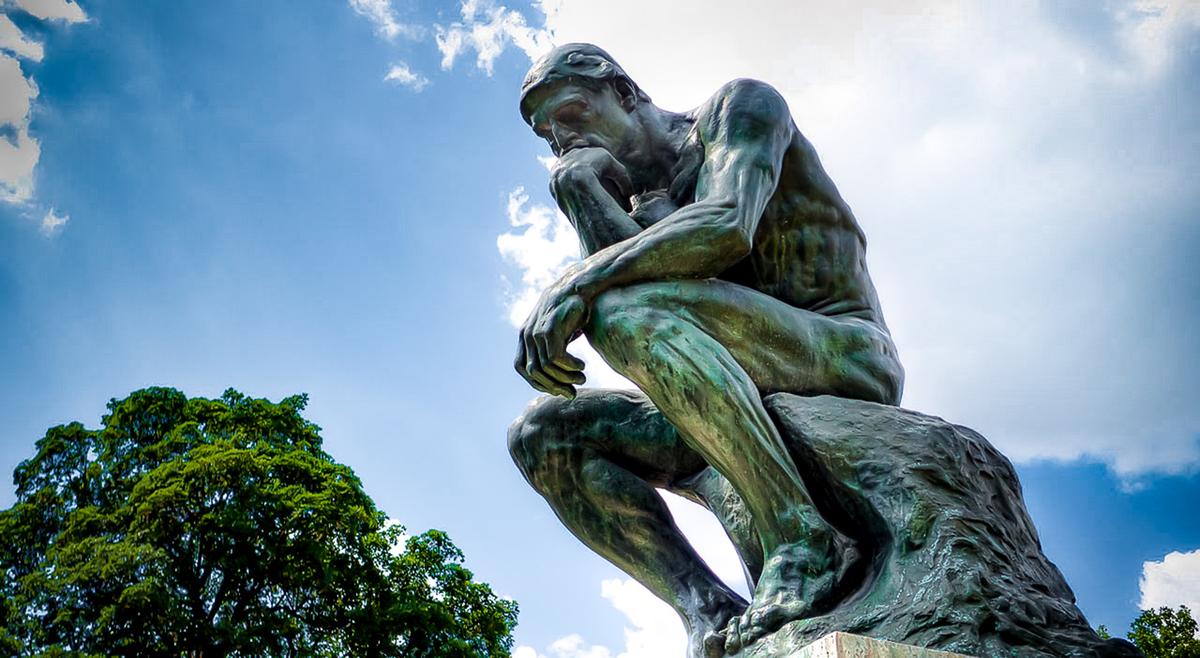
Auguste Rodin’s “The Thinker” in the Rodin Museum in Paris. Public Domain
War and Sports
A love for sports also animated the Greeks’ founding myths. In Homer’s “Odyssey,” athletic competitions abound. When Odysseus arrives at the quixotic island of the Phaeacians, his character is tested by arrogant youth who challenge him to a discus-throwing contest. After a heated exchange, Odysseus humiliates his guests and begins boasting about his athletic skills. The contest remains one of the epic’s most exciting scenes.The “Iliad” also has its fair share of funeral games and athletic stints, not to mention the constant bouts between Greek and Trojan warriors who vie for supremacy on the battlefield.


For centuries, the two epics formed the core curriculum of Greek youth, who grew up hearing riveting stories about the many adventures of fit, brave heroes.
These popular myths described the scarring brutality of war, but they were also fighting manuals. Despite its role as a cradle of beauty, literature, and philosophy, Greece was as violent as any ancient civilization. Its independent city states constantly waged war against one another, unless they were busy fighting foreign enemies. In a militaristic society, physical fitness was an obvious need. Homer’s poems provided countless generations with practicable models.
Socrates, who has been dubbed the “father of philosophy” since his execution in 399 B.C., served as a soldier in several campaigns. Before his relentless questions earned him a negative reputation, he was known as a valiant soldier who put others’ lives before his own. Once he was too old for military service, Socrates continued to frequent the “gymnasium,” where he witnessed and sometimes instigated intellectual bouts about ideas that later defined philosophy as we know it.
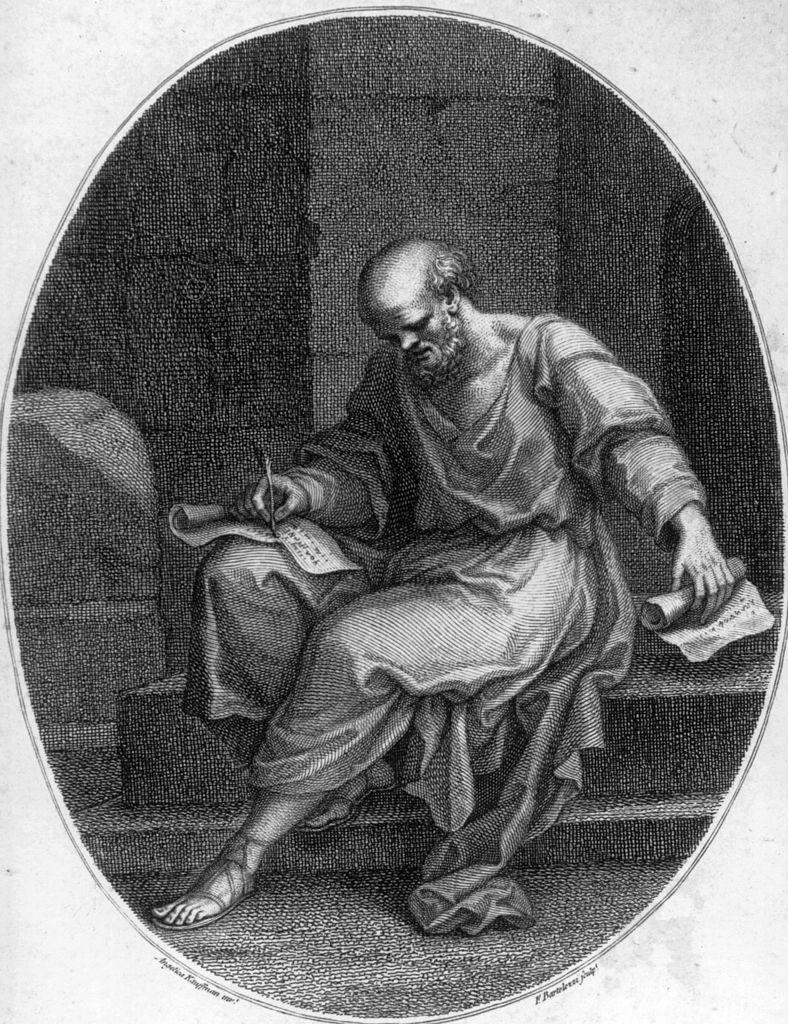
Circa 440 B.C., Greek philosopher Socrates. Hulton Archive/Getty Images
The Gymnasium
The Greeks institutionalized physical training in facilities that became known as “gymnasia,” from the Greek “gymnos” (“naked”).Training was to them a form of moral education. Athletes learned endurance and self-control. They learned to discipline themselves by subordinating immediate pleasures to long-term excellence. Status and character were at stake. A well-trained body reflected inner order and exemplified virtue.
The earliest gymnasia date to the 6th century B.C. They were rough-and-ready: no more than shaded patches of grass with a few boulders for seating. Most gymnasia were located near springs or streams at ancient sanctuaries like Olympia, where athletes sojourned before competing.
Gymnasia were optimal spaces to prepare for military service. Many of the skills that Greeks loved to watch at the Olympics—javelin-throwing, discus-throwing, running—were also needed in war.
In the 5th century, the gymnasium spread from secluded precincts to large cities like Athens. As Athens boomed, it attracted foreigners who wanted to enjoy its prosperity. Among the newcomers were the “sophists”: teachers of rhetoric who promised to dispense wisdom and know-how in exchange for hefty fees. To entice potential customers, sophists began attending gymnasia, where ambitious young men typically hung out.
Some Athenians were suspicious of money-seeking so-called teachers, though they also wanted to influence young people. Socrates was especially wary, as was his pupil Plato. To take matters in his own hands, Socrates began attending the various gymnasia across Athens, where he engaged his opponents in intellectual bouts. Plato carried his teacher’s mission forward, turning the gymnasium into a learning center that eventually lent its name to modern universities.
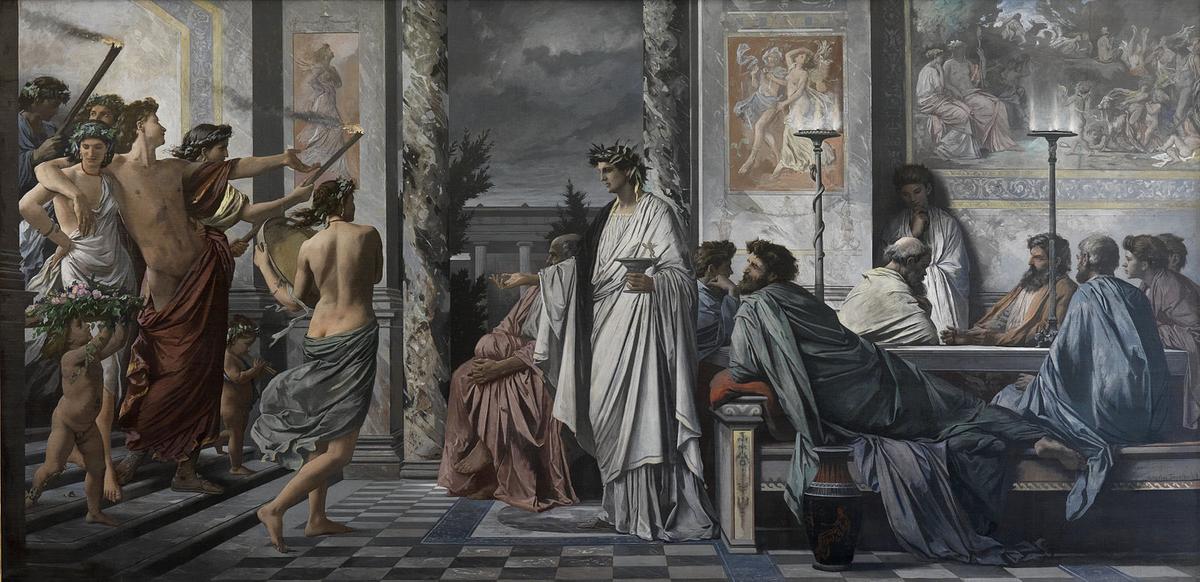
"Plato's Symposium," 1869, by Anselm Feuerbach. Staatliche Kunsthalle Karlsruhe, Germany. Public Domain
Gymnastics and Philosophy
The two most famous gymnasia are the Academy and the Lyceum, where the philosophers Plato and Aristotle established their schools.Around 387 B.C., Plato inherited a lot within a 6th-century gymnasium located outside Athens’s walls. By then, he had a decent following of die-hard supporters and new recruits.
Unlike a typical gymnasium, Plato’s Academy wasn’t open to the public, but it was free. In its early years, it counted two women, though female members were always a minority.
The Academy didn’t have a formal curriculum. It was based on questions and problems members were made to discuss. Topics probably spanned math, geometry, logic, and moral philosophy. The Academy also hosted lectures.
It’s unclear if Plato required members to train, though most, if not all, were likely regular gymnasium-goers. The educational garden where activities took place was right next to an active wrestling school.
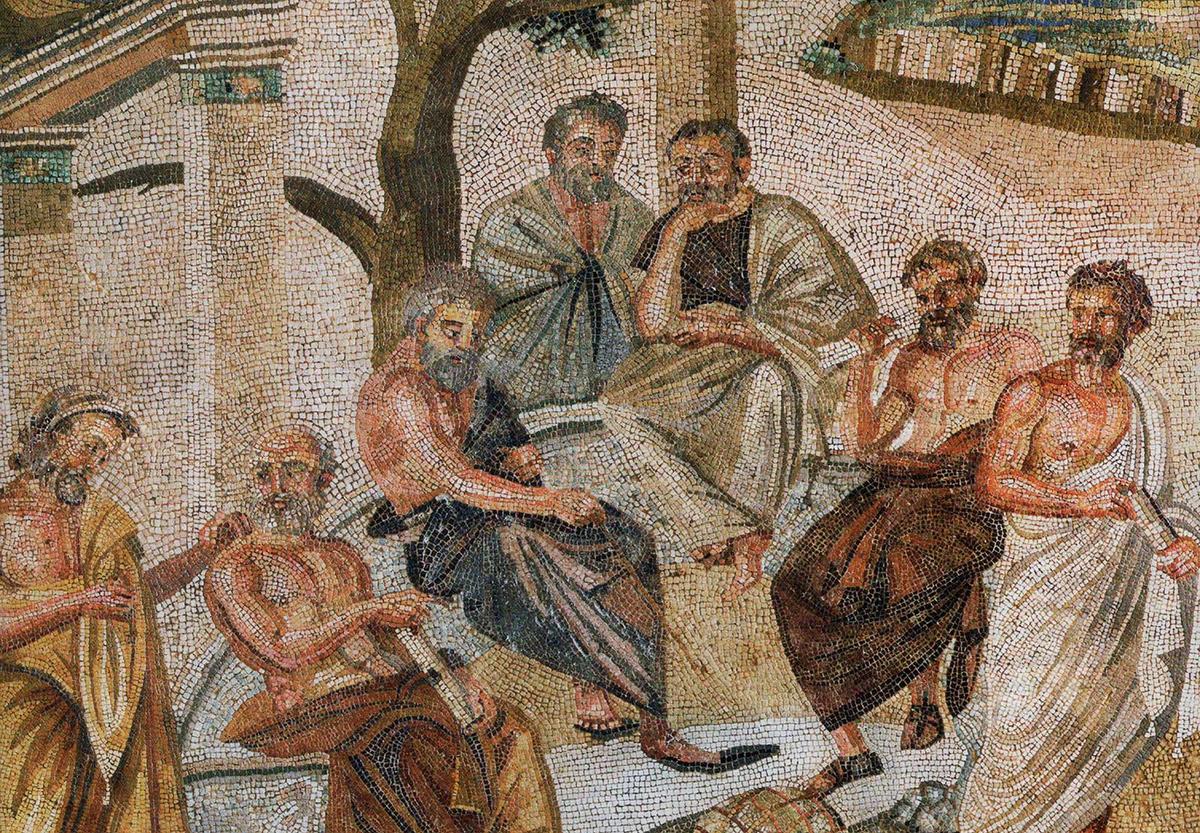
Plato surrounded by students in his Academy in Athens. Mosaic (detail) from the Villa of T. Siminius Stephanus, Pompeii, 1st century B.C. Roman National Archaeological Museum, Naples. (Public Domain)
Among the Academy’s members was Plato’s famous pupil Aristotle, who founded a school of his own. His institution was established at the “Lyceum,” a sanctuary-turned-gymnasium that had long attracted popular sophists. Aristotle’s approach to philosophy was later named “Peripatetic” (Greek for “walk about”), supposedly because of his habit of strolling the gymnasium while he lectured.
Although they weren’t the only institutions of their kind, Plato’s Academy and Aristotle’s Lyceum rightly earned a reputation as the first schools of philosophy. They weren’t sterile lecture halls or stuffy classrooms. They were open spaces where young men typically exercised under the leadership of disciplined coaches. The conversations about truth, beauty, and goodness that we now associate with philosophy emerged spontaneously between wrestling matches and running drills.
‘Mens Sana in Corpore Sano’
The complementarity between mind and body that the Greeks valued so highly found a powerful formulation in Plato. In his monumental “Republic,” the philosopher argued that education must balance physical training and “music,” which included song, poetry, and the arts. Today these would be loosely called the “humanities.” In Plato’s view, overemphasis on athletic discipline produces a narrow-minded citizenry. But neglect of physical soundness produces citizens who are weak in body and, more importantly, in character.These ideas were partly informed by Plato’s experiences. In his youth, he was a wrestler. He possibly competed in the Isthmian Games, one of the four panhellenic events. According to the ancient biographer Diogenes Laertius (A.D. 230), Plato:
“learnt gymnastics under Ariston, the Argive wrestler. And from him he received the name of Plato on account of his robust figure, in place of his original name which was Aristocles. … But others affirm that he got the name Plato from the breadth of his style, or from the breadth of his forehead.”
Plato’s experience as a wrestler influenced his literary style. The philosopher’s dialogues are full of technical wrestling terms, which he used to describe intellectual bouts between interlocutors.
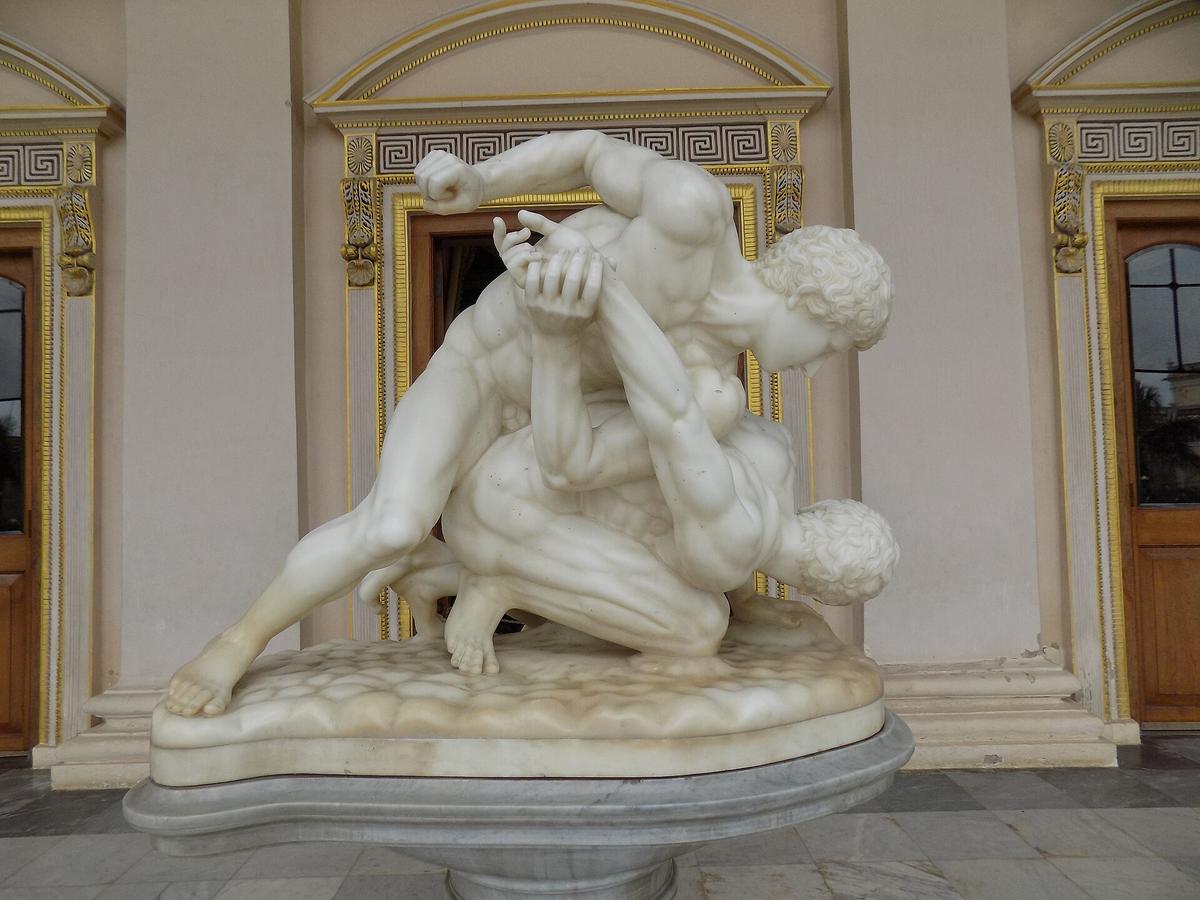
A sculpture of Greek wrestlers at Chowmahalla Palace, Hyderabad, India. Pratishkhedekar/CC BY-SA 4.0
In 1927, the English philosopher Alfred North Whitehead (1861–1947) famously remarked that “the safest general characterization of the European philosophical tradition is that it consists of a series of footnotes to Plato.” While the Greek philosopher continues to appear in college curricula and academic articles, little is ever said about his background in wrestling, let alone the role that sports played in his world-defining intellectual career.
Today, “philosophy” often brings to mind long-winded discussions of trivial ideas, while gyms are often synonymous with ego-boosting halls of mirrors where vanity reigns supreme. There’s some truth to both caricatures, but only because the Greeks’ attitude towards physical and mental activities as complementary has foundered.
To be fair to Rodin, his statue alluded to this complementarity. Although it shows a man lost in thought, the “Thinking Man” is famous partly because of its impressive dimensions. By elevating an anonymous, ordinary thinker to heroic status, the sculptor made a strong statement: Thinking is as commendable as leading an army, and it’s certainly worthy of comparable celebration. Incidentally, Rodin’s model was Jean Baud, an accomplished French boxer and wrestler.
Like Rodin, ancient Rome took great inspiration from Greece. As the poet Horace (65 B.C.–8 B.C.) put it in an oft-cited passage, “Captive Greece captured, in turn, her uncivilized/ Conquerors, and brought the arts to rustic Latium.”
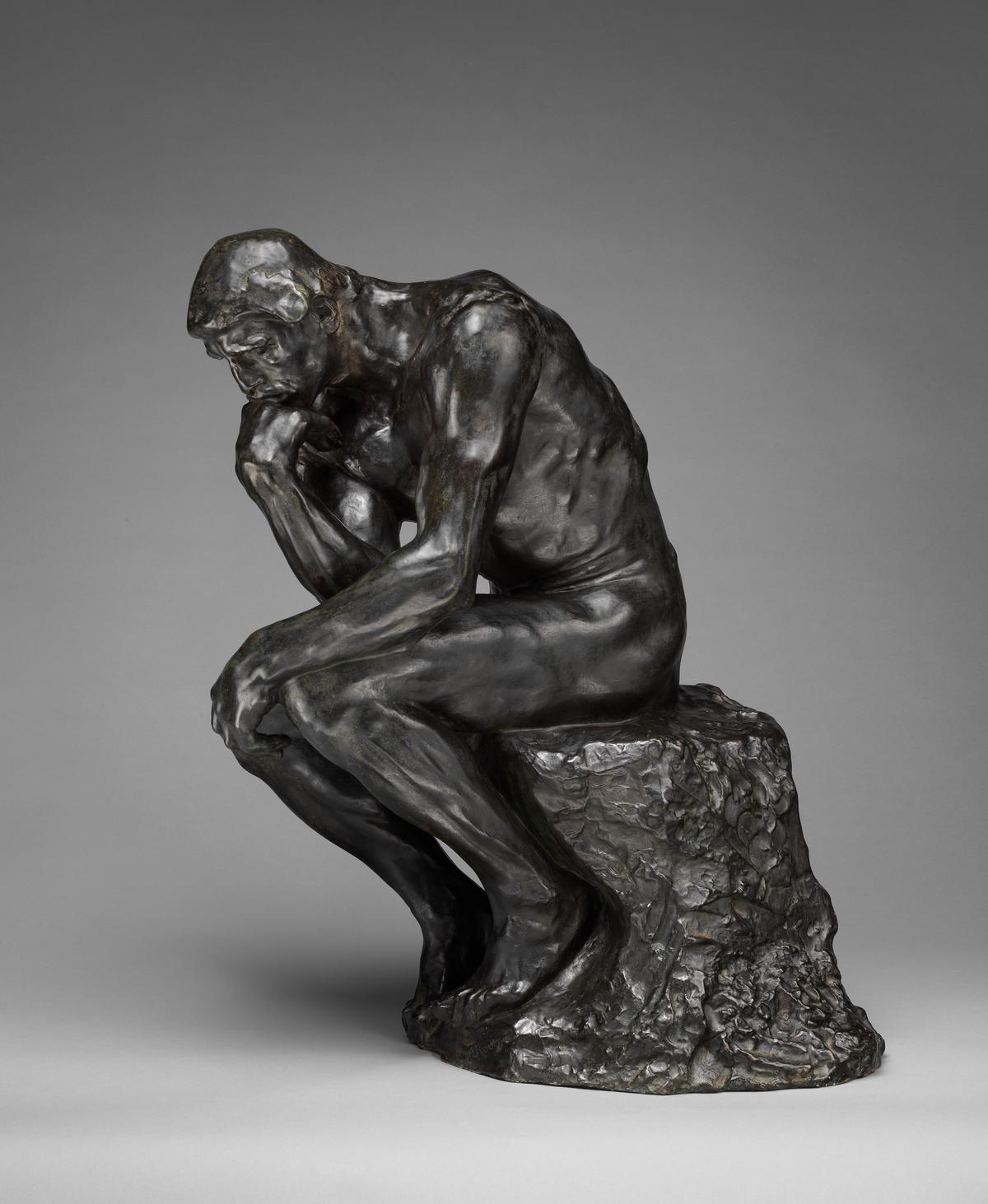
“The Thinker” by Auguste Rodin (1840–1917). Founder: cast by Alexis Rudier. Modeled circa 1880, cast circa 1910, bronze overall. The Metropolitan Museum of Art, gift of Thomas F. Ryan, 1910. The Metropolitan Museum of Art
Once Rome defeated Greece by force, Greece conquered Rome by culture. Part of Greece’s cultural conquest entailed the gymnasium, which remains one of its longest-standing institutions. A century after Horace, another Roman poet summarized the Greeks’ belief in the complementarity of mind and body with a pithy phrase. It’s the first item in a list of petitionary prayers: “mens sana in corpore sano.” A healthy mind in a healthy body.
What arts and culture topics would you like us to cover? Please email ideas or feedback to [email protected]