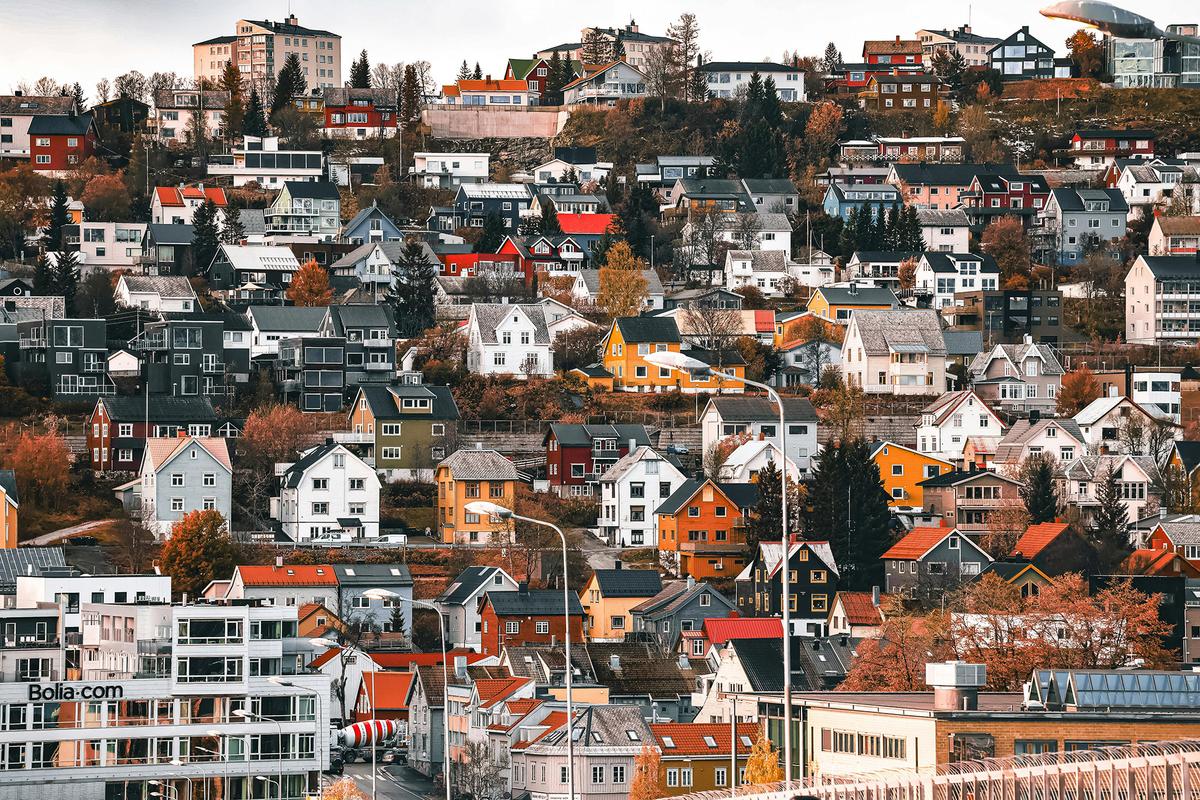
Yes, you can fly to Tromso, but it’s a place that absolutely should be approached from the water. As you sail in, the city rises around you. Soaring bridges connect the island of Tromsoya to the mainland. On one side, there’s the white peaked roof of the Arctic Cathedral up on a nearby ridge. The shores are lined with bright, multi-story, multicolored warehouses, the reds and yellows and oranges all contrasting with the frozen, snowcapped peaks that backdrop the whole scene.
Sitting at 69 degrees north, with a population of almost 80,000 people, Tromso is one of the largest cities inside the Arctic Circle. It is, in many ways, a modern, polished place. You’ll find a number of claims to fame there, including a pedestrian shopping promenade that includes a bookstore (Norli Bokhuset) that’s been named the very best in Norway and, perhaps a little less prestigious, the northernmost McDonald’s on Earth.
Walking the streets here, you feel like an adventurer. Perhaps it’s the extreme latitude or just simply the knowledge that once you leave town, there are glaciers and endless boreal forest and, perhaps, a few friendly trolls to greet you. Not only that, but the inspiring spirit of the actual explorers who once lived here still hangs in the air.
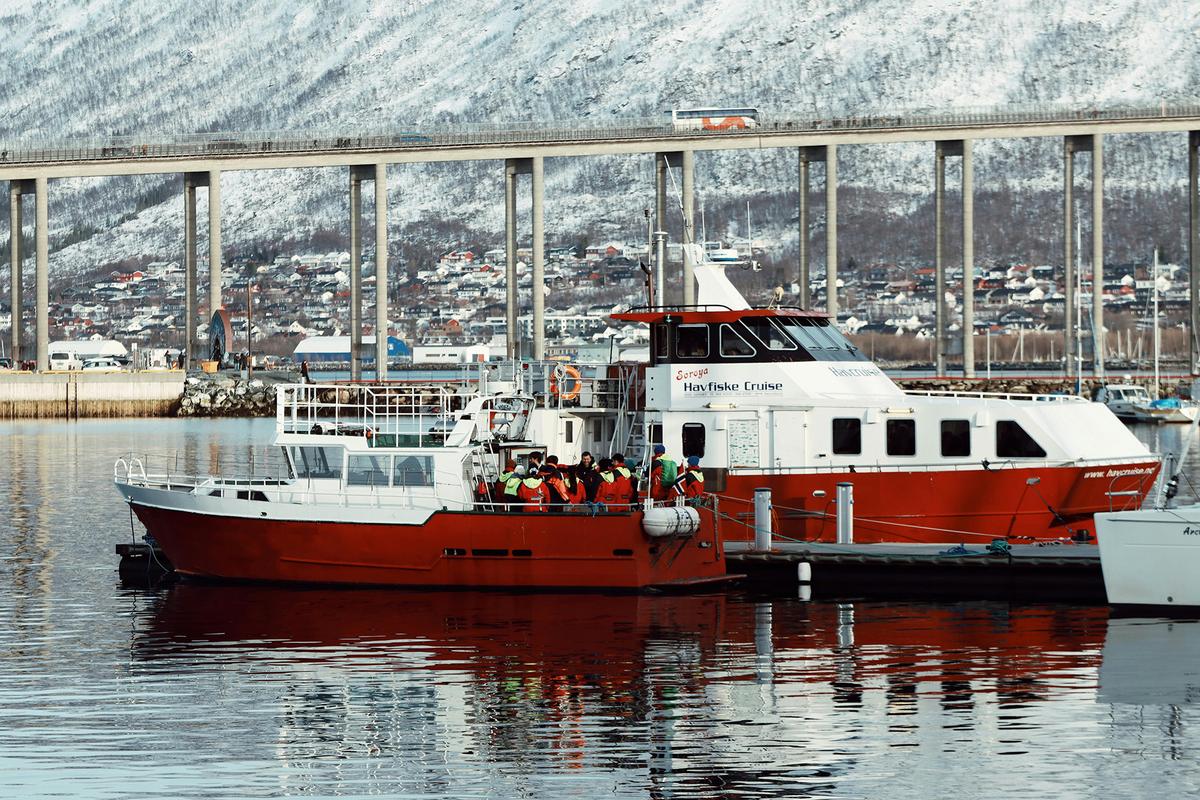
A Dangerous but Beautiful Way to Live
As I disembarked my ship and joined a small group tour, our guide explained that Tromso “was once called the Paris of the North,” in part because people were well-dressed in furs. (Certainly a necessity at the time, more than a fashion choice.) We passed a statue of Roald Amundsen, which was mostly ignored by passersby. But this Norwegian was almost indisputably the greatest figure in what’s called the Heroic Age of Exploration. He made Tromso his home and base of operations.We entered the truly excellent Polar Museum, its logo on the door prominently featuring the comically unattractive face of a walrus. Inside, the guide led us through a series of displays exhibiting the harsh, hardy, and beautiful way people have lived for centuries in the Far North.
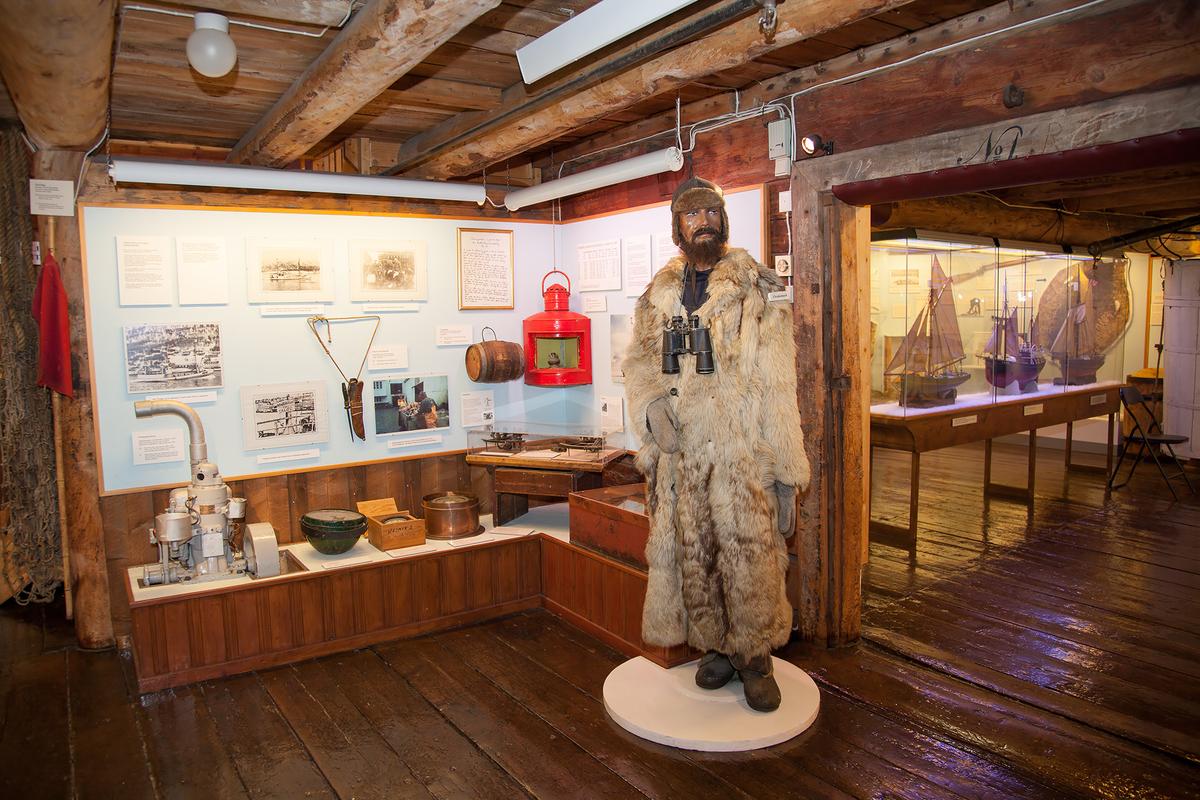
Exhibits showed the lives of hunters and trappers, sealers and sailors. Bearded mannequin men bundled up in a wooden boat, navigating a dark, unfriendly sea. Another one stood on the ice, in pursuit of his prey. “Sealskin, for a time, made the only waterproof clothes,” the guide said.
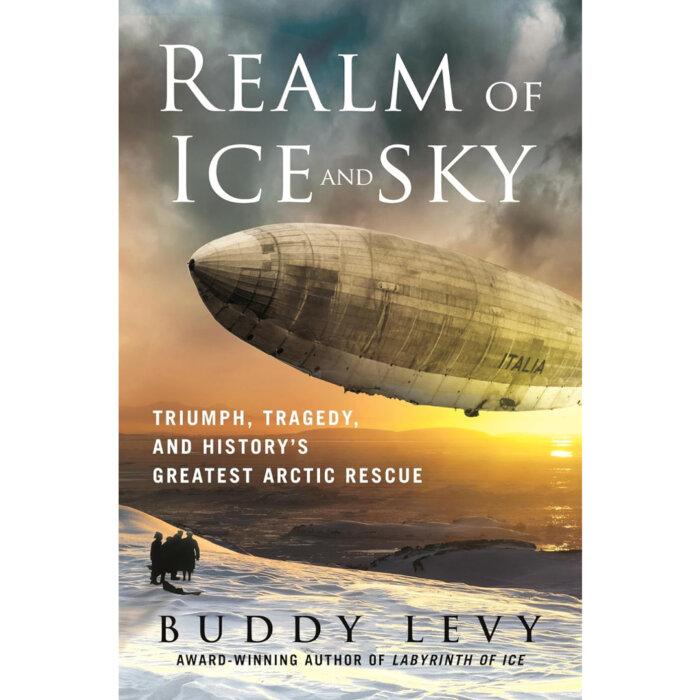
Turning a corner into a different room, there was a surprise—an item very different from everything else in this place: a model of a zeppelin, hung from the ceiling. The name, Norge, was emblazoned on the side.
Amundsen flew the Norge over the North Pole in 1926. But this was definitely not the greatest of his accomplishments.
Amundsen the Adventurer
During the Heroic Age, which lasted from the end of the 19th century to after World War I, explorers from around the world pursued a series of “firsts,” traveling, at great risk, to the ends of the earth. They did so in order to have their names forever remembered. You might still recognize those names—Sir Ernest Shackleton, Robert Peary, Sir James Clark Ross, Robert Falcon Scott. But the greatest among them was Amundsen.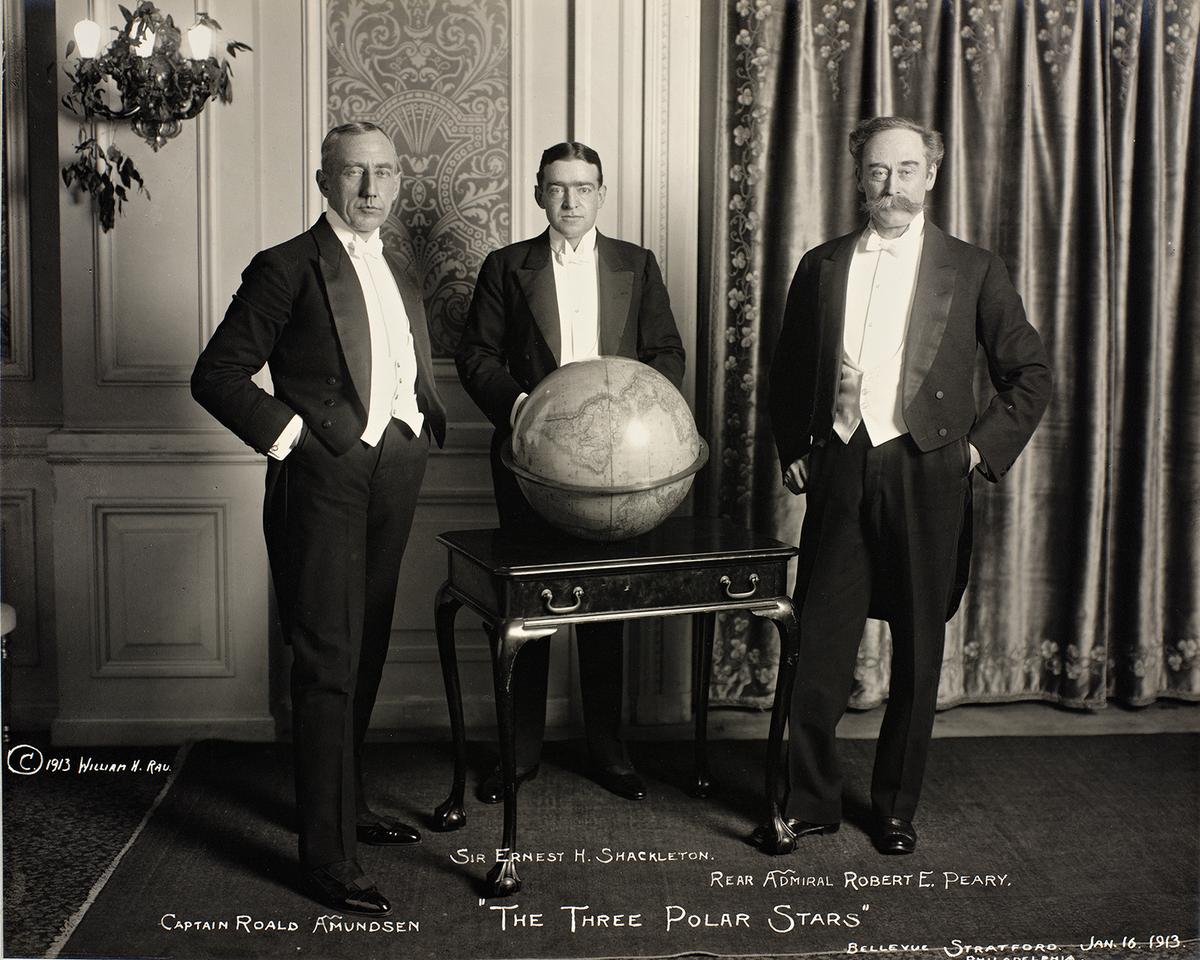
For centuries, one of the jewels that many explorers strove to find was the Northwest Passage, a fabled route to the Far East. These exploratory voyages into Arctic regions were perilous. Hungry polar bears and storms more violent than anything they had ever seen lay on their path. Ships became locked in the ice for long periods of time.
In some cases, such as that of Sir John Franklin’s Expedition, the disaster was complete. The two ships under his command, the Terror and the Erebus, and all the men aboard them simply vanished for hundreds of years. (Searchers using super-modern submersible technology have only recently found them.)
Amundsen was the first European to successfully traverse the Northwest Passage. It took him three whole years. With his crew, he overwintered twice in an Inuit community now called Gjoa Haven, named for his ship, the Gjóa. The people who lived there made his success possible by teaching him survival techniques. These included wearing animal skins, building igloos, and driving teams of sled dogs to pass quickly over frozen terrain. Back at the Polar Museum in Tromso, the guide showed us one of these dogs on display, long dead and preserved by taxidermy.
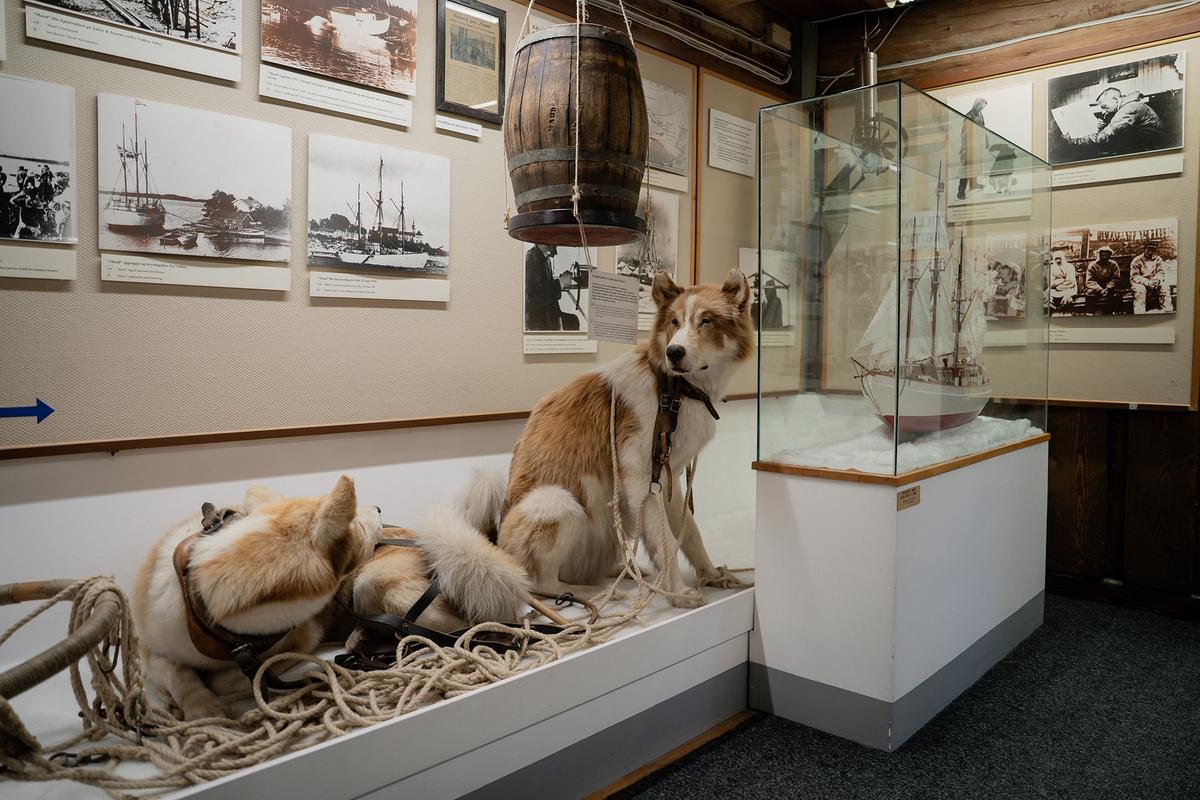
Amundsen used the methods learned from the Inuit to reach the South Pole in 1911. His party, which included four men and a bunch of sled dogs, got there about five weeks before Scott. (Tragically, Scott and his entire team died in terrible weather on their return from the Pole.)
And then, of course, there’s the whole matter of the zeppelin. In 1926, on the Amundsen-Ellsworth-Nobile Transpolar Flight, 16 men took off on the Norge from the extremely northern island of Svalbard. They crossed the Arctic Ocean and the North Pole before encountering thick fog and a strong storm, which blew them off course and over the Bering Strait.
They managed to safely land the zeppelin in Alaska. It was the first crossing of the Arctic Ocean and the North Pole, making Amundsen and one of his crew members, Oscar Wisting, the first people to reach both Poles.
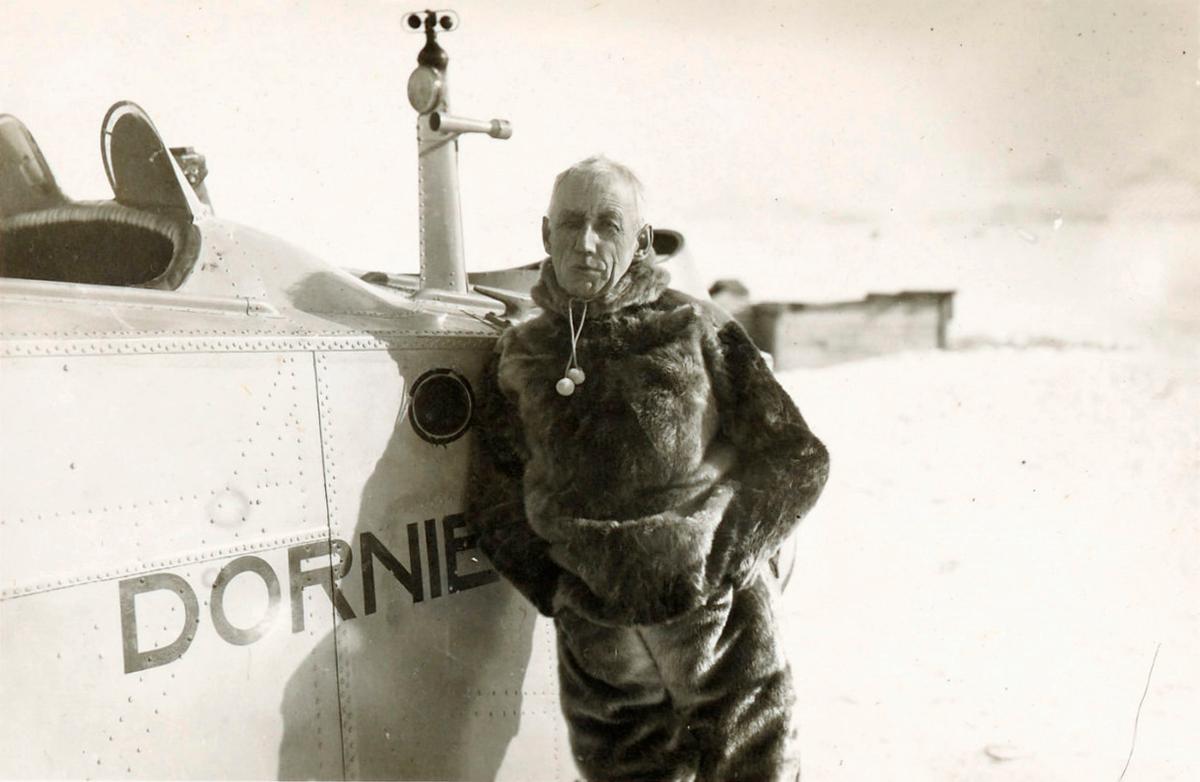
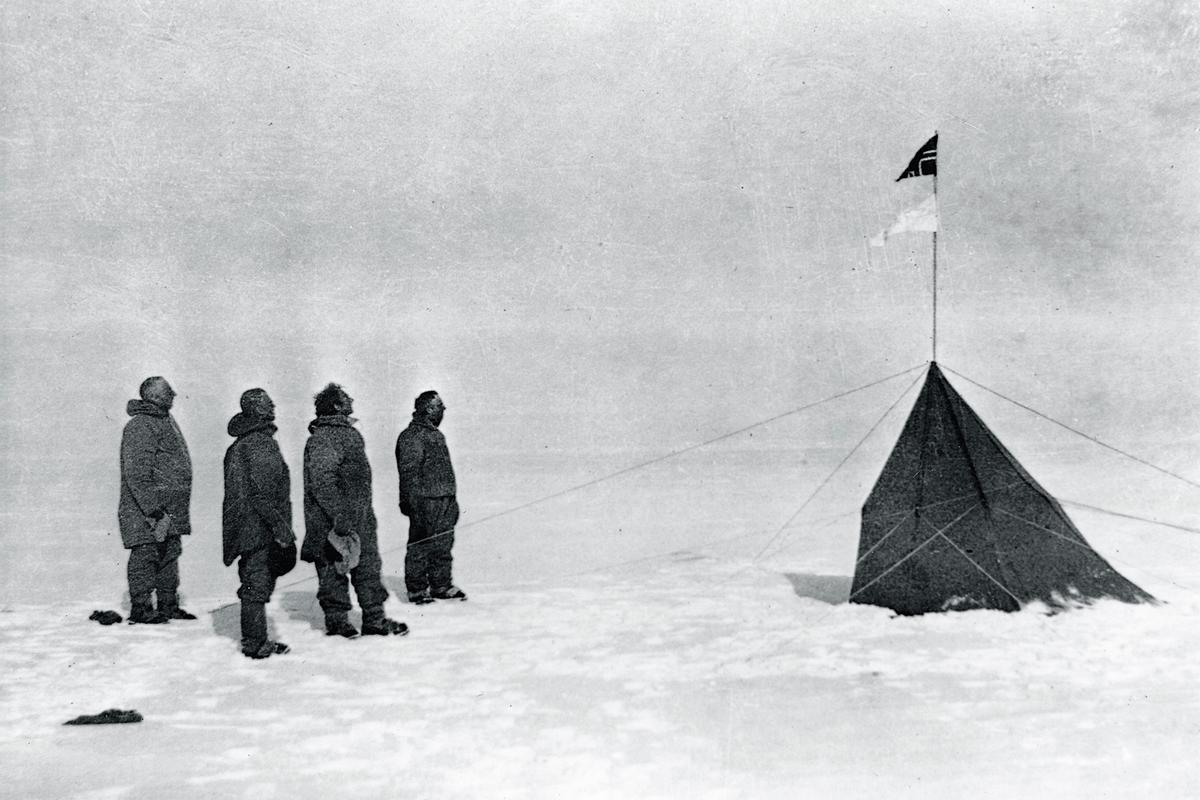
In a death as dramatic as his life, two years later, Amundsen—at the age of 55—piloted a seaplane north. As I emerged from the museum with the guide at my side, he pointed out the stretch of water where the explorer took off. Amundsen was determined to rescue Umberto Nobile, who had flown with him over the Pole. Nobile was flying another zeppelin, which had crashed near Svalbard.
Amundsen was never seen again.
He remained on my mind as I got back on board the ship. We passed the soaring bridges, leaving behind the colorful homes and warehouses and the cathedral up on the ridge, and steamed even further north in the Arctic. It was a land Amundsen had called, simply, “splendid.” My personal voyage, despite the modern conveniences of the ship, most certainly made me feel like an explorer, too.